Connectivity is not a luxury; it is the backbone of modern life. It carries trade, education and healthcare across great distances. When it is absent, communities remain cut off, businesses fail to thrive and governments stumble. When it is present, possibility expands, growth follows and bright futures open.
For Africa’s remote regions, the persistent challenge is how to bridge vast distances with reliable, affordable access.
For decades, satellite filled that gap. Very small aperture terminal (VSAT) technology provided voice and data services where fibre could not reach. They were lifelines for mines in the desert, for clinics in rural towns and for farms stretching beyond the grid.
Yet VSAT relied on geostationary satellites positioned high above the equator, 36 000km from the planet’s surface. The distance created latency. A second’s delay in a video call may not matter for casual conversation, but for business, education or emergency response, it is significant.
A transformative shift
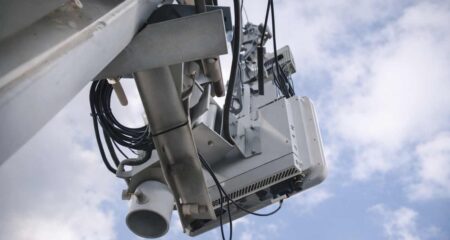
A new day has dawned. Low-Earth orbit satellites, circling at 1 200km or less, change the equation. Latency falls below 70ms and speeds climb towards 200Mbit/s. For Africa’s remote regions, that shift is transformative. The internet is no longer distant; it is close, tangible and within reach.
Paratus South Africa has entered this new chapter through its partnership with Eutelsat OneWeb. For years, Paratus built its reputation on robust connectivity solutions: terrestrial fibre, wireless, LTE and GEO satellite services.
The addition of LEO expands its reach. Together, GEO and LEO create a dual-layer system. GEO provides broad, stable coverage. LEO delivers speed and responsiveness. Combined, they form a resilient network capable of serving industries and communities far from urban centres.
Opening up the cloud
The implications reach everywhere. Mines can sync data in real time and clinics can call specialists without the freeze of a stuttering feed. Farmers can tap precision platforms powered by the cloud and schools can open digital libraries once blocked by endless buffering. Banking agents in rural towns can move money securely, with trust built into every transaction.
Before LEO satellites, companies wrestled with remote desktops and sluggish VPNs. After installation, the friction was gone. Cloud drives opened instantly. Work flowed. Clients trusted the connection. One business, one upgrade, but the lesson is wider. It shows what connectivity unlocks across Africa.
And it is not only about business. Reliable internet draws communities into modern life. A child can keep learning when schools close. A farmer can check crop prices before loading the truck. A nurse can pull up patient records and consult a doctor miles away. A lodge in the wilderness can welcome visitors who still expect to be connected. Each example is different. The thread is the same: connection brings participation.
Connectivity, in short, levels the playing field.

Opening the door to opportunity
Africa’s geography makes terrestrial infrastructure difficult. Building fibre to every village across vast deserts, mountains and savannahs is impractical. Satellite fills that gap with speed and scale. Where VSAT once stood alone, LEO now adds a dimension that makes the experience closer to fibre. It is not a replacement, but a complement. Integrated with Paratus Group’s 20 000km of terrestrial fibre across 10 countries, LEO becomes part of a hybrid solution: satellite where needed, fibre where possible, always connected.
Customer support completes the picture. Technology is only as strong as the service behind it. Paratus deploys certified technicians for installation and offers around-the-clock support. For businesses operating in harsh or remote environments, this assurance is as important as the technology itself. Downtime costs money. Response time builds trust.
The impact is unmistakable. By adding LEO to its portfolio, Paratus strengthens its place in Africa’s digital story. The roll-out in South Africa, Ghana, Angola and Mauritius is proof of momentum. It signals intent and commitment – growth, not in words, but in action.
This is not about quicker downloads, but about livelihoods. A mine that runs more efficiently keeps people employed. A farm that uses data to lift its yield strengthens food security. A rural clinic that reaches a specialist sees better survival rates. A school that connects to global resources builds skills for a lifetime.
Each link in the chain matters. Each connection builds resilience. Together, they open the door to opportunity.
A world of possibilities
Satellite internet will not solve all challenges. Affordability will always be an issue. Power supply in rural areas is often unreliable, and counterintuitively, devices must still be accessible. But the foundation matters. Without connectivity, none of the other problems can be solved at scale. With it, solutions become possible.
Africa has often leapfrogged traditional infrastructure. Mobile banking bypassed physical branches. Wireless networks reached where copper lines never went. LEO satellites now offer another leap. They make connectivity not a dream deferred, but a reality within reach.
The partnership between Paratus and Eutelsat OneWeb reflects this shift. It is a practical step towards closing the digital divide. By combining GEO’s coverage with LEO’s performance, and layering it onto a strong fibre backbone, the continent gains a network that works for both cities and rural towns, for industries and communities.
The future of Africa’s connectivity will not be defined by a single technology. It will be shaped by integration, resilience and vision. VSAT has showed us what was possible; LEO reveals what is next. The challenge now is adoption, ensuring that businesses, governments and citizens seize the opportunity.
Connectivity means empowerment. It is the quiet force that allows Africa’s remote regions to write their own future, one connection at a time.
- Read more articles by Paratus Group on TechCentral
- This promoted content was paid for by the party concerned