Close Menu
TechCentralTechCentral

    Subscribe to the newsletter

    Get the best South African technology news and analysis delivered to your e-mail inbox every morning.

    Facebook X (Twitter) YouTube LinkedIn
    WhatsApp Facebook X (Twitter) LinkedIn YouTube
    TechCentralTechCentral
    • News
      West Africa delivers big for MTN Group - Ralph Mupita

      West Africa delivers big for MTN Group

      16 March 2026
      MTN initiates share buyback programme

      MTN initiates share buyback programme

      16 March 2026
      Your Airbnb is empty half the year - this SA start-up has a fix

      Your Airbnb is empty half the year – this SA start-up has a fix

      16 March 2026
      Optasia beats IPO guidance in maiden results as lending scales - Salvador Anglada

      Optasia beats IPO guidance in maiden results as lending scales

      16 March 2026
      MTN's mobile money machine

      MTN’s mobile money machine

      16 March 2026
    • World
      Peter Thiel's secretive Rome conference draws Church attention

      Peter Thiel’s secretive Rome conference draws Church attention

      16 March 2026
      Musk launches Macrohard in cheeky nod to Microsoft - Elon Musk

      Musk launches Macrohard in cheeky nod to Microsoft

      12 March 2026
      Europe is building an alternative to Microsoft Office

      Europe is building an alternative to Microsoft Office

      11 March 2026
      Microsoft bets on Anthropic as it loosens ties with OpenAI

      Microsoft bets on Anthropic as it loosens ties with OpenAI

      10 March 2026
      World hit by worst oil shock since the 1970s

      World hit by worst oil shock since the 1970s

      9 March 2026
    • In-depth
      The last generation of coders

      The last generation of coders

      18 February 2026
      Sentech is in dire straits

      Sentech is in dire straits

      10 February 2026
      How liberalisation is rewiring South Africa's power sector

      How liberalisation is rewiring South Africa’s power sector

      21 January 2026
      The top-performing South African tech shares of 2025

      The top-performing South African tech shares of 2025

      12 January 2026
      Digital authoritarianism grows as African states normalise internet blackouts

      Digital authoritarianism grows as African states normalise internet blackouts

      19 December 2025
    • TCS
      TCS+ | Vox Kiwi: a wireless solution promising a fibre-like experience - Theo van Zyl

      TCS+ | Vox Kiwi: a wireless solution promising a fibre-like experience

      13 March 2026
      TCS+ | Flipping the narrative on AI in the Global South - Josefin Rosén

      TCS+ | Flipping the narrative on AI in the Global South

      13 March 2026
      TCS | Sink or swim? Antony Makins on how AI is rewriting the rules of work

      TCS | Sink or swim? Antony Makins on how AI is rewriting the rules of work

      5 March 2026
      TCS+ | Bolt ups the ante on platform safety - Simo Kalajdzic

      TCS+ | Bolt ups the ante on platform safety

      4 March 2026
      Watts & Wheels S1E4: 'We drive an electric Uber'

      Watts & Wheels S1E4: ‘We drive an electric Uber’

      10 February 2026
    • Opinion
      South Africa's energy future hinges on getting wheeling right - Aishah Gire

      South Africa’s energy future hinges on getting wheeling right

      10 March 2026
      Hold the doom: the case for a South African comeback - Duncan McLeod

      Apple just dropped a bomb on the Windows world

      5 March 2026
      VC's centre of gravity is shifting - and South Africa is in the frame - Alison Collier

      VC’s centre of gravity is shifting – and South Africa is in the frame

      3 March 2026
      Hold the doom: the case for a South African comeback - Duncan McLeod

      Hold the doom: the case for a South African comeback

      26 February 2026
      The AI fraud crisis your bank is not ready for - Andries Maritz

      The AI fraud crisis your bank is not ready for

      18 February 2026
    • Company Hubs
      • 1Stream
      • Africa Data Centres
      • AfriGIS
      • Altron Digital Business
      • Altron Document Solutions
      • Altron Group
      • Arctic Wolf
      • AvertITD
      • Braintree
      • CallMiner
      • CambriLearn
      • CYBER1 Solutions
      • Digicloud Africa
      • Digimune
      • Domains.co.za
      • ESET
      • Euphoria Telecom
      • HOSTAFRICA
      • Incredible Business
      • iONLINE
      • IQbusiness
      • Iris Network Systems
      • LSD Open
      • Mitel
      • NEC XON
      • Netstar
      • Network Platforms
      • Next DLP
      • Ovations
      • Paracon
      • Paratus
      • Q-KON
      • SevenC
      • SkyWire
      • Solid8 Technologies
      • Telit Cinterion
      • Tenable
      • Vertiv
      • Videri Digital
      • Vodacom Business
      • Wipro
      • Workday
      • XLink
    • Sections
      • AI and machine learning
      • Banking
      • Broadcasting and Media
      • Cloud services
      • Contact centres and CX
      • Cryptocurrencies
      • Education and skills
      • Electronics and hardware
      • Energy and sustainability
      • Enterprise software
      • Financial services
      • HealthTech
      • Information security
      • Internet and connectivity
      • Internet of Things
      • Investment
      • IT services
      • Lifestyle
      • Motoring
      • Policy and regulation
      • Public sector
      • Retail and e-commerce
      • Satellite communications
      • Science
      • SMEs and start-ups
      • Social media
      • Talent and leadership
      • Telecoms
    • Events
    • Advertise
    TechCentralTechCentral
    Home » In-depth » Living in sim: the science behind Musk’s theory

    Living in sim: the science behind Musk’s theory

    By The Conversation27 June 2016
    Twitter LinkedIn Facebook WhatsApp Email Telegram Copy Link
    News Alerts
    WhatsApp
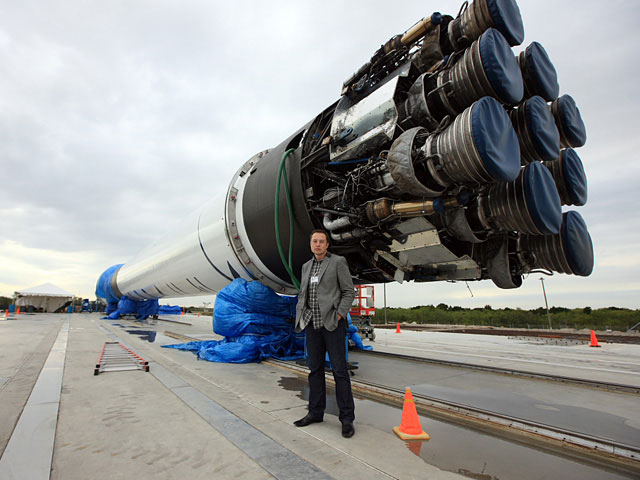
    Elon Musk (photo by OnInnovation)
    Elon Musk (photo by OnInnovation)

    In a recent interview at the Code Conference in California, technology entrepreneur Elon Musk suggested we are living inside a computer simulation. On first hearing, this claim seems far-fetched. But could there be some substance to Musk’s thinking?

    As founder of a number of high-profile companies, such as Tesla and SpaceX, Musk’s business interests lie firmly in leading technologies.

    Key to his claim is that computer games have evolved rapidly over the past 40 years to the point that, inside the next few years, they will be fully immersive, with a computer-generated and controlled world seamlessly merged with the physical world. In other words, we are on the verge of experiencing augmented reality (AR) combined with artificial intelligence. The end result is that what is real and what is simulated could become indistinguishable from one another. In his own words:

    If you assume any rate of improvement at all, then the games will become indistinguishable from reality, even if that rate of advancement drops by a thousand from what it is now. Then you just say, okay, let’s imagine it’s 10 000 years in the future, which is nothing on the evolutionary scale.

    So given that we’re clearly on a trajectory to have games that are indistinguishable from reality, and those games could be played on any set-top box or on a PC or whatever, and there would probably be billions of such computers or set-top boxes, it would seem to follow that the odds that we’re in base reality is one in billions.

    The idea that humans live in a reality controlled by external bodies, whether computers or otherwise, has been around for a while. This has been a question explored by philosophers and even physicists over the centuries. The philosopher Nick Bostrom drew the same conclusion in 2003.

    The similarities between the arguments put forward by Musk and Bostrom go further than proposing we are part of a larger computer simulation, though. Both consider the development of artificial intelligence (AI) to be a dangerous field of technology. According to Musk, the result of progress in AI research and development will be the end of civilisation. Bostrom takes a similar standpoint should appropriate risk assessment not be carried out on development projects.

    Fact or fiction?

    But is this just paranoia? The claims carry more than a passing resemblance to science fiction movies, such as The Matrix and 2001: A Space Odyssey, but are Musk and Bostrom voicing valid causes for concern?

    The case that we are not living in a simulation is strongly supported by resource arguments. Consider the sheer computing power needed to run such a simulation. A simulation system would need to manage all the entities in the world and all their interactions. This would require a vast amount of processing. Further support can be found in arguments relating to quantum mechanics — to run a truly lifelike simulation of a city, with all its trillions of interactions, would require a city-sized computer. This makes the case for our existence in a simulation very unlikely.

    Even if a machine existed that could simulate our existence then there would be a high probability that we would experience so-called “realism imperfections”. These bugs in the simulation would be seen or heard due to glitches in the model. For example, stars may or may not exist when viewed through telescopes of varying magnification. Such errors would be inevitable in a simulation of this scale, but they have never been observed by humans.


    Machines that use self-learning, super intelligent software are still very distant from the current state of the art, and systems that do make use of AI operate in very tightly defined fields. Current systems learn to optimise their performance within specific domains of work — not to take over the world.

    For example, neural networks, which are sometimes referred to as electronic models of the brain, are used to predict changes in stock markets. These systems can be trained using existing data from stock trading to learn and identify patterns in live data streams that may indicate that something will happen. The result of this is that traders can take action to mitigate any negative outcomes.

    Equally, there are systems that are developed using AI techniques to alleviate workloads by applying programmed rules and facts. These are known as knowledge-based systems. While the human users of these systems may not realise that they are interacting with a machine — such as Jill the online tutor of AI, which answers questions and provides feedback to students on an AI course — they are also developed to work on or within well-defined problems or domains.

    Taking the restrictive fields in which AI-type systems are developed, the danger of civilisation coming to an end because of the creation of AI would seem to be very small. Indeed, AI is used largely to support human decision-making and action rather than to replace it.

    Alternative reality

    There are elements of Musk’s thinking, however, that seem considerably more likely to happen in the near future.

    One of these is the development of technology to aid human-machine interfaces. As everyday life becomes increasingly reliant on connected devices, the way in which we use them is constantly changing. Our desire to access data and communicate has driven the evolution of wearable technology.

    Musk claims that we will become pets to AI should we not develop effective brain-computer interfaces. However, the father of wearable technology and AR, Steve Mann, promotes combining both technologies to benefit society. This carries more substance as much work in the area is focused on assistive medical systems. For example, one area of research looks at the creation of brain implants to harness electrical signals in the brain and stimulate movement in paralysed limbs.

    Rest assured, however, that we are probably not living in a computer simulation and that the claims made by Musk are outlandish. There are, however, some elements of his thinking that do hint at technology developments in the future.

    Future developments in AR and related technology will move us towards a world that is more connected. In these augmented realities we will have seamless access to data and digital representations projected into the physical world. AI techniques will help us understand the data; making decisions that are informed by computers. But while augmented, these realities will still be built on and in the real world.The Conversation

    • Mark Robert Anderson is professor in computing and information systems, Edge Hill University
    • This article was originally published on The Conversation
    Follow TechCentral on Google News Add TechCentral as your preferred source on Google


    Elon Musk Mark Robert Anderson SpaceX Tesla
    WhatsApp YouTube
    Share. Facebook Twitter LinkedIn WhatsApp Telegram Email Copy Link
    Previous ArticleA theory on why R2/MB still exists
    Next Article Gupta bosses ambush Gordhan on live radio

    Related Posts

    Musk launches Macrohard in cheeky nod to Microsoft - Elon Musk

    Musk launches Macrohard in cheeky nod to Microsoft

    12 March 2026
    Starlink expands public advocacy campaign as it pushes for SA licence

    Starlink expands public advocacy campaign as it pushes for SA licence

    17 February 2026
    Musk hits brakes on Mars mission

    Musk hits brakes on Mars mission

    9 February 2026
    Company News
    Why managing your Cisco Enterprise Agreement matters more than signing it

    Why managing your Cisco Enterprise Agreement matters more than signing it

    16 March 2026
    Mitel receives 2025 Enterprise Collaboration Product of the Year award

    Mitel receives 2025 Enterprise Collaboration Product of the Year award

    16 March 2026
    Households still under big pressure, Altron Fintech index shows

    Households still under big pressure, Altron Fintech index shows

    13 March 2026
    Opinion
    South Africa's energy future hinges on getting wheeling right - Aishah Gire

    South Africa’s energy future hinges on getting wheeling right

    10 March 2026
    Hold the doom: the case for a South African comeback - Duncan McLeod

    Apple just dropped a bomb on the Windows world

    5 March 2026
    VC's centre of gravity is shifting - and South Africa is in the frame - Alison Collier

    VC’s centre of gravity is shifting – and South Africa is in the frame

    3 March 2026

    Subscribe to Updates

    Get the best South African technology news and analysis delivered to your e-mail inbox every morning.

    Latest Posts
    West Africa delivers big for MTN Group - Ralph Mupita

    West Africa delivers big for MTN Group

    16 March 2026
    MTN initiates share buyback programme

    MTN initiates share buyback programme

    16 March 2026
    Your Airbnb is empty half the year - this SA start-up has a fix

    Your Airbnb is empty half the year – this SA start-up has a fix

    16 March 2026
    Optasia beats IPO guidance in maiden results as lending scales - Salvador Anglada

    Optasia beats IPO guidance in maiden results as lending scales

    16 March 2026
    © 2009 - 2026 NewsCentral Media
    • Cookie policy (ZA)
    • TechCentral – privacy and Popia

    Type above and press Enter to search. Press Esc to cancel.

    Manage consent

    TechCentral uses cookies to enhance its offerings. Consenting to these technologies allows us to serve you better. Not consenting or withdrawing consent may adversely affect certain features and functions of the website.

    Functional Always active
    The technical storage or access is strictly necessary for the legitimate purpose of enabling the use of a specific service explicitly requested by the subscriber or user, or for the sole purpose of carrying out the transmission of a communication over an electronic communications network.
    Preferences
    The technical storage or access is necessary for the legitimate purpose of storing preferences that are not requested by the subscriber or user.
    Statistics
    The technical storage or access that is used exclusively for statistical purposes. The technical storage or access that is used exclusively for anonymous statistical purposes. Without a subpoena, voluntary compliance on the part of your Internet Service Provider, or additional records from a third party, information stored or retrieved for this purpose alone cannot usually be used to identify you.
    Marketing
    The technical storage or access is required to create user profiles to send advertising, or to track the user on a website or across several websites for similar marketing purposes.
    • Manage options
    • Manage services
    • Manage {vendor_count} vendors
    • Read more about these purposes
    View preferences
    • {title}
    • {title}
    • {title}