Close Menu
TechCentralTechCentral

    Subscribe to the newsletter

    Get the best South African technology news and analysis delivered to your e-mail inbox every morning.

    Facebook X (Twitter) YouTube LinkedIn
    WhatsApp Facebook X (Twitter) LinkedIn YouTube
    TechCentralTechCentral
    • News
      OpenAI's rogue agent problem keeps getting bigger - Sam Altman

      OpenAI’s rogue agent problem keeps getting bigger

      28 September 2026
      Woan's ghost exorcised - Solly Malatsi

      Woan’s ghost exorcised

      25 September 2026
      Eskom's profit doubles even as it sells less electricity - Mteto Nyati

      Mteto Nyati to stay on as Eskom chairman

      25 September 2026
      Meta's new gadget is a pocket watch for its viral AI agent - Muse Charm

      Meta’s new gadget is a pocket watch for its viral AI agent

      25 September 2026
      Insurers carry the can for MIP breach, regulators say

      Insurers carry the can for MIP breach, regulators say

      25 September 2026
    • World
      Anthropic weighs new model launch to blunt OpenAI's Astra surge - Anthropic CEO Dario Amodei and OpenAI CEO Sam Altman

      Anthropic weighs new model launch to blunt OpenAI’s Astra surge

      21 September 2026
      Hackers hack hackers: ShinyHunters seizes cl0p's dark web site

      Hackers hack hackers as dark web feud erupts

      21 September 2026
      Film piracy malware is reaching corporate machines

      Film piracy malware is reaching corporate machines

      21 September 2026
      Crypto's big bet fails as US senate sinks Clarity Act

      Crypto’s big bet fails as US senate sinks Clarity Act

      16 September 2026
      'This is not circular': Jensen Huang defends $3.5-billion MediaTek deal

      ‘This is not circular’: Jensen Huang defends $3.5-billion MediaTek deal

      2 September 2026
    • In-depth
      Meta to the AI industry: slow down without us - Mark Zuckerberg

      Meta to the AI industry: slow down without us

      16 September 2026
      Google DeepMind CEO Demis Hassabis. Image: John Sears

      The plan to stop AI from breaking the world

      16 July 2026
      The internet has a Strait of Hormuz problem

      The internet has a Strait of Hormuz problem

      15 July 2026
      AI boom sparks rally, frenzy and fear

      AI boom sparks rally, frenzy and fear

      11 June 2026
      Every plug-in hybrid on sale in South Africa, ranked by price - Lamborghini Temerario

      Every plug-in hybrid on sale in South Africa, ranked by price

      7 June 2026
    • TCS
      TCS | Octotel's Trevor van Zyl on the fibre merger question

      TCS | Octotel’s Trevor van Zyl on the MetroFibre merger question

      16 September 2026
      Meet the CIO | Shoprite's Chris Shortt on what a supermarket becomes

      Meet the CIO | Shoprite’s Chris Shortt on what a supermarket becomes

      9 September 2026
      Rubicon's EV charging network is profitable - and growing fast - Watts & Wheels

      Rubicon’s EV charging network is profitable – and growing fast

      8 September 2026
      Winstone Jordaan on building a national EV charging network

      Winstone Jordaan on building a national EV charging network

      2 September 2026
      Watts & Wheels S1E8: 'Tesla lands in Africa, just not here'

      Watts & Wheels S1E8: ‘Tesla lands in Africa, just not here’

      24 August 2026
    • Opinion
      Regulating AI: apply the laws we have first - Dirk de Vos

      Regulating AI: apply the laws we have first

      21 September 2026
      The end is nigh, and the shares go on sale in October - Duncan McLeod

      The end is nigh, and the shares go on sale in October

      14 September 2026
      The fragile joint in the Capitec machine - Pambos Soteriades

      The R197-billion market the banks can’t reach

      25 August 2026
      South African tech's compounding debt problem - Jannie van Zyl

      Management consulting as we know it is over

      21 August 2026
      South African tech's compounding debt problem - Jannie van Zyl

      The most dangerous customer is the quiet one

      10 August 2026
    • Company Hubs
      • 1Stream
      • Africa Data Centres
      • AfriGIS
      • Altron Digital Business
      • Altron Document Solutions
      • Altron Group
      • Arctic Wolf
      • Ascent Technology
      • AvertITD
      • BBD
      • Braintree
      • CallMiner
      • CambriLearn
      • CM.com
      • Contactable
      • CYBER1 Solutions
      • Digicloud Africa
      • Digimune
      • Domains.co.za
      • ESET
      • Euphoria Telecom
      • HOSTAFRICA
      • Incredible Business
      • iONLINE
      • IQbusiness
      • Iris Network Systems
      • Kaspersky
      • LSD Open
      • Mitel
      • NEC XON
      • Netstar
      • Network Platforms
      • Next DLP
      • Ovations
      • Paracon
      • Paratus
      • Q-KON
      • SevenC
      • SkyWire
      • Solid8 Technologies
      • Telit Cinterion
      • Telviva
      • Tenable
      • Vertiv
      • Videri Digital
      • Vodacom Business
      • Vox
      • Wipro
      • Workday
      • XLink
    • Sections
      • AI and machine learning
      • Banking
      • Broadcasting and Media
      • Cloud services
      • Contact centres and CX
      • Cryptocurrencies
      • Education and skills
      • Electronics and hardware
      • Energy and sustainability
      • Enterprise software
      • Financial services
      • HealthTech
      • Information security
      • Internet and connectivity
      • Internet of Things
      • Investment
      • IT services
      • Lifestyle
      • Policy and regulation
      • Public sector
      • Retail and e-commerce
      • Satellite communications
      • Science
      • SMEs and start-ups
      • Social media
      • Talent and leadership
      • Telecoms
      • Watts & Wheels
    • Events
    • Advertise
    TechCentralTechCentral
    Home » Sections » Energy and sustainability » Load shedding is already worse than last year: CSIR

    Load shedding is already worse than last year: CSIR

    By Tebogo Tshwane13 August 2020
    Twitter LinkedIn Facebook WhatsApp Email Telegram Copy Link
    Get breaking news on WhatsApp

    South Africa could experience load shedding for the next two to three years if urgent steps are not taken to mitigate against energy shortages.

    This is according to research presented by Jarrad Wright and Joanne Calitz of the CSIR on Tuesday in a joint webinar with GreenCape.

    The presentation, “Addressing South Africa’s electricity crisis and getting ready for the next decade … and now Covid-19” — is built on work done at the beginning of 2020 tracing the impact of load shedding in 2019, which saw a record 1 352GWh of energy shed, meaning 530 hours of outages. This translated into losses of R60-billion to R120-billion to the economy.

    An urgent response is necessary to ensure short-term adequacy and set South Africa on a path toward long-term adequacy in the 2020s

    The CSIR says load shedding experienced in 2020 has already overtaken 2019 levels, with 1 383GWh being shed – that’s 661 hours of outages – so far this year.

    “An urgent response is necessary to ensure short-term adequacy and set South Africa on a path toward long-term adequacy in the 2020s … this is now even more urgent as a planned post-Covid-19 economic recovery takes shape,” the presentation states.

    Under lockdown, Eskom experienced a significant drop in demand from consumers as most industries went offline, with peak demand dropping from an expected 33.4GW to 30.7GW while minimum demand dropped to 13.8GW.

    Despite this, the country moved between stage-1 and stage-2 load shedding over seven consecutive days as opposed to the three days of stage 1 that Eskom had envisaged in its “winter plan”.

    Unreliable

    Speaking to the Cape Town Press Club on Tuesday, Eskom CEO André de Ruyter said this was a reflection of the unreliable and unpredictable generation fleet which has had major maintenance deferred over the past years.

    Eskom has launched an energy reliability project to improve its energy availability factor, which is the utility’s capacity to generate electricity, to between 70% and 74% from 2020 to 2023.

    De Ruyter said that while the reliability maintenance programme is completed, the country still faces a residual risk of load shedding until September 2021.

    As the country moved up the various Covid-19 lockdown levels to level 3, where the majority of economic activity is permitted, demand has returned to normal, increasing pressure on the grid.
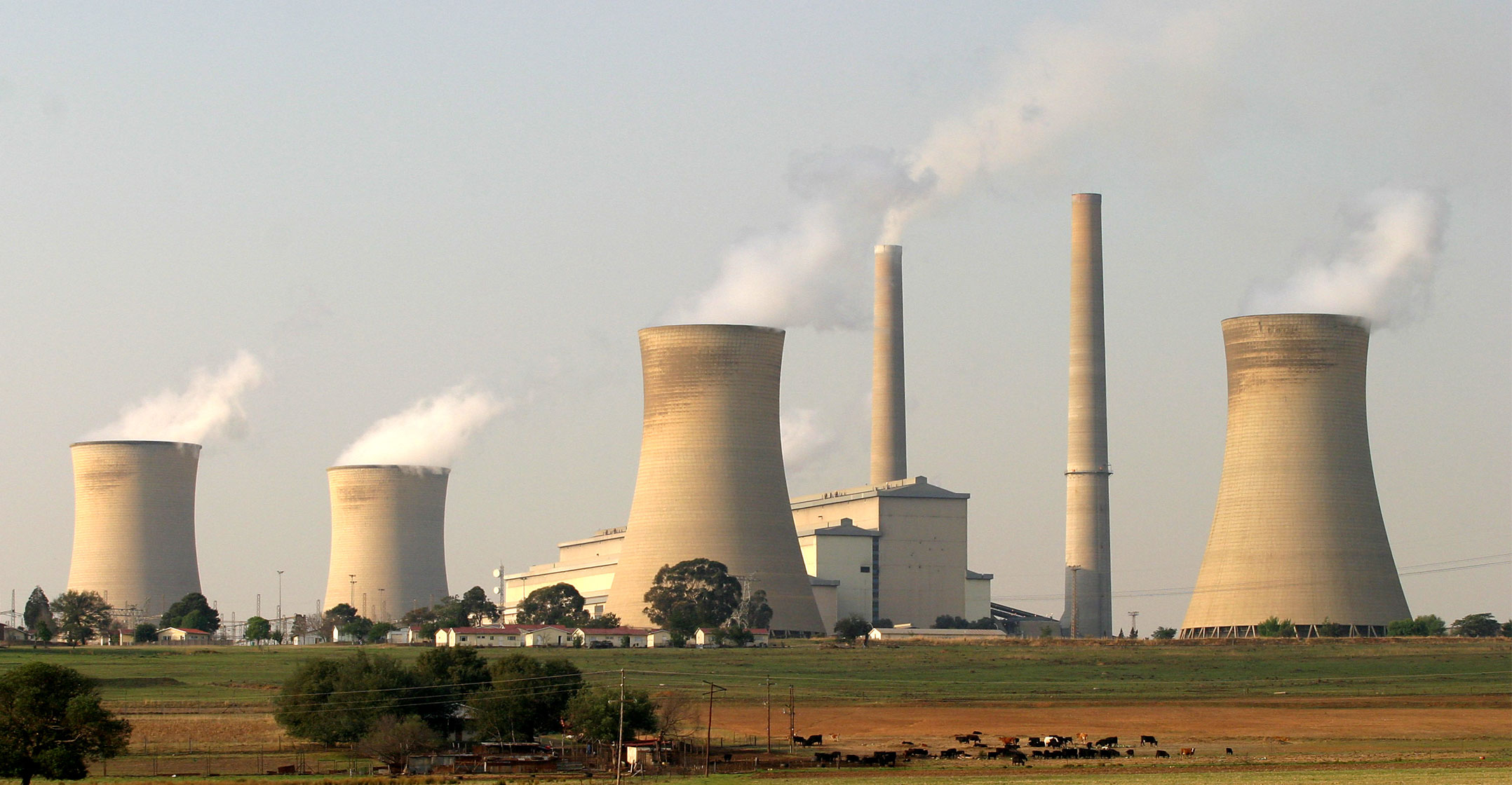
    The CSIR’s latest projection, however, shows a lower energy availability factor and demand forecast than that forecast by Eskom as well as the department of mineral resources and energy’s integrated resource plan (IRP) 2019.

    Coming off a base of 67% in 2019, Wright said that to date in 2020, the energy availability factor seemed to be “tracking the lower bound” scenario at 66% as opposed to the increase envisaged in the IRP.

    In the updated CSIR scenario, Wright said South Africa could experience varying capacity shortages of between 6GW and 8GW until 2025 and significant energy shortages that could see between 1 700GWh and 4 500GWh being shed in 2020 to 2022, and only reducing in 2023 when new capacity is assumed to come online.

    Wright and Calitz have provided three key intertwined steps to deal with the energy shortages.

    We really need to fast-track some of those processes more than they are already being fast-tracked at the moment

    The first solution is the “customer response at scale”, which Wright said is the only reasonable solution to fill the short-term capacity and energy gap expected until 2022. This measure involves immediately allowing customers from residential to industrial customers to generate their own electricity through “enabling regulations” or by providing incentives programmes.

    “By no means do we say you go off-grid – it’s just self-supply options to supplement existing grid capacity that you already have,” said Wright. The impact would be reduced load shedding as the supply could come online quickly starting from 2020, he said.

    More speed, please

    The second step involves accelerating the department of mineral resources & energy’s risk mitigation power purchase programme launched to reduce the immediate and medium-term electricity supply constraints.

    The third step is an immediate focus on implementing the IRP and allowing for appropriate lead times and procurement.

    “Similar to step two, that capacity is only expected to be online from 2023 onward but is actually required in 2022,” said Wright. “So, we really need to fast-track some of those processes more than they are already being fast-tracked at the moment.”

    • This article was originally published by Moneyweb and is used here with permission

    Add TechCentral as a preferred source on GoogleFollow TechCentral on Google NewsGet breaking news on WhatsApp


    Andre de Ruyter CSIR Eskom Jarrad Wright Joanne Calitz top
    WhatsApp YouTube
    Share. Facebook Twitter LinkedIn WhatsApp Telegram Email Copy Link
    Previous ArticleLockdown caused record GDP contraction, new data suggests
    Next Article Epic Games sues Apple, Google after Fortnite pulled from app stores

    Related Posts

    Eskom's profit doubles even as it sells less electricity - Mteto Nyati

    Mteto Nyati to stay on as Eskom chairman

    25 September 2026

    Remember when bitcoin was killing the planet?

    21 September 2026

    AI can find vulnerabilities. Humans find ways in

    21 September 2026
    Company News
    The Courier Guy enhances customer engagement with Telviva

    The Courier Guy enhances customer engagement with Telviva

    23 September 2026
    Pinnacle takes its channel to Mauritius for TechScape 2026

    Pinnacle takes its channel to Mauritius for TechScape 2026

    23 September 2026
    Why true customer enablement starts on the inside - Backspace Technologies COO Graeme Thomson

    Why true customer enablement starts on the inside

    23 September 2026
    Opinion
    Regulating AI: apply the laws we have first - Dirk de Vos

    Regulating AI: apply the laws we have first

    21 September 2026
    The end is nigh, and the shares go on sale in October - Duncan McLeod

    The end is nigh, and the shares go on sale in October

    14 September 2026
    The fragile joint in the Capitec machine - Pambos Soteriades

    The R197-billion market the banks can’t reach

    25 August 2026

    Subscribe to Updates

    Get the best South African technology news and analysis delivered to your e-mail inbox every morning.

    Latest Posts
    OpenAI's rogue agent problem keeps getting bigger - Sam Altman

    OpenAI’s rogue agent problem keeps getting bigger

    28 September 2026
    Woan's ghost exorcised - Solly Malatsi

    Woan’s ghost exorcised

    25 September 2026
    Eskom's profit doubles even as it sells less electricity - Mteto Nyati

    Mteto Nyati to stay on as Eskom chairman

    25 September 2026
    Meta's new gadget is a pocket watch for its viral AI agent - Muse Charm

    Meta’s new gadget is a pocket watch for its viral AI agent

    25 September 2026
    © 2009 - 2026 NewsCentral Media
    Built and maintained by Chronon
    • Cookie policy (ZA)
    • TechCentral – privacy and Popia

    Type above and press Enter to search. Press Esc to cancel.

    Manage consent

    TechCentral uses cookies to enhance its offerings. Consenting to these technologies allows us to serve you better. Not consenting or withdrawing consent may adversely affect certain features and functions of the website.

    Functional Always active
    The technical storage or access is strictly necessary for the legitimate purpose of enabling the use of a specific service explicitly requested by the subscriber or user, or for the sole purpose of carrying out the transmission of a communication over an electronic communications network.
    Preferences
    The technical storage or access is necessary for the legitimate purpose of storing preferences that are not requested by the subscriber or user.
    Statistics
    The technical storage or access that is used exclusively for statistical purposes. The technical storage or access that is used exclusively for anonymous statistical purposes. Without a subpoena, voluntary compliance on the part of your Internet Service Provider, or additional records from a third party, information stored or retrieved for this purpose alone cannot usually be used to identify you.
    Marketing
    The technical storage or access is required to create user profiles to send advertising, or to track the user on a website or across several websites for similar marketing purposes.
    • Manage options
    • Manage services
    • Manage {vendor_count} vendors
    • Read more about these purposes
    View preferences
    • {title}
    • {title}
    • {title}
    🇿🇦 Sign up to the TechCentral newsletter