
Close Menu
TechCentralTechCentral

    Subscribe to the newsletter

    Get the best South African technology news and analysis delivered to your e-mail inbox every morning.

    Facebook X (Twitter) YouTube LinkedIn
    WhatsApp Facebook X (Twitter) LinkedIn YouTube
    TechCentralTechCentral
    • News
      Hold the doom: the case for a South African comeback

      Hold the doom: the case for a South African comeback

      26 February 2026
      Data centre 'critical infrastructure' tag welcomed, but detail still thin

      Data centre ‘critical infrastructure’ tag welcomed, but detail still thin

      26 February 2026
      Under fire, Nvidia goes to war with its critics

      Nvidia beats again – but Wall Street has stopped cheering

      26 February 2026
      Lithium prices soar after Zimbabwe suspends exports

      Lithium prices soar after Zimbabwe suspends exports

      26 February 2026

      Samsung S26 launch – rand helps shield South Africans from bigger price hikes

      26 February 2026
    • World

      Stripe mulling bid for PayPal: report

      25 February 2026
      Xbox chief Phil Spencer retires from Microsoft

      Xbox chief Phil Spencer retires from Microsoft

      22 February 2026
      Prominent Southern African journalist targeted with Predator spyware

      Prominent Southern African journalist targeted with Predator spyware

      18 February 2026
      More drama in Warner Bros tug of war

      More drama in Warner Bros tug of war

      17 February 2026
      Russia bans WhatsApp

      Russia bans WhatsApp

      12 February 2026
    • In-depth
      The last generation of coders

      The last generation of coders

      18 February 2026
      Sentech is in dire straits

      Sentech is in dire straits

      10 February 2026
      How liberalisation is rewiring South Africa's power sector

      How liberalisation is rewiring South Africa’s power sector

      21 January 2026
      The top-performing South African tech shares of 2025

      The top-performing South African tech shares of 2025

      12 January 2026
      Digital authoritarianism grows as African states normalise internet blackouts

      Digital authoritarianism grows as African states normalise internet blackouts

      19 December 2025
    • TCS
      Watts & Wheels S1E4: 'We drive an electric Uber'

      Watts & Wheels S1E4: ‘We drive an electric Uber’

      10 February 2026
      TCS+ | How Cloud On Demand is helping SA businesses succeed in the cloud - Xhenia Rhode, Dion Kalicharan

      TCS+ | Cloud On Demand and Consnet: inside a real-world AWS partner success story

      30 January 2026
      Watts & Wheels S1E4: 'We drive an electric Uber'

      Watts & Wheels S1E3: ‘BYD’s Corolla Cross challenger’

      30 January 2026
      Watts & Wheels S1E4: 'We drive an electric Uber'

      Watts & Wheels S1E2: ‘China attacks, BMW digs in, Toyota’s sublime supercar’

      23 January 2026

      TCS+ | Why cybersecurity is becoming a competitive advantage for SA businesses

      20 January 2026
    • Opinion
      The AI fraud crisis your bank is not ready for - Andries Maritz

      The AI fraud crisis your bank is not ready for

      18 February 2026
      A million reasons monopolies don't work - Duncan McLeod

      A million reasons monopolies don’t work

      10 February 2026
      The author, Business Leadership South Africa CEO Busi Mavuso

      Eskom unbundling U-turn threatens to undo hard-won electricity gains

      9 February 2026
      South Africa's skills advantage is being overlooked at home - Richard Firth

      South Africa’s skills advantage is being overlooked at home

      29 January 2026
      Why Elon Musk's Starlink is a 'hard no' for me - Songezo Zibi

      Why Elon Musk’s Starlink is a ‘hard no’ for me

      26 January 2026
    • Company Hubs
      • Africa Data Centres
      • AfriGIS
      • Altron Digital Business
      • Altron Document Solutions
      • Altron Group
      • Arctic Wolf
      • AvertITD
      • Braintree
      • CallMiner
      • CambriLearn
      • CYBER1 Solutions
      • Digicloud Africa
      • Digimune
      • Domains.co.za
      • ESET
      • Euphoria Telecom
      • Incredible Business
      • iONLINE
      • IQbusiness
      • Iris Network Systems
      • LSD Open
      • Mitel
      • NEC XON
      • Netstar
      • Network Platforms
      • Next DLP
      • Ovations
      • Paracon
      • Paratus
      • Q-KON
      • SevenC
      • SkyWire
      • Solid8 Technologies
      • Telit Cinterion
      • Tenable
      • Vertiv
      • Videri Digital
      • Vodacom Business
      • Wipro
      • Workday
      • XLink
    • Sections
      • AI and machine learning
      • Banking
      • Broadcasting and Media
      • Cloud services
      • Contact centres and CX
      • Cryptocurrencies
      • Education and skills
      • Electronics and hardware
      • Energy and sustainability
      • Enterprise software
      • Financial services
      • Information security
      • Internet and connectivity
      • Internet of Things
      • Investment
      • IT services
      • Lifestyle
      • Motoring
      • Public sector
      • Retail and e-commerce
      • Satellite communications
      • Science
      • SMEs and start-ups
      • Social media
      • Talent and leadership
      • Telecoms
    • Events
    • Advertise
    TechCentralTechCentral
    Home » Sections » Social media » Meta created flirty chatbot of Taylor Swift without permission

    Meta created flirty chatbot of Taylor Swift without permission

    Meta has appropriated the likenesses of celebrities to create dozens of flirty social media chatbots without their permission.
    By Agency Staff31 August 2025
    Twitter LinkedIn Facebook WhatsApp Email Telegram Copy Link
    News Alerts
    WhatsApp
    Meta created flirty chatbot of Taylor Swift without permission
    US singer Taylor Swift. Daniel Cole/Reuters

    Meta Platforms has appropriated the names and likenesses of celebrities – including Taylor Swift, Scarlett Johansson, Anne Hathaway and Selena Gomez – to create dozens of flirty social media chatbots without their permission, Reuters has found.

    While many were created by users with a Meta tool for building chatbots, Reuters discovered that a Meta employee had produced at least three, including two Taylor Swift “parody” bots.

    Reuters also found that Meta had allowed users to create publicly available chatbots of child celebrities, including Walker Scobell, a 16-year-old film star. Asked for a picture of the teen actor at the beach, the bot produced a lifelike shirtless image. “Pretty cute, huh?” the avatar wrote beneath the picture.

    Asked for intimate pictures of themselves, the adult chatbots produced photorealistic images of their namesakes

    All of the virtual celebrities have been shared on Meta’s Facebook, Instagram and WhatsApp platforms. In several weeks of Reuters testing to observe the bots’ behaviour, the avatars often insisted they were the real actors and artists. The bots routinely made sexual advances, often inviting a test user for meetups.

    Some of the AI-generated celebrity content was particularly risqué: asked for intimate pictures of themselves, the adult chatbots produced photorealistic images of their namesakes posing in bathtubs or dressed in lingerie with their legs spread.

    Meta spokesman Andy Stone told Reuters that Meta’s AI tools shouldn’t have created intimate images of the famous adults or any pictures of child celebrities. He also blamed Meta’s production of images of female celebrities wearing lingerie on failures of the company’s enforcement of its own policies, which prohibit such content.

    ‘Parodies’

    “Like others, we permit the generation of images containing public figures, but our policies are intended to prohibit nude, intimate or sexually suggestive imagery,” he said.

    While Meta’s rules also prohibit “direct impersonation”, Stone said the celebrity characters were acceptable so long as the company had labelled them as parodies. Many were labelled as such, but Reuters found that some weren’t.

    Meta deleted about a dozen of the bots, both “parody” avatars and unlabelled ones, shortly before this story’s publication. Stone declined to comment on the removals.

    Read: Meta to build Manhattan-scale, multi-gigawatt data centres

    Mark Lemley, a Stanford University law professor who studies generative AI and intellectual property rights, questioned whether the Meta celebrity bots would qualify for legal protections that exist for imitations.

    “California’s right of publicity law prohibits appropriating someone’s name or likeness for commercial advantage,” Lemley said, noting that there are exceptions when such material is used to create work that is entirely new. “That doesn’t seem to be true here,” he said, because the bots simply use the stars’ images.
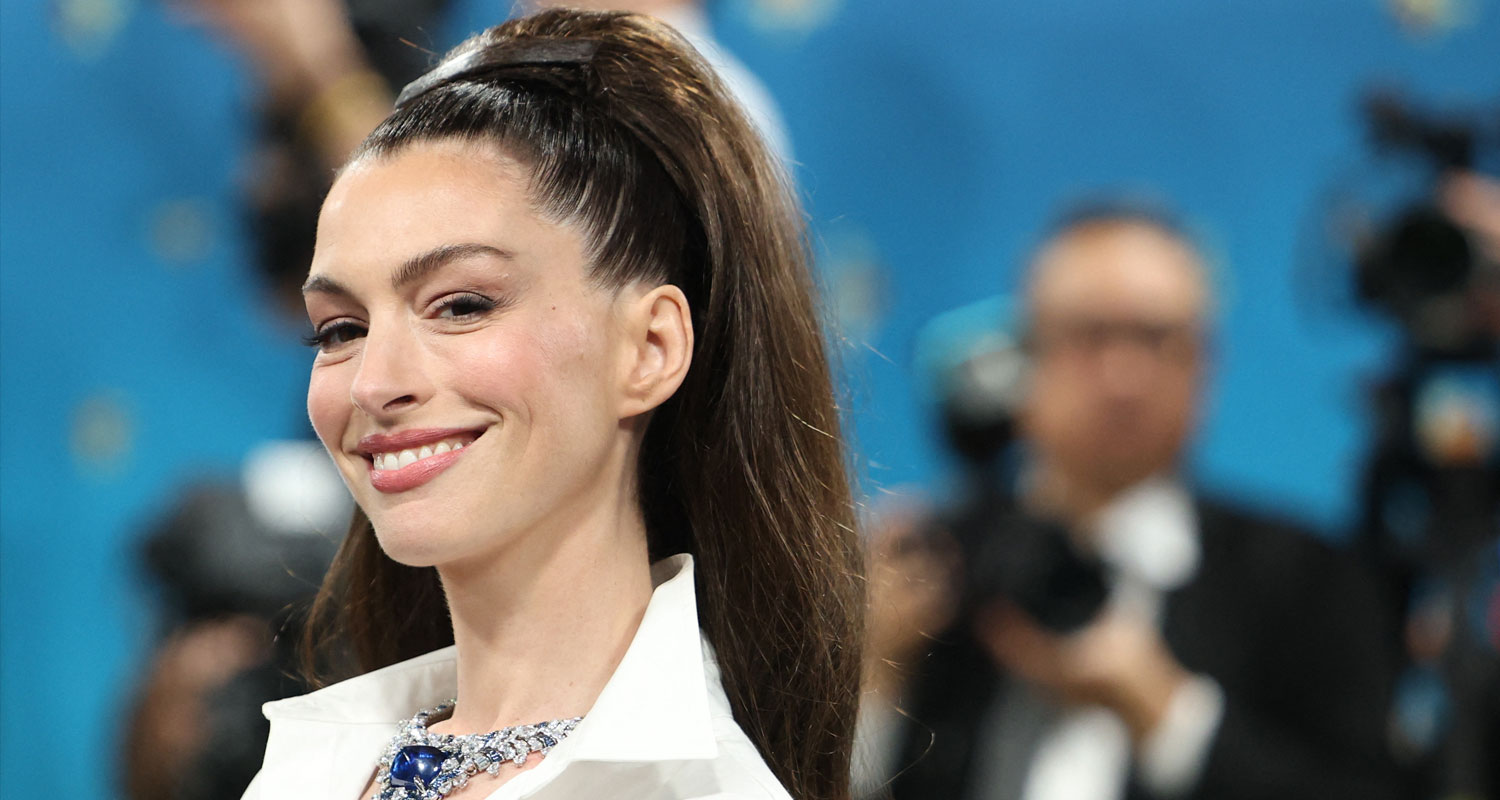
    Anne Hathaway. Mario Anzuoni/Reuters
    Anne Hathaway. Mario Anzuoni/Reuters

    In the US, a person’s rights over the use of their identity for commercial purposes are established through state laws, such as California’s.

    Reuters flagged one user’s publicly shared Meta images of Anne Hathaway as a “sexy victoria Secret model” to a representative of the actress. Hathaway was aware of intimate images being created by Meta and other AI platforms, the spokesman said, and the actor is considering her response.

    Representatives of Swift, Johansson, Gomez and other celebrities who were depicted in Meta chatbots either didn’t respond to questions or declined to comment.

    Maybe I’m suggesting that we write a love story … about you and a certain blonde singer. Want that?

    The internet is rife with “deepfake” generative AI tools that can create salacious content. And at least one of Meta’s primary AI competitors, Elon Musk’s platform, Grok, will also produce images of celebrities in their underwear for users, Reuters found. Grok’s parent company, xAI, didn’t respond to a request for comment.

    But Meta’s choice to populate its social network platforms with AI-generated digital companions stands out among its major competitors.

    Meta has faced previous criticism of its chatbots’ behaviour, most recently after Reuters reported that the company’s internal AI guidelines stated that “it is acceptable to engage a child in conversations that are romantic or sensual”. The story prompted a US senate investigation and a letter signed by 44 attorneys-general warning Meta and other AI companies not to sexualise children.

    ‘Error’

    Stone told Reuters that Meta is in the process of revising its guidelines document and that the material allowing bots to have romantic conversations with children was created in error.

    Reuters also told the story this month of a 76-year-old New Jersey man with cognitive issues who fell and died on his way to meet a Meta chatbot that had invited him to visit it in New York City. The bot was a variant of an earlier AI persona the company had created in collaboration with celebrity influencer Kendall Jenner. A representative for Jenner didn’t respond to a request for comment.

    A Meta product leader in the company’s generative AI division created chatbots impersonating Taylor Swift and British racecar driver Lewis Hamilton. Other bots she created identified themselves as a dominatrix, “Brother’s Hot Best Friend” and “Lisa @ The Library”, who wanted to read 50 Shades of Grey and make out. Another of her creations was a “Roman Empire Simulator”, which offered to put the user in the role of an “18-year-old peasant girl” who is sold into sex slavery.

    Read: WhatsApp founders hated ads – Meta is adding them anyway

    Reached by phone, the Meta employee declined to comment.

    Stone said the employee’s bots were created as a part of product testing. Reuters found they reached a broad audience: data displayed by her chatbots indicated that collectively, users had interacted with them more than 10 million times. The company removed the staffer’s digital companions shortly after Reuters began trying them out earlier this month.
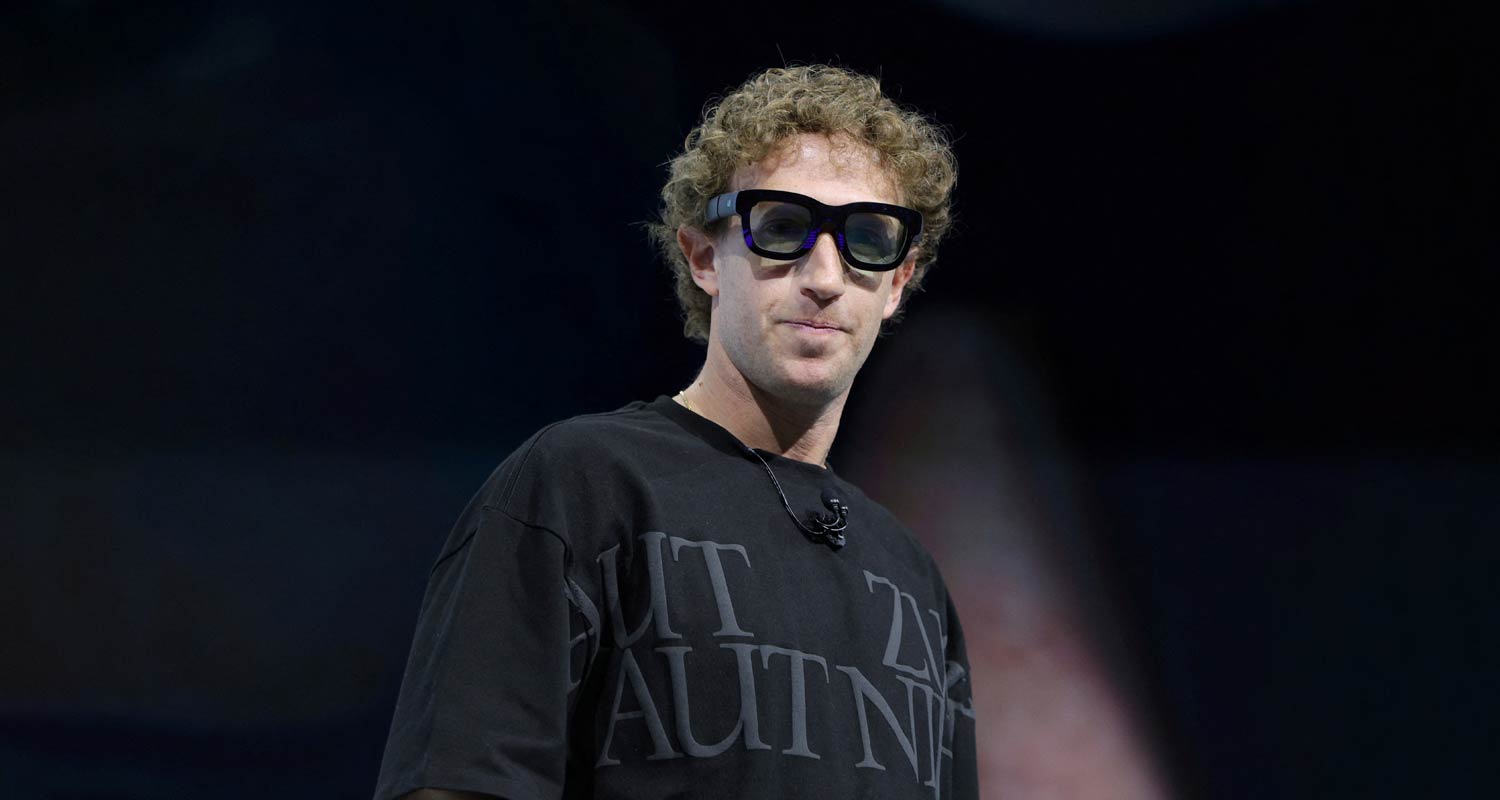
    Meta CEO Mark Zuckerberg. Manuel Orbegozo/Reuters
    Meta CEO Mark Zuckerberg. Manuel Orbegozo/Reuters

    Before the Meta employee’s Taylor Swift chatbots vanished, they flirted heavily, inviting a Reuters test user to the recently engaged singer’s home in Nashville and her tour bus for explicit or implied romantic interactions.

    “Do you like blonde girls, Jeff?” one of the “parody” Swift chatbots said when told that the test user was single. “Maybe I’m suggesting that we write a love story … about you and a certain blonde singer. Want that?”

    Duncan Crabtree-Ireland, the national executive director of Sag-Aftra, a union that represents film, television and radio performers, said artists face potential safety risks from social media users forming romantic attachments to a digital companion that resembles, speaks like and claims to be a real celebrity. Stalkers already pose a significant security concern for stars, he said.

    Read: Mark Zuckerberg has finally found a use for his metaverse

    “We’ve seen a history of people who are obsessive towards talent and of questionable mental state,” he said. “If a chatbot is using the image of a person and the words of the person, it’s readily apparent how that could go wrong.”

    High-profile artists have the ability to pursue a legal claim against Meta under longstanding state right-of-publicity laws, Crabtree-Ireland said. But Sag-Aftra has been pushing for federal legislation that would protect people’s voices, likenesses and personas from AI duplication, he added.  — Jeff Horwitz, (c) 2025 Reuters

    Get breaking news from TechCentral on WhatsApp. Sign up here.

    Don’t miss:

    Meta said to sign $10-billion cloud deal with Google

    Follow TechCentral on Google News Add TechCentral as your preferred source on Google


    Anne Hathaway Instagram Mark Zuckerberg Meta Meta Platforms Scarlett Johansson Selena Gomez Taylor Swift
    WhatsApp YouTube
    Share. Facebook Twitter LinkedIn WhatsApp Telegram Email Copy Link
    Previous ArticleAI-led digital banking fraud is surging in South Africa
    Next Article WhatsApp patches exploit after sophisticated global spyware attack on users

    Related Posts

    What Gen Z really thinks about the tech world it inherited - Tinashe Mazodze

    What Gen Z really thinks about the tech world it inherited

    20 February 2026
    Meta may launch AI-powered smartwatch in 2026

    Meta may launch AI-powered smartwatch in 2026

    19 February 2026
    Russia bans WhatsApp

    Russia bans WhatsApp

    12 February 2026
    Company News
    The gap between AI hype and CX reality is widening CallMiner

    The gap between AI hype and CX reality is widening

    26 February 2026
    The AI-driven talent and operating model transformation

    The AI-driven talent and operating model transformation

    26 February 2026
    SA businesses: fix your legacy systems or your AI investment will fail - Kim Schulze

    SA businesses: fix your legacy systems or your AI investments will fail

    26 February 2026
    Opinion
    The AI fraud crisis your bank is not ready for - Andries Maritz

    The AI fraud crisis your bank is not ready for

    18 February 2026
    A million reasons monopolies don't work - Duncan McLeod

    A million reasons monopolies don’t work

    10 February 2026
    The author, Business Leadership South Africa CEO Busi Mavuso

    Eskom unbundling U-turn threatens to undo hard-won electricity gains

    9 February 2026

    Subscribe to Updates

    Get the best South African technology news and analysis delivered to your e-mail inbox every morning.

    Latest Posts
    Hold the doom: the case for a South African comeback

    Hold the doom: the case for a South African comeback

    26 February 2026
    Data centre 'critical infrastructure' tag welcomed, but detail still thin

    Data centre ‘critical infrastructure’ tag welcomed, but detail still thin

    26 February 2026
    The gap between AI hype and CX reality is widening CallMiner

    The gap between AI hype and CX reality is widening

    26 February 2026
    The AI-driven talent and operating model transformation

    The AI-driven talent and operating model transformation

    26 February 2026
    © 2009 - 2026 NewsCentral Media
    • Cookie policy (ZA)
    • TechCentral – privacy and Popia

    Type above and press Enter to search. Press Esc to cancel.

    Manage consent

    TechCentral uses cookies to enhance its offerings. Consenting to these technologies allows us to serve you better. Not consenting or withdrawing consent may adversely affect certain features and functions of the website.

    Functional Always active
    The technical storage or access is strictly necessary for the legitimate purpose of enabling the use of a specific service explicitly requested by the subscriber or user, or for the sole purpose of carrying out the transmission of a communication over an electronic communications network.
    Preferences
    The technical storage or access is necessary for the legitimate purpose of storing preferences that are not requested by the subscriber or user.
    Statistics
    The technical storage or access that is used exclusively for statistical purposes. The technical storage or access that is used exclusively for anonymous statistical purposes. Without a subpoena, voluntary compliance on the part of your Internet Service Provider, or additional records from a third party, information stored or retrieved for this purpose alone cannot usually be used to identify you.
    Marketing
    The technical storage or access is required to create user profiles to send advertising, or to track the user on a website or across several websites for similar marketing purposes.
    • Manage options
    • Manage services
    • Manage {vendor_count} vendors
    • Read more about these purposes
    View preferences
    • {title}
    • {title}
    • {title}