Close Menu
TechCentralTechCentral

    Subscribe to the newsletter

    Get the best South African technology news and analysis delivered to your e-mail inbox every morning.

    Facebook X (Twitter) YouTube LinkedIn
    WhatsApp Facebook X (Twitter) LinkedIn YouTube
    TechCentralTechCentral
    • News
      MultiChoice scraps annual DStv price hikes for 2026 - David Mignot

      MultiChoice scraps annual DStv price hike

      20 February 2026
      What Gen Z really thinks about the tech world it inherited - Tinashe Mazodze

      What Gen Z really thinks about the tech world it inherited

      20 February 2026
      Showmax 'can't continue' in its current form

      Showmax ‘can’t continue’ in its current form

      20 February 2026
      Free Market Foundation slams treasury's proposed gambling tax

      Free Market Foundation slams treasury’s proposed gambling tax

      20 February 2026
      South Africa's dynamic spectrum breakthrough - Paul Colmer

      South Africa’s dynamic spectrum breakthrough

      20 February 2026
    • World
      Prominent Southern African journalist targeted with Predator spyware

      Prominent Southern African journalist targeted with Predator spyware

      18 February 2026
      More drama in Warner Bros tug of war

      More drama in Warner Bros tug of war

      17 February 2026
      Russia bans WhatsApp

      Russia bans WhatsApp

      12 February 2026
      EU regulators take aim at WhatsApp

      EU regulators take aim at WhatsApp

      9 February 2026
      Musk hits brakes on Mars mission

      Musk hits brakes on Mars mission

      9 February 2026
    • In-depth
      How liberalisation is rewiring South Africa's power sector

      How liberalisation is rewiring South Africa’s power sector

      21 January 2026
      The top-performing South African tech shares of 2025

      The top-performing South African tech shares of 2025

      12 January 2026
      Digital authoritarianism grows as African states normalise internet blackouts

      Digital authoritarianism grows as African states normalise internet blackouts

      19 December 2025
      TechCentral's South African Newsmakers of 2025

      TechCentral’s South African Newsmakers of 2025

      18 December 2025
      Black Friday goes digital in South Africa as online spending surges to record high

      Black Friday goes digital in South Africa as online spending surges to record high

      4 December 2025
    • TCS
      Watts & Wheels S1E4: 'We drive an electric Uber'

      Watts & Wheels S1E4: ‘We drive an electric Uber’

      10 February 2026
      TCS+ | How Cloud On Demand is helping SA businesses succeed in the cloud - Xhenia Rhode, Dion Kalicharan

      TCS+ | Cloud On Demand and Consnet: inside a real-world AWS partner success story

      30 January 2026
      Watts & Wheels S1E4: 'We drive an electric Uber'

      Watts & Wheels S1E3: ‘BYD’s Corolla Cross challenger’

      30 January 2026
      Watts & Wheels S1E4: 'We drive an electric Uber'

      Watts & Wheels S1E2: ‘China attacks, BMW digs in, Toyota’s sublime supercar’

      23 January 2026

      TCS+ | Why cybersecurity is becoming a competitive advantage for SA businesses

      20 January 2026
    • Opinion
      A million reasons monopolies don't work - Duncan McLeod

      A million reasons monopolies don’t work

      10 February 2026
      The author, Business Leadership South Africa CEO Busi Mavuso

      Eskom unbundling U-turn threatens to undo hard-won electricity gains

      9 February 2026
      South Africa's skills advantage is being overlooked at home - Richard Firth

      South Africa’s skills advantage is being overlooked at home

      29 January 2026
      Why Elon Musk's Starlink is a 'hard no' for me - Songezo Zibi

      Why Elon Musk’s Starlink is a ‘hard no’ for me

      26 January 2026
      A million reasons monopolies don't work - Duncan McLeod

      South Africa’s new fibre broadband battle

      20 January 2026
    • Company Hubs
      • Africa Data Centres
      • AfriGIS
      • Altron Digital Business
      • Altron Document Solutions
      • Altron Group
      • Arctic Wolf
      • AvertITD
      • Braintree
      • CallMiner
      • CambriLearn
      • CYBER1 Solutions
      • Digicloud Africa
      • Digimune
      • Domains.co.za
      • ESET
      • Euphoria Telecom
      • Incredible Business
      • iONLINE
      • IQbusiness
      • Iris Network Systems
      • LSD Open
      • Mitel
      • NEC XON
      • Netstar
      • Network Platforms
      • Next DLP
      • Ovations
      • Paracon
      • Paratus
      • Q-KON
      • SevenC
      • SkyWire
      • Solid8 Technologies
      • Telit Cinterion
      • Tenable
      • Vertiv
      • Videri Digital
      • Vodacom Business
      • Wipro
      • Workday
      • XLink
    • Sections
      • AI and machine learning
      • Banking
      • Broadcasting and Media
      • Cloud services
      • Contact centres and CX
      • Cryptocurrencies
      • Education and skills
      • Electronics and hardware
      • Energy and sustainability
      • Enterprise software
      • Financial services
      • Information security
      • Internet and connectivity
      • Internet of Things
      • Investment
      • IT services
      • Lifestyle
      • Motoring
      • Public sector
      • Retail and e-commerce
      • Satellite communications
      • Science
      • SMEs and start-ups
      • Social media
      • Talent and leadership
      • Telecoms
    • Events
    • Advertise
    TechCentralTechCentral
    Home » Sections » Energy and sustainability » Move aside, Nersa! Let the market set electricity prices

    Move aside, Nersa! Let the market set electricity prices

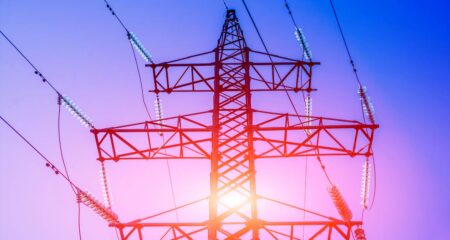
    A floating electricity price would help to alleviate the chronic shortage of power in South Africa.
    By David Ansara6 February 2023
    Twitter LinkedIn Facebook WhatsApp Email Telegram Copy Link
    News Alerts
    WhatsApp
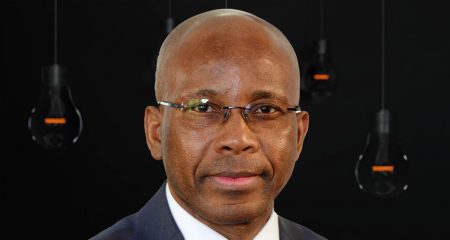
    The author, Free Market Foundation CEO David Ansara

    President Cyril Ramaphosa has pleaded with Eskom not to implement its planned 18.65% tariff hike in April this year. In a speech at the ANC’s Free State conference in Bloemfontein on 22 January, the President reportedly said to Eskom that “it will be an injury to our people if we implement the 18% now when we are going through load shedding. Put it in suspense for a while.”

    In doing so, Ramaphosa went against the Eskom executive team, as well as the National Energy Regulator of South Africa (Nersa), the regulatory body that granted Eskom the tariff hike in the first place. Eskom had initially requested an eye-wateringly high 32% increase.

    Some commentators have rightly pointed out that Ramaphosa is indulging in populist politics ahead of the general election in 2024 by interfering with the regulatory mandate of Nersa. However, I would go further and argue that it is this very “mandate” which is part of the problem with electricity provision in South Africa. It is, to borrow a phrase from the president, “injuring our people”.

    The more you interfere through regulatory decree, the greater the chances that price signals will be distorted

    On 12 January, Nersa approved a tariff of 173.80c/kWh for the 2023/2024 financial year (an 18.65% increase from 146.48c/kWh in the 2022/2023 financial year). For the following financial year of 2024/2025, Nersa permitted a tariff of 195.95c/kWh (a 12.74% increase).

    These tariff hikes have an air of mathematical precision about them. We can picture clever wonks in dark rooms at Nersa headquarters squinting at spreadsheets trying to determine the optimal price point for electricity.

    Was Eskom being unreasonable in its 32% application? Is Nersa being unfair with its 18.65% counteroffer? Why did Nersa settle on 18.65% and not, say, 18.55% or 18.75%?

    Nobody really knows the answers to these questions because the final price determination is not linked to the true cost of electricity production and distribution. Instead of the market, it is politicians and bureaucrats who determine the price of electricity. Consequently, no amount of modelling by Nersa’s number crunchers can account for the ever-fluctuating needs of a complex society of 60 million people.

    Political exercise

    That’s not to say that price modelling is always a futile exercise. Firms in a market economy regularly engage in price setting for their products or services. Banks, insurers or telecommunications companies typically employ actuaries, economists or data scientists to “discover” prices based on what their research reveals consumers will tolerate, weighed against the cost of production.

    Your local café probably doesn’t employ an in-house economist, but the café owner surely knows that no matter how delicious his bagels may be, very few people would be willing to pay R500 for one. The market simply would not bear it. Customers will look to buy cheaper bagels somewhere else. That is how markets normally work, but we are told by the government that the market for energy is different. It is not.

    Read: So, what exactly is going to happen to Eskom’s debt?

    Instead of responding to supply and demand, Eskom and Nersa negotiate between themselves what energy prices should be – a fundamentally political exercise. Is it any surprise that Ramaphosa sees fit to weigh in as the head of state? Politicians will do what politicians do.

    This is deeply unfair to South African consumers of electricity, who have no say in the matter. They cannot take their custom elsewhere because they are prohibited from doing so due to Eskom’s government-enforced monopoly status. The best consumers can hope for is to install a solar panel on their rooftop or to fire up a diesel generator – at an additional cost, of course.

    Prices are signals. Prices convey information about the underlying value of a product or service, based on the very subjective considerations of everyone directly or peripherally involved in the supply chain: producers; distributors; their own producers and distributors; and consumers.

    The more you interfere through regulatory decree, the greater the chances that price signals will be distorted. This makes it difficult for prospective investors to plan ahead and to decide whether they should allocate capital to costly long-term projects.

    Should an opposition coalition government come to power in 2024, it will have a long to-do list. Right near the top of this list should be opening the energy market to private electricity providers without prescribing which sources of energy to utilise. However, it won’t be sufficient to let independent power producers plug into the grid if electricity tariffs remain artificially fixed by the regulator.

    Read: Ramaphosa wants state of disaster to deal with Eskom crisis

    A floating electricity price would help to alleviate the chronic shortage of power in South Africa. Prices may go up in the short term, but over the longer term, greater efficiencies will be sought and prices would come down – and the great risk of centralising the whole of society’s electricity needs in a single entity will dissipate. Eskom’s monopoly must be broken, and so, too, must Nersa’s.

    • David Ansara is CEO of the Free Market Foundation

    Get TechCentral’s daily newsletter

    Follow TechCentral on Google News Add TechCentral as your preferred source on Google


    Cyril Ramaphosa David Ansara Eskom Free Market Foundation
    WhatsApp YouTube
    Share. Facebook Twitter LinkedIn WhatsApp Telegram Email Copy Link
    Previous ArticleBitcoin flirts with ‘golden cross’
    Next Article Dell to lay off 5% of its global workforce

    Related Posts

    Free Market Foundation slams treasury's proposed gambling tax

    Free Market Foundation slams treasury’s proposed gambling tax

    20 February 2026
    Not enough: Eskom unions spurn above-inflation wage offer

    Not enough: Eskom unions spurn above-inflation wage offer

    17 February 2026
    Blu Label lands energy trading licence from Nersa - Mark Levy

    Blu Label lands electricity trading licence from Nersa

    17 February 2026
    Company News
    Service is everyone's problem now - and that's exactly why the Atlassian Service Collection matters

    Service is everyone’s problem now – why the Atlassian Service Collection matters

    20 February 2026
    Customers have new expectations. Is your CX ready? 1Stream

    Customers have new expectations. Is your CX ready?

    19 February 2026
    South Africa's cybersecurity challenge is not a tool problem - Nicholas Applewhite, Trinexia South Africa

    South Africa’s cybersecurity challenge is not a tool problem

    19 February 2026
    Opinion
    A million reasons monopolies don't work - Duncan McLeod

    A million reasons monopolies don’t work

    10 February 2026
    The author, Business Leadership South Africa CEO Busi Mavuso

    Eskom unbundling U-turn threatens to undo hard-won electricity gains

    9 February 2026
    South Africa's skills advantage is being overlooked at home - Richard Firth

    South Africa’s skills advantage is being overlooked at home

    29 January 2026

    Subscribe to Updates

    Get the best South African technology news and analysis delivered to your e-mail inbox every morning.

    Latest Posts
    MultiChoice scraps annual DStv price hikes for 2026 - David Mignot

    MultiChoice scraps annual DStv price hike

    20 February 2026
    What Gen Z really thinks about the tech world it inherited - Tinashe Mazodze

    What Gen Z really thinks about the tech world it inherited

    20 February 2026
    Showmax 'can't continue' in its current form

    Showmax ‘can’t continue’ in its current form

    20 February 2026
    Free Market Foundation slams treasury's proposed gambling tax

    Free Market Foundation slams treasury’s proposed gambling tax

    20 February 2026
    © 2009 - 2026 NewsCentral Media
    • Cookie policy (ZA)
    • TechCentral – privacy and Popia

    Type above and press Enter to search. Press Esc to cancel.

    Manage consent

    TechCentral uses cookies to enhance its offerings. Consenting to these technologies allows us to serve you better. Not consenting or withdrawing consent may adversely affect certain features and functions of the website.

    Functional Always active
    The technical storage or access is strictly necessary for the legitimate purpose of enabling the use of a specific service explicitly requested by the subscriber or user, or for the sole purpose of carrying out the transmission of a communication over an electronic communications network.
    Preferences
    The technical storage or access is necessary for the legitimate purpose of storing preferences that are not requested by the subscriber or user.
    Statistics
    The technical storage or access that is used exclusively for statistical purposes. The technical storage or access that is used exclusively for anonymous statistical purposes. Without a subpoena, voluntary compliance on the part of your Internet Service Provider, or additional records from a third party, information stored or retrieved for this purpose alone cannot usually be used to identify you.
    Marketing
    The technical storage or access is required to create user profiles to send advertising, or to track the user on a website or across several websites for similar marketing purposes.
    • Manage options
    • Manage services
    • Manage {vendor_count} vendors
    • Read more about these purposes
    View preferences
    • {title}
    • {title}
    • {title}