Close Menu
TechCentralTechCentral

    Subscribe to the newsletter

    Get the best South African technology news and analysis delivered to your e-mail inbox every morning.

    Facebook X (Twitter) YouTube LinkedIn
    WhatsApp Facebook X (Twitter) LinkedIn YouTube
    TechCentralTechCentral
    • News
      The Post Office is out of options - Anoosh Rooplal

      The Post Office is out of options

      24 March 2026
      Namibia rejects Starlink

      Namibia rejects Starlink

      24 March 2026
      Optasia wants to do for banks what it did for telcos - Salvador Anglada

      Optasia wants to do for banks what it did for telcos

      24 March 2026
      Sanlam appoints group chief AI officer - Theo Mabaso

      Sanlam appoints group chief AI officer

      24 March 2026
      SA's digital economy is booming - but so is the fraud that comes with it - Nomvuyiso Batyi

      SA’s digital economy is booming – but so is the fraud that comes with it

      24 March 2026
    • World
      It's official: ads are coming to ChatGPT

      It’s official: ads are coming to ChatGPT

      23 March 2026
      Mystery Chinese AI model revealed to be Xiaomi's

      Mystery Chinese AI model revealed to be Xiaomi’s

      19 March 2026
      A mystery AI model has developers buzzing

      A mystery AI model has developers buzzing

      18 March 2026
      Samsung's trifold gamble ends in retreat

      Samsung’s trifold gamble ends in retreat

      17 March 2026
      Nvidia targets $1-trillion in AI chip sales as inference demand surges - Jensen Huang

      Nvidia targets $1-trillion in AI chip sales as inference demand surges

      17 March 2026
    • In-depth
      The last generation of coders

      The last generation of coders

      18 February 2026
      Sentech is in dire straits

      Sentech is in dire straits

      10 February 2026
      How liberalisation is rewiring South Africa's power sector

      How liberalisation is rewiring South Africa’s power sector

      21 January 2026
      The top-performing South African tech shares of 2025

      The top-performing South African tech shares of 2025

      12 January 2026
      Digital authoritarianism grows as African states normalise internet blackouts

      Digital authoritarianism grows as African states normalise internet blackouts

      19 December 2025
    • TCS
      Meet the CIO | HealthBridge CTO Anton Fatti on the future of digital health

      Meet the CIO | Healthbridge CTO Anton Fatti on the future of digital health

      23 March 2026
      TCS+ | Arctic Wolf unpacks the evolving threat landscape for SA businesses - Clare Loveridge and Jason Oehley

      TCS+ | Arctic Wolf unpacks the evolving threat landscape for SA businesses

      19 March 2026
      TCS+ | Vox Kiwi: a wireless solution promising a fibre-like experience - Theo van Zyl

      TCS+ | Vox Kiwi: a wireless solution promising a fibre-like experience

      13 March 2026
      TCS+ | Flipping the narrative on AI in the Global South - Josefin Rosén

      TCS+ | Flipping the narrative on AI in the Global South

      13 March 2026
      TCS | Sink or swim? Antony Makins on how AI is rewriting the rules of work

      TCS | Sink or swim? Antony Makins on how AI is rewriting the rules of work

      5 March 2026
    • Opinion
      South Africa's energy future hinges on getting wheeling right - Aishah Gire

      South Africa’s energy future hinges on getting wheeling right

      10 March 2026
      Hold the doom: the case for a South African comeback - Duncan McLeod

      Apple just dropped a bomb on the Windows world

      5 March 2026
      VC's centre of gravity is shifting - and South Africa is in the frame - Alison Collier

      VC’s centre of gravity is shifting – and South Africa is in the frame

      3 March 2026
      Hold the doom: the case for a South African comeback - Duncan McLeod

      Hold the doom: the case for a South African comeback

      26 February 2026
      The AI fraud crisis your bank is not ready for - Andries Maritz

      The AI fraud crisis your bank is not ready for

      18 February 2026
    • Company Hubs
      • 1Stream
      • Africa Data Centres
      • AfriGIS
      • Altron Digital Business
      • Altron Document Solutions
      • Altron Group
      • Arctic Wolf
      • Ascent Technology
      • AvertITD
      • Braintree
      • CallMiner
      • CambriLearn
      • CYBER1 Solutions
      • Digicloud Africa
      • Digimune
      • Domains.co.za
      • ESET
      • Euphoria Telecom
      • HOSTAFRICA
      • Incredible Business
      • iONLINE
      • IQbusiness
      • Iris Network Systems
      • LSD Open
      • Mitel
      • NEC XON
      • Netstar
      • Network Platforms
      • Next DLP
      • Ovations
      • Paracon
      • Paratus
      • Q-KON
      • SevenC
      • SkyWire
      • Solid8 Technologies
      • Telit Cinterion
      • Tenable
      • Vertiv
      • Videri Digital
      • Vodacom Business
      • Wipro
      • Workday
      • XLink
    • Sections
      • AI and machine learning
      • Banking
      • Broadcasting and Media
      • Cloud services
      • Contact centres and CX
      • Cryptocurrencies
      • Education and skills
      • Electronics and hardware
      • Energy and sustainability
      • Enterprise software
      • Financial services
      • HealthTech
      • Information security
      • Internet and connectivity
      • Internet of Things
      • Investment
      • IT services
      • Lifestyle
      • Motoring
      • Policy and regulation
      • Public sector
      • Retail and e-commerce
      • Satellite communications
      • Science
      • SMEs and start-ups
      • Social media
      • Talent and leadership
      • Telecoms
    • Events
    • Advertise
    TechCentralTechCentral
    Home » Top » Qualcomm’s licensing model is so 1990s

    Qualcomm’s licensing model is so 1990s

    By Agency Staff24 January 2017
    Twitter LinkedIn Facebook WhatsApp Email Telegram Copy Link
    News Alerts
    WhatsApp

    The fact that Qualcomm’s business model has survived two decades is as much a marvel of modern lawyering as one of modern technology.

    That Qualcomm is the leading player in global mobile development is beyond doubt. What has irked authorities in China, South Korea, the US and now Apple is what many see as the San Diego-based company’s strong-arm tactics in charging for that technology.

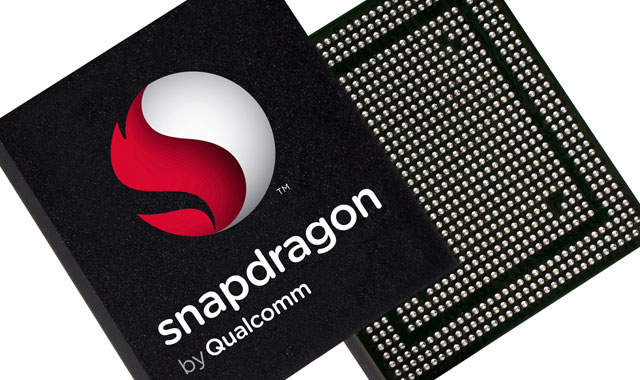
    While Qualcomm designs and sells chips used in cellphones — Snapdragon being its most famous one — the real money comes from its huge portfolio of patents that offers up a complete system for wireless communications. Licensees pay for the technology, no matter how much of it they actually use or whether they even buy Qualcomm chips.

    It’s a fantastic business model, one that Qualcomm is justifiably fighting to protect. While licensing accounts for only a third of revenue, behind the sale of chips, that business makes up almost three-quarters of its profit.

    The problem is that this model, and its tactics, are dated.

    Qualcomm’s breakthrough came in the 1990s when the scrappy little company’s CDMA technology became an official standard for cellular communications.

    Twenty years later, the industry has moved on. Qualcomm hasn’t

    Back then, phones were simple. Screens were small and monochrome, processors were slow and clunky and storage was not even a consideration. The cutting-edge technology really was in the wireless chips that connected them to networks and the methods the networks and handsets used to communicate with each other.

    Qualcomm’s licensing model was simple. It charged a percentage of the total cost of all components in the phone. This approach had advantages for everyone involved. It meant licensees and Qualcomm didn’t have to scrap over which parts of the phone did or didn’t use Qualcomm technology, so they could just go ahead and focus on the more important task of developing and selling these hip new gadgets.

    Qualcomm’s argument was that no matter what went in the phones, they wouldn’t work at all without its technology.

    Twenty years later, the industry has moved on. Qualcomm hasn’t.

    Displays, cameras, memory and even metal casings have become increasingly more expensive components of a phone, yet Qualcomm still expects to collect a “tax” on all of it no matter how much it contributes.

    It’s in this new paradigm that regulators and clients are pushing for change

    According to iSuppli, Apple’s iPhone 7 has total component costs of US$219,80 for the model with 32GB of storage. Assuming a licensing fee of 5%, Qualcomm receives $11 for every model Apple sells regardless of the fact that three of the most expensive items are the display (which Qualcomm doesn’t make), the Apple-designed processor and the radio chips whose suppliers include Intel, Broadcom and Skyworks Solutions.

    If Apple were to increase the storage to 128GB, Qualcomm’s revenue would increase accordingly despite the fact that it doesn’t even make storage chips. Increase the display size (and thus the cost), Qualcomm collects. A better camera: you guessed it, more money to Qualcomm.

    It’s in this new paradigm that regulators and clients are pushing for change. In their eyes, Qualcomm is contributing less and less to the device and ecosystem but still has the nerve to collect just as much.

    For a while it could be argued that nationalism was a huge driver behind both Asian nations’ cases against Qualcomm. One is a rising force in global technology, and the other is an established powerhouse fighting to protect its turf. But when the US regulator and the country’s largest company decide to pile on, it starts looking as if it’s time to roll the credits on Qualcomm’s licensing model.  — (c) 2017 Bloomberg LP

    Follow TechCentral on Google News Add TechCentral as your preferred source on Google


    Apple Broadcom Intel Qualcomm
    WhatsApp YouTube
    Share. Facebook Twitter LinkedIn WhatsApp Telegram Email Copy Link
    Previous ArticleNet1 buys stake in European bank
    Next Article SA start-up launches ‘Tinder for cars’

    Related Posts

    Major security alert for iPhone users

    Major security alert for iPhone users

    18 March 2026
    AI chip boom is pushing up costs for telecoms operators

    AI chip boom is pushing up costs for telecoms operators

    17 March 2026
    Samsung's trifold gamble ends in retreat

    Samsung’s trifold gamble ends in retreat

    17 March 2026
    Company News
    AnyDesk - high-performance remote access built for the modern enterprise

    AnyDesk – high-performance remote access built for the modern enterprise

    23 March 2026

    How South African executives can crack the AI ROI code

    20 March 2026
    Africa's first Nvidia RTX Pro GPU servers have landed

    Africa’s first Nvidia RTX Pro GPU servers have landed

    19 March 2026
    Opinion
    South Africa's energy future hinges on getting wheeling right - Aishah Gire

    South Africa’s energy future hinges on getting wheeling right

    10 March 2026
    Hold the doom: the case for a South African comeback - Duncan McLeod

    Apple just dropped a bomb on the Windows world

    5 March 2026
    VC's centre of gravity is shifting - and South Africa is in the frame - Alison Collier

    VC’s centre of gravity is shifting – and South Africa is in the frame

    3 March 2026

    Subscribe to Updates

    Get the best South African technology news and analysis delivered to your e-mail inbox every morning.

    Latest Posts
    The Post Office is out of options - Anoosh Rooplal

    The Post Office is out of options

    24 March 2026
    Namibia rejects Starlink

    Namibia rejects Starlink

    24 March 2026
    Optasia wants to do for banks what it did for telcos - Salvador Anglada

    Optasia wants to do for banks what it did for telcos

    24 March 2026
    Sanlam appoints group chief AI officer - Theo Mabaso

    Sanlam appoints group chief AI officer

    24 March 2026
    © 2009 - 2026 NewsCentral Media
    • Cookie policy (ZA)
    • TechCentral – privacy and Popia

    Type above and press Enter to search. Press Esc to cancel.

    Manage consent

    TechCentral uses cookies to enhance its offerings. Consenting to these technologies allows us to serve you better. Not consenting or withdrawing consent may adversely affect certain features and functions of the website.

    Functional Always active
    The technical storage or access is strictly necessary for the legitimate purpose of enabling the use of a specific service explicitly requested by the subscriber or user, or for the sole purpose of carrying out the transmission of a communication over an electronic communications network.
    Preferences
    The technical storage or access is necessary for the legitimate purpose of storing preferences that are not requested by the subscriber or user.
    Statistics
    The technical storage or access that is used exclusively for statistical purposes. The technical storage or access that is used exclusively for anonymous statistical purposes. Without a subpoena, voluntary compliance on the part of your Internet Service Provider, or additional records from a third party, information stored or retrieved for this purpose alone cannot usually be used to identify you.
    Marketing
    The technical storage or access is required to create user profiles to send advertising, or to track the user on a website or across several websites for similar marketing purposes.
    • Manage options
    • Manage services
    • Manage {vendor_count} vendors
    • Read more about these purposes
    View preferences
    • {title}
    • {title}
    • {title}