


Close Menu
TechCentralTechCentral

    Subscribe to the newsletter

    Get the best South African technology news and analysis delivered to your e-mail inbox every morning.

    Facebook X (Twitter) YouTube LinkedIn
    WhatsApp Facebook X (Twitter) LinkedIn YouTube
    TechCentralTechCentral
    • News
      AI is eating the world's memory - and we're all going to pay the price

      AI is eating the world’s memory – and we’re all going to pay the price

      22 January 2026
      New details emerge about Apple's big Siri overhaul

      New details emerge about Apple’s big Siri overhaul

      22 January 2026
      How liberalisation is rewiring South Africa's power sector

      How liberalisation is rewiring South Africa’s power sector

      21 January 2026
      South African digital radio trial is about to go live - Aldred Dreyer

      South African digital radio trial is about to go live

      21 January 2026
      Major change to telco licensing rules in Europe - Henna Virkkunen

      Major change to telco licensing rules in Europe

      21 January 2026
    • World
      Taiwan, US strike strategic AI and chip supply-chain pact - TSMC

      Taiwan, US strike strategic AI and chip supply-chain pact

      20 January 2026
      Wikipedia moves to monetise AI giants' reliance on its content

      Wikipedia moves to monetise AI giants’ reliance on its content

      15 January 2026
      Visa moves to plug stablecoins into the global payments system

      Visa moves to plug stablecoins into the global payments system

      15 January 2026
      Oracle sued as bondholders allege AI debt plans were hidden - Larry Ellison

      Oracle sued as bondholders allege AI debt plans were hidden

      15 January 2026
      Activists call for X, Grok to removed from app stores - Elon Musk

      Activists call for X, Grok to removed from app stores

      14 January 2026
    • In-depth
      The top-performing South African tech shares of 2025

      The top-performing South African tech shares of 2025

      12 January 2026
      Digital authoritarianism grows as African states normalise internet blackouts

      Digital authoritarianism grows as African states normalise internet blackouts

      19 December 2025
      TechCentral's South African Newsmakers of 2025

      TechCentral’s South African Newsmakers of 2025

      18 December 2025
      Black Friday goes digital in South Africa as online spending surges to record high

      Black Friday goes digital in South Africa as online spending surges to record high

      4 December 2025
      DStv dodges channel blackout in last-minute deal with Warner Bros

      Canal+ plays hardball – and DStv viewers feel the pain

      3 December 2025
    • TCS

      TCS+ | Why cybersecurity is becoming a competitive advantage for SA businesses

      20 January 2026
      TCS+ | Africa's digital transformation - unlocking AI through cloud and culture - Cliff de Wit Accelera Digital Group

      TCS+ | Cloud without culture won’t deliver AI: Accelera’s Cliff de Wit

      12 December 2025
      TCS+ | How Cloud on Demand helps partners thrive in the AWS ecosystem - Odwa Ndyaluvane and Xenia Rhode

      TCS+ | How Cloud On Demand helps partners thrive in the AWS ecosystem

      4 December 2025
      TCS | MTN Group CEO Ralph Mupita on competition, AI and the future of mobile

      TCS | Ralph Mupita on competition, AI and the future of mobile

      28 November 2025
      TCS | Dominic Cull on fixing South Africa's ICT policy bottlenecks

      TCS | Dominic Cull on fixing South Africa’s ICT policy bottlenecks

      21 November 2025
    • Opinion
      AI moves from pilots to production in South African companies - Nazia Pillay SAP

      AI moves from pilots to production in South African companies

      20 January 2026
      ANC's attack on Solly Malatsi shows how BEE dogma trumps economic reality - Duncan McLeod

      ANC’s attack on Solly Malatsi shows how BEE dogma trumps economic reality

      14 December 2025
      Netflix, Warner Bros deal raises fresh headaches for MultiChoice - Duncan McLeod

      Netflix, Warner Bros deal raises fresh headaches for MultiChoice

      5 December 2025
      BIN scans, DDoS and the next cybercrime wave hitting South Africa's banks - Entersekt Gerhard Oosthuizen

      BIN scans, DDoS and the next cybercrime wave hitting South Africa’s banks

      3 December 2025
      ANC's attack on Solly Malatsi shows how BEE dogma trumps economic reality - Duncan McLeod

      Your data, your hardware: the DIY AI revolution is coming

      20 November 2025
    • Company Hubs
      • Africa Data Centres
      • AfriGIS
      • Altron Digital Business
      • Altron Document Solutions
      • Altron Group
      • Arctic Wolf
      • AvertITD
      • Braintree
      • CallMiner
      • CambriLearn
      • CYBER1 Solutions
      • Digicloud Africa
      • Digimune
      • Domains.co.za
      • ESET
      • Euphoria Telecom
      • Incredible Business
      • iONLINE
      • IQbusiness
      • Iris Network Systems
      • LSD Open
      • NEC XON
      • Netstar
      • Network Platforms
      • Next DLP
      • Ovations
      • Paracon
      • Paratus
      • Q-KON
      • SevenC
      • SkyWire
      • Solid8 Technologies
      • Telit Cinterion
      • Tenable
      • Vertiv
      • Videri Digital
      • Vodacom Business
      • Wipro
      • Workday
      • XLink
    • Sections
      • AI and machine learning
      • Banking
      • Broadcasting and Media
      • Cloud services
      • Contact centres and CX
      • Cryptocurrencies
      • Education and skills
      • Electronics and hardware
      • Energy and sustainability
      • Enterprise software
      • Financial services
      • Information security
      • Internet and connectivity
      • Internet of Things
      • Investment
      • IT services
      • Lifestyle
      • Motoring
      • Public sector
      • Retail and e-commerce
      • Satellite communications
      • Science
      • SMEs and start-ups
      • Social media
      • Talent and leadership
      • Telecoms
    • Events
    • Advertise
    TechCentralTechCentral
    Home » Opinion » Ivo Vegter » Ramaphosa’s move to control mobile data prices is a grave mistake

    Ramaphosa’s move to control mobile data prices is a grave mistake

    By Ivo Vegter27 January 2021
    Twitter LinkedIn Facebook WhatsApp Email Telegram Copy Link
    News Alerts
    WhatsApp
    The author, Ivo Vegter, argues that introducing retail price controls in South Africa’s highly successful mobile market would be courting disaster

    President Cyril Ramaphosa has ordered his communications minister, Stella Ndabeni-Abrahams, to bring down mobile data prices by 50% by instituting direct controls on retail prices. This is a grave mistake.

    Since 2016, the #DataMustFall campaign, widely supported by some NGOs, industry associations such as the Internet Service Providers’ Association, and the general population on social media, has maintained that South Africa’s mobile operators charge excessively high prices for mobile data.

    Of course, for consumers, any price at all is “too high”. Everybody wants higher speeds, greater bandwidth and would like to pay less, or indeed, nothing at all.

    The mobile operators pioneered prepaid airtime and data, making mobile phones accessible to even the most credit-impaired people

    Using freed-up digital radio spectrum to provide free public Wi-Fi, instead of auctioning it to the highest bidder for commercial use, was among the demands of one such organisation, the Right2Know Campaign. It insisted on greater government control of the telecommunications sectors, and demanded that communications regulator Icasa, which regulates the sector, do more to “rein in telecoms companies”.

    It seems to have got its wish, and long may it live to regret it.

    Lost in the clamour is the recognition that the mobile operators almost single-handedly, and contrary to the expectations of government regulators, brought widespread telephony and Internet access to the masses.

    Toys for the rich

    Government policy was to grant Telkom a monopoly to bring universal service to the masses using fixed lines. It dismissed mobile telephones as a toy for the rich, and gladly handed licences to the private sector.

    Government’s strategy failed spectacularly, and the private sector succeeded beyond all expectations. The mobile operators pioneered prepaid airtime and data, making mobile phones accessible to even the most credit-impaired people.

    Fixed-line coverage never exceeded the low millions. Yet by 2019, according to Icasa, mobile 3G coverage reached 99.7% of the population, while 4G coverage was available to 92.8% of South Africa’s people.

    Smartphones, which in 2016 were available to only 43.5% of the population, by 2019 reached 91.2%. There were some 82 million active prepaid subscriptions in 2019, and a further 14.5 million contract subscriptions, together covering the South African population almost twice over.
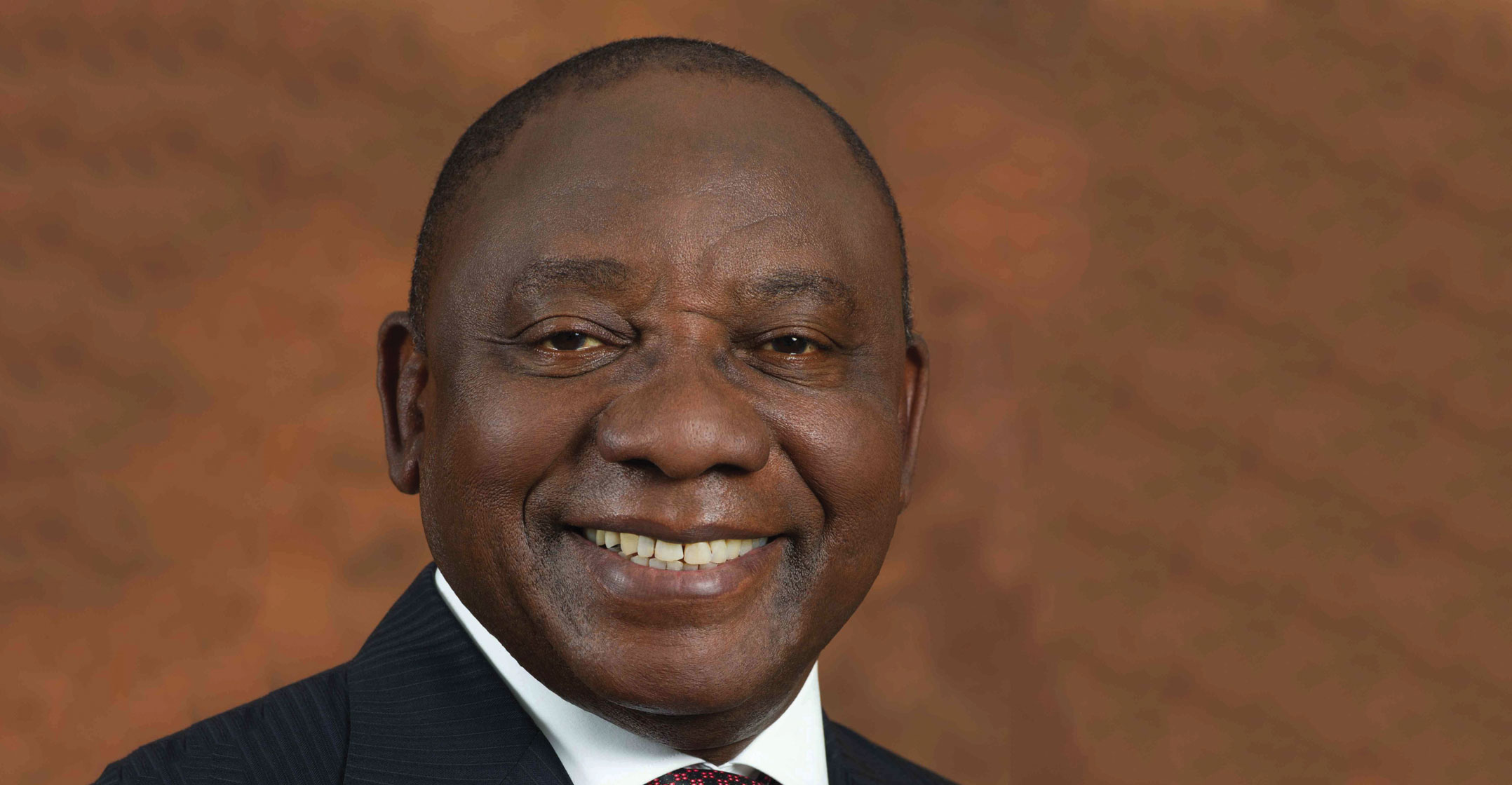
    President Cyril Ramaphosa. Image: GCIS

    It is rare to find any employed person who doesn’t own a mobile phone today.

    Mobile data subscriptions rose from 50 million in 2016 to 78 million in 2019. A compound annual growth rate of 16% in a depressed economy does not exactly scream “too expensive”.

    Yet that is exactly what the Competition Commission found in its Data Services Market Inquiry of 2019. It claims that South Africa ranks poorly in International Telecommuncation Union comparisons across a worldwide selection of countries, but the chart it published suggests local data prices are not much higher than the median, and are lower than those in many other countries, including developed countries such as the US, Germany and Belgium. They are also cheaper than data in Canada, New Zealand and Switzerland.

    It makes simplistic comparisons to other African countries, but it appears to have gone to no effort to assess the myriad factors that could account for differences in costs, network quality and prices, saying merely that South African operators have “failed to demonstrate” that these factors account for price differentials.

    Many African countries are smaller, have a higher population density and only have 4G coverage in some urban areas

    Among these factors are population density, country size, telecoms regulations, licensing fees, subsidies, spectrum availability and quality of service. Many African countries, for example, are smaller, have a higher population density and only have 4G coverage in some urban areas.

    South Africa has a population density of 48 people per square kilometre, which is lower than in most countries with lower prices. In Ghana, it’s 127, in Nigeria it’s 218, in Uganda it’s 166 and in Rwanda it’s 470. Even in Lesotho, which consists mostly of sparsely populated mountains, it’s 75, which is higher than in South Africa.

    India, which has the cheapest data in the world, has a population density of 417 people per square kilometre, so each cell tower can serve almost 10 times as many customers as in South Africa.

    Superior coverage

    Both Vodacom and MTN spend considerably more on capital per subscriber in South Africa than in other African countries, and this is reflected in their far superior network coverage and speeds here.

    It should also be noted that both Vodacom and MTN have substantially reduced their data prices in the last decade. A 1GB package in 2010 would cost you R289 on both networks. In 2020, that package cost R149 on MTN and R115 on Vodacom. Other packages saw similar price decreases over the same period.

    The Competition Commission found none of these arguments compelling. It also claims that there is an anti-poor bias in pricing packages. However, this makes little sense from the point of view of the exploitative robber baron.

    If one wanted to gouge customers, better to gouge the rich, who have lots of money from which they can be parted. This suggests that there are other factors at play than simple greed, such as service costs and revenue stream certainty.
    Threatened with prosecution, the mobile operators all agreed to slash data prices in 2020, primarily on their low-end packages. Vodacom was the first to buckle, announcing cuts of up to 40% on selected packages from 1 April 2020, taking a R2.7-billion, or 10%, hit to its revenue.

    Although the Competition Commission made no findings against Cell C, it, too, signed a voluntary data price agreement hot on the heels of the Vodacom announcement. MTN initially promised to cut prices in May 2020, and eventually did so in June of that year.

    Despite these concessions, Ramaphosa in December 2020 ordered Ndabeni-Abrahams to ensure mobile data prices are slashed again, this time by 50%. To achieve this, the department has been directed to institute direct regulatory controls on retail prices.

    Price is a signal between buyers and sellers that balances supply with demand. The effect of price controls is always to create surpluses or shortages

    The consequences of such a step will be grave. Price is a signal between buyers and sellers that balances supply with demand. The effect of price controls is always to create surpluses or shortages. If prices are forced artificially high, there will be excess capacity. If prices are forced artificially low, capacity and network quality will constrained.

    The only way in which mobile operators can respond to being forced to slash prices is by cutting their investment in network infrastructure, with the result that South Africa’s mobile network quality, far from being the envy of the continent, will become spotty, unreliable and slow.

    Already, Cell C has given up on maintaining its own network infrastructure, instead trying to turn around the company’s dismal performance by piggybacking on the MTN network.

    Policy options

    Instead of blaming mobile operators for high prices and summarily dictate prices to them, the government has several policy options that would significantly improve data pricing without violating free-market principles.

    The most significant of these is to proceed with the long-overdue auction of spectrum released by the migration to digital terrestrial television. The switch from analogue television was supposed to have been completed nearly a decade ago. It is still not done.

    Significant amounts of spectrum have been available for years, but the delay in making it available to mobile operators has dragged on for years. Just when it seemed the sale might take place by the end of March 2021, Telkom filed court papers to have the process stopped, citing the nonviability of some of the frequency bands and the lack of competition in the market.

    This is rich coming from Telkom, which owns more spectrum than any other telecoms operator, dominated the telecoms market for years, and still enjoys monopoly power over significant portions of South Africa’s fixed network infrastructure.
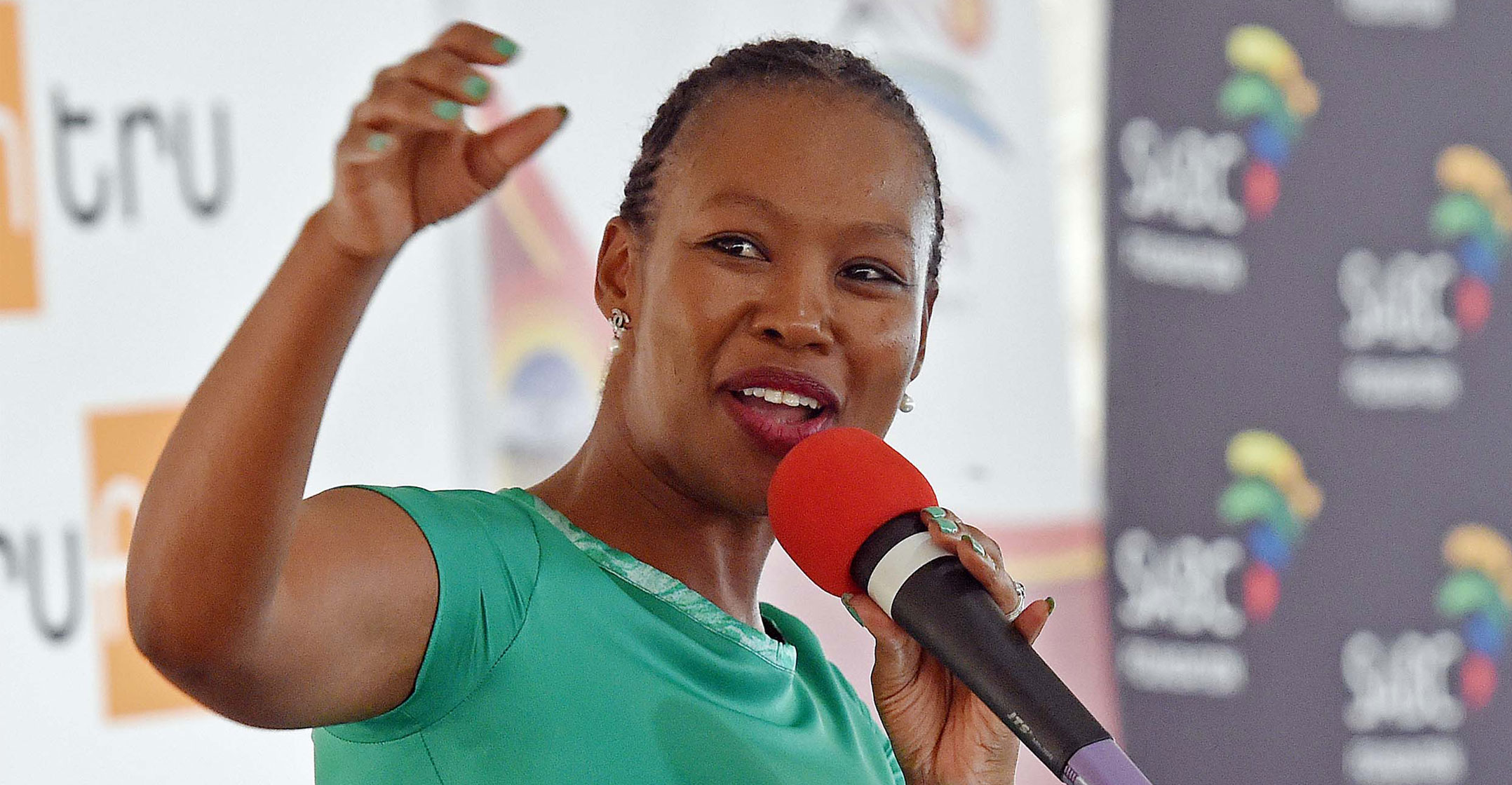
    Stella Ndabeni-Abrahams … ordered by the president to cut retail mobile data prices

    Other policy interventions have been proposed. The Internet Service Providers’ Association has suggested establishing a wholesale market for mobile data, much like the regulator did with fixed-line data to combat the exorbitant pricing when Telkom monopolised that market. This would require infrastructure companies to sell mobile data to ISPs at the same discount that they would do internally to their own ISP divisions. By stimulating competition among ISPs, it is hoped to bring retail prices down, as it did for fixed-line data in the days of ADSL.

    Such a policy cannot be justified, however. Unlike in the Telkom monopoly days, there are now six mobile network operators, making the space fairly competitive already. Further licences could be issued, but only the release of significantly more spectrum can truly stimulate price competition.

    Forcing large operators to sell access to their infrastructure at wholesale prices would disadvantage those that invested heavily in infrastructure, to benefit those that placed little capital at risk, and would in any case have limited impact on consumer prices.

    A rash move by government to control retail prices would do critical damage to South Africa’s mobile data networks. One cannot fix failed over-regulation with more regulation. It is critical that government release and auction off radio spectrum as soon as possible, but then leave the market free to innovate in how they use it.
    What the mobile market has always needed was more freedom, not more government control.

    • Ivo Vegter is a freelance journalist, columnist and speaker who loves debunking myths and misconceptions, and addresses topics from the perspective of individual liberty and free markets. This article was commissioned by the Free Market Foundation



    Cyril Ramaphosa Icasa Ispa Ivo Vegter Right2Know Campaign Stella Ndabeni-Abrahams top
    WhatsApp YouTube Follow on Google News Add as preferred source on Google
    Share. Facebook Twitter LinkedIn WhatsApp Telegram Email Copy Link
    Previous ArticleMicrosoft earnings soar on cloud demand, Xbox sales
    Next Article MTN sues Icasa over 5G spectrum auction plan

    Related Posts

    Icasa to target Sentech with tougher broadcast pricing rules

    Icasa to target Sentech with tougher broadcast pricing rules

    19 January 2026
    South Africa's telecoms sector enters a new growth phase

    South Africa’s telecoms sector enters a new growth phase

    19 January 2026
    Telecoms industry backs Malatsi policy directive, warns on execution - ACT CEO Nomvuyiso Batyi

    Telecoms industry backs Malatsi policy directive, warns on execution

    17 December 2025
    Company News
    Trends that are shaping the use of AI to improve CX - Telviva

    Trends that are shaping the use of AI to improve CX

    22 January 2026
    The tech transformation of sports betting

    The tech transformation of sports betting

    21 January 2026
    How Norton is protecting digital lives in a hostile online world - Avert ITD Avert IT Distribution

    How Norton is protecting digital lives in a hostile online world

    20 January 2026
    Opinion
    AI moves from pilots to production in South African companies - Nazia Pillay SAP

    AI moves from pilots to production in South African companies

    20 January 2026
    ANC's attack on Solly Malatsi shows how BEE dogma trumps economic reality - Duncan McLeod

    ANC’s attack on Solly Malatsi shows how BEE dogma trumps economic reality

    14 December 2025
    Netflix, Warner Bros deal raises fresh headaches for MultiChoice - Duncan McLeod

    Netflix, Warner Bros deal raises fresh headaches for MultiChoice

    5 December 2025

    Subscribe to Updates

    Get the best South African technology news and analysis delivered to your e-mail inbox every morning.

    Latest Posts
    AI is eating the world's memory - and we're all going to pay the price

    AI is eating the world’s memory – and we’re all going to pay the price

    22 January 2026
    Trends that are shaping the use of AI to improve CX - Telviva

    Trends that are shaping the use of AI to improve CX

    22 January 2026
    New details emerge about Apple's big Siri overhaul

    New details emerge about Apple’s big Siri overhaul

    22 January 2026
    How liberalisation is rewiring South Africa's power sector

    How liberalisation is rewiring South Africa’s power sector

    21 January 2026
    © 2009 - 2026 NewsCentral Media
    • Cookie policy (ZA)
    • TechCentral – privacy and Popia

    Type above and press Enter to search. Press Esc to cancel.

    Manage consent

    TechCentral uses cookies to enhance its offerings. Consenting to these technologies allows us to serve you better. Not consenting or withdrawing consent may adversely affect certain features and functions of the website.

    Functional Always active
    The technical storage or access is strictly necessary for the legitimate purpose of enabling the use of a specific service explicitly requested by the subscriber or user, or for the sole purpose of carrying out the transmission of a communication over an electronic communications network.
    Preferences
    The technical storage or access is necessary for the legitimate purpose of storing preferences that are not requested by the subscriber or user.
    Statistics
    The technical storage or access that is used exclusively for statistical purposes. The technical storage or access that is used exclusively for anonymous statistical purposes. Without a subpoena, voluntary compliance on the part of your Internet Service Provider, or additional records from a third party, information stored or retrieved for this purpose alone cannot usually be used to identify you.
    Marketing
    The technical storage or access is required to create user profiles to send advertising, or to track the user on a website or across several websites for similar marketing purposes.
    • Manage options
    • Manage services
    • Manage {vendor_count} vendors
    • Read more about these purposes
    View preferences
    • {title}
    • {title}
    • {title}