

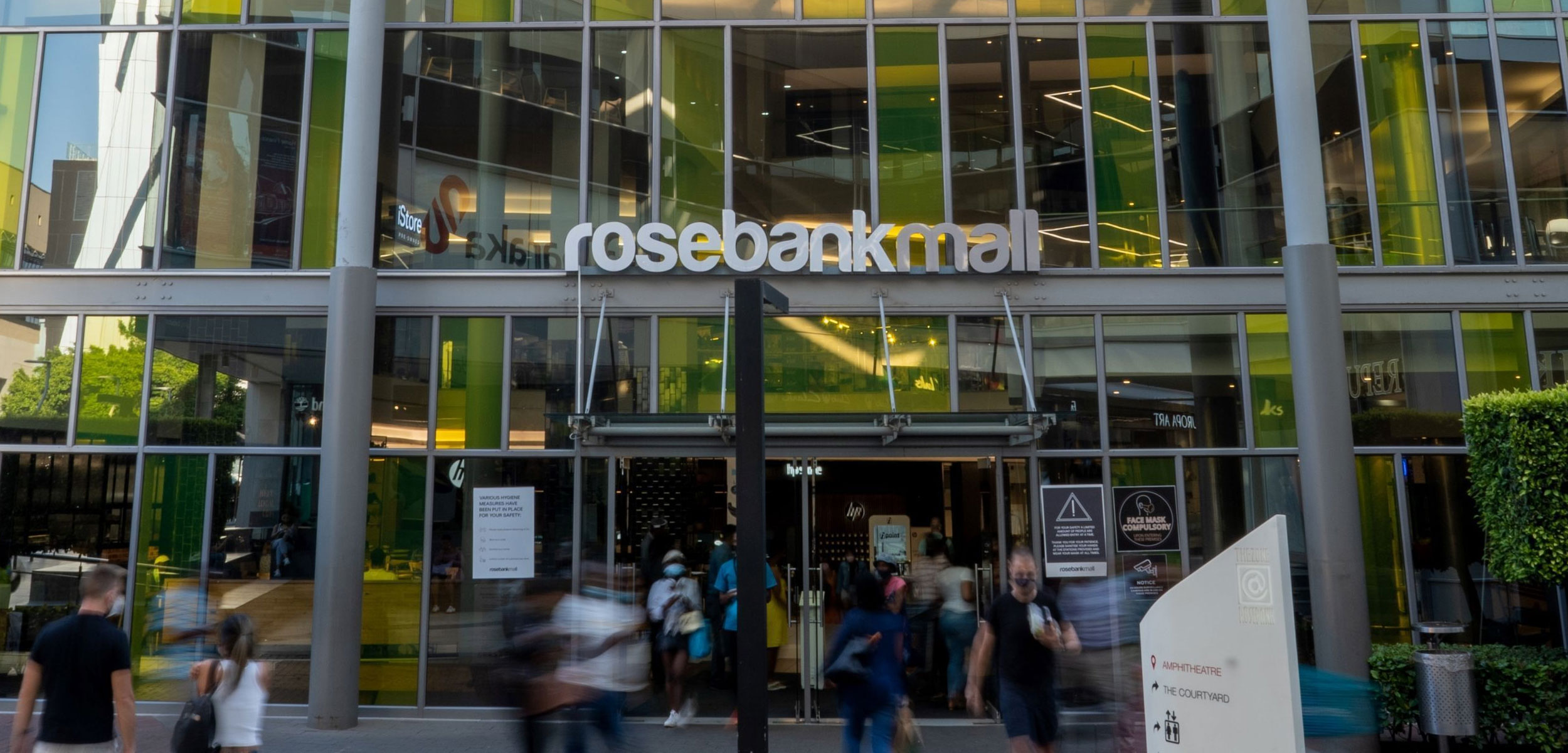
The popular Rosebank Mall in Johannesburg has unveiled a gigantic new hybrid energy system comprising 1.3MW of solar power, a 7.2MWh battery system, a 4.5MW inverter and three 1MW dual-fuel diesel/gas generators.
According to Wally Weber of Blackdot Energy and project manager for the Rosebank Mall implementation, the system is managed by a real-time telemetry platform that chooses the most cost-effective combination of energy sources to use an any given time.
“Hyprop wanted a solution that merges financial return with energy investment,” said Weber in an on-site interview with TechCentral on Tuesday. Hyprop has not disclosed how much it has spent on the project.
“Now that we have multiple technology platforms – battery, diesel, gas, council power and solar PV – if diesel prices were to change and gas were to become more competitive, we could lean into that. We use solar PV on sunny days, but if it gets cloudy the system will shift to the next-best technology. It all about moving into a new mindset, about energy arbitrage.”
Weber explained that the system uses grid power to charge the batteries at night when demand is low. During peak demand in the early morning, battery power is dispensed to ease strain on the grid.
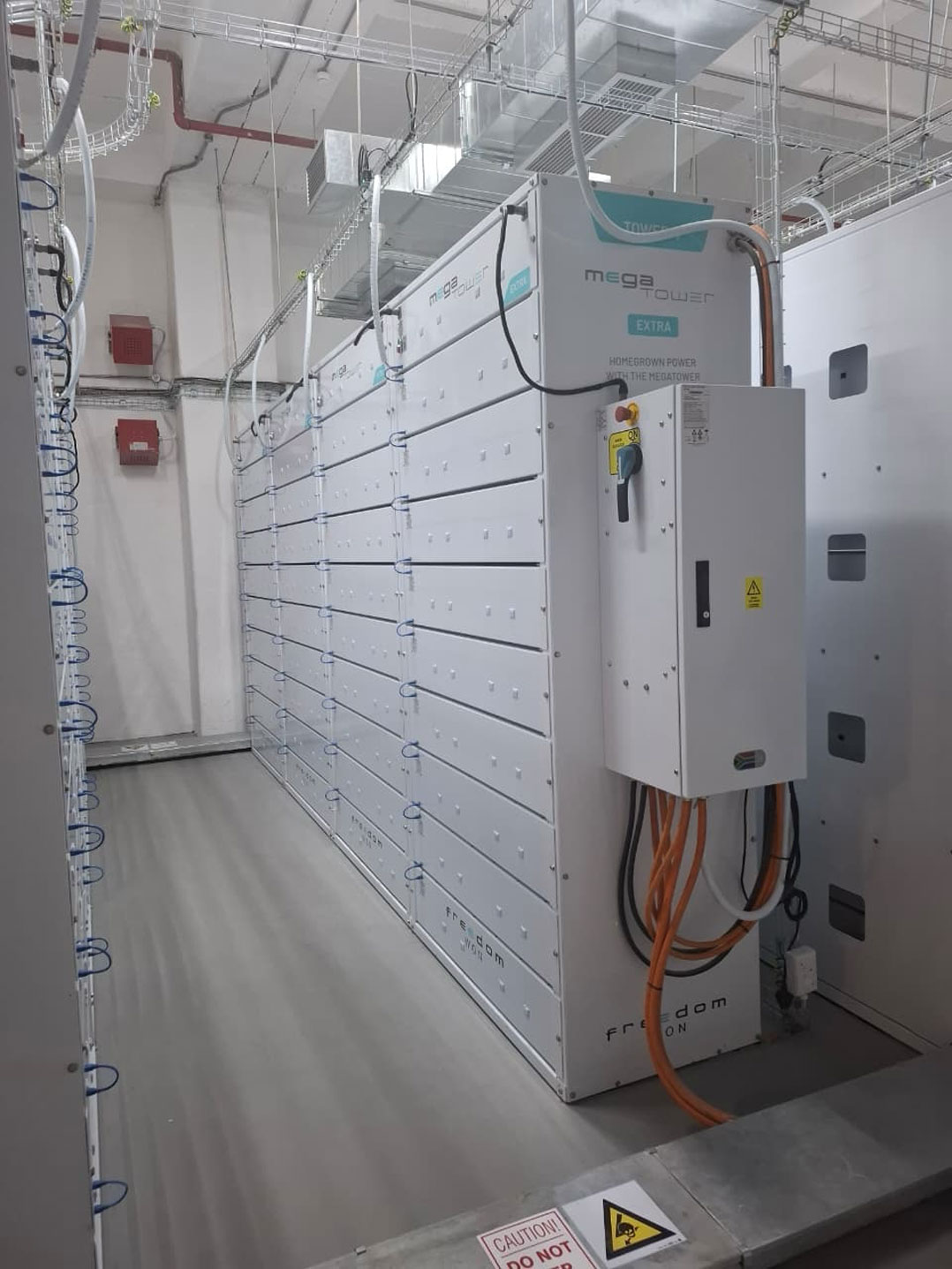
Anthony English, founder and chief technology officer of Freedom Won – the company that supplied the mall’s battery system – said the series of 1.5MWh battery towers run 1.2kV of direct current, which it then runs through a series of three 1.4MW inverters connected using busbars.
Beating peak tariffs
“You might not have enough power to fully recharge the batteries during the day because you don’t want to go over your peak demand, but you also don’t want to use grid power during the day because that is either the peak or standard tariff,” said English.
The system tries to make use of as much solar capacity as it can during the day when sunshine is abundant. The solar system also helps charge the batteries up again during the day in preparation of the early evening peak in demand.
Read: Eskom targets 32GW green energy shift by 2040
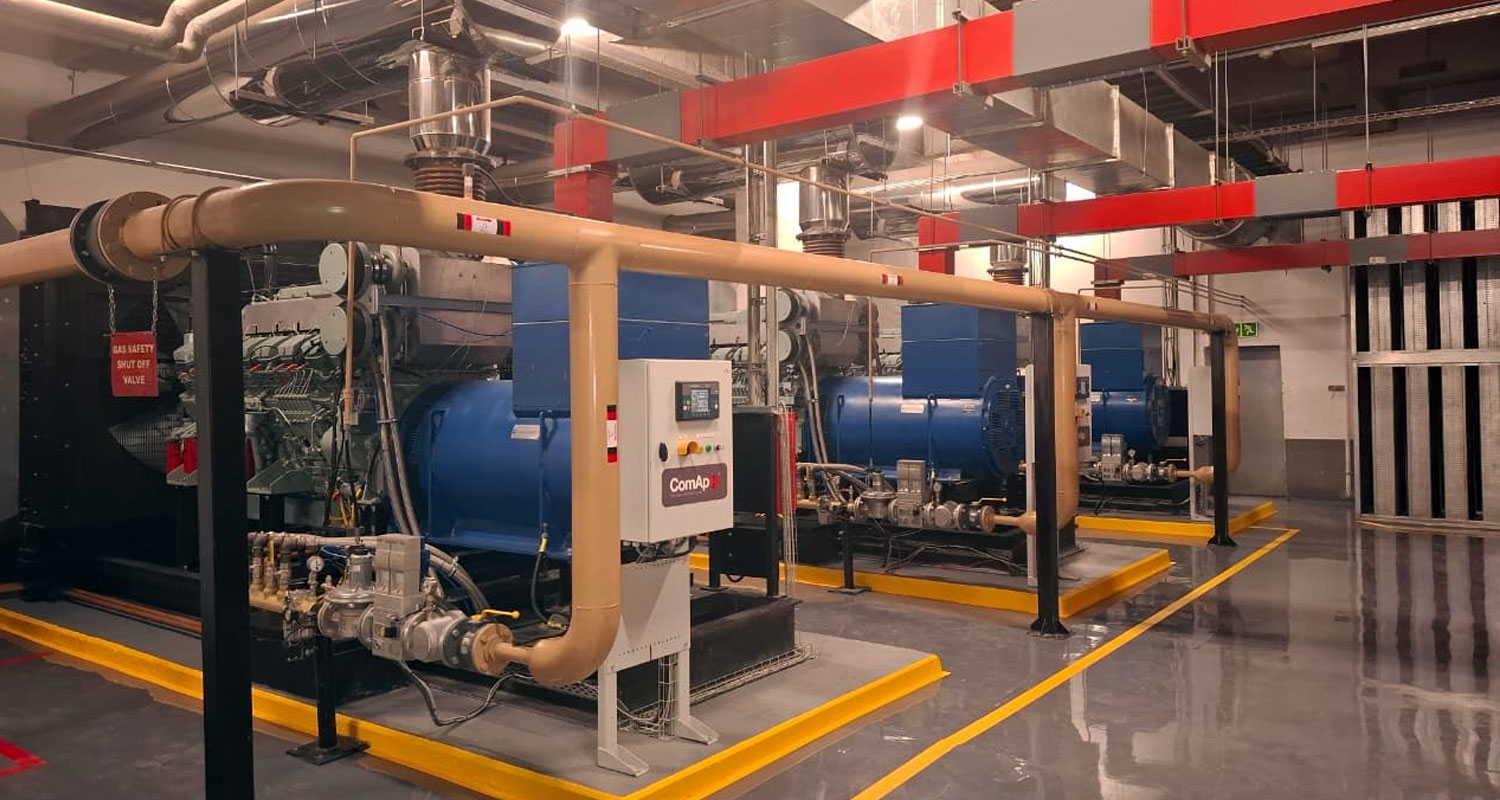
Since the energy produced by solar panels varies throughout the day, three dual-fuel generators are used to provide backup. The combination of diesel and natural gas, instead of the more expensive diesel alone, means the system can produce energy at a lower tariff, making it cheaper than using grid power during peak periods.
The entire system – solar, batteries and generators – is controlled by a real-time telemetry decision-making module supplied by a company called ComAp. Each component supplies its power to a transformer which converts the electrical signals to 11kV before it is distributed to various stepdown transformers around the mall precinct.
…article continues below…
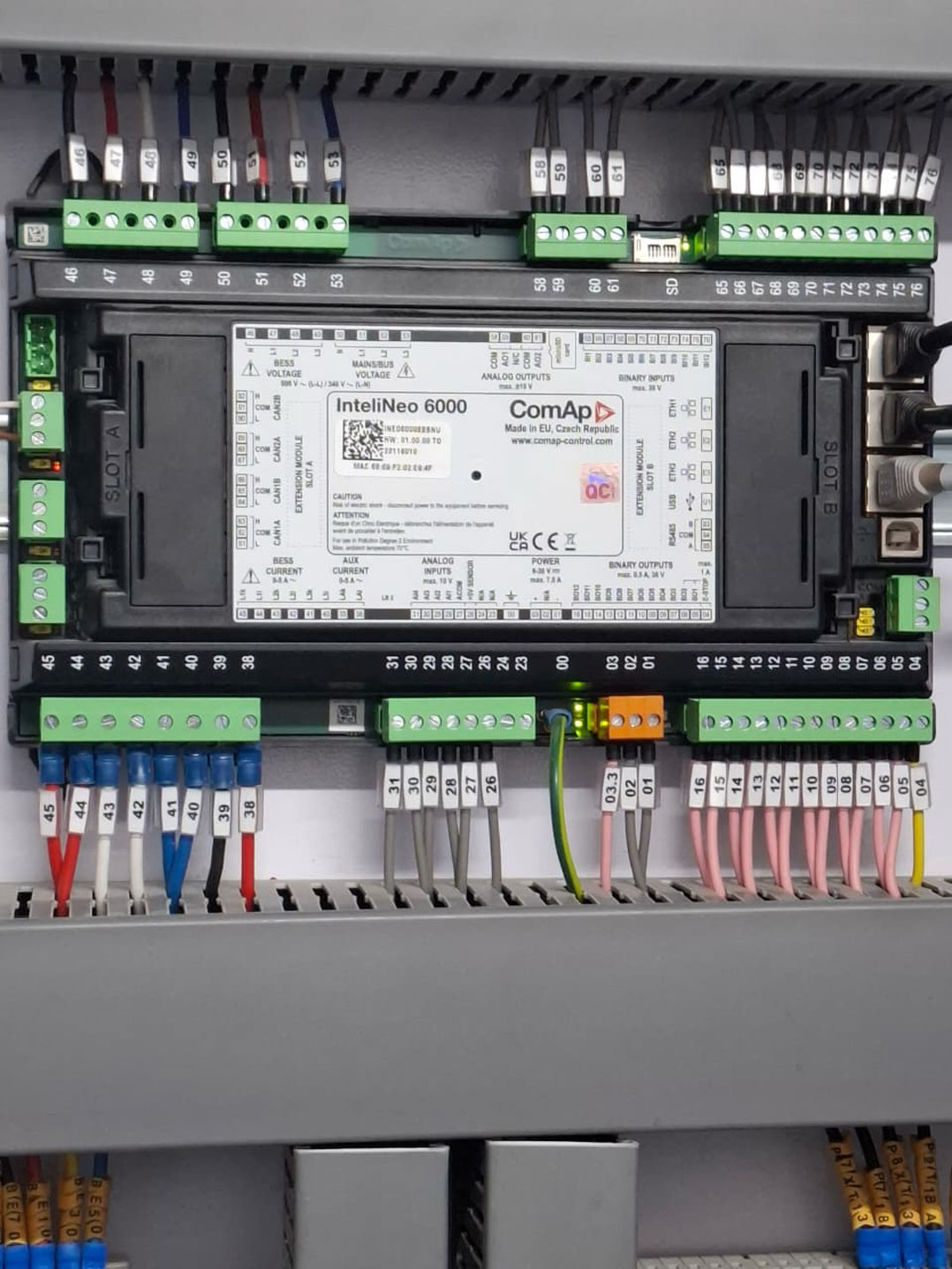
“There is a small brain in every part of the system,” said Marc Smit, MD of ComAp Southern Africa. “The batteries have their own little amount of intelligence – the generators, too. But you need one big brain to time everything and make sure there is a smooth transition between different energy sources, like an orchestrator in a symphony.”
Read: Eskom wants your solar system registered – what does that actually mean?
For Hyprop, Rosebank Mall serves as a testing ground, where lessons learnt from implementing the hybrid energy system can be applied elsewhere, Rosebank Mall GM Muhammad Varachia said.
“This isn’t just a switch-on event. It’s a signal of how we are rethinking energy in the commercial space, from passive consumers to active role players in the power ecosystem,” he said. – © 2025 NewsCentral Media
Get breaking news from TechCentral on WhatsApp. Sign up here.