
Close Menu
TechCentralTechCentral

    Subscribe to the newsletter

    Get the best South African technology news and analysis delivered to your e-mail inbox every morning.

    Facebook X (Twitter) YouTube LinkedIn
    WhatsApp Facebook X (Twitter) LinkedIn YouTube
    TechCentralTechCentral
    • News
      Big Microsoft 365 price increases coming next year

      Big Microsoft price increases coming next year

      5 December 2025
      Vodacom to take control of Safaricom in R36-billion deal - Shameel Joosub

      Vodacom to take control of Safaricom in R36-billion deal

      4 December 2025
      Black Friday goes digital in South Africa as online spending surges to record high

      Black Friday goes digital in South Africa as online spending surges to record high

      4 December 2025
      BYD takes direct aim at Toyota with launch of sub-R500 000 Sealion 5 PHEV

      BYD takes direct aim at Toyota with launch of sub-R500 000 Sealion 5 PHEV

      4 December 2025
      'Get it now': Takealot in new instant deliveries pilot

      ‘Get it now’: Takealot in new instant deliveries pilot

      4 December 2025
    • World
      Amazon and Google launch multi-cloud service for faster connectivity

      Amazon and Google launch multi-cloud service for faster connectivity

      1 December 2025
      Google makes final court plea to stop US breakup

      Google makes final court plea to stop US breakup

      21 November 2025
      Bezos unveils monster rocket: New Glenn 9x4 set to dwarf Saturn V

      Bezos unveils monster rocket: New Glenn 9×4 set to dwarf Saturn V

      21 November 2025
      Tech shares turbocharged by Nvidia's stellar earnings

      Tech shares turbocharged by stellar Nvidia earnings

      20 November 2025
      Config file blamed for Cloudflare meltdown that disrupted the web

      Config file blamed for Cloudflare meltdown that disrupted the web

      19 November 2025
    • In-depth
      Jensen Huang Nvidia

      So, will China really win the AI race?

      14 November 2025
      Valve's Linux console takes aim at Microsoft's gaming empire

      Valve’s Linux console takes aim at Microsoft’s gaming empire

      13 November 2025
      iOCO's extraordinary comeback plan - Rhys Summerton

      iOCO’s extraordinary comeback plan

      28 October 2025
      Why smart glasses keep failing - no, it's not the tech - Mark Zuckerberg

      Why smart glasses keep failing – it’s not the tech

      19 October 2025
      BYD to blanket South Africa with megawatt-scale EV charging network - Stella Li

      BYD to blanket South Africa with megawatt-scale EV charging network

      16 October 2025
    • TCS
      TCS+ | How Cloud on Demand helps partners thrive in the AWS ecosystem - Odwa Ndyaluvane and Xenia Rhode

      TCS+ | How Cloud On Demand helps partners thrive in the AWS ecosystem

      4 December 2025
      TCS | MTN Group CEO Ralph Mupita on competition, AI and the future of mobile

      TCS | Ralph Mupita on competition, AI and the future of mobile

      28 November 2025
      TCS | Dominic Cull on fixing South Africa's ICT policy bottlenecks

      TCS | Dominic Cull on fixing South Africa’s ICT policy bottlenecks

      21 November 2025
      TCS | BMW CEO Peter van Binsbergen on the future of South Africa's automotive industry

      TCS | BMW CEO Peter van Binsbergen on the future of South Africa’s automotive industry

      6 November 2025
      TCS | Why Altron is building an AI factory - Bongani Andy Mabaso

      TCS | Why Altron is building an AI factory in Johannesburg

      28 October 2025
    • Opinion
      Your data, your hardware: the DIY AI revolution is coming - Duncan McLeod

      Your data, your hardware: the DIY AI revolution is coming

      20 November 2025
      Zero Carbon Charge founder Joubert Roux

      The energy revolution South Africa can’t afford to miss

      20 November 2025
      It's time for a new approach to government IT spend in South Africa - Richard Firth

      It’s time for a new approach to government IT spend in South Africa

      19 November 2025
      How South Africa's broken Rica system fuels murder and mayhem - Farhad Khan

      How South Africa’s broken Rica system fuels murder and mayhem

      10 November 2025
      South Africa's AI data centre boom risks overloading a fragile grid - Paul Colmer

      South Africa’s AI data centre boom risks overloading a fragile grid

      30 October 2025
    • Company Hubs
      • Africa Data Centres
      • AfriGIS
      • Altron Digital Business
      • Altron Document Solutions
      • Altron Group
      • Arctic Wolf
      • AvertITD
      • Braintree
      • CallMiner
      • CambriLearn
      • CYBER1 Solutions
      • Digicloud Africa
      • Digimune
      • Domains.co.za
      • ESET
      • Euphoria Telecom
      • Incredible Business
      • iONLINE
      • IQbusiness
      • Iris Network Systems
      • LSD Open
      • NEC XON
      • Netstar
      • Network Platforms
      • Next DLP
      • Ovations
      • Paracon
      • Paratus
      • Q-KON
      • SevenC
      • SkyWire
      • Solid8 Technologies
      • Telit Cinterion
      • Tenable
      • Vertiv
      • Videri Digital
      • Vodacom Business
      • Wipro
      • Workday
      • XLink
    • Sections
      • AI and machine learning
      • Banking
      • Broadcasting and Media
      • Cloud services
      • Contact centres and CX
      • Cryptocurrencies
      • Education and skills
      • Electronics and hardware
      • Energy and sustainability
      • Enterprise software
      • Financial services
      • Information security
      • Internet and connectivity
      • Internet of Things
      • Investment
      • IT services
      • Lifestyle
      • Motoring
      • Public sector
      • Retail and e-commerce
      • Satellite communications
      • Science
      • SMEs and start-ups
      • Social media
      • Talent and leadership
      • Telecoms
    • Events
    • Advertise
    TechCentralTechCentral
    Home » Top » Russian hacks: how the US might retaliate

    Russian hacks: how the US might retaliate

    By Agency Staff29 December 2016
    Twitter LinkedIn Facebook WhatsApp Email Telegram Copy Link
    News Alerts
    WhatsApp
    US President Barack Obama

    US President Barack Obama has vowed that America will respond to Russian hacking undertaken during the country’s presidential campaign. Yet the public may never hear about it.

    During his presidency, Obama favoured a policy of deterrence when it came to responding to cyberattacks, in what US officials call “naming and shaming”. He’s indicted Iranian and Chinese hackers and signed an executive order allowing the treasury department to impose financial sanctions on hackers. He could take similar steps against Russia, which has repeatedly denied accusations of hacking.

    Another possible route, though, is an offensive cyber operation. Obama said on 16 December that he would respond in a “thoughtful, methodical way”, and some of it “we do publicly. Some of it, we will do in a way that they know but not everybody will.”

    Several former military and intelligence officials explained how an offensive response might play out.

    Intelligence agencies vs Pentagon response

    One key step would be deciding which part of the vast US national security apparatus the administration taps for the job. The administration could turn to the Pentagon or the intelligence community to draft “proportional” responses to a breach, said Ted Johnson, a retired US Navy commander and cyber fellow at the New America Foundation. That would ensure the US plays by the norms of international conflict and reduces the risk of escalation.

    “Your response to someone’s action against you should be proportional. So, if you get punched in the mouth you don’t blow up their home, because that’s not proportional,” Johnson said.

    In making that decision, the president could choose a covert action by intelligence agencies, under a law called Title 50, or a military response, under the law known as Title 10.

    Spy agency options

    If a covert action by the Central Intelligence Agency or National Security Agency is sought, it would come after gathering as much data as possible on the specific “entities and individuals” involved in the US attack, according to Terry Roberts, founder and president of cybersecurity firm WhiteHawk and former deputy director of US Naval Intelligence.

    That could involve wiping out hard drives connected to Russia’s intelligence community, exposing Russian hacking tools on the Web or revealing where the hackers operate in the so-called dark Web. Or if the specific hackers involved use bitcoin currency, the US could delete their online financial cache, Roberts said. This could be done without attribution, so it’s not obvious the US was behind the action.

    “If I want to just quietly take out their capability and send a very sneaky message and not an overt message, I would probably do a covert action,” said Bob Stasio, a fellow at the Truman National Security Project and former chief of operations at the NSA’s Cyber Operations Center.

    Another possibility, according to another former NSA official, includes “deny, disrupt, degrade” attacks, where agency hackers could take down websites or networks, or break into non-government institutions and leak information. That could also include hacking into companies that have ties to Russian President Vladimir Putin or leaders supporting him, or leaking information about Russia’s role in another country, deflecting the focus from the US.

    Military response

    If the president chooses an offensive military option, that would fall to US Cyber Command, a relatively new agency headed by Admiral Michael Rogers, who also leads the NSA. This path requires the object of the action be a military target. Possible options here could include a cyber-strike against the systems of the FSB or GRU, Russian intelligence agencies, or launching a ransomware attack against them or manipulating their data.

    Using the military could send a strong message and eventually the operation could be made public. Rogers, for instance, has said he expects to declassify some of the offensive tactics being used against Islamic State. But it also raises the idea of overt warfare.
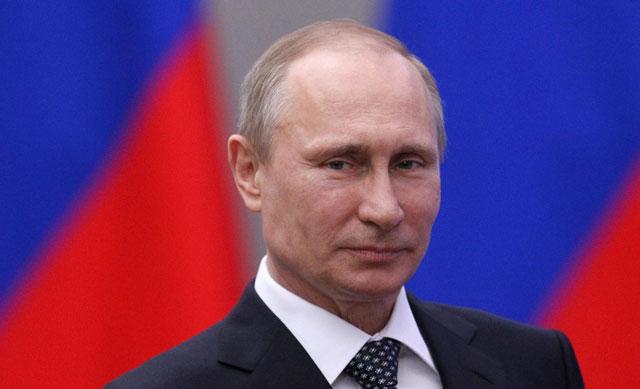
    Vladimir Putin

    If the US response is a military action, there could be questions around who oversees the operation. “Right now, the Russian geography falls within the European Command area of responsibility,” so the defence secretary or the president will have to determine who heads it up, Johnson, the former Navy commander said. “That is not a question that will be easily resolved.”

    Is there precedent for making an offensive cyberattack public?

    “The only publicly declared offensive cyber operation that the US is conducting is against” Islamic State, though few details of that are known, according to Michael Sulmeyer, director of the Cyber Security Project at Harvard’s Belfer Center and a former senior cyber policy adviser at the defence department. “I suspect that’s why the administration, if they’re going to choose to go with an offensive cyber response, they’re probably going to be fairly quiet about it,” Sulmeyer said.

    Case in point: North Korea. The isolated regime’s Internet was disrupted for about 10 hours on 21 and 22 December 2014, days after the Obama administration accused Kim Jong Un’s government of hacking Sony’s computer systems. Although the US didn’t claim responsibility, the administration had vowed to retaliate against North Korea.

    The argument for going public

    While policy makers face a challenge deciding whether to make a response public, not disclosing the attack raises the spectre that the US isn’t actually responding, according to Susan Hennessey, a national security fellow at the Brookings Institution and a former NSA lawyer.

    “The idea of telling Russia, ‘we know it’s you and we might do something about it’, the idea that that is sufficient in this case, I just don’t think that’s the case,” Hennessey said. “I think the White House has indicated that they recognise this is an area in which at least a partially visible and really quite consequential response is required.”

    What’s next?

    Former officials and analysts say the process for cyber offensive operations isn’t streamlined and can get bogged down by policy discussions. That could be hindering the US from carrying out such campaigns.

    For instance, if Cyber Command presents an option to the president, the National Security Council and a joint task force made up of the intelligence community, including the state department, “have to determine the collateral effects,” according to Stasio. They consider the impact of the action, such as relations with the other country and civilian casualties. It’s a similar approval process as for a tactical strike.

    “There’s generally not a whole lot of agreement in these meetings,” Stasio said.

    Despite all this, Obama could have already ordered an offensive operation. Or he may choose to pursue a non-cyber response, or decide to do nothing beyond the public statements he’s made. It all depends on what message the US wants to send. Regardless, US allies and adversaries will closely watch the response.

    “We’re in new territory in the digital age, we’re seeing things that we haven’t dealt with before,” Roberts, the former naval intelligence officer said. “Our policies and statutes are woefully behind in keeping up with these new dynamics.”  — (c) 2016 Bloomberg LP



    Barack Obama NSA Ted Johnson Terry Roberts Vladimir Putin WhiteHawk
    Subscribe to TechCentral Subscribe to TechCentral
    Share. Facebook Twitter LinkedIn WhatsApp Telegram Email Copy Link
    Previous ArticleBackspace: ‘Resolutions’
    Next Article YouTube needs to become a TV star

    Related Posts

    Russia to launch state-backed rival to WhatsApp - Vladimir Putin

    Russia to launch state-backed rival to WhatsApp

    25 June 2025
    Elon Musk. Image adapted from a photo by Debbie Rowe

    Bookmarks | Elon Musk’s secret talks with Vladimir Putin

    25 October 2024
    Beware the digital demagogues

    Beware the digital demagogues

    19 August 2024
    Company News
    AI is not a technology problem - iqbusiness

    AI is not a technology problem – iqbusiness

    5 December 2025
    Telcos are sitting on a data gold mine - but few know what do with it - Phillip du Plessis

    Telcos are sitting on a data gold mine – but few know what do with it

    4 December 2025
    Unlock smarter computing with your surface Copilot+ PC

    Unlock smarter computing with your Surface Copilot+ PC

    4 December 2025
    Opinion
    Your data, your hardware: the DIY AI revolution is coming - Duncan McLeod

    Your data, your hardware: the DIY AI revolution is coming

    20 November 2025
    Zero Carbon Charge founder Joubert Roux

    The energy revolution South Africa can’t afford to miss

    20 November 2025
    It's time for a new approach to government IT spend in South Africa - Richard Firth

    It’s time for a new approach to government IT spend in South Africa

    19 November 2025

    Subscribe to Updates

    Get the best South African technology news and analysis delivered to your e-mail inbox every morning.

    Latest Posts
    Big Microsoft 365 price increases coming next year

    Big Microsoft price increases coming next year

    5 December 2025
    AI is not a technology problem - iqbusiness

    AI is not a technology problem – iqbusiness

    5 December 2025
    Vodacom to take control of Safaricom in R36-billion deal - Shameel Joosub

    Vodacom to take control of Safaricom in R36-billion deal

    4 December 2025
    Black Friday goes digital in South Africa as online spending surges to record high

    Black Friday goes digital in South Africa as online spending surges to record high

    4 December 2025
    © 2009 - 2025 NewsCentral Media
    • Cookie policy (ZA)
    • TechCentral – privacy and Popia

    Type above and press Enter to search. Press Esc to cancel.

    Manage consent

    TechCentral uses cookies to enhance its offerings. Consenting to these technologies allows us to serve you better. Not consenting or withdrawing consent may adversely affect certain features and functions of the website.

    Functional Always active
    The technical storage or access is strictly necessary for the legitimate purpose of enabling the use of a specific service explicitly requested by the subscriber or user, or for the sole purpose of carrying out the transmission of a communication over an electronic communications network.
    Preferences
    The technical storage or access is necessary for the legitimate purpose of storing preferences that are not requested by the subscriber or user.
    Statistics
    The technical storage or access that is used exclusively for statistical purposes. The technical storage or access that is used exclusively for anonymous statistical purposes. Without a subpoena, voluntary compliance on the part of your Internet Service Provider, or additional records from a third party, information stored or retrieved for this purpose alone cannot usually be used to identify you.
    Marketing
    The technical storage or access is required to create user profiles to send advertising, or to track the user on a website or across several websites for similar marketing purposes.
    • Manage options
    • Manage services
    • Manage {vendor_count} vendors
    • Read more about these purposes
    View preferences
    • {title}
    • {title}
    • {title}