Close Menu
TechCentralTechCentral

    Subscribe to the newsletter

    Get the best South African technology news and analysis delivered to your e-mail inbox every morning.

    Facebook X (Twitter) YouTube LinkedIn
    WhatsApp Facebook X (Twitter) LinkedIn YouTube
    TechCentralTechCentral
    • News
      Nedbank hires MTN's former tech chief as group CIO - Nikos Angelopoulos

      Nedbank hires MTN’s former tech chief as group CIO

      31 July 2026
      Eskom's diesel bill falls 86% as breakdowns hit eight-year low

      Eskom’s diesel bill falls 86% as breakdowns hit eight-year low

      31 July 2026
      Ramaphosa signs off on taking the grid away from Eskom

      Ramaphosa signs off on taking the grid away from Eskom

      31 July 2026
      Microsoft just had the biggest day in stock market history

      Microsoft just had the biggest day in stock market history

      31 July 2026
      MTN Nigeria's growth engine stalled in second quarter - Karl Toriola

      MTN Nigeria’s growth engine stalled in second quarter

      31 July 2026
    • World
      Meta AI will now tell parents if their teen is in crisis

      Meta AI will now tell parents if their teen is in crisis

      17 July 2026
      IBM shares crash 25% as AI upends software spending - Arvind Krishna

      IBM shares crash 25% as AI upends software spending

      15 July 2026
      Jony Ive's first OpenAI device: an AI smart speaker - Jony Ive and Sam Altman

      Jony Ive’s first OpenAI device: an AI smart speaker

      15 July 2026
      Stripe, Advent in talks to buy PayPal for $53-billion

      Stripe, Advent in talks to buy PayPal for $53-billion

      15 July 2026
      Memory crisis sends smartphone market into steep decline

      Memory crisis sends smartphone market into steep decline

      13 July 2026
    • In-depth
      The plan to stop AI from breaking the world - Google DeepMind CEO Demis Hassabis. Image: John Sears

      The plan to stop AI from breaking the world

      16 July 2026
      The internet has a Strait of Hormuz problem

      The internet has a Strait of Hormuz problem

      15 July 2026
      AI boom sparks rally, frenzy and fear

      AI boom sparks rally, frenzy and fear

      11 June 2026
      Every plug-in hybrid on sale in South Africa, ranked by price - Lamborghini Temerario

      Every plug-in hybrid on sale in South Africa, ranked by price

      7 June 2026
      What Wi-Fi 8 will mean for wireless networks

      What Wi-Fi 8 will mean for wireless networks

      1 June 2026
    • TCS
      TCS+ | Why South African workers must become supervisors of digital labour - Accelera Digital Group Cliff de Wit

      TCS+ | Why South African workers must become supervisors of digital labour

      31 July 2026
      TCS | Rapid deployment rules can't work without municipalities: ACT - Nomvuyiso Batyi

      TCS | Icasa’s rules skip the real bottleneck: ACT

      30 July 2026
      TCS+ | iStore Business on why Apple makes sense for SMEs - Sudesh Pillay and Tamia Nontsikelelo

      TCS+ | iStore Business on why Apple makes sense for SMEs

      30 July 2026
      TCS+ | A smarter approach to cloud for South African businesses - Joel Chacko and Jonathan Oaker

      TCS+ | A smarter approach to cloud for South African businesses

      28 July 2026
      TCS | How Optasia lends billions to people banks can't see - Salvador Anglada

      TCS | How Optasia lends billions to people banks can’t see

      23 July 2026
    • Opinion
      The author, Jannie van Zyl

      Selling vapour is corporate suicide in slow motion

      16 July 2026
      Brazil's online gambling crackdown is a lesson for South Africa

      How Amazon outmanoeuvred Starlink in South Africa

      15 July 2026
      The Popia problem with agentic AI - Herman Haasbroek

      The Popia problem with agentic AI

      14 July 2026
      The author, Fanie van Rooyen

      South Africa can still catch the AI wave – here’s how

      7 July 2026
      The author, Fanie van Rooyen

      The AI utopia South Africa can’t afford

      1 July 2026
    • Company Hubs
      • 1Stream
      • Africa Data Centres
      • AfriGIS
      • Altron Digital Business
      • Altron Document Solutions
      • Altron Group
      • Arctic Wolf
      • Ascent Technology
      • AvertITD
      • BBD
      • Braintree
      • CallMiner
      • CambriLearn
      • CM Telecom
      • Contactable
      • CYBER1 Solutions
      • Digicloud Africa
      • Digimune
      • Domains.co.za
      • ESET
      • Euphoria Telecom
      • HOSTAFRICA
      • Incredible Business
      • iONLINE
      • IQbusiness
      • Iris Network Systems
      • Kaspersky
      • LSD Open
      • Mitel
      • NEC XON
      • Netstar
      • Network Platforms
      • Next DLP
      • Ovations
      • Paracon
      • Paratus
      • Q-KON
      • SevenC
      • SkyWire
      • Solid8 Technologies
      • Telit Cinterion
      • Telviva
      • Tenable
      • Vertiv
      • Videri Digital
      • Vodacom Business
      • Vox
      • Wipro
      • Workday
      • XLink
    • Sections
      • AI and machine learning
      • Banking
      • Broadcasting and Media
      • Cloud services
      • Contact centres and CX
      • Cryptocurrencies
      • Education and skills
      • Electronics and hardware
      • Energy and sustainability
      • Enterprise software
      • Financial services
      • HealthTech
      • Information security
      • Internet and connectivity
      • Internet of Things
      • Investment
      • IT services
      • Lifestyle
      • Policy and regulation
      • Public sector
      • Retail and e-commerce
      • Satellite communications
      • Science
      • SMEs and start-ups
      • Social media
      • Talent and leadership
      • Telecoms
      • Watts & Wheels
    • Events
    • Advertise
    TechCentralTechCentral
    Home » In-depth » Sanity, at last, in government’s lockdown plan

    Sanity, at last, in government’s lockdown plan

    By Hilton Tarrant25 May 2020
    Twitter LinkedIn Facebook WhatsApp Email Telegram Copy Link
    News Alerts
    WhatsApp
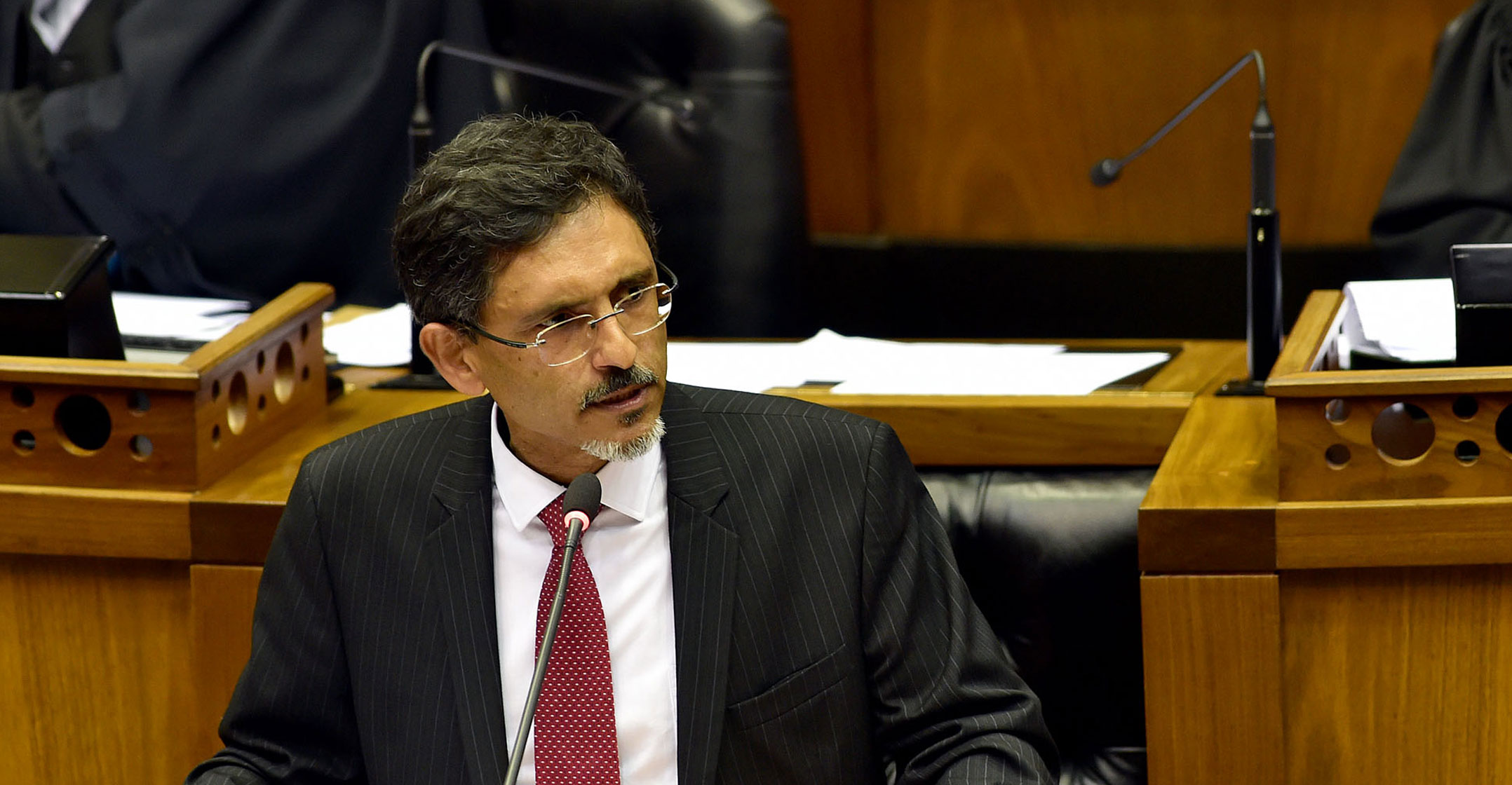
    Ebrahim Patel

    Based on level-3 regulations leaked over the weekend ahead of President Cyril Ramaphosa’s announcement on Sunday evening that the whole of South Africa will move from level-4 to level-3 lockdown on 1 June, government has done a complete about-turn on how it will ease lockdown restrictions.

    Supposed ideological battles over the sale of tobacco aside, the “phased reopening” of the economy is starting to look decidedly unphased at all.

    Instead of specifying exactly which sectors of the economy will be allowed to resume operations (and how), the favoured approach seems to be to explicitly prohibit certain types of businesses from trading. This is consistent with the approach promoted by many smart economists, business leaders and columnists in recent weeks, and reinforced by comments made by Ramaphosa at Nedlac consultations this week.

    The draft framework contained a host of other illogical and arbitrary distinctions. Building a bridge? You’re fine. An office building? Not allowed

    Original draft regulations for public comment were absurdly detailed, likely as a result of tons of “consultation” with the likes of minister of trade, industry & competition Ebrahim Patel. Businesses in the manufacturing sector would, in theory, scale up production (depending on the type of manufacturer) through levels 4 and 3.

    But in many cases this theory ignored whether inputs were available and if suppliers to those businesses would be operating. They also ignored the fact that many manufacturing concerns simply cannot operate at 25% capacity.

    The draft framework contained a host of other illogical and arbitrary distinctions. Building a bridge? You’re fine. An office building? Not allowed.

    Arbitrary

    The deeds office has finally reopened (it only took nearly a month), but real estate agents are not yet allowed to operate. See the problem?

    These completely arbitrary distinctions in the lockdown regulations reached their nadir in the spat over the sale of “hot, cooked food” (implemented after-the-fact with a one-line amendment) and Patel’s now-infamous Kafkaesque numbered list of what items of clothing are allowed to be sold under level 4. That the clothing retail industry clamoured to “sincerely thank him” for the “clarity” is bewildering.

    Linked to the clothing retail regulations was the stipulation that only winter clothes could be manufactured. But as the whole world except Patel knows, tons of seasonal clothing items (especially basics) are manufactured in advance. Quite how shops were expected to have t-shirts available in spring given this farcical approach to regulation remained to be seen.
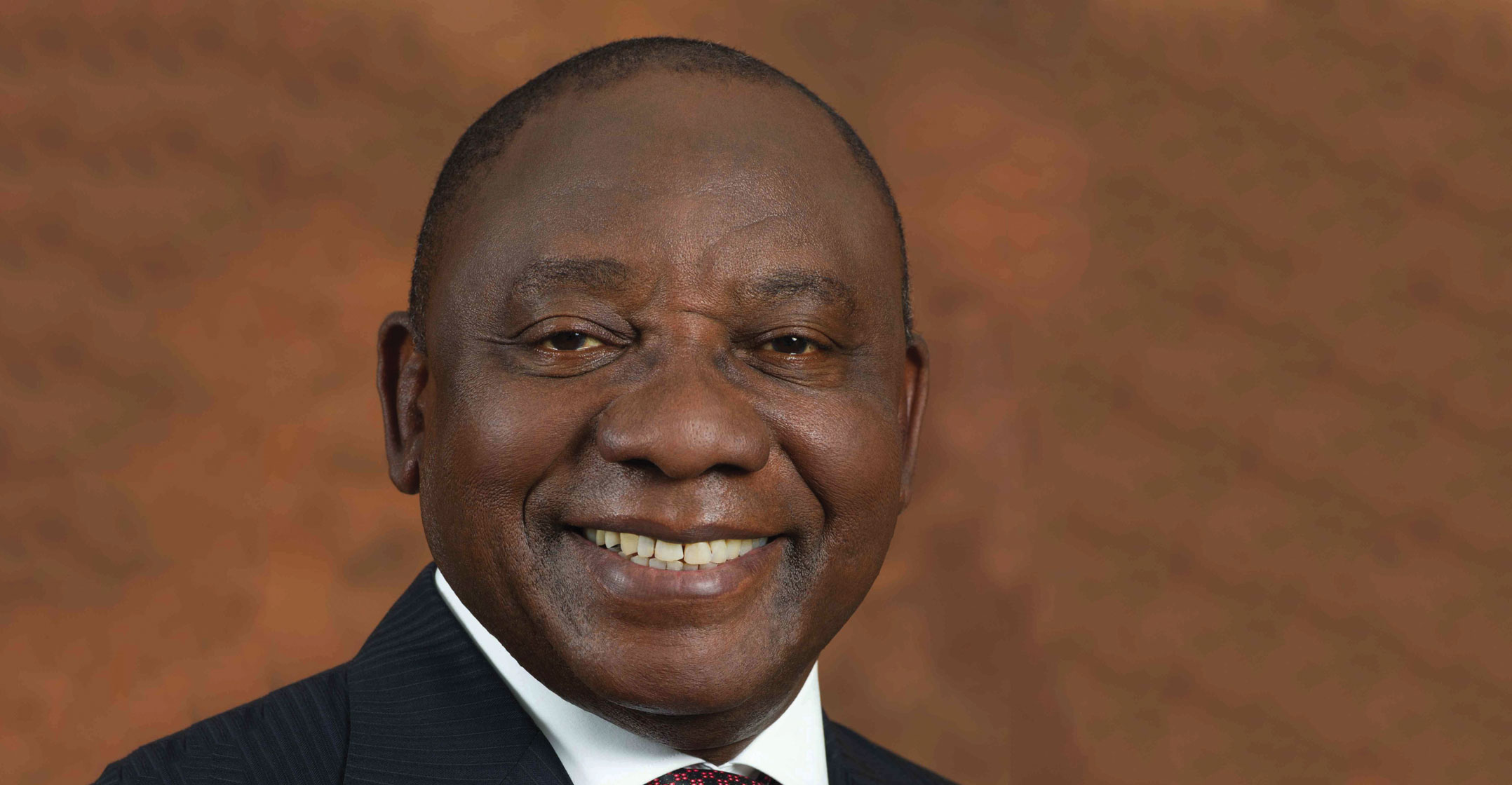
    President Cyril Ramaphosa. Image: GCIS

    The endless lists and micromanaging meant that certain things fell outside of regulation completely.

    A month ago, spice stocks at supermarkets were running low because spice was seemingly not categorised as an essential good and therefore could not be manufactured.

    The gaping loophole that effectively permits the sale of takeaway coffee is another likely unintended effect of the department of trade, industry & competition (DTIC) “approach” to regulation.

    That Woolworths, which rolled over on the rotisserie chicken and pie front, has reopened coffee counters at all its stores tells you all you need to know. Certain other chains have been trading from petrol station forecourts right throughout lockdown! (And most other supermarkets continue to sell pies – they’re baked, not cooked, see…)

    It is probable that the list of types of winter clothing permitted to be sold was the final straw that broke the proverbial camel’s back

    It is probable that the list of types of winter clothing permitted to be sold was the final straw that broke the proverbial camel’s back. Was the DTIC really going to try and regulate in painstaking detail what could and could not operate?

    Was there perhaps the realisation in all the president’s consultations that the economy needed to be reopened as quickly as possible to avoid a far bigger catastrophe as millions starve and more than a million lose their jobs?

    So, then, to the list …

    The only “specific economic exclusions” in the draft regulations for level 3 are restaurants, pubs and shebeens, travel for recreational purposes, and possibly certain personal care services (in what is a confusingly constructed regulation).

    Nothing further to gain

    Construction, manufacturing, retail? Everything is fair game now, with the burden and responsibility on the business to ensure safe operating (and adherence to department of labour requirements). Even business travel is allowed – yes, flights.

    Compare these draft regulations to the original “framework for sectors” published for comment and it is clear that these are level 3 in name only; we’ve all but skipped right to level 2.

    A gaping hole in this year’s budget, pictures of food parcel queues stretching for kilometres, dire economic and unemployment forecasts, and models that confirm there is nothing further to gain from a lockdown have forced this outcome.

    You could feel the pressure and despair ahead of the president’s address on 13 May in which he actually said very little. He needed to speak to the nation – even when there was not yet anything to share – to avoid the country turning into outright revolt.

    Sooner or later, we all need to get back to work. For many small businesses, the lockdown ended a month ago. The remaining constraints should arguably have been removed a few weeks ago, but at least we’re finally there.

    Now, on to the far more important conundrum: how do we actually kickstart this economy after a damaging shutdown and how does government fund its nascent ambitious public works programme (which will certainly help)?

    • This article was originally published on Moneyweb and is used here with permission

    Follow TechCentral on Google News Add TechCentral as your preferred source on Google


    Cyril Ramaphosa Ebrahim Patel top
    WhatsApp YouTube
    Share. Facebook Twitter LinkedIn WhatsApp Telegram Email Copy Link
    Previous ArticleGetting things done remotely? It’s easier with fibre to the home
    Next Article Obscure announces distribution agreement with Proofpoint

    Related Posts

    Ramaphosa signs off on taking the grid away from Eskom

    Ramaphosa signs off on taking the grid away from Eskom

    31 July 2026
    Memo to Eskom: Telkom already lost this fight

    Memo to Eskom: Telkom already lost this fight

    8 July 2026
    Malatsi comes out swinging in Starlink lobbying row - Solly Malatsi

    Malatsi comes out swinging in Starlink lobbying row

    6 July 2026
    Company News
    Domains.co.za launches self-hosted n8n VPS hosting

    Domains.co.za launches self-hosted n8n VPS hosting

    31 July 2026
    Smarter.tech '26 shows why smarter technology begins with context - Obsidian Systems

    Context is the missing piece in enterprise AI: Obsidian

    31 July 2026
    Huawei launches 12 intelligent transport solutions in South Africa - Sam Tang

    Huawei launches 12 intelligent transport solutions in South Africa

    30 July 2026
    Opinion
    The author, Jannie van Zyl

    Selling vapour is corporate suicide in slow motion

    16 July 2026
    Brazil's online gambling crackdown is a lesson for South Africa

    How Amazon outmanoeuvred Starlink in South Africa

    15 July 2026
    The Popia problem with agentic AI - Herman Haasbroek

    The Popia problem with agentic AI

    14 July 2026

    Subscribe to Updates

    Get the best South African technology news and analysis delivered to your e-mail inbox every morning.

    Latest Posts
    Nedbank hires MTN's former tech chief as group CIO - Nikos Angelopoulos

    Nedbank hires MTN’s former tech chief as group CIO

    31 July 2026
    Eskom's diesel bill falls 86% as breakdowns hit eight-year low

    Eskom’s diesel bill falls 86% as breakdowns hit eight-year low

    31 July 2026
    Ramaphosa signs off on taking the grid away from Eskom

    Ramaphosa signs off on taking the grid away from Eskom

    31 July 2026
    TCS+ | Why South African workers must become supervisors of digital labour - Accelera Digital Group Cliff de Wit

    TCS+ | Why South African workers must become supervisors of digital labour

    31 July 2026
    © 2009 - 2026 NewsCentral Media
    Built and maintained by Chronon
    • Cookie policy (ZA)
    • TechCentral – privacy and Popia

    Type above and press Enter to search. Press Esc to cancel.

    Manage consent

    TechCentral uses cookies to enhance its offerings. Consenting to these technologies allows us to serve you better. Not consenting or withdrawing consent may adversely affect certain features and functions of the website.

    Functional Always active
    The technical storage or access is strictly necessary for the legitimate purpose of enabling the use of a specific service explicitly requested by the subscriber or user, or for the sole purpose of carrying out the transmission of a communication over an electronic communications network.
    Preferences
    The technical storage or access is necessary for the legitimate purpose of storing preferences that are not requested by the subscriber or user.
    Statistics
    The technical storage or access that is used exclusively for statistical purposes. The technical storage or access that is used exclusively for anonymous statistical purposes. Without a subpoena, voluntary compliance on the part of your Internet Service Provider, or additional records from a third party, information stored or retrieved for this purpose alone cannot usually be used to identify you.
    Marketing
    The technical storage or access is required to create user profiles to send advertising, or to track the user on a website or across several websites for similar marketing purposes.
    • Manage options
    • Manage services
    • Manage {vendor_count} vendors
    • Read more about these purposes
    View preferences
    • {title}
    • {title}
    • {title}