Close Menu
TechCentralTechCentral

    Subscribe to the newsletter

    Get the best South African technology news and analysis delivered to your e-mail inbox every morning.

    Facebook X (Twitter) YouTube LinkedIn
    WhatsApp Facebook X (Twitter) LinkedIn YouTube
    TechCentralTechCentral
    • News
      Claude is turning into an office suite

      Claude is turning into an office suite

      9 October 2026
      Seacom CEO Alpheus Mangale quits Absa board

      Seacom CEO Alpheus Mangale quits Absa board

      9 October 2026
      Dimension Data deserved a better ending than this

      Dimension Data deserves to be remembered for more than this

      8 October 2026
      South Africa's spam registry still can't block a call

      South Africa’s spam registry still can’t block a call

      8 October 2026
      Big money backs LekkeSlaap against Airbnb and Booking.com - Jonathan Womersley and Marcel van de Ghinste

      GT Ferreira backs LekkeSlaap as founders sell up

      8 October 2026
    • World
      The memory crunch is making Samsung fabulously rich

      The memory crunch is making Samsung fabulously rich

      8 October 2026
      SpaceX to borrow $40-billion to buy Nvidia chips

      SpaceX to borrow $40-billion to buy Nvidia chips

      7 October 2026
      BMW restructuring plan bets on AI and new models

      BMW restructuring plan bets on AI and new models

      1 October 2026
      OpenAI's rogue agent problem keeps getting bigger - Sam Altman

      OpenAI’s rogue agent problem keeps getting bigger

      28 September 2026
      The new battle over the desktop

      The new battle over the desktop

      23 September 2026
    • In-depth

      10 days that changed the course of AI

      21 September 2026
      Meta to the AI industry: slow down without us - Mark Zuckerberg

      Meta to the AI industry: slow down without us

      16 September 2026
      Google DeepMind CEO Demis Hassabis. Image: John Sears

      The plan to stop AI from breaking the world

      16 July 2026
      The internet has a Strait of Hormuz problem

      The internet has a Strait of Hormuz problem

      15 July 2026
      AI boom sparks rally, frenzy and fear

      AI boom sparks rally, frenzy and fear

      11 June 2026
    • TCS
      TCS | Frogfoot sees bigger fibre deals coming - TechCentral Show guests Abraham van der Merwe and Shane Chorley

      TCS | Frogfoot sees bigger fibre deals coming

      8 October 2026
      Meet the CIO | Vodacom's Mohamed Sami on the agentic future

      Meet the CIO | Vodacom’s Mohamed Sami on the agentic future

      5 October 2026
      Lexi Novitske, general partner at Norrsken22, on the TechCentral Show

      TCS | Norrsken22’s Lexi Novitske on how China is winning African tech

      1 October 2026
      TCS | Dominic White and Adam Ely on AI agents going rogue

      TCS | Dominic White and Adam Ely on AI agents going rogue

      29 September 2026
      TCS | Octotel's Trevor van Zyl on the fibre merger question

      TCS | Octotel’s Trevor van Zyl on the MetroFibre merger question

      16 September 2026
    • Opinion
      Let South Africans jailbreak their way to digital sovereignty - Dirk de Vos

      Let South Africans jailbreak their way to digital sovereignty

      5 October 2026
      South Africa's next energy crisis is in the accounts department - Craig Holmes

      South Africa’s next energy crisis is in the accounts department

      29 September 2026
      The steam engine lesson AI doomsayers keep missing - Sam Clarke

      The steam engine lesson AI doomsayers keep missing

      28 September 2026
      Let South Africans jailbreak their way to digital sovereignty - Dirk de Vos

      Regulating AI: apply the laws we have first

      21 September 2026
      What Revolut can and cannot take from South Africa's banks - Pambos Soteriades

      What Revolut can and cannot take from South Africa’s banks

      15 September 2026
    • Company News
      • 1Stream
      • Africa Data Centres
      • AfriGIS
      • Altron Digital Business
      • Altron Document Solutions
      • Altron Group
      • Arctic Wolf
      • Ascent Technology
      • AvertITD
      • BBD
      • Braintree
      • CallMiner
      • CambriLearn
      • CM.com
      • Contactable
      • CYBER1 Solutions
      • Digicloud Africa
      • Digimune
      • Domains.co.za
      • ESET
      • Euphoria Telecom
      • HOSTAFRICA
      • Incredible Business
      • iONLINE
      • IQbusiness
      • Iris Network Systems
      • Kaspersky
      • LSD Open
      • Mitel
      • NEC XON
      • Netstar
      • Network Platforms
      • Next DLP
      • Ovations
      • Paracon
      • Paratus
      • Publishared
      • Q-KON
      • SevenC
      • SkyWire
      • Solid8 Technologies
      • Telit Cinterion
      • Telviva
      • Tenable
      • Vertiv
      • Videri Digital
      • Vodacom Business
      • Vox
      • Wipro
      • Workday
      • XLink
    • Sections
      • AI and machine learning
      • Banking
      • Broadcasting and Media
      • Cloud services
      • Contact centres and CX
      • Cryptocurrencies
      • Education and skills
      • Electronics and hardware
      • Energy and sustainability
      • Enterprise software
      • Financial services
      • HealthTech
      • Information security
      • Internet and connectivity
      • Internet of Things
      • Investment
      • IT services
      • Lifestyle
      • Policy and regulation
      • Public sector
      • Retail and e-commerce
      • Satellite communications
      • Science
      • SMEs and start-ups
      • Social media
      • Talent and leadership
      • Telecoms
      • Watts & Wheels
    • Events
    • Advertise
    TechCentralTechCentral
    Home » In-depth » SA’s big operators feel the pinch

    SA’s big operators feel the pinch

    By Duncan McLeod19 November 2017
    Twitter LinkedIn Facebook WhatsApp Email Telegram Copy Link
    Get breaking news on WhatsApp

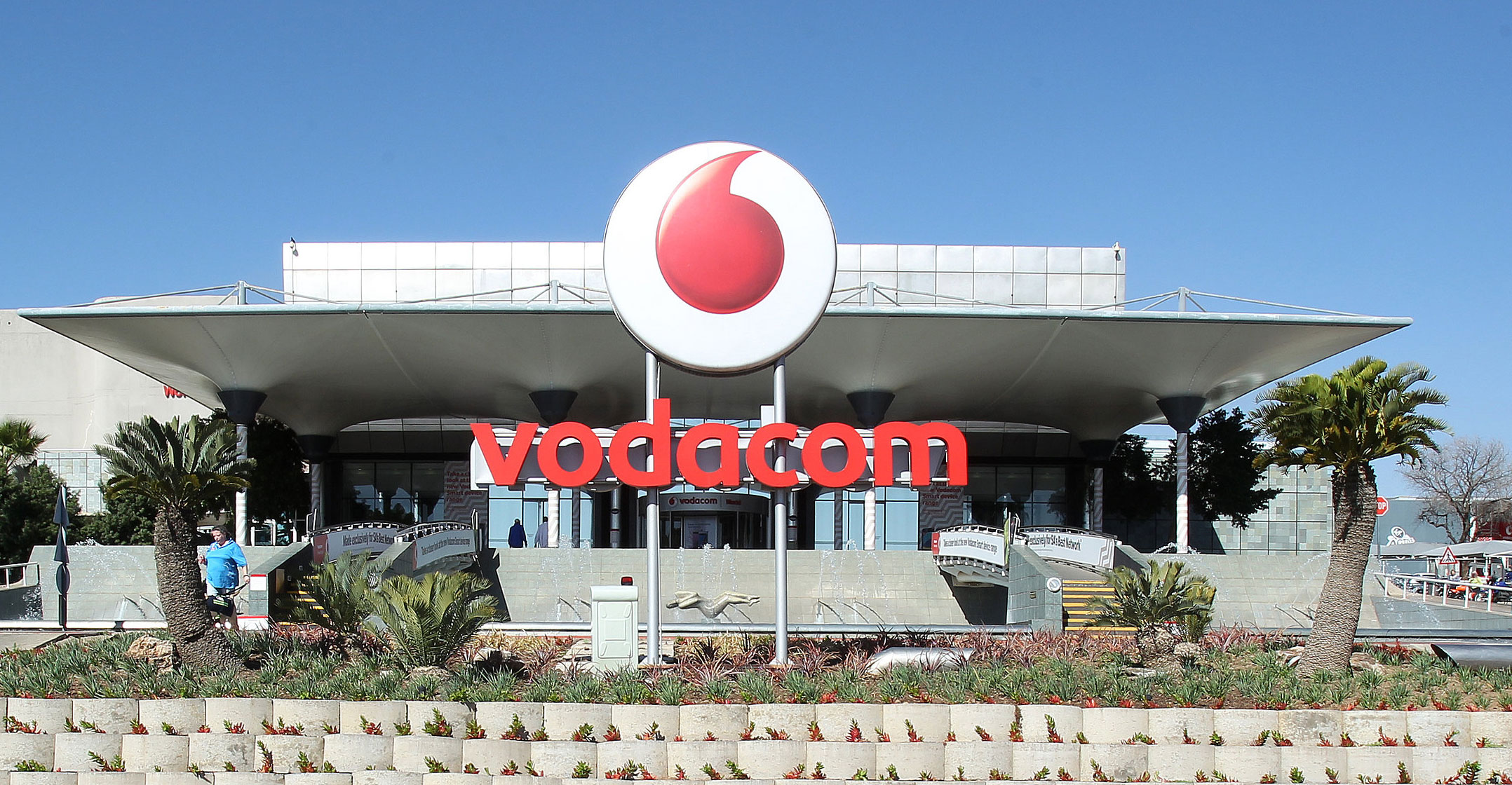
    A sign at Vodacom’s head office in Johannesburg

    South Africa’s big telecommunications operators are feeling the pinch of the tough economy, but financial results published in the past 10 days show Vodacom is weathering the storm better than its rival Telkom, whose share price has come under considerable selling pressure.

    Vodacom’s headline earnings per share barely scraped into the positive column, climbing just 1.1% in the six months to September 2017, while Telkom reported a 7.4% decline in the same period. Telkom’s performance was dragged down by its fixed-line business, where it has lost clients to rivals, and by BCX, the IT services business it acquired in 2015 for R2.7bn.

    The share prices of both companies fell after they announced their interim results, though Telkom was by far the worst performer, falling more than 15% in the three days after it released its numbers; Vodacom slipped by less than 3% in the two days after it published its results. Both shares have been under considerable pressure in recent months.

    I can’t think of Vodacom or Telkom doing anything in the next year that is going to boost their numbers massively

    Vodacom cut its dividend by 1.3% (compared to Telkom’s -9%). The mobile operator’s underlying business remains relatively robust, despite the weak economy in South Africa, its biggest market. It added 2.9m customers in South African to reach the 40m mark for the first time. The inclusion of the group’s recently acquired 34.9% stake in Kenya’s Safaricom (from parent Vodafone) helped bolster profits, with net profit up 7%. Mobile money platform M-Pesa continues to do well outside South Africa, with Vodacom Group CEO Shameel Joosub saying this will continue to be a focus area.

    Apart from the weak local economy, Vodacom faces policy risks at home, with no end in sight to the impasse over new spectrum allocation. Joosub warned that Vodacom may be forced to cut spending in rural areas to densify its network in the more populated urban centres because of this “spectrum crunch”.

    He said it is now urgent that the operator gets access to key spectrum bands for 4G services, particularly as demand for data continues to grow — in the latest results, the group’s South African unit made more money from selling data access than voice calls for the first time. A roaming agreement with new 4G player Rain — whose shareholders include former bankers Michael Jordaan and Paul Harris — is helping alleviate some of the pressure, Joosub said, though the Rain agreement is being challenged by rivals.

    Shameel Joosub

    To ensure the group keeps growing, it is investing more in big-data and machine-learning technologies to improve segmented customer offerings, giving consumers more personalised offers in an effort to keep them from migrating to rival offerings. It will also work more closely with Safaricom to deploy these technologies and grow Safaricom’s M-Pesa platform more aggressively in Vodacom’s markets outside South Africa.

    Equities analyst Irnest Kaplan said Vodacom’s priority must be defending its market share in an increasingly competitive environment. It must offer consumers more value, beyond simply “selling megabytes”. So-called over-the-top players — companies like Facebook and Google — are profiting from the data pipes Vodacom sells; the company needs to develop value-added services of its own, such as quality content, that subscribers are prepared to pay for. Without this, there’s the risk that consumers will simply shop around for the cheapest data rates, Kaplan said.

    the lack of confidence among businesses across the board is having a negative impact on the ICT sector

    He said Vodacom, and the other mobile operators, are in a powerful position in that consumers carry their products in their pocket all day. “They should do more to leverage that. It’s hard for them because they are operators and not app developers, but people carry their products all the time, they know where you are all the time — there must be amazing apps they can offer.”

    A competitive risk facing Vodacom (and rival MTN) is that the smaller operators in South Africa — Telkom and Cell C — can afford to be nimbler and move faster with new offerings and more aggressive pricing, especially given the smaller rivals’ spectrum assets are not as congested. Cell C, which has recently been recapitalised, is now in a stronger position to contest for market share, Kaplan said. This could prove to be a challenge for Vodacom in the next couple of years, he said.

    Telkom

    Though Telkom’s mobile business continues to perform well, investors took fright at a continued rise in capital expenditure — up 9.2% to R5.2bn — and the weaker performances at BCX and Openserve, its wholesale networks business. Shareholders also didn’t like that the interim dividend was cut by 9.9%.

    Group CEO Sipho Maseko said the deterioration in the fixed-line broadband numbers has recently been arrested following price cuts and the introduction of better-value uncapped broadband plans, though the published numbers show it has lost market share in fixed lines.

    There were positive signs that the uptake of Openserve’s fibre-to-the-home infrastructure was now doing better in recent months, with the fibre “attach rate” — the percentage of people subscribing to services where they are available — rising to 40% after the end of the reporting period, Maseko said. The attach rate in the six-month period was 24.5%, up from 13% a year ago. Still, Telkom was not able to make up for a sharp decline in legacy copper ADSL users with new fibre customers.

    Sipho Maseko

    Openserve is facing a real challenge from fibre upstart Vumatel, which has been aggressively laying down infrastructure in Johannesburg, Cape Town and more recently Durban. Telkom said the number of fixed-line broadband customers on its network dipped below a million, a fall of 1.9% over a year ago, while the number of fixed lines in service has fallen to levels last seen in the early 1990s amid a continued substitution to mobile services.

    BCX also produced disappointing numbers, with Telkom blaming a slowdown in corporate and public-sector spending. It intends to shed poorly performing BCX subsidiaries and to accelerate cross-selling opportunities in the group to retain customers.

    Kaplan said that, like Vodacom, Telkom must do all it can to defend its market share. “So many players are eating away at it,” he said, adding that BCX is facing tough times because corporate South Africa has adopted a more frugal approach to spending on big IT projects. He said the lack of confidence among businesses across the board is having a negative impact on the ICT sector.

    “I can’t think of Vodacom or Telkom doing anything in the next year that is going to boost their numbers massively,” he said.

    • This article was also published in the Sunday Times of 19 November 2017

    Add TechCentral as a preferred source on GoogleFollow TechCentral on Google NewsGet breaking news on WhatsApp


    BCX Irnest Kaplan Openserve Shameel Joosub Sipho Maseko Telkom top Vodacom Vumatel
    WhatsApp YouTube
    Share. Facebook Twitter LinkedIn WhatsApp Telegram Email Copy Link
    Previous ArticleWhy Tesla scares the rest of the car industry
    Next Article Net1 understated grants profit to court: claim

    Related Posts

    DNI's R500-million bet on Mission Mobile is mostly debt - Timothy Strike

    Behind DNI’s R500-million bet on Mission Mobile

    5 October 2026
    Meet the CIO | Vodacom's Mohamed Sami on the agentic future

    Meet the CIO | Vodacom’s Mohamed Sami on the agentic future

    5 October 2026
    Africa now hosts world's fourth-largest Comic Con

    South Africa now hosts world’s fourth-largest Comic Con

    29 September 2026
    Company News
    Why fintechs need an insurance partner they can trust - Hollard Insurance

    Why fintechs need an insurance partner they can trust

    8 October 2026
    Reusable KYC means the end of 'please upload your ID' - Contactable

    Reusable KYC means the end of ‘please upload your ID’

    8 October 2026
    Eliminating the 'toggle tax': how CRM integration changes customer experience - Martie de Beer

    Eliminating the ‘toggle tax’: how CRM integration changes customer experience

    8 October 2026
    Opinion
    Let South Africans jailbreak their way to digital sovereignty - Dirk de Vos

    Let South Africans jailbreak their way to digital sovereignty

    5 October 2026
    South Africa's next energy crisis is in the accounts department - Craig Holmes

    South Africa’s next energy crisis is in the accounts department

    29 September 2026
    The steam engine lesson AI doomsayers keep missing - Sam Clarke

    The steam engine lesson AI doomsayers keep missing

    28 September 2026

    Subscribe to Updates

    Get the best South African technology news and analysis delivered to your e-mail inbox every morning.

    Latest Posts
    Claude is turning into an office suite

    Claude is turning into an office suite

    9 October 2026
    Seacom CEO Alpheus Mangale quits Absa board

    Seacom CEO Alpheus Mangale quits Absa board

    9 October 2026
    Dimension Data deserved a better ending than this

    Dimension Data deserves to be remembered for more than this

    8 October 2026
    South Africa's spam registry still can't block a call

    South Africa’s spam registry still can’t block a call

    8 October 2026
    © 2009 - 2026 NewsCentral Media
    Built and maintained by Chronon
    • Cookie policy (ZA)
    • TechCentral – privacy and Popia

    Type above and press Enter to search. Press Esc to cancel.

    Manage consent

    TechCentral uses cookies to enhance its offerings. Consenting to these technologies allows us to serve you better. Not consenting or withdrawing consent may adversely affect certain features and functions of the website.

    Functional Always active
    The technical storage or access is strictly necessary for the legitimate purpose of enabling the use of a specific service explicitly requested by the subscriber or user, or for the sole purpose of carrying out the transmission of a communication over an electronic communications network.
    Preferences
    The technical storage or access is necessary for the legitimate purpose of storing preferences that are not requested by the subscriber or user.
    Statistics
    The technical storage or access that is used exclusively for statistical purposes. The technical storage or access that is used exclusively for anonymous statistical purposes. Without a subpoena, voluntary compliance on the part of your Internet Service Provider, or additional records from a third party, information stored or retrieved for this purpose alone cannot usually be used to identify you.
    Marketing
    The technical storage or access is required to create user profiles to send advertising, or to track the user on a website or across several websites for similar marketing purposes.
    • Manage options
    • Manage services
    • Manage {vendor_count} vendors
    • Read more about these purposes
    View preferences
    • {title}
    • {title}
    • {title}
    🇿🇦 Sign up to the TechCentral newsletter