Close Menu
TechCentralTechCentral

    Subscribe to the newsletter

    Get the best South African technology news and analysis delivered to your e-mail inbox every morning.

    Facebook X (Twitter) YouTube LinkedIn
    WhatsApp Facebook X (Twitter) LinkedIn YouTube
    TechCentralTechCentral
    • News
      So, who exactly will buy Apple's R50 000 iPhone Duo

      Why Apple can’t tell you who its R50 000 iPhone is for

      11 September 2026
      South Africa is behind its neighbours on the plumbing of digital IDs

      South Africa is behind its neighbours on the plumbing of digital IDs

      11 September 2026
      South Africa to extradite US cyberfraud-gang suspects to US

      South Africa to extradite cyberfraud-gang suspects to US

      11 September 2026
      Newspaper group Caxton deploys AI editors

      Newspaper group Caxton deploys AI copy editors

      11 September 2026
      'There are no adults in the room': the AI safety exodus

      ‘There are no adults in the room’: the AI safety exodus

      11 September 2026
    • World
      'This is not circular': Jensen Huang defends $3.5-billion MediaTek deal

      ‘This is not circular’: Jensen Huang defends $3.5-billion MediaTek deal

      2 September 2026
      AI-generated music banned from Australian charts

      AI-generated music banned from Australian charts

      26 August 2026
      Traders brace for a R4.5-trillion swing in Nvidia's value

      Traders brace for a R4.5-trillion swing in Nvidia’s value

      25 August 2026
      Russia building its own Starlink - and faster than expected - Vadym Skibitskyi

      Russia building its own Starlink – and faster than expected

      11 August 2026
      Meta AI will now tell parents if their teen is in crisis

      Meta AI will now tell parents if their teen is in crisis

      17 July 2026
    • In-depth
      Google DeepMind CEO Demis Hassabis. Image: John Sears

      The plan to stop AI from breaking the world

      16 July 2026
      The internet has a Strait of Hormuz problem

      The internet has a Strait of Hormuz problem

      15 July 2026
      AI boom sparks rally, frenzy and fear

      AI boom sparks rally, frenzy and fear

      11 June 2026
      Every plug-in hybrid on sale in South Africa, ranked by price - Lamborghini Temerario

      Every plug-in hybrid on sale in South Africa, ranked by price

      7 June 2026
      What Wi-Fi 8 will mean for wireless networks

      What Wi-Fi 8 will mean for wireless networks

      1 June 2026
    • TCS
      Meet the CIO | Shoprite's Chris Shortt on what a supermarket becomes

      Meet the CIO | Shoprite’s Chris Shortt on what a supermarket becomes

      9 September 2026
      Rubicon's EV charging network is profitable - and growing fast - Watts & Wheels

      Rubicon’s EV charging network is profitable – and growing fast

      8 September 2026
      Winstone Jordaan on building a national EV charging network

      Winstone Jordaan on building a national EV charging network

      2 September 2026
      Watts & Wheels S1E8: 'Tesla lands in Africa, just not here'

      Watts & Wheels S1E8: ‘Tesla lands in Africa, just not here’

      24 August 2026
      TCS | Herotel CEO Van Zyl Botha on beating Starlink to South Africa

      TCS | Herotel CEO Van Zyl Botha on beating Starlink to South Africa

      14 August 2026
    • Opinion
      The fragile joint in the Capitec machine - Pambos Soteriades

      The R197-billion market the banks can’t reach

      25 August 2026
      South African tech's compounding debt problem - Jannie van Zyl

      Management consulting as we know it is over

      21 August 2026
      South African tech's compounding debt problem - Jannie van Zyl

      The most dangerous customer is the quiet one

      10 August 2026
      South African tech's compounding debt problem - Jannie van Zyl

      South African tech’s compounding debt problem

      29 July 2026
      The fragile joint in the Capitec machine - Pambos Soteriades

      Best network, worst vibes: the puzzle of SA telecoms

      20 July 2026
    • Company Hubs
      • 1Stream
      • Africa Data Centres
      • AfriGIS
      • Altron Digital Business
      • Altron Document Solutions
      • Altron Group
      • Arctic Wolf
      • Ascent Technology
      • AvertITD
      • BBD
      • Braintree
      • CallMiner
      • CambriLearn
      • CM.com
      • Contactable
      • CYBER1 Solutions
      • Digicloud Africa
      • Digimune
      • Domains.co.za
      • ESET
      • Euphoria Telecom
      • HOSTAFRICA
      • Incredible Business
      • iONLINE
      • IQbusiness
      • Iris Network Systems
      • Kaspersky
      • LSD Open
      • Mitel
      • NEC XON
      • Netstar
      • Network Platforms
      • Next DLP
      • Ovations
      • Paracon
      • Paratus
      • Q-KON
      • SevenC
      • SkyWire
      • Solid8 Technologies
      • Telit Cinterion
      • Telviva
      • Tenable
      • Vertiv
      • Videri Digital
      • Vodacom Business
      • Vox
      • Wipro
      • Workday
      • XLink
    • Sections
      • AI and machine learning
      • Banking
      • Broadcasting and Media
      • Cloud services
      • Contact centres and CX
      • Cryptocurrencies
      • Education and skills
      • Electronics and hardware
      • Energy and sustainability
      • Enterprise software
      • Financial services
      • HealthTech
      • Information security
      • Internet and connectivity
      • Internet of Things
      • Investment
      • IT services
      • Lifestyle
      • Policy and regulation
      • Public sector
      • Retail and e-commerce
      • Satellite communications
      • Science
      • SMEs and start-ups
      • Social media
      • Talent and leadership
      • Telecoms
      • Watts & Wheels
    • Events
    • Advertise
    TechCentralTechCentral
    Home » In-depth » Silicon Valley is winning the driverless car race

    Silicon Valley is winning the driverless car race

    By The Conversation26 February 2018
    Twitter LinkedIn Facebook WhatsApp Email Telegram Copy Link
    Get breaking news on WhatsApp

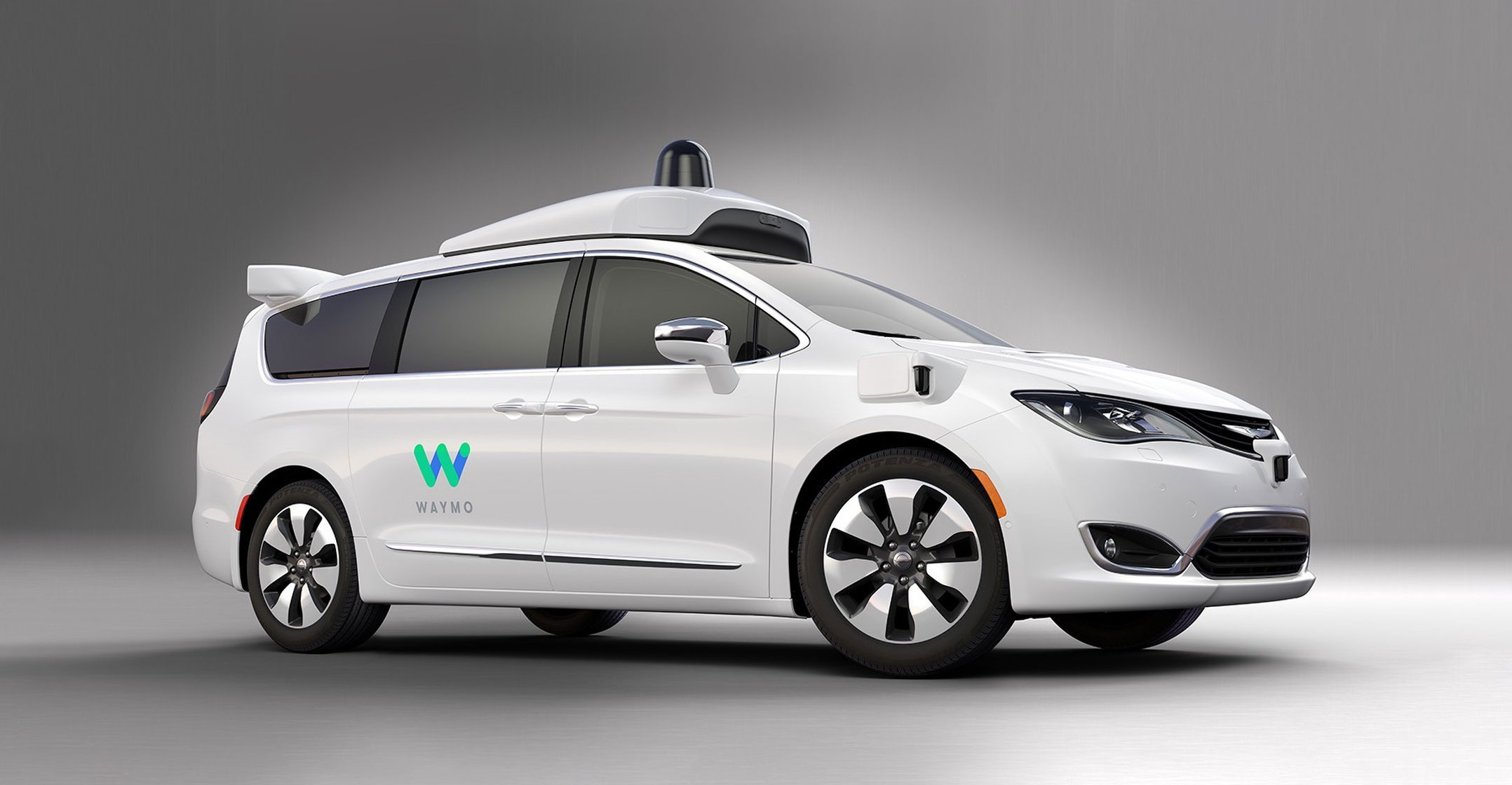
    A Waymo autonomous car

    Henry Ford didn’t invent the motor car. The late 1800s saw a flurry of innovation by hundreds of companies battling to deliver on the promise of fast, efficient and reasonably priced mechanical transportation. Ford later came to dominate the industry thanks to the development of the moving assembly line.

    Today the sector is poised for another breakthrough with the advent of cars that drive themselves. But unlike the original wave of automobile innovation, the race for supremacy in autonomous vehicles is concentrated among a few corporate giants. So, who is set to dominate this time?

    I’ve analysed six companies we think are leading the race to build the first truly driverless car. Three of these — General Motors, Ford and Volkswagen — come from the existing car industry and need to integrate self-driving technology into their existing fleet of mass-produced vehicles. The other three — Tesla, Uber and Waymo (owned by the same company as Google) — are newcomers from the digital technology world of Silicon Valley and have to build a mass manufacturing capability.

    Waymo’s experience, technology capability and ability to secure solid partnerships puts it at the head of the pack

    While it’s impossible to know all the developments at any given time, we have tracked investments, strategic partnerships and official press releases to learn more about what’s happening behind the scenes. The car industry typically rates self-driving technology on a scale from level 0 (no automation) to level 5 (full automation). We’ve assessed where each company is now and estimated how far they are from reaching the top level. Here’s how we think each player is performing.

    Volkswagen

    Volkswagen has invested in taxi-hailing app Gett and partnered with chip maker Nvidia to develop an artificial intelligence co-pilot for its cars. In 2018, the VW Group is set to release the Audi A8, the first production vehicle that reaches level 3 on the scale, “conditional driving automation”. This means the car’s computer will handle all driving functions, but a human has to be ready to take over if necessary.

    Ford

    Ford already sells cars with a level 2 autopilot, “partial driving automation”. This means one or more aspects of driving are controlled by a computer based on information about the environment, for example combined cruise control and lane centring. Alongside other investments, the company has put US$1 billion into Argo AI, an artificial intelligence company for self-driving vehicles. Following a trial to test pizza delivery using autonomous vehicles, Ford is now testing level 4 cars on public roads. These feature “high automation”, where the car can drive entirely on its own but not in certain conditions such as when the road surface is poor or the weather is bad.
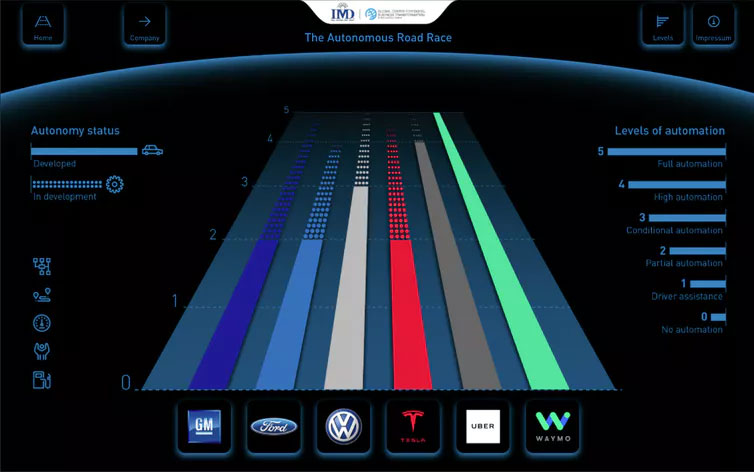
    Who’s winning the race. Image: IMD

    General Motors

    GM also sells vehicles with level 2 automation but, after buying Silicon Valley start-up Cruise Automation in 2016, now plans to launch the first mass production-ready level-5 autonomy vehicle that drives completely on its own by 2019. The Cruise AV will have no steering wheel or pedals to allow a human to take over and be part of a large fleet of driverless taxis the company plans to operate in big cities. But crucially the company hasn’t yet secured permission to test the car on public roads.

    Waymo (Google)

    Founded as a special project in 2009, Waymo separated from Google (though they’re both owned by the same parent firm, Alphabet) in 2016. Though it has never made, sold or operated a car on a commercial basis, Waymo has created test vehicles that have clocked more than 6.5m kilometress without human drivers as of November 2017. Waymo tested its level-5 car, Firefly, between 2015 and 2017 but then decided to focus on hardware that could be installed in other manufacturers’ vehicles, starting with the Chrysler Pacifica.

    Uber

    The taxi-hailing app maker Uber has been testing autonomous cars on the streets of Pittsburgh since 2016, always with an employee behind the wheel ready to take over in case of a malfunction. After buying the self-driving truck company Otto in 2016 for a reported $680m, Uber is now expanding its AI capabilities and plans to test Nvidia’s latest chips in Otto’s vehicles. It has also partnered with Volvo to create a self-driving fleet of cars, and with Toyota to co-create a ride-sharing autonomous vehicle.
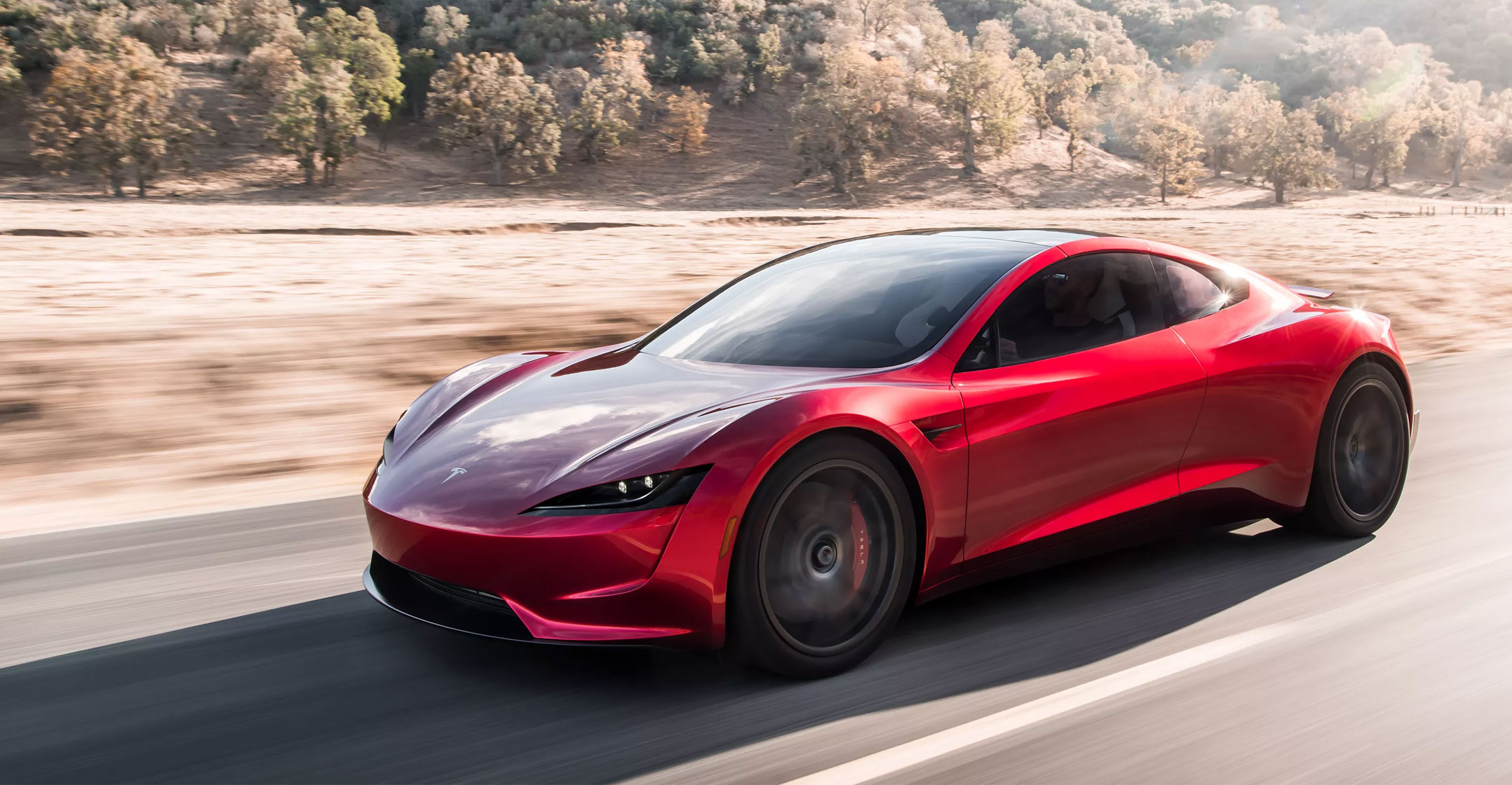
    Tesla Roadster

    Tesla

    The first major car manufacturer to come from Silicon Valley, Tesla was also the first to introduce level-2 autopilot back in 2015. The following year, it announced that all new Teslas would have the hardware for full autonomy, meaning once the software is finished it can be deployed on existing cars with an instant upgrade. Some experts have challenged this approach, arguing that the company has merely added surround cameras to its production cars that aren’t as capable as the laser-based sensing systems that most other car makers are using.

    But the company has collected data from hundreds of thousands of cars, driving millions of kilometres across all terrains. So we shouldn’t dismiss the firm’s founder, Elon Musk, when he claims a level-4 Tesla will drive from Los Angeles to New York without any human interference within the first half of 2018.

    Winners

    For now, the disruptors like Tesla, Waymo and Uber seem to have the upper hand. While the traditional automakers are focusing on bringing level-3 and -4 partial automation to market, the new companies are leapfrogging them by moving more directly towards level-5 full automation. Waymo may have the least experience of dealing with consumers in this sector but it has already clocked up a huge amount of time testing some of the most advanced technology on public roads.

    The incumbent car makers are also focused on the difficult process of integrating new technology and business models into their existing manufacturing operations by buying up small companies. The challengers, on the other hand, are easily partnering with other big players including manufacturers to get the scale and expertise they need more quickly.

    Tesla is building its own manufacturing capability but also collecting vast amounts of critical data that will enable it to more easily upgrade its cars when ready for full automation. Waymo’s experience, technology capability and ability to secure solid partnerships puts it at the head of the pack.The Conversation

    • Michael Wade is professor of innovation and strategy, Cisco chair in digital business transformation, IMD Business School
    • This article was originally published on The Conversation

    Add TechCentral as a preferred source on GoogleFollow TechCentral on Google NewsGet breaking news on WhatsApp


    Elon Musk Ford General Motors GM Tesla top Uber Volkswagen VW Waymo
    WhatsApp YouTube
    Share. Facebook Twitter LinkedIn WhatsApp Telegram Email Copy Link
    Previous ArticleSpaceX, Uber CEOs square off over flying cars
    Next Article Pharmaceuticals industry ‘facing its own Y2K’

    Related Posts

    Uber retreats from key African markets

    Uber retreats from key African markets

    3 September 2026
    Altman and Musk take their feud to the developers - Sam Altman

    Altman and Musk take their feud to the developers

    31 August 2026
    Chinese car makers go after South Africa's EV and bakkie buyers

    Chinese car makers go after South Africa’s EV and bakkie buyers

    30 August 2026
    Company News
    Why businesses are moving n8n onto their own servers - Domains.co.za

    Why businesses are moving n8n onto their own servers

    11 September 2026
    Nitda, NDPC and Galaxy Backbone back CyFrica 2026

    Nitda, NDPC and Galaxy Backbone back CyFrica 2026

    11 September 2026
    Can an online school produce a scientist? CambriLearn has an independent answer

    Can an online school produce a scientist? CambriLearn has an independent answer

    9 September 2026
    Opinion
    The fragile joint in the Capitec machine - Pambos Soteriades

    The R197-billion market the banks can’t reach

    25 August 2026
    South African tech's compounding debt problem - Jannie van Zyl

    Management consulting as we know it is over

    21 August 2026
    South African tech's compounding debt problem - Jannie van Zyl

    The most dangerous customer is the quiet one

    10 August 2026

    Subscribe to Updates

    Get the best South African technology news and analysis delivered to your e-mail inbox every morning.

    Latest Posts
    So, who exactly will buy Apple's R50 000 iPhone Duo

    Why Apple can’t tell you who its R50 000 iPhone is for

    11 September 2026
    South Africa is behind its neighbours on the plumbing of digital IDs

    South Africa is behind its neighbours on the plumbing of digital IDs

    11 September 2026
    South Africa to extradite US cyberfraud-gang suspects to US

    South Africa to extradite cyberfraud-gang suspects to US

    11 September 2026
    Newspaper group Caxton deploys AI editors

    Newspaper group Caxton deploys AI copy editors

    11 September 2026
    © 2009 - 2026 NewsCentral Media
    Built and maintained by Chronon
    • Cookie policy (ZA)
    • TechCentral – privacy and Popia

    Type above and press Enter to search. Press Esc to cancel.

    Manage consent

    TechCentral uses cookies to enhance its offerings. Consenting to these technologies allows us to serve you better. Not consenting or withdrawing consent may adversely affect certain features and functions of the website.

    Functional Always active
    The technical storage or access is strictly necessary for the legitimate purpose of enabling the use of a specific service explicitly requested by the subscriber or user, or for the sole purpose of carrying out the transmission of a communication over an electronic communications network.
    Preferences
    The technical storage or access is necessary for the legitimate purpose of storing preferences that are not requested by the subscriber or user.
    Statistics
    The technical storage or access that is used exclusively for statistical purposes. The technical storage or access that is used exclusively for anonymous statistical purposes. Without a subpoena, voluntary compliance on the part of your Internet Service Provider, or additional records from a third party, information stored or retrieved for this purpose alone cannot usually be used to identify you.
    Marketing
    The technical storage or access is required to create user profiles to send advertising, or to track the user on a website or across several websites for similar marketing purposes.
    • Manage options
    • Manage services
    • Manage {vendor_count} vendors
    • Read more about these purposes
    View preferences
    • {title}
    • {title}
    • {title}