Close Menu
TechCentralTechCentral

    Subscribe to the newsletter

    Get the best South African technology news and analysis delivered to your e-mail inbox every morning.

    Facebook X (Twitter) YouTube LinkedIn
    WhatsApp Facebook X (Twitter) LinkedIn YouTube
    TechCentralTechCentral
    • News
      Nedbank hires MTN's former tech chief as group CIO - Nikos Angelopoulos

      Nedbank hires MTN’s former tech chief as group CIO

      31 July 2026
      Eskom's diesel bill falls 86% as breakdowns hit eight-year low

      Eskom’s diesel bill falls 86% as breakdowns hit eight-year low

      31 July 2026
      Ramaphosa signs off on taking the grid away from Eskom

      Ramaphosa signs off on taking the grid away from Eskom

      31 July 2026
      Microsoft just had the biggest day in stock market history

      Microsoft just had the biggest day in stock market history

      31 July 2026
      MTN Nigeria's growth engine stalled in second quarter - Karl Toriola

      MTN Nigeria’s growth engine stalled in second quarter

      31 July 2026
    • World
      Meta AI will now tell parents if their teen is in crisis

      Meta AI will now tell parents if their teen is in crisis

      17 July 2026
      IBM shares crash 25% as AI upends software spending - Arvind Krishna

      IBM shares crash 25% as AI upends software spending

      15 July 2026
      Jony Ive's first OpenAI device: an AI smart speaker - Jony Ive and Sam Altman

      Jony Ive’s first OpenAI device: an AI smart speaker

      15 July 2026
      Stripe, Advent in talks to buy PayPal for $53-billion

      Stripe, Advent in talks to buy PayPal for $53-billion

      15 July 2026
      Memory crisis sends smartphone market into steep decline

      Memory crisis sends smartphone market into steep decline

      13 July 2026
    • In-depth
      The plan to stop AI from breaking the world - Google DeepMind CEO Demis Hassabis. Image: John Sears

      The plan to stop AI from breaking the world

      16 July 2026
      The internet has a Strait of Hormuz problem

      The internet has a Strait of Hormuz problem

      15 July 2026
      AI boom sparks rally, frenzy and fear

      AI boom sparks rally, frenzy and fear

      11 June 2026
      Every plug-in hybrid on sale in South Africa, ranked by price - Lamborghini Temerario

      Every plug-in hybrid on sale in South Africa, ranked by price

      7 June 2026
      What Wi-Fi 8 will mean for wireless networks

      What Wi-Fi 8 will mean for wireless networks

      1 June 2026
    • TCS
      TCS+ | Why South African workers must become supervisors of digital labour - Accelera Digital Group Cliff de Wit

      TCS+ | Why South African workers must become supervisors of digital labour

      31 July 2026
      TCS | Rapid deployment rules can't work without municipalities: ACT - Nomvuyiso Batyi

      TCS | Icasa’s rules skip the real bottleneck: ACT

      30 July 2026
      TCS+ | iStore Business on why Apple makes sense for SMEs - Sudesh Pillay and Tamia Nontsikelelo

      TCS+ | iStore Business on why Apple makes sense for SMEs

      30 July 2026
      TCS+ | A smarter approach to cloud for South African businesses - Joel Chacko and Jonathan Oaker

      TCS+ | A smarter approach to cloud for South African businesses

      28 July 2026
      TCS | How Optasia lends billions to people banks can't see - Salvador Anglada

      TCS | How Optasia lends billions to people banks can’t see

      23 July 2026
    • Opinion
      The author, Jannie van Zyl

      Selling vapour is corporate suicide in slow motion

      16 July 2026
      Brazil's online gambling crackdown is a lesson for South Africa

      How Amazon outmanoeuvred Starlink in South Africa

      15 July 2026
      The Popia problem with agentic AI - Herman Haasbroek

      The Popia problem with agentic AI

      14 July 2026
      The author, Fanie van Rooyen

      South Africa can still catch the AI wave – here’s how

      7 July 2026
      The author, Fanie van Rooyen

      The AI utopia South Africa can’t afford

      1 July 2026
    • Company Hubs
      • 1Stream
      • Africa Data Centres
      • AfriGIS
      • Altron Digital Business
      • Altron Document Solutions
      • Altron Group
      • Arctic Wolf
      • Ascent Technology
      • AvertITD
      • BBD
      • Braintree
      • CallMiner
      • CambriLearn
      • CM Telecom
      • Contactable
      • CYBER1 Solutions
      • Digicloud Africa
      • Digimune
      • Domains.co.za
      • ESET
      • Euphoria Telecom
      • HOSTAFRICA
      • Incredible Business
      • iONLINE
      • IQbusiness
      • Iris Network Systems
      • Kaspersky
      • LSD Open
      • Mitel
      • NEC XON
      • Netstar
      • Network Platforms
      • Next DLP
      • Ovations
      • Paracon
      • Paratus
      • Q-KON
      • SevenC
      • SkyWire
      • Solid8 Technologies
      • Telit Cinterion
      • Telviva
      • Tenable
      • Vertiv
      • Videri Digital
      • Vodacom Business
      • Vox
      • Wipro
      • Workday
      • XLink
    • Sections
      • AI and machine learning
      • Banking
      • Broadcasting and Media
      • Cloud services
      • Contact centres and CX
      • Cryptocurrencies
      • Education and skills
      • Electronics and hardware
      • Energy and sustainability
      • Enterprise software
      • Financial services
      • HealthTech
      • Information security
      • Internet and connectivity
      • Internet of Things
      • Investment
      • IT services
      • Lifestyle
      • Policy and regulation
      • Public sector
      • Retail and e-commerce
      • Satellite communications
      • Science
      • SMEs and start-ups
      • Social media
      • Talent and leadership
      • Telecoms
      • Watts & Wheels
    • Events
    • Advertise
    TechCentralTechCentral
    Home » Sections » Information security » Snode – the power of prioritising risk using AI

    Snode – the power of prioritising risk using AI

    Promoted | Artificial intelligence-driven cybersecurity is revolutionising business resilience.
    By Snode19 December 2024
    Twitter LinkedIn Facebook WhatsApp Email Telegram Copy Link
    News Alerts
    WhatsApp

    Snode - the power of prioritising riskOrganisations are facing an uphill battle in a world where cyberthreats evolve faster than cybersecurity practitioners can keep up. The overwhelming complexity of real-time data and a burgeoning attack surface create a daunting challenge for security teams.

    Yet the solution lies not merely in data management but also in strategic risk identification and stratification. This is where AI-driven cybersecurity platforms that prioritise risk change the game – offering businesses strategic protection and the advantage of streamlining risk management.

    The challenge: cognitive overload in cybersecurity

    For firms, monitoring their digital environments can feel like drowning in data. Imagine dashboards displaying billions of messages exchanged every second, relentless external interactions across networks and a slew of critical weaknesses that need immediate attention.

    This constant influx of information will overwhelm even the most experienced and skilled security teams. Conventional cybersecurity tools, while adept at generating alerts, often fail to answer the most critical questions – “so what?” and “now what?”.

    Learn more at www.snode.com

    This cognitive overload inevitably leads to decision paralysis, in which security teams are unable to prioritise amid the noise and end up focusing on symptoms instead of the root causes. This reactive approach can be costly, on the company’s purse and its reputation. Entities need to shift their stance to one that prioritises cyber risk and delivers actionable intelligence.

    Identifying the most effective intervention

    Vulnerabilities, threats and assets are not all created equal. Treating every alert with the same urgency wastes time and resources. A smart risk-prioritisation approach focuses on understanding which systems or data are most valuable to malefactors. Once this is in hand, they can weigh up the likelihood and impact of each possible attack and pinpoint the most effective intervention to neutralise and proactively manage risks.

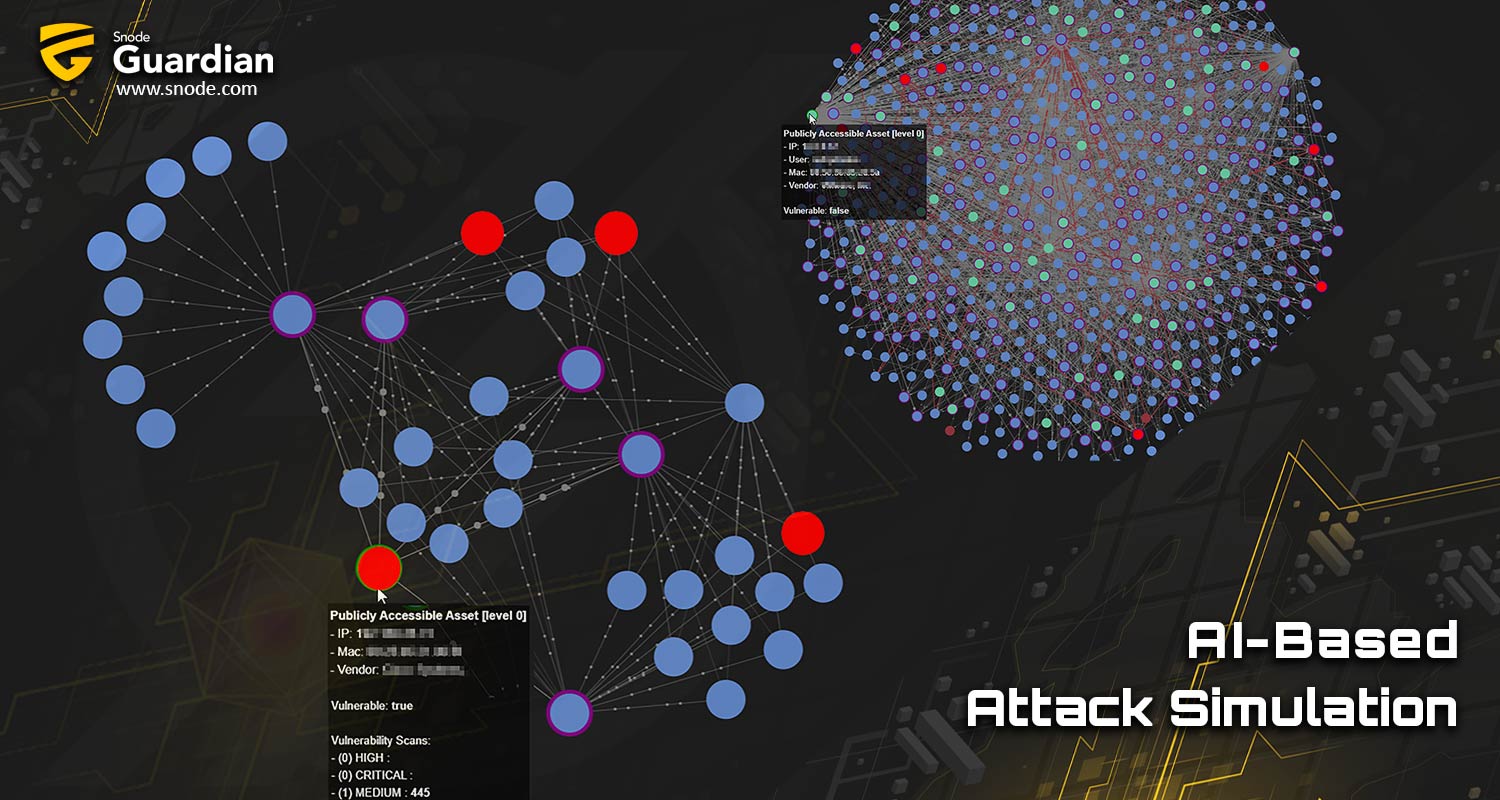
    Consider this: an AI-powered platform can analyse billions of events in real time, correlating vulnerabilities with potential attack paths for active threats. By isolating a critical vulnerability in an internet VPN that ultimately impacts a high-value internal client database, the platform can recommend a single targeted fix. This allows security teams to spend their limited time addressing the most impactful risks by disabling the attacker’s kill chain.

    AI in action: a real-world example

    We tested this novel approach on a Southern African telecommunications provider managing millions of transactions and subscribers daily. At any given moment, the company’s systems held between R20-million and R60-million in airtime value within its voucher databases. This airtime isn’t just a number – it’s money in digital form, and if it disappears due to fraud or unsanctioned access, it’s almost impossible to trace. Once leaked into the black market, it becomes an incredibly complex issue.

    However, our AI-driven approach processed this massive amount of data on the fly. It analysed millions of transactions, flagged unusual patterns and even isolated a single critical action that required immediate follow-up. In the event the risk was realised, where a fraudulent transaction attempted to siphon off millions of rands worth of airtime, our AI-powered system could recognise the anomaly, contain the threat and proactively mitigate the risk.

    This capability – isolating high-risk actions within seconds and presenting actionable insights – is not just innovative but game-changing. It’s not just about technology; it’s about targeted minimisation of financial and reputational risks by ensuring that vulnerabilities in critical infrastructure like telecoms are addressed before they cause any harm.
    Snode - the power of prioritising riskLimiting cognitive overload

    AI-powered platforms transform raw data into actionable intelligence. Instead of reacting to every alert, security teams can focus on the highest-priority risks. This clarity limits cognitive overload and helps security teams make faster and more efficient decisions.

    Cybersecurity budgets are already stretched to the max. By prioritising the most critical risks, organisations can allocate resources where they matter most. This limits the chances of costly and embarrassing breaches and avoids budget being wasted on less crucial issues.

    Downtime caused by cyber incidents can cripple operations. By proactively addressing vulnerabilities in critical systems, firms can prevent disruptions and maintain trust with customers and stakeholders. Further to this point, all industries face stringent compliance requirements. Risk-based approaches align with regulations like Popia, GDPR and HIPAA, and frameworks like NIST, ensuring companies meet their obligations while minimising exposure to penalties.

    The role of AI in driving innovation

    AI is the cornerstone of modern risk prioritisation. Here’s how it works:

    • Correlation and classification: AI algorithms classify related events by attack phase (such as initial access and lateral movement).
    • Profiling and cartography: Platforms identify the most critical assets to the business, ensuring targeted protection.
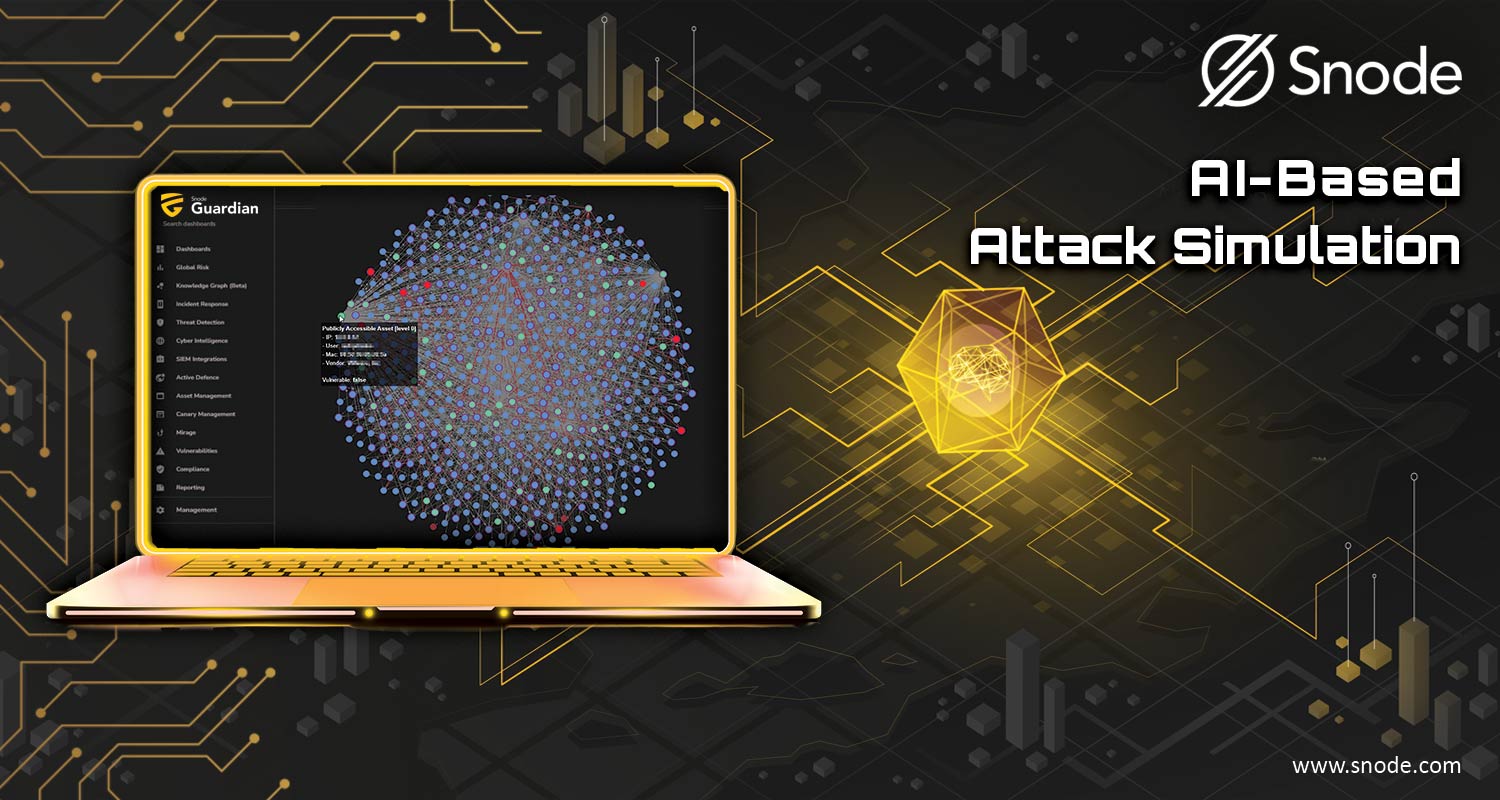
    • Digital twin attack simulation: AI creates visual attack paths, showing how vulnerabilities can be exploited – and how to break the chain.

    Unlike traditional tools, AI doesn’t just alert – it predicts, prescribes and automates corrective actions. This shift from reactive monitoring to proactive intelligence and automated operations is a giant leap forward in the war against cybercrime.

    A smarter, safer future

    In cybersecurity, knowing what to protect – and how to protect it – is half the battle. Businesses can shift from firefighting to forward-thinking by leveraging AI to prioritise risk. The result is stronger defences and a more resilient, competitive enterprise.

    Sun Tzu once said: “In the midst of chaos, there is also opportunity.” In today’s digital landscape, that opportunity lies in harnessing the power of AI to turn data into intelligence and risks into action.

    With a cyber-threat landscape in constant flux, organisations need better, more sophisticated ways to protect themselves. Snode’s approach to cyber threat exposure management (CTEM) incorporates AI, machine learning, active asset management and SOAR, helping businesses proactively defend themselves in the war against exploitation.

    Learn more at www.snode.com.

    • Read more articles by Snode on TechCentral
    • This promoted content was paid for by the party concerned

    Follow TechCentral on Google News Add TechCentral as your preferred source on Google


    Snode Snode Technologies
    WhatsApp YouTube
    Share. Facebook Twitter LinkedIn WhatsApp Telegram Email Copy Link
    Previous ArticleBig management changes at MTN Group
    Next Article Unleash your potential with Microsoft’s power trio

    Related Posts

    Building digital twins that can be trusted - Snode Technologies - Snode Technologies

    Building digital twins that can be trusted

    5 May 2026
    When the physical world goes online: the new front line of cyber risk - Snode Technologies

    When the physical world goes online: the new front line of cyber risk

    12 December 2025
    The next cyber battlefield is in orbit - and it's already under attack

    The next cyber battlefield is in orbit – and it’s already under attack

    14 October 2025
    Add A Comment

    Comments are closed.

    Company News
    Domains.co.za launches self-hosted n8n VPS hosting

    Domains.co.za launches self-hosted n8n VPS hosting

    31 July 2026
    Smarter.tech '26 shows why smarter technology begins with context - Obsidian Systems

    Context is the missing piece in enterprise AI: Obsidian

    31 July 2026
    Huawei launches 12 intelligent transport solutions in South Africa - Sam Tang

    Huawei launches 12 intelligent transport solutions in South Africa

    30 July 2026
    Opinion
    The author, Jannie van Zyl

    Selling vapour is corporate suicide in slow motion

    16 July 2026
    Brazil's online gambling crackdown is a lesson for South Africa

    How Amazon outmanoeuvred Starlink in South Africa

    15 July 2026
    The Popia problem with agentic AI - Herman Haasbroek

    The Popia problem with agentic AI

    14 July 2026

    Subscribe to Updates

    Get the best South African technology news and analysis delivered to your e-mail inbox every morning.

    Latest Posts
    Nedbank hires MTN's former tech chief as group CIO - Nikos Angelopoulos

    Nedbank hires MTN’s former tech chief as group CIO

    31 July 2026
    Eskom's diesel bill falls 86% as breakdowns hit eight-year low

    Eskom’s diesel bill falls 86% as breakdowns hit eight-year low

    31 July 2026
    Ramaphosa signs off on taking the grid away from Eskom

    Ramaphosa signs off on taking the grid away from Eskom

    31 July 2026
    TCS+ | Why South African workers must become supervisors of digital labour - Accelera Digital Group Cliff de Wit

    TCS+ | Why South African workers must become supervisors of digital labour

    31 July 2026
    © 2009 - 2026 NewsCentral Media
    Built and maintained by Chronon
    • Cookie policy (ZA)
    • TechCentral – privacy and Popia

    Type above and press Enter to search. Press Esc to cancel.

    Manage consent

    TechCentral uses cookies to enhance its offerings. Consenting to these technologies allows us to serve you better. Not consenting or withdrawing consent may adversely affect certain features and functions of the website.

    Functional Always active
    The technical storage or access is strictly necessary for the legitimate purpose of enabling the use of a specific service explicitly requested by the subscriber or user, or for the sole purpose of carrying out the transmission of a communication over an electronic communications network.
    Preferences
    The technical storage or access is necessary for the legitimate purpose of storing preferences that are not requested by the subscriber or user.
    Statistics
    The technical storage or access that is used exclusively for statistical purposes. The technical storage or access that is used exclusively for anonymous statistical purposes. Without a subpoena, voluntary compliance on the part of your Internet Service Provider, or additional records from a third party, information stored or retrieved for this purpose alone cannot usually be used to identify you.
    Marketing
    The technical storage or access is required to create user profiles to send advertising, or to track the user on a website or across several websites for similar marketing purposes.
    • Manage options
    • Manage services
    • Manage {vendor_count} vendors
    • Read more about these purposes
    View preferences
    • {title}
    • {title}
    • {title}