
Close Menu
TechCentralTechCentral

    Subscribe to the newsletter

    Get the best South African technology news and analysis delivered to your e-mail inbox every morning.

    Facebook X (Twitter) YouTube LinkedIn
    WhatsApp Facebook X (Twitter) LinkedIn YouTube
    TechCentralTechCentral
    • News
      Why electric trucks are beating electric cars to South Africa - Hiten Parmar

      Why electric trucks are beating electric cars to South Africa

      3 September 2026
      Only one in 10 township businesses sells online

      Only one in 10 township businesses sells online

      3 September 2026
      Rural South Africans should not have to trade competition for coverage - Paul Colmer

      Rural South Africans should not have to trade competition for coverage

      3 September 2026
      Adrian Gore sets an October date for Discovery's 'super bank'

      Adrian Gore sets an October date for Discovery’s ‘super bank’

      3 September 2026
      Discovery bolts AI-driven healthtech onto Vitality with Icario deal

      Discovery bolts AI-driven healthtech onto Vitality with Icario deal

      3 September 2026
    • World
      'This is not circular': Jensen Huang defends $3.5-billion MediaTek deal

      ‘This is not circular’: Jensen Huang defends $3.5-billion MediaTek deal

      2 September 2026
      AI-generated music banned from Australian charts

      AI-generated music banned from Australian charts

      26 August 2026
      Traders brace for a R4.5-trillion swing in Nvidia's value

      Traders brace for a R4.5-trillion swing in Nvidia’s value

      25 August 2026
      Russia building its own Starlink - and faster than expected - Vadym Skibitskyi

      Russia building its own Starlink – and faster than expected

      11 August 2026
      Meta AI will now tell parents if their teen is in crisis

      Meta AI will now tell parents if their teen is in crisis

      17 July 2026
    • In-depth
      Google DeepMind CEO Demis Hassabis. Image: John Sears

      The plan to stop AI from breaking the world

      16 July 2026
      The internet has a Strait of Hormuz problem

      The internet has a Strait of Hormuz problem

      15 July 2026
      AI boom sparks rally, frenzy and fear

      AI boom sparks rally, frenzy and fear

      11 June 2026
      Every plug-in hybrid on sale in South Africa, ranked by price - Lamborghini Temerario

      Every plug-in hybrid on sale in South Africa, ranked by price

      7 June 2026
      What Wi-Fi 8 will mean for wireless networks

      What Wi-Fi 8 will mean for wireless networks

      1 June 2026
    • TCS
      Winstone Jordaan on building a national EV charging network

      Winstone Jordaan on building a national EV charging network

      2 September 2026
      Watts & Wheels S1E8: 'Tesla lands in Africa, just not here'

      Watts & Wheels S1E8: ‘Tesla lands in Africa, just not here’

      24 August 2026
      TCS | Herotel CEO Van Zyl Botha on beating Starlink to South Africa

      TCS | Herotel CEO Van Zyl Botha on beating Starlink to South Africa

      14 August 2026
      Meet the CIO | Discovery's Derek Wilcocks on AI, guardrails and growth

      Meet the CIO | Derek Wilcocks on how AI personalised Vitality

      13 August 2026
      TCS | Money just became native to the internet - Steven Boykey Sidley

      TCS | Money just became native to the internet – Steven Boykey Sidley

      12 August 2026
    • Opinion
      The fragile joint in the Capitec machine - Pambos Soteriades

      The R197-billion market the banks can’t reach

      25 August 2026
      South African tech's compounding debt problem - Jannie van Zyl

      Management consulting as we know it is over

      21 August 2026
      South African tech's compounding debt problem - Jannie van Zyl

      The most dangerous customer is the quiet one

      10 August 2026
      South African tech's compounding debt problem - Jannie van Zyl

      South African tech’s compounding debt problem

      29 July 2026
      The fragile joint in the Capitec machine - Pambos Soteriades

      Best network, worst vibes: the puzzle of SA telecoms

      20 July 2026
    • Company Hubs
      • 1Stream
      • Africa Data Centres
      • AfriGIS
      • Altron Digital Business
      • Altron Document Solutions
      • Altron Group
      • Arctic Wolf
      • Ascent Technology
      • AvertITD
      • BBD
      • Braintree
      • CallMiner
      • CambriLearn
      • CM.com
      • Contactable
      • CYBER1 Solutions
      • Digicloud Africa
      • Digimune
      • Domains.co.za
      • ESET
      • Euphoria Telecom
      • HOSTAFRICA
      • Incredible Business
      • iONLINE
      • IQbusiness
      • Iris Network Systems
      • Kaspersky
      • LSD Open
      • Mitel
      • NEC XON
      • Netstar
      • Network Platforms
      • Next DLP
      • Ovations
      • Paracon
      • Paratus
      • Q-KON
      • SevenC
      • SkyWire
      • Solid8 Technologies
      • Telit Cinterion
      • Telviva
      • Tenable
      • Vertiv
      • Videri Digital
      • Vodacom Business
      • Vox
      • Wipro
      • Workday
      • XLink
    • Sections
      • AI and machine learning
      • Banking
      • Broadcasting and Media
      • Cloud services
      • Contact centres and CX
      • Cryptocurrencies
      • Education and skills
      • Electronics and hardware
      • Energy and sustainability
      • Enterprise software
      • Financial services
      • HealthTech
      • Information security
      • Internet and connectivity
      • Internet of Things
      • Investment
      • IT services
      • Lifestyle
      • Policy and regulation
      • Public sector
      • Retail and e-commerce
      • Satellite communications
      • Science
      • SMEs and start-ups
      • Social media
      • Talent and leadership
      • Telecoms
      • Watts & Wheels
    • Events
    • Advertise
    TechCentralTechCentral
    Home » Sections » Telecoms » MTN rethinks connectivity for Africa’s diverse realities

    MTN rethinks connectivity for Africa’s diverse realities

    Promoted | MTN recognises that traditional infrastructure alone may not be enough to bridge the digital divide.
    By MTN4 April 2025
    Twitter LinkedIn Facebook WhatsApp Email Telegram Copy Link
    News Alerts
    WhatsApp
    MTN rethinks connectivity for Africa's diverse realities - Mazen Mroué
    The author, Mazen Mroué, CEO: MTN Digital Infrastructure and group chief technology and information officer

    Across sub-Saharan Africa, mobile phones are often the first and only gateway to the internet. Yet, while nearly 90% of the population is now covered by mobile broadband, only 27% are actually online.

    And in rural areas – home to a majority of the population – that gap is even more pronounced. These figures remind us that coverage does not equal inclusion. Infrastructure, while essential, must be supported by affordability, usability and resilience to drive meaningful connectivity.

    At MTN, we’ve always believed in the power of connectivity to unlock potential and drive inclusive progress. But we also recognise that traditional infrastructure alone may not be enough to bridge the digital divide – especially in the most remote and underserved communities. That’s why we’re exploring complementary technologies like low-Earth-orbit (LEO) satellite connectivity through strategic partnerships. These innovations have the potential to significantly extend the reach, resilience and reliability of our networks, bringing us closer to a world where everyone, everywhere, is connected.

    People can connect using the devices they already have, without the need for specialised equipment

    Our first trial with satellite-to-mobile innovation began in Liberia, where, in partnership with Lynk Global, we conducted the continent’s first trial of satellite connectivity to standard mobile phones. It was a small but significant step – proving that even in some of the most difficult-to-reach areas, people could connect without new or specialised devices.

    We’ve since built on that learning. More recently, in Vryburg, a rural town in South Africa’s North West province, we completed a similar technical trial – again with Lynk. The satellite-to-mobile call was Africa’s first of its kind, built on what we had previously learned in Liberia. These trials are part of a broader initiative aimed at testing practical solutions that could help bridge persistent coverage and usage gaps.

    Why satellite matters now

    LEO satellite systems orbit the Earth at altitudes between 160km and 2 000km – much closer than traditional geostationary satellites. This proximity enables lower latency and more efficient data transfer, making services like voice calls and messaging viable even in areas far from towers or fibre links, which is why they’re ideal for expanding connectivity to remote and underserved regions.

    Crucially, this technology is designed to work with regular mobile phones on 2G, 4G and eventually 5G networks, depending on the satellite provider. This means people can connect using the devices they already have, without the need for specialised equipment, making the solution more practical for underserved and remote communities. It works with the mobile phones that people already use – there’s no need for expensive or hard-to-find hardware. For a continent where cost remains one of the primary barriers to connectivity, this opens real possibilities.

    And while infrastructure costs have historically limited our ability to reach sparsely populated or geographically remote communities, satellite technologies offer a scalable and cost-effective complement, one that aligns with our goal to achieve 99% broadband population coverage in South Africa, and to drive similar efforts across our markets.
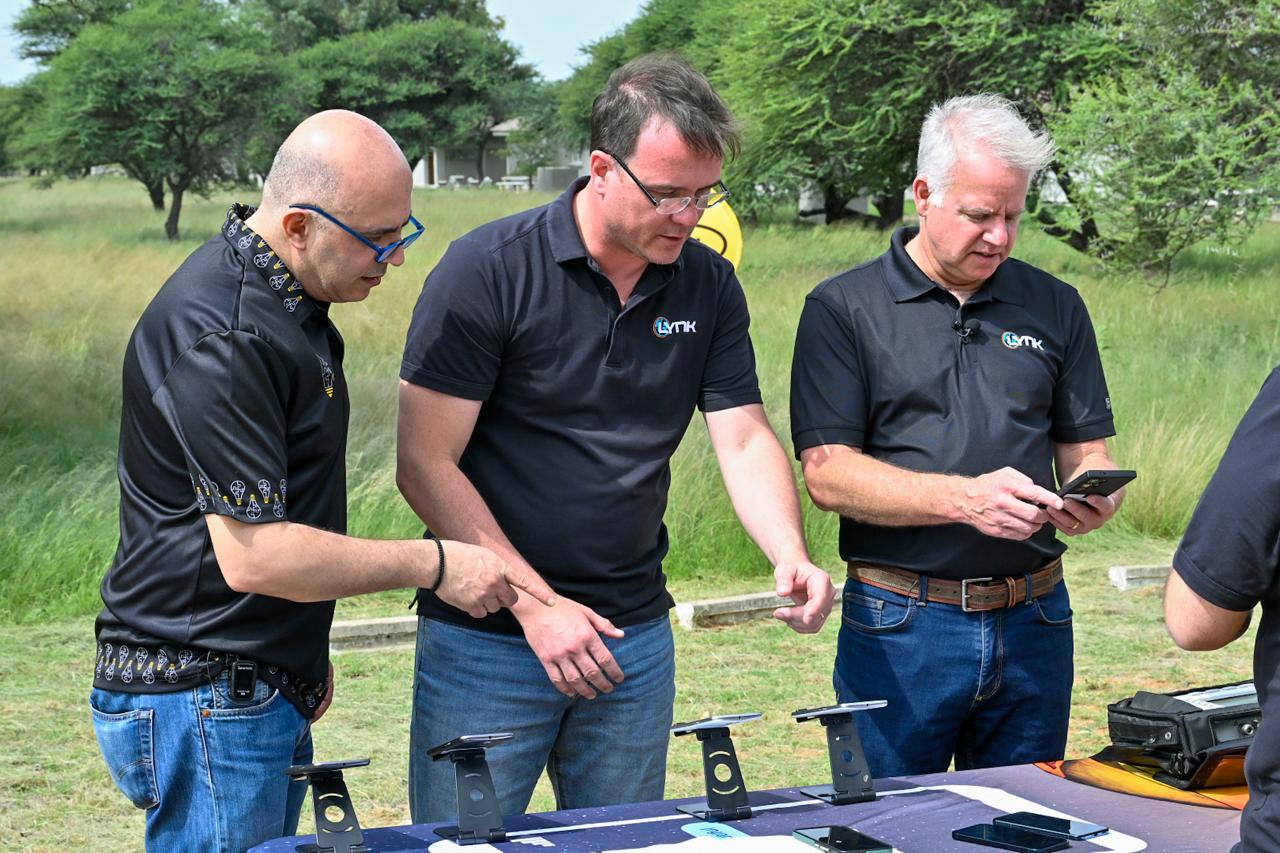
    The satellite test call was placed at Vryburg in North West

    However, even where coverage is available, adoption often lags. According to the GSMA, more than 60% of sub-Saharan Africans live within mobile broadband coverage but remain offline. The reasons are layered: affordability of data and devices, lack of digital literacy, and uncertainty around the value of being online.

    These are challenges we cannot address with technology alone. It requires partnerships, education, ecosystem development and, most importantly, empathy. When we talk about digital inclusion, we are talking about people: farmers trying to access market prices, students seeking online learning and women entrepreneurs looking to reach new customers.

    It also requires an understanding that progress will not be uniform. Communities have different starting points, and our approach must reflect that.

    Building resilience

    Satellite connectivity also contributes an important additional layer to our network resilience. Across many of our markets, natural disasters – particularly flooding – have disrupted terrestrial infrastructure, leaving affected communities digitally isolated at the worst possible moments. In those situations, the ability to make a call, send a message or receive an emergency alert can make a meaningful difference.

    Satellite links provide a crucial layer of redundancy. They keep communication channels open when terrestrial networks are under pressure, support emergency coordination and enable mass notifications, ensuring people are informed, even in the most challenging circumstances.

    By integrating satellite technology with our broader network design, we are building not only reach but also adaptability. This hybrid approach strengthens our infrastructure strategy and helps ensure that our networks are built to serve people in real-world conditions, not just ideal ones.

    Objectively speaking, we still have a long way to go. The digital divide in Africa is persistent and evolving

    Objectively speaking, we still have a long way to go. The digital divide in Africa is persistent and evolving. The infrastructure gaps of the past are now joined by usage gaps, affordability barriers and digital literacy challenges. The divide is shaped by many factors, and the solutions must be as diverse and adaptive as the communities we aim to serve.

    Each trial, each insight and each collaboration contributes to our understanding of what it takes to build a more inclusive and resilient digital future. And while we take pride in the progress made, we approach the road ahead with humility and a clear-eyed view of the work still to be done.

    Sustained collaboration

    We also recognise that this is not a journey we take alone. True progress relies on sustained collaboration, with technology partners, communities, regulators and governments all playing a vital role in shaping the conditions for inclusive and sustainable connectivity.

    The satellite-to-mobile call in Vryburg in North West may have been brief, but what it symbolised is lasting: that access can be reimagined, that innovation is most powerful when driven by purpose and that digital inclusion is not a one-time achievement but a continuous commitment we must uphold.

    • The author, Mazen Mroué, is CEO: MTN Digital Infrastructure and group chief technology and information officer
    • Read more articles by MTN on TechCentral
    • This promoted content was paid for by the party concerned

    Don’t miss:

    MTN SuperFlex: the ultimate digital-first mobile plan with no contracts

    Follow TechCentral on Google News Add TechCentral as your preferred source on Google


    Lynk Global Mazen Mroue MTN
    WhatsApp YouTube
    Share. Facebook Twitter LinkedIn WhatsApp Telegram Email Copy Link
    Previous ArticleHonor Magic7 Pro launched in SA, offering next-gen AI
    Next Article YouTube Premium price hike in South Africa

    Related Posts

    If it quacks like a duck: Kganyago on regulating fintechs - Reserve Bank governor Lesetja Kganyago

    If it quacks like a duck: Kganyago on regulating fintechs

    1 September 2026
    Blu Label says MTN is coming for its Capitec business - Brett Levy

    Blu Label says MTN is coming for its Capitec business

    26 August 2026
    MTN targets 150MW in first phase of AI data centre push

    MTN targets 150MW in first phase of AI data centre push

    25 August 2026
    Company News
    How to build a security operations centre that actually works - Kaspersky

    How to build a security operations centre that actually works

    3 September 2026
    Paratus Uganda first to market with Starlink service

    Paratus Uganda first to market with Starlink service

    2 September 2026
    Solid8 brings AlgoSec Horizon to Southern Africa - Simone Santana

    Solid8 brings AlgoSec Horizon to Southern Africa

    1 September 2026
    Opinion
    The fragile joint in the Capitec machine - Pambos Soteriades

    The R197-billion market the banks can’t reach

    25 August 2026
    South African tech's compounding debt problem - Jannie van Zyl

    Management consulting as we know it is over

    21 August 2026
    South African tech's compounding debt problem - Jannie van Zyl

    The most dangerous customer is the quiet one

    10 August 2026

    Subscribe to Updates

    Get the best South African technology news and analysis delivered to your e-mail inbox every morning.

    Latest Posts
    Why electric trucks are beating electric cars to South Africa - Hiten Parmar

    Why electric trucks are beating electric cars to South Africa

    3 September 2026
    Only one in 10 township businesses sells online

    Only one in 10 township businesses sells online

    3 September 2026
    Rural South Africans should not have to trade competition for coverage - Paul Colmer

    Rural South Africans should not have to trade competition for coverage

    3 September 2026
    Adrian Gore sets an October date for Discovery's 'super bank'

    Adrian Gore sets an October date for Discovery’s ‘super bank’

    3 September 2026
    © 2009 - 2026 NewsCentral Media
    Built and maintained by Chronon
    • Cookie policy (ZA)
    • TechCentral – privacy and Popia

    Type above and press Enter to search. Press Esc to cancel.

    Manage consent

    TechCentral uses cookies to enhance its offerings. Consenting to these technologies allows us to serve you better. Not consenting or withdrawing consent may adversely affect certain features and functions of the website.

    Functional Always active
    The technical storage or access is strictly necessary for the legitimate purpose of enabling the use of a specific service explicitly requested by the subscriber or user, or for the sole purpose of carrying out the transmission of a communication over an electronic communications network.
    Preferences
    The technical storage or access is necessary for the legitimate purpose of storing preferences that are not requested by the subscriber or user.
    Statistics
    The technical storage or access that is used exclusively for statistical purposes. The technical storage or access that is used exclusively for anonymous statistical purposes. Without a subpoena, voluntary compliance on the part of your Internet Service Provider, or additional records from a third party, information stored or retrieved for this purpose alone cannot usually be used to identify you.
    Marketing
    The technical storage or access is required to create user profiles to send advertising, or to track the user on a website or across several websites for similar marketing purposes.
    • Manage options
    • Manage services
    • Manage {vendor_count} vendors
    • Read more about these purposes
    View preferences
    • {title}
    • {title}
    • {title}