Close Menu
TechCentralTechCentral

    Subscribe to the newsletter

    Get the best South African technology news and analysis delivered to your e-mail inbox every morning.

    Facebook X (Twitter) YouTube LinkedIn
    WhatsApp Facebook X (Twitter) LinkedIn YouTube
    TechCentralTechCentral
    • News
      Xneelo breaks ground on second Samrand data centre

      Xneelo breaks ground on second Samrand data centre

      3 February 2026
      Heavyweights backing ZARU, a new rand-based stablecoin in South Africa

      Heavyweights backing ZARU, a new rand-based stablecoin

      3 February 2026
      China's Haier takes aim at Samsung, LG and Hisense in South Africa

      China’s Haier takes aim at Samsung, LG and Hisense in South Africa

      3 February 2026
      South African tech start-ups that sold big on the world stage

      South African tech start-ups that sold big on the world stage

      3 February 2026
      Standard Bank branches are going cashless - Kabelo Makeke

      Standard Bank branches are going cashless

      3 February 2026
    • World
      Apple acquires audio AI start-up Q.ai

      Apple acquires audio AI start-up Q.ai

      30 January 2026
      SpaceX IPO may be largest in history

      SpaceX IPO may be largest in history

      28 January 2026
      Nvidia throws AI at the weather

      Nvidia throws AI at weather forecasting

      27 January 2026
      Debate erupts over value of in-flight Wi-Fi

      Debate erupts over value of in-flight Wi-Fi

      26 January 2026
      Intel takes another hit - Intel CEO Lip-Bu Tan. Laure Andrillon/Reuters

      Intel takes another hit

      23 January 2026
    • In-depth
      How liberalisation is rewiring South Africa's power sector

      How liberalisation is rewiring South Africa’s power sector

      21 January 2026
      The top-performing South African tech shares of 2025

      The top-performing South African tech shares of 2025

      12 January 2026
      Digital authoritarianism grows as African states normalise internet blackouts

      Digital authoritarianism grows as African states normalise internet blackouts

      19 December 2025
      TechCentral's South African Newsmakers of 2025

      TechCentral’s South African Newsmakers of 2025

      18 December 2025
      Black Friday goes digital in South Africa as online spending surges to record high

      Black Friday goes digital in South Africa as online spending surges to record high

      4 December 2025
    • TCS
      TCS+ | How Cloud On Demand is helping SA businesses succeed in the cloud - Xhenia Rhode, Dion Kalicharan

      TCS+ | Cloud On Demand and Consnet: inside a real-world AWS partner success story

      30 January 2026
      Watts & Wheels S1E3: 'BYD's Corolla Cross challenger'

      Watts & Wheels S1E3: ‘BYD’s Corolla Cross challenger’

      30 January 2026
      Watts & Wheels S1E3: 'BYD's Corolla Cross challenger'

      Watts & Wheels S1E2: ‘China attacks, BMW digs in, Toyota’s sublime supercar’

      23 January 2026

      TCS+ | Why cybersecurity is becoming a competitive advantage for SA businesses

      20 January 2026
      Watts & Wheels S1E3: 'BYD's Corolla Cross challenger'

      Watts & Wheels: S1E1 – ‘William, Prince of Wheels’

      8 January 2026
    • Opinion
      South Africa's skills advantage is being overlooked at home - Richard Firth

      South Africa’s skills advantage is being overlooked at home

      29 January 2026
      Why Elon Musk's Starlink is a 'hard no' for me - Songezo Zibi

      Why Elon Musk’s Starlink is a ‘hard no’ for me

      26 January 2026
      South Africa's new fibre broadband battle - Duncan McLeod

      South Africa’s new fibre broadband battle

      20 January 2026
      AI moves from pilots to production in South African companies - Nazia Pillay SAP

      AI moves from pilots to production in South African companies

      20 January 2026
      South Africa's new fibre broadband battle - Duncan McLeod

      ANC’s attack on Solly Malatsi shows how BEE dogma trumps economic reality

      14 December 2025
    • Company Hubs
      • Africa Data Centres
      • AfriGIS
      • Altron Digital Business
      • Altron Document Solutions
      • Altron Group
      • Arctic Wolf
      • AvertITD
      • Braintree
      • CallMiner
      • CambriLearn
      • CYBER1 Solutions
      • Digicloud Africa
      • Digimune
      • Domains.co.za
      • ESET
      • Euphoria Telecom
      • Incredible Business
      • iONLINE
      • IQbusiness
      • Iris Network Systems
      • LSD Open
      • NEC XON
      • Netstar
      • Network Platforms
      • Next DLP
      • Ovations
      • Paracon
      • Paratus
      • Q-KON
      • SevenC
      • SkyWire
      • Solid8 Technologies
      • Telit Cinterion
      • Tenable
      • Vertiv
      • Videri Digital
      • Vodacom Business
      • Wipro
      • Workday
      • XLink
    • Sections
      • AI and machine learning
      • Banking
      • Broadcasting and Media
      • Cloud services
      • Contact centres and CX
      • Cryptocurrencies
      • Education and skills
      • Electronics and hardware
      • Energy and sustainability
      • Enterprise software
      • Financial services
      • Information security
      • Internet and connectivity
      • Internet of Things
      • Investment
      • IT services
      • Lifestyle
      • Motoring
      • Public sector
      • Retail and e-commerce
      • Satellite communications
      • Science
      • SMEs and start-ups
      • Social media
      • Talent and leadership
      • Telecoms
    • Events
    • Advertise
    TechCentralTechCentral
    Home » In-depth » Solar and mobile will fuel Africa’s future economy

    Solar and mobile will fuel Africa’s future economy

    By Agency Staff31 July 2019
    Twitter LinkedIn Facebook WhatsApp Email Telegram Copy Link
    News Alerts
    WhatsApp

    Backyard industrialisation has been tried; it was a miserable failure. During the so-called Great Leap Forward in China under Mao Zedong, peasants were encouraged to erect steel furnaces in their back yards. Predictably, most people had no idea how to build a mini steel plant much less make steel, and there was no market for their wares. The result was economic disaster.

    But you don’t have to invoke Mao to see that most production tends to be centralised. Manufacturing tends to cluster in factory towns, and these towns are connected by roads and rail. Infrastructure is essential to development — factories need to ship in raw materials and parts and ship out finished goods, and workers need to travel from home to work. Energy, sewage, broadband Internet and infrastructure are also essential for offices and factories. Good transportation is important for more subtle reasons — salespeople and marketers can more easily get a feel for demand in nearby areas, and engineers and other knowledge workers can more easily intermingle and exchange ideas.

    A number of major recent innovations are making fragmented, geographically isolated systems of production more feasible

    This is probably why the world’s rich countries tend to be those with effective centralised governments that are dedicated to building infrastructure networks. Any list of countries with the best roads, tunnels, ports and electrical grids is dominated by rich nations such as Switzerland, Japan, France and the US. And it’s probably why China, which pours a large share of its economic output into building infrastructure, has grown and industrialised so rapidly.

    But that means countries without competent central governments are in trouble. This is especially a problem in Africa, where political stability was elusive until recently. Corruption is a big roadblock for infrastructure there as well. But even countries with stable, centralised systems can struggle to build world-class road and transit systems — witness India, where subpar infrastructure has long been seen as a barrier to matching China’s manufacturing dominance. India is doing a bit better recently — its spending on roads has risen and quality has improved, but land acquisition costs are still a major impediment, and corruption remains a problem.

    Next wave

    The infrastructure problem will eventually become less severe, as poor countries in Africa and South Asia figure out how to improve governance, spend more effectively and bring down costs. But in the meantime, another force is emerging that could make things easier for the next wave of developing nations — technology. A number of major recent innovations are making fragmented, geographically isolated systems of production more feasible.

    The first such technology, not surprisingly, is mobile phones. By allowing information to be sent long distances without networks of roads, phone lines or broadband, mobile phones are changing Africa rapidly. Already, mobile penetration is very high.

    Agriculture, in turn, has been transformed — mobile phones allow farmers to trade and learn about prices, get weather forecasts and buy insurance and other crucial financial services, all without leaving their fields. Finance is also transforming Africa, which is now the world leader in mobile banking. A 2018 McKinsey report called Africa’s mobile fintech sector a “hotbed of innovation”, and a report by the Brookings Institution suggested that IT services could serve as a big source of employment for the country’s young workers.

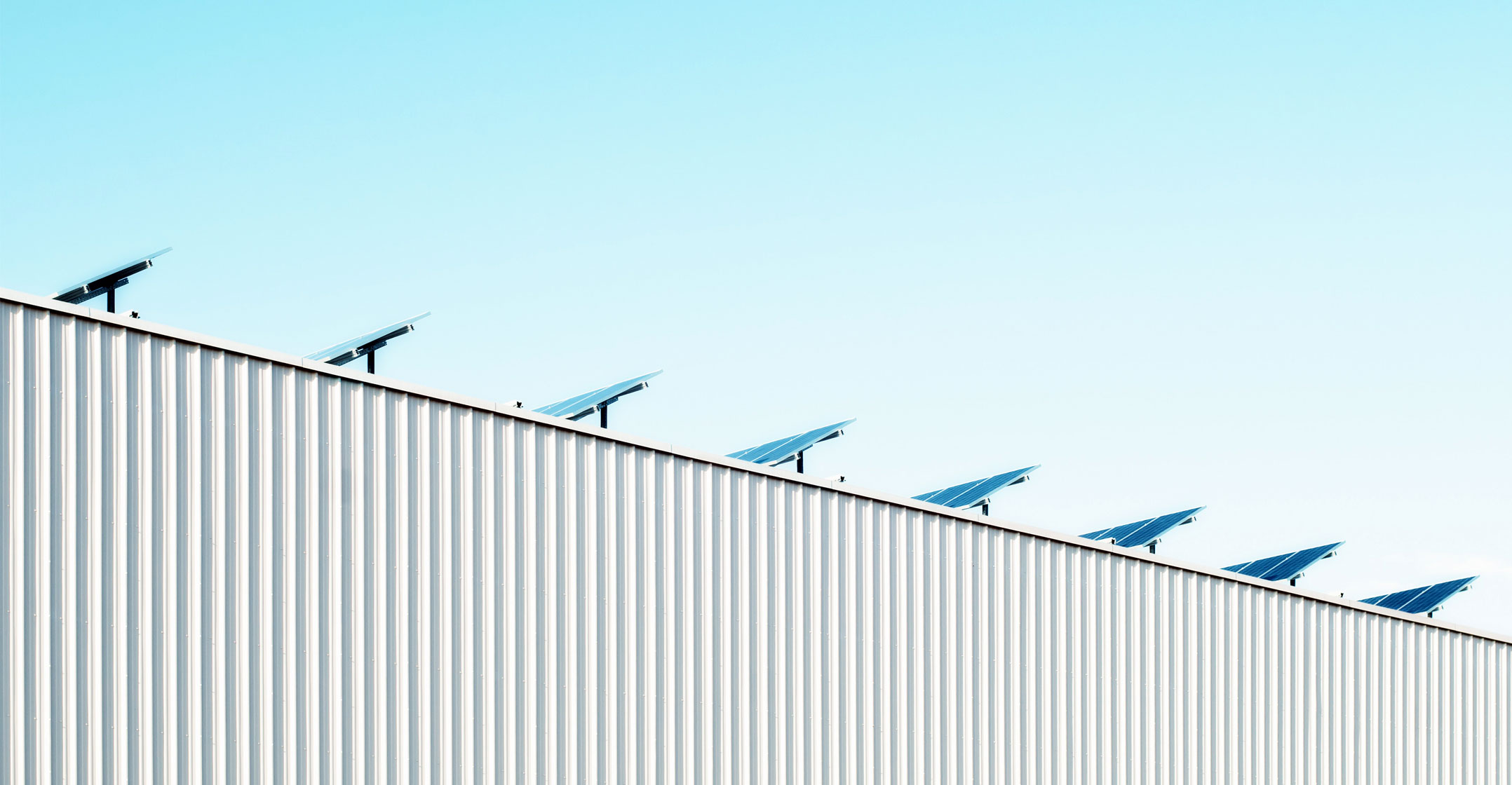
    The second key technology is solar power. Although solar is cheapest when done at large scales, it doesn’t have to be — rooftop solar panels already allow many buildings to go off the grid. In countries where the grid doesn’t exist, or is patchy and unreliable, rooftop solar can be as transformative as coal power was in earlier waves of development. In addition to allowing factories to operate without centralised power grids or expensive on-site generators, solar power also can be a major source of jobs; already, some estimates show as many alternative-energy jobs in sub-Saharan Africa as in the traditional power sector. (And all this is in addition, of course, to the environmental benefits.) Improved battery technology, allowing easier transport and storage of electrical energy, will only complement this trend.

    The next wave of industrialisation could see more factories and offices in Africa and South Asia supported by a thriving IT service sector

    A third potentially helpful technology is 3D printing. In rich countries, where it’s generally cheaper to order parts than make them yourself, 3D printing has been mostly used in niche applications such as rapid prototyping. But in regions where road transport is slow and unreliable, and where regional suppliers may not even exist, factories may find it more convenient to simply 3D-print needed components.

    In other words, a revolution in technology may change the way production networks. That doesn’t mean infrastructure will ever stop being important, but the minimum needed to start the process of development in a poor country or region could be reduced. The next wave of industrialisation could see more factories and offices in Africa and South Asia supported by a thriving IT service sector. Thanks to the magic of innovation, backyard production could make a comeback.  — By Noah Smith, (c) 2019 Bloomberg LP



    WhatsApp YouTube Follow on Google News Add as preferred source on Google
    Share. Facebook Twitter LinkedIn WhatsApp Telegram Email Copy Link
    Previous ArticleSamsung unveils new tablet to rival iPad Pro
    Next Article Spotify drops as growth in premium subscribers disappoints

    Related Posts

    Xneelo breaks ground on second Samrand data centre

    Xneelo breaks ground on second Samrand data centre

    3 February 2026
    Heavyweights backing ZARU, a new rand-based stablecoin in South Africa

    Heavyweights backing ZARU, a new rand-based stablecoin

    3 February 2026
    China's Haier takes aim at Samsung, LG and Hisense in South Africa

    China’s Haier takes aim at Samsung, LG and Hisense in South Africa

    3 February 2026
    Company News
    Breaking silos with SAS: Agile insurance in an uncertain world

    Breaking silos with SAS: agile insurance in an uncertain world

    2 February 2026
    Stellar year expected for Digicloud Africa and its reseller partners - Gregory MacLennan

    Stellar year expected for Digicloud Africa and its reseller partners

    2 February 2026
    How to subscribe to South Africa's best tech podcasts - TechCentral

    How to subscribe to South Africa’s best tech podcasts

    2 February 2026
    Opinion
    South Africa's skills advantage is being overlooked at home - Richard Firth

    South Africa’s skills advantage is being overlooked at home

    29 January 2026
    Why Elon Musk's Starlink is a 'hard no' for me - Songezo Zibi

    Why Elon Musk’s Starlink is a ‘hard no’ for me

    26 January 2026
    South Africa's new fibre broadband battle - Duncan McLeod

    South Africa’s new fibre broadband battle

    20 January 2026

    Subscribe to Updates

    Get the best South African technology news and analysis delivered to your e-mail inbox every morning.

    Latest Posts
    Xneelo breaks ground on second Samrand data centre

    Xneelo breaks ground on second Samrand data centre

    3 February 2026
    Heavyweights backing ZARU, a new rand-based stablecoin in South Africa

    Heavyweights backing ZARU, a new rand-based stablecoin

    3 February 2026
    China's Haier takes aim at Samsung, LG and Hisense in South Africa

    China’s Haier takes aim at Samsung, LG and Hisense in South Africa

    3 February 2026
    South African tech start-ups that sold big on the world stage

    South African tech start-ups that sold big on the world stage

    3 February 2026
    © 2009 - 2026 NewsCentral Media
    • Cookie policy (ZA)
    • TechCentral – privacy and Popia

    Type above and press Enter to search. Press Esc to cancel.

    Manage consent

    TechCentral uses cookies to enhance its offerings. Consenting to these technologies allows us to serve you better. Not consenting or withdrawing consent may adversely affect certain features and functions of the website.

    Functional Always active
    The technical storage or access is strictly necessary for the legitimate purpose of enabling the use of a specific service explicitly requested by the subscriber or user, or for the sole purpose of carrying out the transmission of a communication over an electronic communications network.
    Preferences
    The technical storage or access is necessary for the legitimate purpose of storing preferences that are not requested by the subscriber or user.
    Statistics
    The technical storage or access that is used exclusively for statistical purposes. The technical storage or access that is used exclusively for anonymous statistical purposes. Without a subpoena, voluntary compliance on the part of your Internet Service Provider, or additional records from a third party, information stored or retrieved for this purpose alone cannot usually be used to identify you.
    Marketing
    The technical storage or access is required to create user profiles to send advertising, or to track the user on a website or across several websites for similar marketing purposes.
    • Manage options
    • Manage services
    • Manage {vendor_count} vendors
    • Read more about these purposes
    View preferences
    • {title}
    • {title}
    • {title}