Close Menu
TechCentralTechCentral

    Subscribe to the newsletter

    Get the best South African technology news and analysis delivered to your e-mail inbox every morning.

    Facebook X (Twitter) YouTube LinkedIn
    WhatsApp Facebook X (Twitter) LinkedIn YouTube
    TechCentralTechCentral
    • News
      Vuyani Jarana: Mobile coverage masks a deeper broadband failure

      Vuyani Jarana: Mobile coverage masks a deeper broadband failure

      30 January 2026
      SABC Plus to flight Microsoft AI training videos

      SABC Plus to flight Microsoft AI training videos

      30 January 2026
      Fibre ducts

      Fibre industry consolidation in KZN

      30 January 2026
      Watts & Wheels S1E3: 'BYD's Corolla Cross challenger'

      Watts & Wheels S1E3: ‘BYD’s Corolla Cross challenger’

      30 January 2026
      What ordinary South Africans really think of AI

      What ordinary South Africans really think of AI

      30 January 2026
    • World
      Apple acquires audio AI start-up Q.ai

      Apple acquires audio AI start-up Q.ai

      30 January 2026
      SpaceX IPO may be largest in history

      SpaceX IPO may be largest in history

      28 January 2026
      Nvidia throws AI at the weather

      Nvidia throws AI at weather forecasting

      27 January 2026
      Debate erupts over value of in-flight Wi-Fi

      Debate erupts over value of in-flight Wi-Fi

      26 January 2026
      Intel takes another hit - Intel CEO Lip-Bu Tan. Laure Andrillon/Reuters

      Intel takes another hit

      23 January 2026
    • In-depth
      How liberalisation is rewiring South Africa's power sector

      How liberalisation is rewiring South Africa’s power sector

      21 January 2026
      The top-performing South African tech shares of 2025

      The top-performing South African tech shares of 2025

      12 January 2026
      Digital authoritarianism grows as African states normalise internet blackouts

      Digital authoritarianism grows as African states normalise internet blackouts

      19 December 2025
      TechCentral's South African Newsmakers of 2025

      TechCentral’s South African Newsmakers of 2025

      18 December 2025
      Black Friday goes digital in South Africa as online spending surges to record high

      Black Friday goes digital in South Africa as online spending surges to record high

      4 December 2025
    • TCS
      TCS+ | How Cloud On Demand is helping SA businesses succeed in the cloud - Xhenia Rhode, Dion Kalicharan

      TCS+ | Cloud On Demand and Consnet: inside a real-world AWS partner success story

      30 January 2026
      Watts & Wheels S1E3: 'BYD's Corolla Cross challenger'

      Watts & Wheels S1E2: ‘China attacks, BMW digs in, Toyota’s sublime supercar’

      23 January 2026

      TCS+ | Why cybersecurity is becoming a competitive advantage for SA businesses

      20 January 2026
      Watts & Wheels S1E3: 'BYD's Corolla Cross challenger'

      Watts & Wheels: S1E1 – ‘William, Prince of Wheels’

      8 January 2026
      TCS+ | Africa's digital transformation - unlocking AI through cloud and culture - Cliff de Wit Accelera Digital Group

      TCS+ | Cloud without culture won’t deliver AI: Accelera’s Cliff de Wit

      12 December 2025
    • Opinion
      South Africa's skills advantage is being overlooked at home - Richard Firth

      South Africa’s skills advantage is being overlooked at home

      29 January 2026
      Why Elon Musk's Starlink is a 'hard no' for me - Songezo Zibi

      Why Elon Musk’s Starlink is a ‘hard no’ for me

      26 January 2026
      South Africa's new fibre broadband battle - Duncan McLeod

      South Africa’s new fibre broadband battle

      20 January 2026
      AI moves from pilots to production in South African companies - Nazia Pillay SAP

      AI moves from pilots to production in South African companies

      20 January 2026
      South Africa's new fibre broadband battle - Duncan McLeod

      ANC’s attack on Solly Malatsi shows how BEE dogma trumps economic reality

      14 December 2025
    • Company Hubs
      • Africa Data Centres
      • AfriGIS
      • Altron Digital Business
      • Altron Document Solutions
      • Altron Group
      • Arctic Wolf
      • AvertITD
      • Braintree
      • CallMiner
      • CambriLearn
      • CYBER1 Solutions
      • Digicloud Africa
      • Digimune
      • Domains.co.za
      • ESET
      • Euphoria Telecom
      • Incredible Business
      • iONLINE
      • IQbusiness
      • Iris Network Systems
      • LSD Open
      • NEC XON
      • Netstar
      • Network Platforms
      • Next DLP
      • Ovations
      • Paracon
      • Paratus
      • Q-KON
      • SevenC
      • SkyWire
      • Solid8 Technologies
      • Telit Cinterion
      • Tenable
      • Vertiv
      • Videri Digital
      • Vodacom Business
      • Wipro
      • Workday
      • XLink
    • Sections
      • AI and machine learning
      • Banking
      • Broadcasting and Media
      • Cloud services
      • Contact centres and CX
      • Cryptocurrencies
      • Education and skills
      • Electronics and hardware
      • Energy and sustainability
      • Enterprise software
      • Financial services
      • Information security
      • Internet and connectivity
      • Internet of Things
      • Investment
      • IT services
      • Lifestyle
      • Motoring
      • Public sector
      • Retail and e-commerce
      • Satellite communications
      • Science
      • SMEs and start-ups
      • Social media
      • Talent and leadership
      • Telecoms
    • Events
    • Advertise
    TechCentralTechCentral
    Home » In-depth » Solar power to reach its zenith

    Solar power to reach its zenith

    By Lisa Steyn16 January 2015
    Twitter LinkedIn Facebook WhatsApp Email Telegram Copy Link
    News Alerts
    WhatsApp

    solar-640

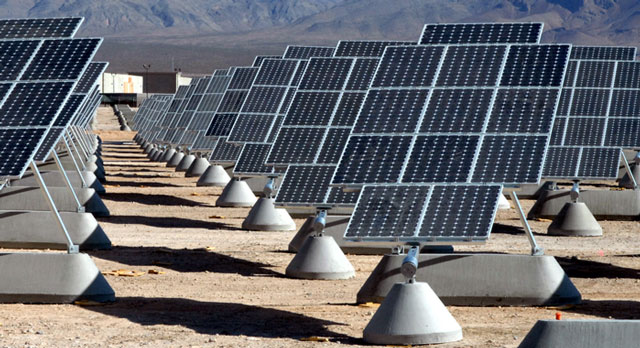
    Eskom may be unable to avert an energy crisis, but South African households and businesses can generate power on their rooftops at a cost per kilowatt that rivals that of megaprojects such as Medupi or Kusile, without subsidies or incentives.

    The cost of rooftop solar photovoltaic systems to power residential and commercial buildings has dropped over recent years to reach parity with domestic and commercial tariffs.

    According to the CSIR, residential-sized photovoltaic systems are already a cost-competitive alternative to other new-build options, coming in at an estimated 81c/kWh versus 80c/kWh at Medupi or Kusile. This solar power cost includes financing at an interest rate of 9%.

    Consumers are cottoning on and, as the National Energy Regulator of South Africa (Nersa) notes, there has been a great increase in the installation of private rooftop photovoltaic systems over the past year. Their total peak capacity is only about 10MW at present but if demand is stimulated the CSIR estimates it could quickly reach 500MW/year.

    Germany, which has less sun than South Africa, is the world’s largest small-scale user of photovoltaic power. It has a target of 52GW of installed capacity by 2017 and, on a sunny day in June last year, was able to generate more than half the nation’s power needs through solar energy.

    The Integrated Resource Plan estimates South Africa’s energy needs will double to almost 90GW of installed capacity by 2030, and rooftop and commercial photovoltaic power could grow to account for as much as 22,5GW of this requirement.

    In most cases, solar photovoltaic systems are set up at the consumer’s expense with stable energy supply as the only incentive. But already some municipalities — such as the City of Cape Town — allow small-scale photovoltaic users to sell back excess power into the national energy grid.

    Frank Spencer, who heads up the Southern African Photovoltaic Industry Association’s rooftop/embedded generation committee, says: “Cape Town progressively allows customers to produce their own solar and will buy the extra energy they produce [at the low tariff of 50c/kWh].”

    The association’s chairman, Davin Chown, said Eskom and Nersa restrictions on the size of photovoltaic installations, to limit the amount of energy put into the grid, were onerous beyond reason. “So, too, are the Eskom connection timelines … [they] are just far too costly and take too long.”

    Rooftop solar power does present challenges to the present structure. Municipalities derive a chunk of revenue from electricity sales that they use to cross-subsidise other services.

    There is also the issue of whether selling excess power into the grid, while boosting supply during daylight hours, could exacerbate supply problems during night-time peak times.

    Regulator Nersa has suggested that owners of solar photovoltaic rooftop systems should pay more to get electricity from the grid because they could boost demand during peak times once the sun has set.

    “I have a firm belief that solar photovoltaic power could play that role in alleviating strain on the system,” says Chown. “There shouldn’t be a disincentive; there should be a massive incentive to put electricity back into the grid.”

    solar-640

    He adds that the uptake of solar energy would create a new industry and a new skills base. “[It] can be rolled out at scale and will grow the SMME [small, medium and micro enterprises] sector. It’s a demand-side intervention, like solar water heaters or energy-saving light bulbs; nobody should be penalising you.”

    James Shirley, chairman of the Sustainable Energy Society of Southern Africa, agrees: “I certainly don’t think it’s fair. They are asking us to reduce consumption, but then they are penalising us for it.”

    He says an incentive, such as selling excess power back into the grid, is necessary to make solar energy attractive for consumers and the country. “Effectively, you have a feed-in tariff where the distributor [such as the municipality] pays you one rate to buy your power, and pays another rate to supply.”

    Demand rate
    Nersa, in a recently published discussion document, says rooftop solar installation without storage makes no contribution to reducing peak demand and may, in practice, increase it for reasons related to load shifting. This is because the demand for electricity will pick up at peak times at a steeper rate than before as solar users switch back to the grid.

    “This means that, at a higher penetration of the photovoltaic installations, it is likely that an investment will have to be made into peaking generation with a relatively faster ramp rate that can perform in a way that allows them to handle this rapid pick-up,” the regulator says.

    According to a scenario in the Integrated Resource Plan, the introduction of rooftop photovoltaic installations causes an increase in the open-cycle gas turbines from 4 680MW to 10 320MW in 2030.

    But some industry experts disagree, noting that there is an even steeper ramp-up rate required in the mornings and this has not yet proved to be a problem.

    Tobias Bischof-Niemz, chief energy engineer at the CSIR, said a CSIR study (which is yet to be published) has found, after looking at two years of data, that the steepest ramp rate is in the morning with power supplied by the conventional coal-pumped hydro fleet.

    “So it is a fair assumption that we can at least introduce photovoltaic power up to the point that the evening ramp becomes as steep as the current morning ramp,” he says.

    “If we take this assumption, we can install 7GW of installed capacity of photovoltaic power. That will take up a number of years, even if we really stimulate the market. That is sufficient time to look at other measures to take care of this evening ramp.”

    Lower electricity consumption during the day means municipalities will lose revenue and will be unable to cover fixed costs, according to Nersa. As such, “pricing and/or tariffs and regulatory policies need to ensure that the utility can collect enough revenue to cover its cost of supply and continue to safely and reliably provide vital services to all customers”, Nersa says, suggesting that a fixed network charge for users of photovoltaic energy could be a solution.

    The regulator also suggests users with a photovoltaic installation should be put on a time-of-use tariff: “This is to avoid them shifting their load at specific times to export maximum power.” It also proposes a low export tariff or a “disincentive tariff” that will encourage users to include storage in their installations rather than to export power back to the grid. “The inclusion of storage means that the peak demand also goes down; thus, the users are almost going off grid and are therefore not incurring extra costs on behalf of other users.”

    Spencer says the discussion document now has the industry concerned that Nersa is promoting the idea that municipalities introduce a different tariff regime for those with embedded generation, which could make it unviable for some smaller energy consumers.

    Independent power consultant Doug Kuni says efforts by the energy department and others to reduce consumption are a “fatal step”, as there is a direct correlation between economic growth and the number of kilowatt hours sold.

    “If you are taking electricity out of the economy, you are contracting the economy and that means loss of money and loss of jobs.”

    Growth in relation to SMMEs in this field would not be organic growth, Kuni maintains.

    But Chown says, although legislation needs to catch up, a “silent revolution” of solar photovoltaic energy is taking place regardless.

    “Eskom and Nersa see this process taking two years. We fundamentally disagree and we are saying to them: ‘You actually don’t have the time.’”  — (c) 2015 Mail & Guardian

    • Visit the Mail & Guardian Online, the smart news source


    CSIR Davin Chown Eskom Frank Spencer Nersa Tobias Bischof-Niemz
    WhatsApp YouTube Follow on Google News Add as preferred source on Google
    Share. Facebook Twitter LinkedIn WhatsApp Telegram Email Copy Link
    Previous ArticleTalk takes over typing
    Next Article Icasa must block Neotel sale: MTN

    Related Posts

    Outa warns homeowners against rushing to register rooftop solar

    Outa warns homeowners against rushing to register rooftop solar

    27 January 2026
    Batteries to move to the centre of South Africa's energy transition

    Batteries to move to the centre of South Africa’s energy transition

    22 January 2026
    How liberalisation is rewiring South Africa's power sector

    How liberalisation is rewiring South Africa’s power sector

    21 January 2026
    Company News
    Huawei turns 25 in South Africa, celebrates with major device discounts

    Huawei turns 25 in South Africa, celebrates with major device discounts

    30 January 2026
    Phishing has not disappeared, but it has grown up - KnowBe4

    Phishing has not disappeared, but it has grown up

    30 January 2026
    Smartphone affordability: South Africa's new economic divide - PayJoy

    Smartphone affordability: South Africa’s new economic divide

    29 January 2026
    Opinion
    South Africa's skills advantage is being overlooked at home - Richard Firth

    South Africa’s skills advantage is being overlooked at home

    29 January 2026
    Why Elon Musk's Starlink is a 'hard no' for me - Songezo Zibi

    Why Elon Musk’s Starlink is a ‘hard no’ for me

    26 January 2026
    South Africa's new fibre broadband battle - Duncan McLeod

    South Africa’s new fibre broadband battle

    20 January 2026

    Subscribe to Updates

    Get the best South African technology news and analysis delivered to your e-mail inbox every morning.

    Latest Posts
    Vuyani Jarana: Mobile coverage masks a deeper broadband failure

    Vuyani Jarana: Mobile coverage masks a deeper broadband failure

    30 January 2026
    TCS+ | How Cloud On Demand is helping SA businesses succeed in the cloud - Xhenia Rhode, Dion Kalicharan

    TCS+ | Cloud On Demand and Consnet: inside a real-world AWS partner success story

    30 January 2026
    Huawei turns 25 in South Africa, celebrates with major device discounts

    Huawei turns 25 in South Africa, celebrates with major device discounts

    30 January 2026
    SABC Plus to flight Microsoft AI training videos

    SABC Plus to flight Microsoft AI training videos

    30 January 2026
    © 2009 - 2026 NewsCentral Media
    • Cookie policy (ZA)
    • TechCentral – privacy and Popia

    Type above and press Enter to search. Press Esc to cancel.

    Manage consent

    TechCentral uses cookies to enhance its offerings. Consenting to these technologies allows us to serve you better. Not consenting or withdrawing consent may adversely affect certain features and functions of the website.

    Functional Always active
    The technical storage or access is strictly necessary for the legitimate purpose of enabling the use of a specific service explicitly requested by the subscriber or user, or for the sole purpose of carrying out the transmission of a communication over an electronic communications network.
    Preferences
    The technical storage or access is necessary for the legitimate purpose of storing preferences that are not requested by the subscriber or user.
    Statistics
    The technical storage or access that is used exclusively for statistical purposes. The technical storage or access that is used exclusively for anonymous statistical purposes. Without a subpoena, voluntary compliance on the part of your Internet Service Provider, or additional records from a third party, information stored or retrieved for this purpose alone cannot usually be used to identify you.
    Marketing
    The technical storage or access is required to create user profiles to send advertising, or to track the user on a website or across several websites for similar marketing purposes.
    • Manage options
    • Manage services
    • Manage {vendor_count} vendors
    • Read more about these purposes
    View preferences
    • {title}
    • {title}
    • {title}