Close Menu
TechCentralTechCentral

    Subscribe to the newsletter

    Get the best South African technology news and analysis delivered to your e-mail inbox every morning.

    Facebook X (Twitter) YouTube LinkedIn
    WhatsApp Facebook X (Twitter) LinkedIn YouTube
    TechCentralTechCentral
    • News
      MultiChoice scraps annual DStv price hikes for 2026 - David Mignot

      MultiChoice scraps annual DStv price hike

      20 February 2026
      What Gen Z really thinks about the tech world it inherited - Tinashe Mazodze

      What Gen Z really thinks about the tech world it inherited

      20 February 2026
      Showmax 'can't continue' in its current form

      Showmax ‘can’t continue’ in its current form

      20 February 2026
      Free Market Foundation slams treasury's proposed gambling tax

      Free Market Foundation slams treasury’s proposed gambling tax

      20 February 2026
      South Africa's dynamic spectrum breakthrough - Paul Colmer

      South Africa’s dynamic spectrum breakthrough

      20 February 2026
    • World
      Prominent Southern African journalist targeted with Predator spyware

      Prominent Southern African journalist targeted with Predator spyware

      18 February 2026
      More drama in Warner Bros tug of war

      More drama in Warner Bros tug of war

      17 February 2026
      Russia bans WhatsApp

      Russia bans WhatsApp

      12 February 2026
      EU regulators take aim at WhatsApp

      EU regulators take aim at WhatsApp

      9 February 2026
      Musk hits brakes on Mars mission

      Musk hits brakes on Mars mission

      9 February 2026
    • In-depth
      How liberalisation is rewiring South Africa's power sector

      How liberalisation is rewiring South Africa’s power sector

      21 January 2026
      The top-performing South African tech shares of 2025

      The top-performing South African tech shares of 2025

      12 January 2026
      Digital authoritarianism grows as African states normalise internet blackouts

      Digital authoritarianism grows as African states normalise internet blackouts

      19 December 2025
      TechCentral's South African Newsmakers of 2025

      TechCentral’s South African Newsmakers of 2025

      18 December 2025
      Black Friday goes digital in South Africa as online spending surges to record high

      Black Friday goes digital in South Africa as online spending surges to record high

      4 December 2025
    • TCS
      Watts & Wheels S1E4: 'We drive an electric Uber'

      Watts & Wheels S1E4: ‘We drive an electric Uber’

      10 February 2026
      TCS+ | How Cloud On Demand is helping SA businesses succeed in the cloud - Xhenia Rhode, Dion Kalicharan

      TCS+ | Cloud On Demand and Consnet: inside a real-world AWS partner success story

      30 January 2026
      Watts & Wheels S1E4: 'We drive an electric Uber'

      Watts & Wheels S1E3: ‘BYD’s Corolla Cross challenger’

      30 January 2026
      Watts & Wheels S1E4: 'We drive an electric Uber'

      Watts & Wheels S1E2: ‘China attacks, BMW digs in, Toyota’s sublime supercar’

      23 January 2026

      TCS+ | Why cybersecurity is becoming a competitive advantage for SA businesses

      20 January 2026
    • Opinion
      A million reasons monopolies don't work - Duncan McLeod

      A million reasons monopolies don’t work

      10 February 2026
      The author, Business Leadership South Africa CEO Busi Mavuso

      Eskom unbundling U-turn threatens to undo hard-won electricity gains

      9 February 2026
      South Africa's skills advantage is being overlooked at home - Richard Firth

      South Africa’s skills advantage is being overlooked at home

      29 January 2026
      Why Elon Musk's Starlink is a 'hard no' for me - Songezo Zibi

      Why Elon Musk’s Starlink is a ‘hard no’ for me

      26 January 2026
      A million reasons monopolies don't work - Duncan McLeod

      South Africa’s new fibre broadband battle

      20 January 2026
    • Company Hubs
      • Africa Data Centres
      • AfriGIS
      • Altron Digital Business
      • Altron Document Solutions
      • Altron Group
      • Arctic Wolf
      • AvertITD
      • Braintree
      • CallMiner
      • CambriLearn
      • CYBER1 Solutions
      • Digicloud Africa
      • Digimune
      • Domains.co.za
      • ESET
      • Euphoria Telecom
      • Incredible Business
      • iONLINE
      • IQbusiness
      • Iris Network Systems
      • LSD Open
      • Mitel
      • NEC XON
      • Netstar
      • Network Platforms
      • Next DLP
      • Ovations
      • Paracon
      • Paratus
      • Q-KON
      • SevenC
      • SkyWire
      • Solid8 Technologies
      • Telit Cinterion
      • Tenable
      • Vertiv
      • Videri Digital
      • Vodacom Business
      • Wipro
      • Workday
      • XLink
    • Sections
      • AI and machine learning
      • Banking
      • Broadcasting and Media
      • Cloud services
      • Contact centres and CX
      • Cryptocurrencies
      • Education and skills
      • Electronics and hardware
      • Energy and sustainability
      • Enterprise software
      • Financial services
      • Information security
      • Internet and connectivity
      • Internet of Things
      • Investment
      • IT services
      • Lifestyle
      • Motoring
      • Public sector
      • Retail and e-commerce
      • Satellite communications
      • Science
      • SMEs and start-ups
      • Social media
      • Talent and leadership
      • Telecoms
    • Events
    • Advertise
    TechCentralTechCentral
    Home » Sections » Energy and sustainability » South Africa could end load shedding in five years

    South Africa could end load shedding in five years

    Ending power cuts completely will probably take another five years if the infusion of more solar and wind capacity proceeds as currently planned.
    By Hartmut Winkler7 June 2023
    Twitter LinkedIn Facebook WhatsApp Email Telegram Copy Link
    News Alerts
    WhatsApp

    South Africa is in the middle of a severe electricity crisis, with enforced power cuts that have worsened every year. Electricity is sometimes unavailable for 10 hours a day – or more. The shortfall is the consequence of frequent breakdowns at its ageing coal power plants, which constitute 74% of the country’s generating capacity.

    In theory, improving the performance and reliability of the existing coal plants would resolve the power crisis. This remedy is promoted in some quarters. But it’s easier said than done. To function satisfactorily, many of the plants would require a complete overhaul, which would be both time consuming and prohibitively costly.

    Estimates suggest that South Africa needs around 6GW of extra capacity to overcome the current deficit. The following sections explain why it is likely to require as long as five years to eradicate this shortfall, though partial improvement should already be felt by the end of 2024.

    Building new coal, nuclear or gas plants is still being considered to improve future power supply, but these typically require construction times of 10 years. They would therefore not play a role in the short- to medium-term period under consideration.

    Time lines for fixing existing power stations

    The 4.8GW Kusile and its twin Medupi are the two largest power stations in South Africa, and among the biggest coal plants in the world. Their construction was commissioned in 2007. At the time they were expected to guarantee South Africa ample electricity supply and allow the decommissioning of older plants.

    But the construction of the plants proceeded disastrously. Costs escalated to more than double the initial projections and construction was much slower than anticipated. One of Kusile’s six units has still not been finished.

    Calamity also struck twice in the first few years of operation. The damage caused by an explosion at Medupi’s unit 4 in 2021 resulted in so much damage that the unit not yet been brought back online. Then in October last year, a chimney at Kusile collapsed. This forced the closure of three Kusile units.

    Koeberg is effectively only running at half power, and this state of affairs will likely continue into 2025

    The 1.8GW Koeberg nuclear power plant has in recent decades contributed about 5% of South Africa’s electricity. It will reach the end of its initially projected 40-year lifespan in 2024. To extend its operating licence for a further 20 years, the National Nuclear Regulator requires specific part replacements and upgrades, the most significant being the installation of new steam generators.

    These operations were initially projected to require 10 months (five months for each of Koeberg’s two units) to be completed. The attempted upgrade of the first unit early last year was aborted after it became clear that preparations for the project were incomplete.

    The second attempt began in January this year. But it has already been acknowledged that this stage, initially projected to end in June, will not be completed until at least August. After that, a similar process will commence for the other unit, and this will be followed by a 200 day planned outage.

    Read: R2.5-billion to fix Medupi unit that blew up

    Koeberg is therefore effectively only running at half power, and this state of affairs will likely continue into 2025.

    Gas power ships

    Amid clear signs of a deepening power crisis, the minister of mineral resources & energy in 2021 announced successful bids to supply 2,000MW of emergency power. The bulk of this award, 1.2GW, was allocated to Turkey’s Karpowership, a company with a fleet of floating gas plants to be shipped in and moored in three of South Africa’s ports – Richards Bay, Nqurha and Saldanha.

    The award attracted controversy, with accusations that the terms of reference of this bidding round amounted to an unfair advantage to Karpowership. Court challenges queried the legality of the environmental impact approvals, too.

    The key objection to the Karpowership deal is that it would cement what is painted as an arrangement for temporary emergency power for a 20-year period.

    This opposition and delays in some other projects reaching financial close mean that the emergency programme is at least a year behind schedule. Some might come on line at the end of 2023, but the added capacity would decrease South Africa’s electricity shortfall by only a moderate amount.
    Renewables

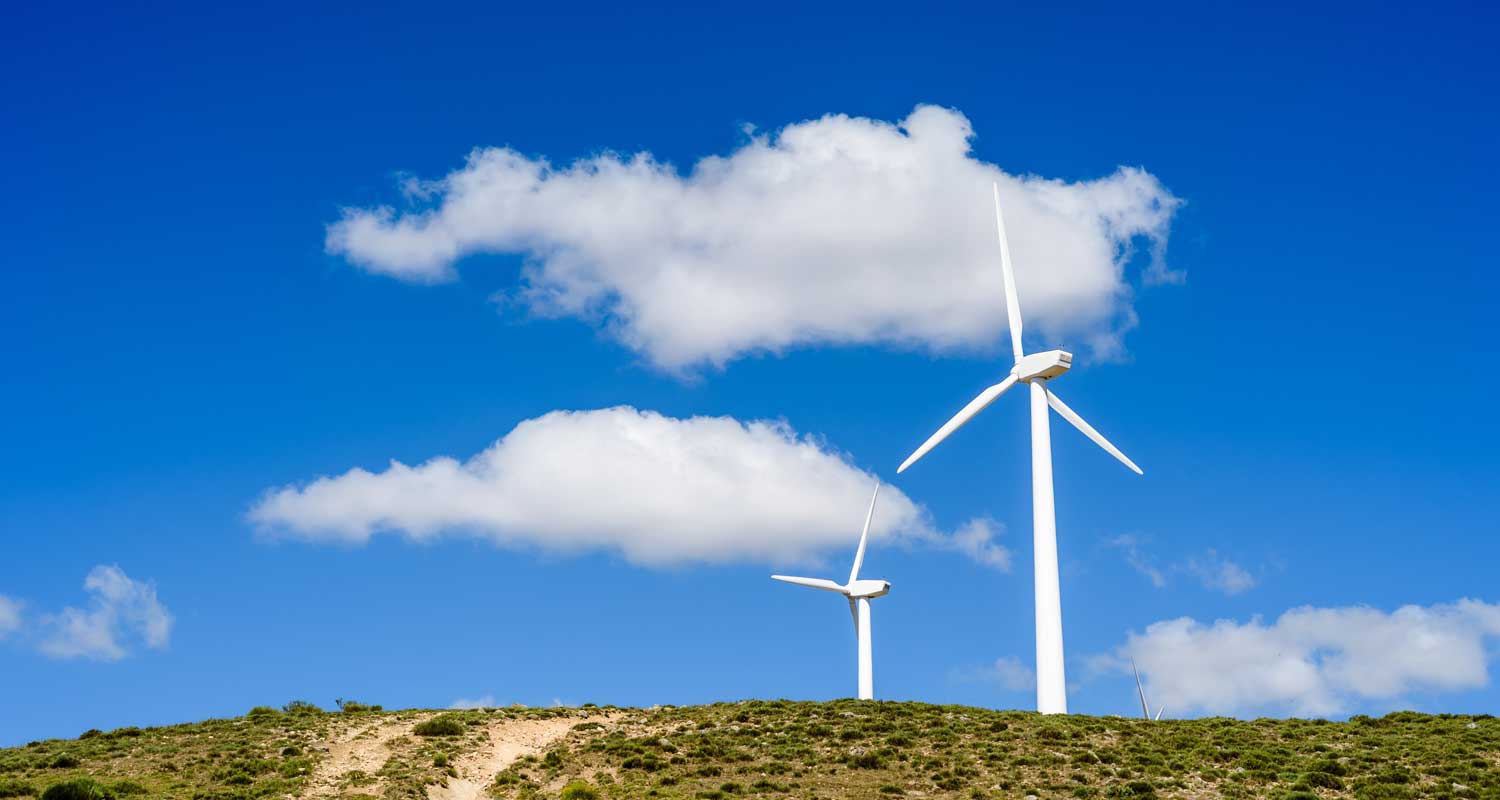
    The Renewable Energy Independent Power Producer Procurement Programme was designed to enable the production of mostly solar and wind energy by private developers, who would then sell it to the power utility, Eskom.

    Given the intermittency of sunshine and wind, solar and wind farms in South Africa on average typically only produce about 25% (solar) and 35% (wind) of what they can generate under ideal conditions. Meeting a national shortfall of 6GW with one of these technologies alone would therefore require solar farms with a total capacity of 24GW, or wind farms with a total capacity of 18GW.

    Two rounds of establishing new plants under the renewables programme are under way. The first of these should see 1GW of solar power and 1.6GW of wind power come on stream by early 2025, while the second round will see a further 1GW of solar projects completed about a year later.

    Read: Eskom weighs impact on Koeberg of end of US pact

    A mega-initiative to install 15GW of solar and wind power has recently been touted by the new electricity minister. While this would massively ameliorate the power scarcity, it would be very challenging to construct such a large number of solar plants simultaneously due to potential import bottlenecks and a shortage of skilled installers. So, while some of these plants might be ready by late 2025, the entire programme is likely to require five years.

    Domestic and private solar installations

    The greatest progress in accelerating electricity production has been achieved by small-scale solar power installation initiatives, ranging from municipal or private enterprise solar farms to solar panels on household roofs. Although this component is still comparatively small, late last year the president announced that projects amounting to a total of 9GW were under development.

    Despite the major growth in this sphere, the roll-out of private solar installations is hampered by the same constraints faced by the renewables programmes: import bottlenecks and skills shortages. While municipalities and smaller entities able to get such programmes working will experience considerable relief from power cuts, these initiatives will only moderately cut the national shortfall.

    The timeframe for a possible recovery

    Any remedies to the South African power crisis initiated now or already under development are not going to have a significant impact this year. The projections also assume that no major setback like last year’s Kusile accident is imminent.

    Betweem 1GW and 2GW might be added to the generating capacity towards the end of the year, but a substantial decrease in the power shortage will only be possible towards the end of 2024, if Kusile repairs are then completed as expected, and when several renewable energy initiatives should come online.

    Ending power cuts completely will probably take another five years if the infusion of more solar and wind capacity proceeds as currently planned.The Conversation

    • The author, Hartmut Winkler, is professor of physics, University of Johannesburg
    • This article is republished from The Conversation under a Creative Commons licence
    Follow TechCentral on Google News Add TechCentral as your preferred source on Google


    Eskom Gwede Mantashe Hartmut Winkler Karpowership
    WhatsApp YouTube
    Share. Facebook Twitter LinkedIn WhatsApp Telegram Email Copy Link
    Previous ArticleBuying a new car? It could be a target for tech-savvy criminals
    Next Article Asus ROG Ally launched in SA, joining competitive handheld gaming market

    Related Posts

    Not enough: Eskom unions spurn above-inflation wage offer

    Not enough: Eskom unions spurn above-inflation wage offer

    17 February 2026
    Blu Label lands energy trading licence from Nersa - Mark Levy

    Blu Label lands electricity trading licence from Nersa

    17 February 2026
    Nersa blunder triggers sharper electricity tariff increases

    Nersa blunder triggers sharper electricity tariff increases

    9 February 2026
    Company News
    Service is everyone's problem now - and that's exactly why the Atlassian Service Collection matters

    Service is everyone’s problem now – why the Atlassian Service Collection matters

    20 February 2026
    Customers have new expectations. Is your CX ready? 1Stream

    Customers have new expectations. Is your CX ready?

    19 February 2026
    South Africa's cybersecurity challenge is not a tool problem - Nicholas Applewhite, Trinexia South Africa

    South Africa’s cybersecurity challenge is not a tool problem

    19 February 2026
    Opinion
    A million reasons monopolies don't work - Duncan McLeod

    A million reasons monopolies don’t work

    10 February 2026
    The author, Business Leadership South Africa CEO Busi Mavuso

    Eskom unbundling U-turn threatens to undo hard-won electricity gains

    9 February 2026
    South Africa's skills advantage is being overlooked at home - Richard Firth

    South Africa’s skills advantage is being overlooked at home

    29 January 2026

    Subscribe to Updates

    Get the best South African technology news and analysis delivered to your e-mail inbox every morning.

    Latest Posts
    MultiChoice scraps annual DStv price hikes for 2026 - David Mignot

    MultiChoice scraps annual DStv price hike

    20 February 2026
    What Gen Z really thinks about the tech world it inherited - Tinashe Mazodze

    What Gen Z really thinks about the tech world it inherited

    20 February 2026
    Showmax 'can't continue' in its current form

    Showmax ‘can’t continue’ in its current form

    20 February 2026
    Free Market Foundation slams treasury's proposed gambling tax

    Free Market Foundation slams treasury’s proposed gambling tax

    20 February 2026
    © 2009 - 2026 NewsCentral Media
    • Cookie policy (ZA)
    • TechCentral – privacy and Popia

    Type above and press Enter to search. Press Esc to cancel.

    Manage consent

    TechCentral uses cookies to enhance its offerings. Consenting to these technologies allows us to serve you better. Not consenting or withdrawing consent may adversely affect certain features and functions of the website.

    Functional Always active
    The technical storage or access is strictly necessary for the legitimate purpose of enabling the use of a specific service explicitly requested by the subscriber or user, or for the sole purpose of carrying out the transmission of a communication over an electronic communications network.
    Preferences
    The technical storage or access is necessary for the legitimate purpose of storing preferences that are not requested by the subscriber or user.
    Statistics
    The technical storage or access that is used exclusively for statistical purposes. The technical storage or access that is used exclusively for anonymous statistical purposes. Without a subpoena, voluntary compliance on the part of your Internet Service Provider, or additional records from a third party, information stored or retrieved for this purpose alone cannot usually be used to identify you.
    Marketing
    The technical storage or access is required to create user profiles to send advertising, or to track the user on a website or across several websites for similar marketing purposes.
    • Manage options
    • Manage services
    • Manage {vendor_count} vendors
    • Read more about these purposes
    View preferences
    • {title}
    • {title}
    • {title}