
Close Menu
TechCentralTechCentral

    Subscribe to the newsletter

    Get the best South African technology news and analysis delivered to your e-mail inbox every morning.

    Facebook X (Twitter) YouTube LinkedIn
    WhatsApp Facebook X (Twitter) LinkedIn YouTube
    TechCentralTechCentral
    • News
      Big Microsoft 365 price increases coming next year

      Big Microsoft price increases coming next year

      5 December 2025
      Vodacom to take control of Safaricom in R36-billion deal - Shameel Joosub

      Vodacom to take control of Safaricom in R36-billion deal

      4 December 2025
      Black Friday goes digital in South Africa as online spending surges to record high

      Black Friday goes digital in South Africa as online spending surges to record high

      4 December 2025
      BYD takes direct aim at Toyota with launch of sub-R500 000 Sealion 5 PHEV

      BYD takes direct aim at Toyota with launch of sub-R500 000 Sealion 5 PHEV

      4 December 2025
      'Get it now': Takealot in new instant deliveries pilot

      ‘Get it now’: Takealot in new instant deliveries pilot

      4 December 2025
    • World
      Amazon and Google launch multi-cloud service for faster connectivity

      Amazon and Google launch multi-cloud service for faster connectivity

      1 December 2025
      Google makes final court plea to stop US breakup

      Google makes final court plea to stop US breakup

      21 November 2025
      Bezos unveils monster rocket: New Glenn 9x4 set to dwarf Saturn V

      Bezos unveils monster rocket: New Glenn 9×4 set to dwarf Saturn V

      21 November 2025
      Tech shares turbocharged by Nvidia's stellar earnings

      Tech shares turbocharged by stellar Nvidia earnings

      20 November 2025
      Config file blamed for Cloudflare meltdown that disrupted the web

      Config file blamed for Cloudflare meltdown that disrupted the web

      19 November 2025
    • In-depth
      Jensen Huang Nvidia

      So, will China really win the AI race?

      14 November 2025
      Valve's Linux console takes aim at Microsoft's gaming empire

      Valve’s Linux console takes aim at Microsoft’s gaming empire

      13 November 2025
      iOCO's extraordinary comeback plan - Rhys Summerton

      iOCO’s extraordinary comeback plan

      28 October 2025
      Why smart glasses keep failing - no, it's not the tech - Mark Zuckerberg

      Why smart glasses keep failing – it’s not the tech

      19 October 2025
      BYD to blanket South Africa with megawatt-scale EV charging network - Stella Li

      BYD to blanket South Africa with megawatt-scale EV charging network

      16 October 2025
    • TCS
      TCS+ | How Cloud on Demand helps partners thrive in the AWS ecosystem - Odwa Ndyaluvane and Xenia Rhode

      TCS+ | How Cloud On Demand helps partners thrive in the AWS ecosystem

      4 December 2025
      TCS | MTN Group CEO Ralph Mupita on competition, AI and the future of mobile

      TCS | Ralph Mupita on competition, AI and the future of mobile

      28 November 2025
      TCS | Dominic Cull on fixing South Africa's ICT policy bottlenecks

      TCS | Dominic Cull on fixing South Africa’s ICT policy bottlenecks

      21 November 2025
      TCS | BMW CEO Peter van Binsbergen on the future of South Africa's automotive industry

      TCS | BMW CEO Peter van Binsbergen on the future of South Africa’s automotive industry

      6 November 2025
      TCS | Why Altron is building an AI factory - Bongani Andy Mabaso

      TCS | Why Altron is building an AI factory in Johannesburg

      28 October 2025
    • Opinion
      Your data, your hardware: the DIY AI revolution is coming - Duncan McLeod

      Your data, your hardware: the DIY AI revolution is coming

      20 November 2025
      Zero Carbon Charge founder Joubert Roux

      The energy revolution South Africa can’t afford to miss

      20 November 2025
      It's time for a new approach to government IT spend in South Africa - Richard Firth

      It’s time for a new approach to government IT spend in South Africa

      19 November 2025
      How South Africa's broken Rica system fuels murder and mayhem - Farhad Khan

      How South Africa’s broken Rica system fuels murder and mayhem

      10 November 2025
      South Africa's AI data centre boom risks overloading a fragile grid - Paul Colmer

      South Africa’s AI data centre boom risks overloading a fragile grid

      30 October 2025
    • Company Hubs
      • Africa Data Centres
      • AfriGIS
      • Altron Digital Business
      • Altron Document Solutions
      • Altron Group
      • Arctic Wolf
      • AvertITD
      • Braintree
      • CallMiner
      • CambriLearn
      • CYBER1 Solutions
      • Digicloud Africa
      • Digimune
      • Domains.co.za
      • ESET
      • Euphoria Telecom
      • Incredible Business
      • iONLINE
      • IQbusiness
      • Iris Network Systems
      • LSD Open
      • NEC XON
      • Netstar
      • Network Platforms
      • Next DLP
      • Ovations
      • Paracon
      • Paratus
      • Q-KON
      • SevenC
      • SkyWire
      • Solid8 Technologies
      • Telit Cinterion
      • Tenable
      • Vertiv
      • Videri Digital
      • Vodacom Business
      • Wipro
      • Workday
      • XLink
    • Sections
      • AI and machine learning
      • Banking
      • Broadcasting and Media
      • Cloud services
      • Contact centres and CX
      • Cryptocurrencies
      • Education and skills
      • Electronics and hardware
      • Energy and sustainability
      • Enterprise software
      • Financial services
      • Information security
      • Internet and connectivity
      • Internet of Things
      • Investment
      • IT services
      • Lifestyle
      • Motoring
      • Public sector
      • Retail and e-commerce
      • Satellite communications
      • Science
      • SMEs and start-ups
      • Social media
      • Talent and leadership
      • Telecoms
    • Events
    • Advertise
    TechCentralTechCentral
    Home » Sections » Telecoms » South Africa faces complex spectrum choices – BMIT

    South Africa faces complex spectrum choices – BMIT

    By Duncan McLeod30 September 2019
    Twitter LinkedIn Facebook WhatsApp Email Telegram Copy Link
    News Alerts
    WhatsApp
    The author, Martyn Roetter, argues that

    Telecommunications and technology advisory firm BMIT has warned that South Africa faces complex choices and trade-offs in reaching decisions regarding the awarding of new spectrum licences for mobile broadband.

    In a new paper, called Spectrum Policy for the Gs, the firm said that South Africa will have to be smart in the way it awards spectrum to a new wholesale open-access network (Woan) and to existing and potentially new network operators.

    Government wants to create the Woan — to be owned by a consortium of private-sector players — to infuse more competition into the South African telecommunications industry and to challenge the dominance of market leaders Vodacom and MTN.

    The outcomes will determine the capabilities, coverage and timing of the networks that are subsequently deployed to deliver new and improved services

    The plan has drawn criticism, though has been welcomed in principle by smaller operators, including Telkom and Cell C. The latter, which has a distressed balance sheet, said last week that it simply cannot afford to participate in a spectrum auction and so will likely lean on the Woan — whatever form it takes — for access to future 4G and 5G spectrum.

    BMIT has done extensive modelling around the proposed Woan, including looking at whether there is a business case for it, what sort of investment it will need to make and what its drivers of profitability will be.

    “It will be critical to coordinate policy goals with how spectrum is allocated, forging a sensible balance between interests that are complementary in some respects while they conflict in others,” said the paper’s author, Martyn Roetter. “Otherwise, the dissension and contradictions between the hopes for the economy and goals for society that are riding upon wireless networks, and the ability to deploy these networks efficiently, economically and productively to fulfil these hopes and achieve these goals, will persist.

    Worst case

    “In the worst case, no one will be a winner in the medium and long term, even if there may be one or two financial winners among special or narrowly defined interests in the short term,” he said.

    Roetter said South Africa should emulate Europe and Asia in placing an emphasis on licensing so-called mid-band frequencies for 5G deployment (typically 1GHz to 6GHz), while decisions about high bands (typically 24GHz to 48GHz) “should reflect the outcome of the imminent World Radiocommunication Conference (WRC-19) scheduled to start in late October, at which, among other items, global and regional allocations to terrestrial mobile services in these bands will be made”.

    Whatever is decided in the coming months will have a “decisive impact on the valuations and hence costs and uses of spectrum in South Africa,” Roetter said in the paper.
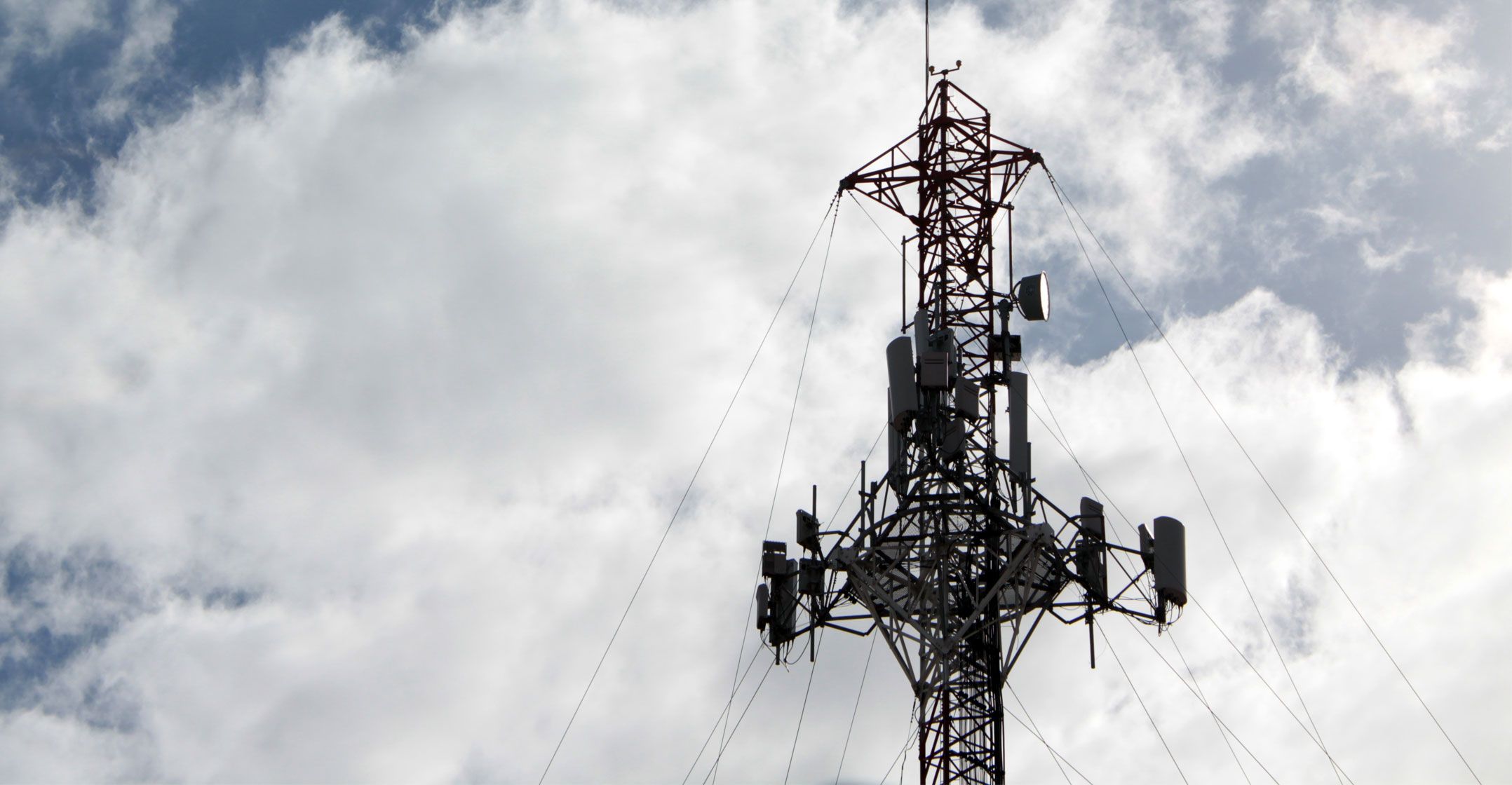
    “The outcomes will determine the capabilities, coverage and timing of the networks that are subsequently deployed to deliver new and improved services. The delay in awarding high demand spectrum licences, and communications regulator Icasa’s decision to include the 3.5GHz band in the future invitation to apply, open the opportunity for the country to coordinate the award not only of this high-demand spectrum in the 700MHz, 800MHz and 2.6GHz bands but also of other bands envisaged in many countries for 5G deployments (in other mid bands as well as the high-millimetre-wave bands) in a coherent and productive framework.”

    Spectrum valuation, he said, is a complex process. The outcomes for prices of the same spectrum awarded even in comparable countries and market circumstances vary enormously, depending on the process that is employed and the conditions of the licences.

    “It makes more sense to structure and adopt an awards process designed as best as possible to produce results that fulfil well-articulated purposes for networks in supporting economic and social objectives, rather than trying to determine the value of spectrum as an exogenous variable to be taken into consideration as if it is independent of the process itself.”

    This situation could allow the country to build, at least regionally, a late-mover advantage based on spectrum…

    The long delay in allocating high-demand spectrum in South Africa creates an opportunity for the country to construct its spectrum policy within a longer-term perspective that anticipates the characteristics of next-generation technologies, as well as future and established uses of wireless networks, Roetter said.

    “This situation could allow the country to build, at least regionally, a late-mover advantage based on spectrum, despite having fallen behind in exploiting fully the benefits offered by the deployment of 4G technology.”

    South Africa has never formally licensed spectrum for 4G deployments, though operators have improvised by reallocating (or “re-farming”) 2G and 3G assignments to roll-out 4G infrastructure.

    ‘Greatest benefits’

    BMIT’s paper said several other countries are planning to, or have already held, multi-band 5G spectrum auctions, including frequencies within the low bands, mid bands and high bands.

    “South Africa, like other countries, confronts the challenge of how to set or achieve prices and other conditions applied to spectrum licences in ways, and with costs for the licence holders, that will enable the services delivered over wireless networks to generate the greatest benefits for the South African economy and all the country’s residents.

    “It is very complicated to determine the best strategy for spectrum allocations because multiple, sometimes conflicting, interests are necessarily engaged, both within the public and the private sector, in trying to influence decisions… Choices that are made to achieve a balance between these interests will exert substantial effects on the valuation of spectrum, and then on the distribution over time of the network costs borne by and the benefits network services will generate for various constituencies.

    “These benefits may be spread widely over all the different segments or categories of the population and user groups, as defined by geography, or by sector in the business community, or by groups of consumers or residents with distinctive needs or expectations for services, or by different public services competing for attention and funding from the public purse. Or they may be concentrated on a subset of these constituencies contributing to unhealthy inequality in South African society.”

    BMIT said two examples of the balance that must be struck in relation to spectrum are:

    • The extent to which new market entrants are to be encouraged — for example, through limiting existing large operators by putting caps on the amounts of new spectrum they can acquire; and
    • The trade-off between fiscal requirements (the desire of government to generate revenue directly, often in the short term, from the awards of spectrum licences) with the need for investment to foster long-term economic development. This investment may be hampered or unreasonably delayed if the costs of spectrum absorb a significant proportion of the funding available to licence holders to deploy networks.

    BMIT said so-called dynamic (time and location) sharing or allocation of bandwidth is an idea and capability that could play a significant role in the operation of future networks, whether a Woan or one controlled by an existing operator.

    “In principle, these techniques would help maximise network usage and revenues to offset high costs. One approach particularly applicable to a Woan is based on dynamic spectrum allocation, which provides network capacity to those who need it, when and where they need it, in real time,” it said.

    One approach particularly applicable to a Woan is based on dynamic spectrum allocation…

    “Ideally, bidders will be able to acquire bandwidth immediately, or for some defined time in the future, in response to projected demand and market conditions. Also, in principle, supply and demand for capacity or spectrum can thereby be continuously matched as closely as possible on every cell site on a network, helping to achieve a viable financial model for a Woan that supports not only existing commercial mobile services but also machine-to-machine, Internet of things and other applications so as to reduce the risk the network will be underutilised and fail to generate a return for its investors.

    “The second approach is a solution that enables an operator’s underutilised capacity to move from areas where average network load percentages are low to locations where the percentage load is high and additional capacity is needed. High-demand growth leads to very uneven and generally low utilisation of operators’ existing network capacity. This solution may involve two overlapping networks or independent network layers. The benefit of moving mobile devices from a heavily loaded cell to an alternative network improves connection speeds and reduces capex and opex. It may also provide opportunities for an operator to provide wholesale excess capacity in specific network locations.”  — © 2019 NewsCentral Media



    BMIT Cell C Icasa Martyn Roetter MTN MTN South Africa Telkom top Vodacom Woan
    Subscribe to TechCentral Subscribe to TechCentral
    Share. Facebook Twitter LinkedIn WhatsApp Telegram Email Copy Link
    Previous ArticleZimbabwe clamps down on mobile money apps
    Next Article Adapt IT delays results and warns of fall in earnings

    Related Posts

    Vodacom to take control of Safaricom in R36-billion deal - Shameel Joosub

    Vodacom to take control of Safaricom in R36-billion deal

    4 December 2025
    Building trust in a digital world: Vodacom Business's approach to security

    Building trust in a digital world – the Vodacom Business approach to security

    4 December 2025
    TCS | MTN Group CEO Ralph Mupita on competition, AI and the future of mobile

    TCS | Ralph Mupita on competition, AI and the future of mobile

    28 November 2025
    Company News
    AI is not a technology problem - iqbusiness

    AI is not a technology problem – iqbusiness

    5 December 2025
    Telcos are sitting on a data gold mine - but few know what do with it - Phillip du Plessis

    Telcos are sitting on a data gold mine – but few know what do with it

    4 December 2025
    Unlock smarter computing with your surface Copilot+ PC

    Unlock smarter computing with your Surface Copilot+ PC

    4 December 2025
    Opinion
    Your data, your hardware: the DIY AI revolution is coming - Duncan McLeod

    Your data, your hardware: the DIY AI revolution is coming

    20 November 2025
    Zero Carbon Charge founder Joubert Roux

    The energy revolution South Africa can’t afford to miss

    20 November 2025
    It's time for a new approach to government IT spend in South Africa - Richard Firth

    It’s time for a new approach to government IT spend in South Africa

    19 November 2025

    Subscribe to Updates

    Get the best South African technology news and analysis delivered to your e-mail inbox every morning.

    Latest Posts
    Big Microsoft 365 price increases coming next year

    Big Microsoft price increases coming next year

    5 December 2025
    AI is not a technology problem - iqbusiness

    AI is not a technology problem – iqbusiness

    5 December 2025
    Vodacom to take control of Safaricom in R36-billion deal - Shameel Joosub

    Vodacom to take control of Safaricom in R36-billion deal

    4 December 2025
    Black Friday goes digital in South Africa as online spending surges to record high

    Black Friday goes digital in South Africa as online spending surges to record high

    4 December 2025
    © 2009 - 2025 NewsCentral Media
    • Cookie policy (ZA)
    • TechCentral – privacy and Popia

    Type above and press Enter to search. Press Esc to cancel.

    Manage consent

    TechCentral uses cookies to enhance its offerings. Consenting to these technologies allows us to serve you better. Not consenting or withdrawing consent may adversely affect certain features and functions of the website.

    Functional Always active
    The technical storage or access is strictly necessary for the legitimate purpose of enabling the use of a specific service explicitly requested by the subscriber or user, or for the sole purpose of carrying out the transmission of a communication over an electronic communications network.
    Preferences
    The technical storage or access is necessary for the legitimate purpose of storing preferences that are not requested by the subscriber or user.
    Statistics
    The technical storage or access that is used exclusively for statistical purposes. The technical storage or access that is used exclusively for anonymous statistical purposes. Without a subpoena, voluntary compliance on the part of your Internet Service Provider, or additional records from a third party, information stored or retrieved for this purpose alone cannot usually be used to identify you.
    Marketing
    The technical storage or access is required to create user profiles to send advertising, or to track the user on a website or across several websites for similar marketing purposes.
    • Manage options
    • Manage services
    • Manage {vendor_count} vendors
    • Read more about these purposes
    View preferences
    • {title}
    • {title}
    • {title}