Close Menu
TechCentralTechCentral

    Subscribe to the newsletter

    Get the best South African technology news and analysis delivered to your e-mail inbox every morning.

    Facebook X (Twitter) YouTube LinkedIn
    WhatsApp Facebook X (Twitter) LinkedIn YouTube
    TechCentralTechCentral
    • News
      Why Telkom is pouring capex into IT - Serame Taukobong

      Why Telkom is pouring capital spending into IT

      2 June 2026
      Telkom's data growth story still has years to run: CEO

      Telkom’s data growth story still has years to run: CEO

      2 June 2026
      Reserve Bank draws a line on inflation - Lesetja Kganyago. Siphiwe Sibeko/Reuters

      Reserve Bank draws a line on inflation

      2 June 2026

      Clashing judgments leave South Africa’s crypto law unsettled

      2 June 2026
      Telkom's four-year SIU standoff awaits a final ruling

      Telkom’s four-year SIU standoff awaits a final ruling

      2 June 2026
    • World
      Astronomers discover exoplanets with magnetic fields

      Strange winds reveal magnetic fields on distant ‘hot Jupiters’

      2 June 2026
      Nvidia's first CPUs to debut in Windows laptops this week

      Nvidia CPUs to debut in Windows laptops this week

      31 May 2026
      Watch: Bezos rocket erupts in fireball during ground test

      Watch: Bezos rocket erupts in fireball during ground test

      29 May 2026
      AI boom hands Samsung chip workers life-changing bonuses

      AI boom hands Samsung chip workers life-changing bonuses

      27 May 2026
      Luce lit: Ferrari unveils its first electric car

      Luce lit: Ferrari unveils its first electric car

      26 May 2026
    • In-depth
      Alfa's electric rebel - Alfa Romeo Junior Elettrica Veloce

      Alfa’s electric rebel

      29 April 2026
      Africa switches on as Europe dims the lights

      Africa switches on as Europe dims the lights

      9 April 2026
      The biggest untapped EV market on Earth is hiding in plain sight

      The biggest untapped EV market on Earth is hiding in plain sight

      1 April 2026
      AI, cybersecurity power standout year for Datatec - Jens Montanana

      The R16-billion tech giant hiding in plain sight

      26 March 2026
      The last generation of coders

      The last generation of coders

      18 February 2026
    • TCS
      TCS | Charge's R1.8-billion bet on an off-grid EV future - Charge chairman Joubert Roux

      TCS | Charge’s R1.8-billion bet on an off-grid EV future

      18 May 2026
      TCS+ | The Up&Up Group on the hidden cost of AI - Jason Harrison

      TCS+ | The Up&Up Group on the hidden cost of AI

      13 May 2026
      Michael Rossouw

      TCS+ | The retirement decision most South Africans get wrong

      6 May 2026
      TCS | The Cape Town start-up listening for TB with AI - Braden van Breda

      TCS | The Cape Town start-up listening for TB with AI

      4 May 2026

      TCS+ | ‘The ISP for ISPs’: Vox’s shift to wholesale aggregator

      20 April 2026
    • Opinion
      Treasury's crypto crackdown is a betrayal of Mandela's promise - Duncan McLeod

      Treasury’s crypto crackdown is a betrayal of Mandela’s promise

      22 May 2026
      South Africa is sleepwalking into another AI policy failure - Celeste Labuschagne

      South Africa is sleepwalking into another AI policy failure

      20 May 2026
      AI won't fix your culture - it will expose it - Jackie Kennedy

      AI won’t fix your culture – it will expose it

      19 May 2026
      Treasury's crypto crackdown is a betrayal of Mandela's promise - Duncan McLeod

      Free calls, dead voice and Shameel Joosub’s Spanish ghost

      22 April 2026
      The conflict of interest at the heart of PayShap's slow adoption - Cheslyn Jacobs

      The conflict of interest at the heart of PayShap’s slow adoption

      26 March 2026
    • Company Hubs
      • 1Stream
      • Africa Data Centres
      • AfriGIS
      • Altron Digital Business
      • Altron Document Solutions
      • Altron Group
      • Arctic Wolf
      • Ascent Technology
      • AvertITD
      • BBD
      • Braintree
      • CallMiner
      • CambriLearn
      • CM Telecom
      • Contactable
      • CYBER1 Solutions
      • Digicloud Africa
      • Digimune
      • Domains.co.za
      • ESET
      • Euphoria Telecom
      • HOSTAFRICA
      • Incredible Business
      • iONLINE
      • IQbusiness
      • Iris Network Systems
      • Kaspersky
      • LSD Open
      • Mitel
      • NEC XON
      • Netstar
      • Network Platforms
      • Next DLP
      • Ovations
      • Paracon
      • Paratus
      • Q-KON
      • SevenC
      • SkyWire
      • Solid8 Technologies
      • Telit Cinterion
      • Telviva
      • Tenable
      • Vertiv
      • Videri Digital
      • Vodacom Business
      • Wipro
      • Workday
      • XLink
    • Sections
      • AI and machine learning
      • Banking
      • Broadcasting and Media
      • Cloud services
      • Contact centres and CX
      • Cryptocurrencies
      • Education and skills
      • Electronics and hardware
      • Energy and sustainability
      • Enterprise software
      • Financial services
      • HealthTech
      • Information security
      • Internet and connectivity
      • Internet of Things
      • Investment
      • IT services
      • Lifestyle
      • Motoring
      • Policy and regulation
      • Public sector
      • Retail and e-commerce
      • Satellite communications
      • Science
      • SMEs and start-ups
      • Social media
      • Talent and leadership
      • Telecoms
    • Events
    • Advertise
    TechCentralTechCentral
    Home » Sections » Science » South African astronomy has a long, rich history of discovery

    South African astronomy has a long, rich history of discovery

    By The Conversation18 January 2021
    Twitter LinkedIn Facebook WhatsApp Email Telegram Copy Link
    News Alerts
    WhatsApp
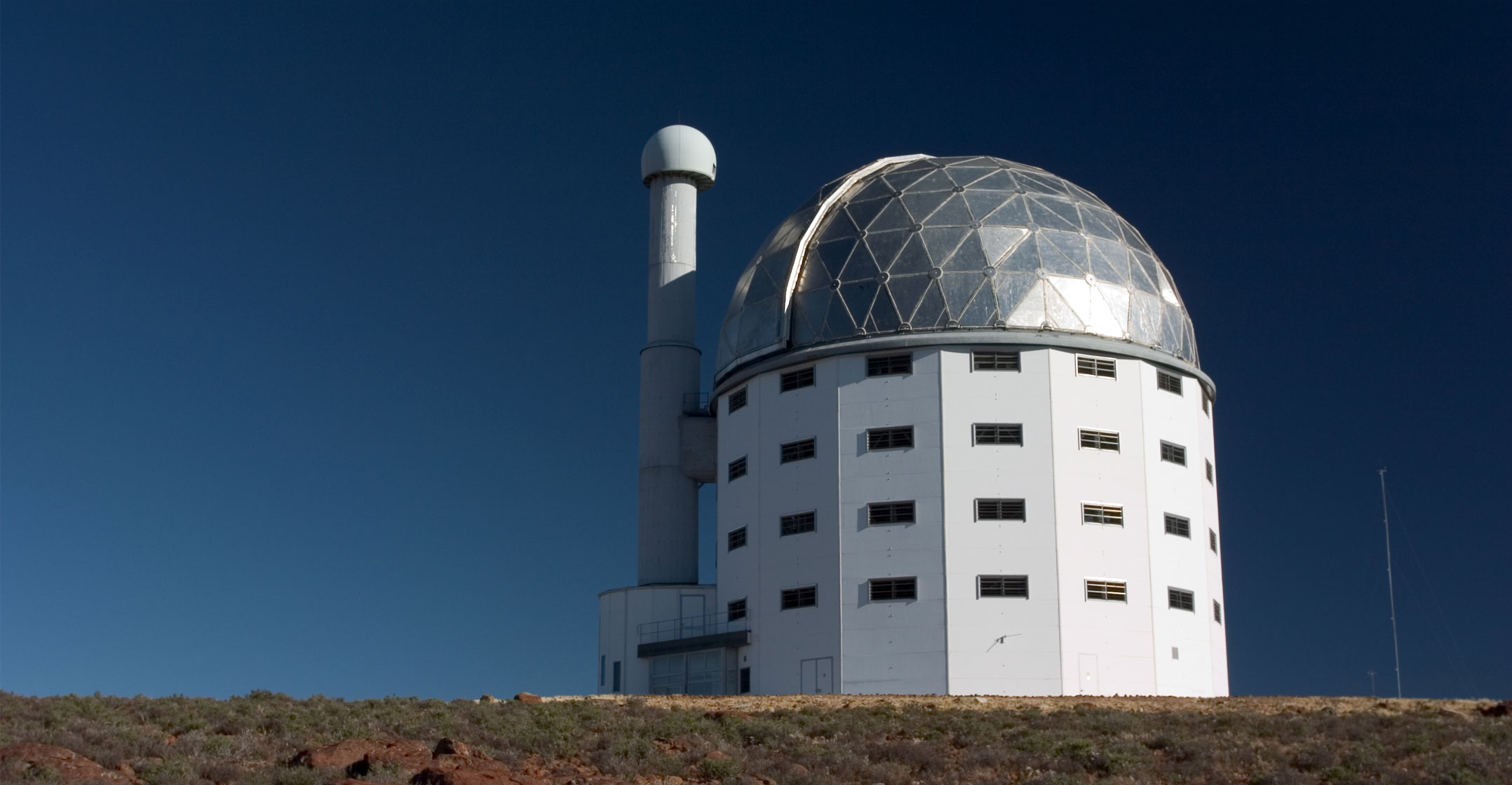
    The Southern African Large Telescope in Sutherland

    The South African Astronomical Observatory in Cape Town is the oldest permanent observatory in the southern hemisphere: It turned 200 in 2020.

    This observatory is a fundamental part of South Africa’s long history of astronomical research, which began when French academic Nicolas-Louis de La Caille visited Cape Town from 1751 to 1753. He undertook a careful examination of every square degree of the southern sky. This resulted in the first comprehensive sky survey ever made, in either hemisphere.

    The Royal Observatory, Cape Town of Good Hope (today the South African Astronomical Observatory) was established in 1820. It became – and remained for 150 years – the most important source of star positions in the southern hemisphere sky. This was in terms of both accuracy and the number of measurements made. In the years that followed its foundation, the observatory’s laborious work led to important scientific discoveries.

    Cape astronomers were responsible for, among other things, the first measurement of the distance to a star; the first photographic sky survey and the accurate measurement of the distance to the sun. They were at the forefront of developments in stellar spectroscopy. This is the detailed analysis of a star’s light to find out its composition and movement towards or away from the sun. They also determined the shape of the Earth in the southern hemisphere and conducted the first accurate countrywide survey measurements of Southern Africa.

    Measuring stellar distances

    In 1543, the mathematician and astronomer Nicolaus Copernicus asserted that Earth orbits the sun. This meant that people should be able to observe the apparent shift in the position of the nearest stars from different points in the Earth’s orbit. But that had not been observed in the centuries that followed. The reason was, of course, that even the nearest stars are incredibly far away and the effect being looked for is very small.

    When the Royal Observatory was founded in 1820, it was equipped with the most accurate star position measuring devices available. Eleven years later, Thomas Henderson used those devices to make the first believable measurements of this effect, known as “parallax”. By observing the angular “movement” of Alpha Centauri – still the second closest star – and knowing also the size of Earth’s orbit, this gave the distance to the star by simple trigonometry.

    When the Royal Observatory was founded in 1820, it was equipped with the most accurate star position measuring devices available

    A different technology, photography, would lead to more important astronomical discoveries at the Cape. All observatories in the 19th century made precise observations of star positions one by one and published catalogues of these. In 1882, the head of the Royal Observatory, David Gill, was surprised to receive a letter from a Mr Simpson, an amateur photographer in Aberdeen, a town elsewhere in the Cape. Simpson had managed to photograph a bright comet that had just appeared. His photographic plates were sensitive enough to register stars in the background. This led to a “lightbulb” moment for Gill: He realised that the positions of stars could now be recorded in quantity on a permanent medium, more reliably than any visual observer could ever hope to do.

    So, he set up a special photographic telescope using the largest lens that he could find and set about making the first photographic star catalogue. This was called the Cape Photographic Durchmusterung after its much more laboriously compiled northern hemisphere equivalent, put together in Bonn, Germany.
    But it wasn’t just Cape Town that hosted an important astronomical site. In 1903, the Johannesburg Observatory was established. It achieved its greatest success in 1915 when its director, Robert Innes, discovered a very faint star near Alpha Centauri.

    On various grounds he claimed it to be the nearest star to Earth; it took many years of investigation before this could be verified. The new discovery was named “Proxima Centauri”, meaning the nearest in the constellation Centaurus. Not only was it the nearest star but at that time of discovery it was the least luminous star ever discovered. Other dimmer stars have been found since, but Proxima still retains its nearest star status and its distance has been thoroughly verified from space satellites.

    Doubling the size of the universe

    In 1948, the private Radcliffe Foundation in the UK set up in Pretoria what was for a time the largest telescope in the southern hemisphere and joint fourth largest in the world. This is a title currently held by the Southern African Large Telescope.

    Early on in the Radcliffe’s existence the then director, David Thackeray, and his colleague Adriaan Wesselink discovered in our neighbouring galaxy the Large Magellanic Cloud, a number of RR Lyrae variable stars that astronomers using smaller telescopes could not detect. These are stars that change their brightness in a well-defined manner over a cycle of a few days and whose average “wattage” is completely predictable.

    By measuring the Magellanic Cloud stars’ average apparent brightness and comparing them to other RR Lyrae stars at known distances they determined that the cosmic distance scale originally published two decades before by Edwin Hubble and others was underestimated by about a factor of two. In effect, they doubled the size of the universe. This result was announced to great acclaim at the triennial meeting of the International Astronomical Union in 1952.

    More to come

    Today, South African astronomy remains at the forefront of many initiatives and discoveries. It has become a leader in the field of radio astronomy with the MeerKAT telescope near Carnarvon and will within a decade be the host of an international project, the Square Kilometre Array.

    This article is adapted from a piece that initially appeared in the South African National Research Foundation’s Science Matters Magazine.The Conversation

    • Written by Ian Glass, associate research astronomer, South African Astronomical Observatory
    • This article is republished from The Conversation under a Creative Commons licence

    Follow TechCentral on Google News Add TechCentral as your preferred source on Google


    Ian Glass SAAO South African Astronomical Observatory top
    WhatsApp YouTube
    Share. Facebook Twitter LinkedIn WhatsApp Telegram Email Copy Link
    Previous ArticleInside CD Projekt’s Cyberpunk 2077 launch fiasco
    Next Article Load shedding: The short-term outlook is dire

    Related Posts

    Blood Moon to dazzle South Africa in rare total lunar eclipse

    Blood Moon to dazzle South Africa in rare total lunar eclipse

    7 September 2025
    Outer space is coming to the Mother City - IAU General Assembly

    Outer space is coming to the Mother City

    1 August 2024

    18GW in unplanned breakdowns cripple Eskom

    2 November 2021
    Company News
    The hidden infrastructure behind AI - Open Access Data Centres OADC

    The hidden infrastructure behind AI

    2 June 2026
    Addressing the 57% blind spot: Kaspersky on measuring SOC effectiveness

    Addressing the 57% blind spot: Kaspersky on measuring SOC effectiveness

    2 June 2026
    Strike48 report: security leaders wary of AI agents - Maidar Secure

    Strike48 report: security leaders wary of AI agents

    2 June 2026
    Opinion
    Treasury's crypto crackdown is a betrayal of Mandela's promise - Duncan McLeod

    Treasury’s crypto crackdown is a betrayal of Mandela’s promise

    22 May 2026
    South Africa is sleepwalking into another AI policy failure - Celeste Labuschagne

    South Africa is sleepwalking into another AI policy failure

    20 May 2026
    AI won't fix your culture - it will expose it - Jackie Kennedy

    AI won’t fix your culture – it will expose it

    19 May 2026

    Subscribe to Updates

    Get the best South African technology news and analysis delivered to your e-mail inbox every morning.

    Latest Posts
    Why Telkom is pouring capex into IT - Serame Taukobong

    Why Telkom is pouring capital spending into IT

    2 June 2026
    Telkom's data growth story still has years to run: CEO

    Telkom’s data growth story still has years to run: CEO

    2 June 2026
    Reserve Bank draws a line on inflation - Lesetja Kganyago. Siphiwe Sibeko/Reuters

    Reserve Bank draws a line on inflation

    2 June 2026
    Astronomers discover exoplanets with magnetic fields

    Strange winds reveal magnetic fields on distant ‘hot Jupiters’

    2 June 2026
    © 2009 - 2026 NewsCentral Media
    • Cookie policy (ZA)
    • TechCentral – privacy and Popia

    Type above and press Enter to search. Press Esc to cancel.

    Manage consent

    TechCentral uses cookies to enhance its offerings. Consenting to these technologies allows us to serve you better. Not consenting or withdrawing consent may adversely affect certain features and functions of the website.

    Functional Always active
    The technical storage or access is strictly necessary for the legitimate purpose of enabling the use of a specific service explicitly requested by the subscriber or user, or for the sole purpose of carrying out the transmission of a communication over an electronic communications network.
    Preferences
    The technical storage or access is necessary for the legitimate purpose of storing preferences that are not requested by the subscriber or user.
    Statistics
    The technical storage or access that is used exclusively for statistical purposes. The technical storage or access that is used exclusively for anonymous statistical purposes. Without a subpoena, voluntary compliance on the part of your Internet Service Provider, or additional records from a third party, information stored or retrieved for this purpose alone cannot usually be used to identify you.
    Marketing
    The technical storage or access is required to create user profiles to send advertising, or to track the user on a website or across several websites for similar marketing purposes.
    • Manage options
    • Manage services
    • Manage {vendor_count} vendors
    • Read more about these purposes
    View preferences
    • {title}
    • {title}
    • {title}