When energy minister Kgosientsho Ramokgopa said recently that “coal is going nowhere” and that scientists were perfecting technology to burn it cleanly, he was making two promises at once.
The first is political: that South Africa will not abandon the resource that still keeps the lights on, nor the communities that mine it. The second is technical and financial: that “clean coal” can be made to work, and made to pay.
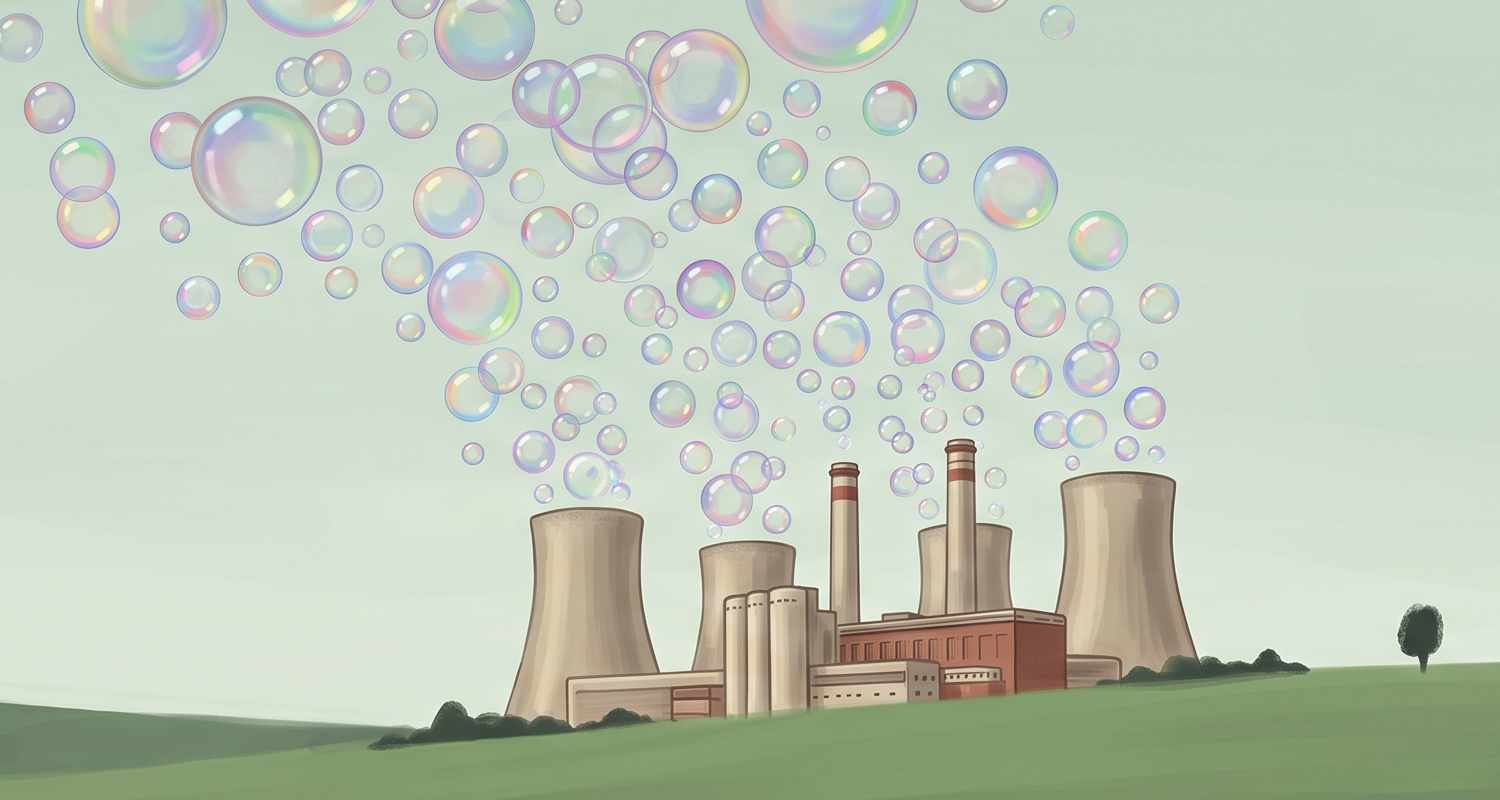
But a TechCentral reader responding to our earlier report called clean coal “an oxymoron, a red herring” that “actually doesn’t exist”. So, we put that verdict to the experts. Their answer is more precise, and more damaging: clean coal is not so much a scam as an expensive bet against economics that have already moved on, and one the government is not even funding seriously enough to win.
Chris Yelland, an independent energy analyst and MD of EE Business Intelligence, does not dispute that the science is worth studying. He disputes that the government is serious about it.
“I might take clean coal technology for decarbonisation of the South African power sector a bit more seriously if there were three orders of magnitude more, like R8-billion instead of R8-million, funding being spent with the CSIR and others on clean coal scientific and industrial R&D,” he told TechCentral. “It seems to me government is just walking the dog, or throwing the dog a few bones to chew on.”
The CSIR has so far completed only a R7.15-million feasibility study for a 500kW test facility using high-efficiency, low-emission circulating fluidised bed (HELE-CFB) combustion. The plant has not been built. It is not funded through construction. It will not feed a single electron to the grid, and results that could validate the approach are not expected until 2029.
The carbon that will not go away
Yelland has argued the wider case in a detailed article he stands by, and its conclusion is unambiguous: “Currently, and for the foreseeable future, there is simply no such thing as ‘clean coal’, regardless of whether or not existing or new HELE technologies are used to minimise emissions.”
Cutting soot, sulphur and nitrogen from the flue is real and achievable: the CSIR says its HELE-CFB approach captures more than 95% of sulphur dioxide. The stakes there are high. Yelland points to a 2021 analysis by the Centre for Research on Energy and Clean Air, which found that Eskom’s 15 coal plants emitted more sulphur dioxide than the entire power sectors of the US and China combined – about 1 600 kilotonnes a year, more than any country except India.
Removing the carbon dioxide, the part that drives climate change, is a different and far harder problem. That requires carbon capture and storage. “Carbon capture and storage needs the right geological conditions at scale nearby, which seems most unlikely,” Yelland said.
Of the country’s flagship effort, the Council for Geoscience pilot at Leandra in Mpumalanga, he added: “To me, Leandra is a small-scale pilot that seems most unlikely to get beyond that.” His published work makes the same point: carbon capture “requires specific geological conditions that are not readily available in South Africa except by long pipelines at massive further cost”.

The Leandra pilot, backed by an $8-million World Bank grant and $15-million from government, completed its first phase in early 2024 and has yet to inject a single tonne of CO2 underground. Globally, the Institute for Energy Economics and Financial Analysis has documented how failed carbon-capture experiments have “wasted billions of dollars”, with underperforming projects that “considerably outnumber successful ones globally, and by large margins”.
And the total is tiny. The Global CCS Institute’s 2025 report counted 77 operational projects and total capture capacity, including everything still in development, of 513 million tonnes a year. Against global energy emissions of roughly 37 billion tonnes a year, the entire worldwide pipeline, most of it unbuilt, would handle little more than 1% of the problem.
It will be decided by a spreadsheet
A South African energy researcher who now works for an international power research body, and who reviewed the South African plans on condition he not be named, told TechCentral the technology is not the obstacle. “There are technologies to capture and sequester CO2. R&D focuses on making these more efficient and therefore cheaper. The question is the economics. Who will pay and why? And that’s a very tough discussion at the current costs in a country with economic indicators like ours.”
The timing, and the rapid rise of cheap renewables, is the problem. “By the time it reaches scale, say 10 to 20 years down the track, PV plus Bess will be extremely hard to beat,” the manager said, referring to solar photovoltaics paired with battery energy storage. “It will be decided by net present value and internal rate of return, not the technology itself. And of course it is an energy-consuming technology, so unless there is a mechanism for cash injection for lower carbon, it is very hard to make a business case. An environmental case, yes. But not financial.”
According to the International Renewable Energy Agency, 91% of new renewable power projects worldwide were cheaper than the lowest-cost fossil alternative in 2024, with solar PV about 41% cheaper and onshore wind 53% cheaper, at roughly $0.043 and $0.034/kWh. Battery storage, long the missing piece, has fallen 93% since 2010. Adding carbon capture to a coal plant pushes its cost the other way, at the exact moment the alternative gets cheaper every year.
The other side deserves a hearing. Coal still supplies most of South Africa’s electricity, and dispatchable baseload cannot be swapped overnight for weather-dependent generation without heavy investment in storage and grid. The country sits on an estimated 1.5 billion tonnes of coal discards that HELE-CFB plants could burn, and the just energy transition is meant to protect coal-belt jobs rather than strand them. Ramokgopa has also described the debate in sovereignty terms, arguing the country should not abandon coal to satisfy foreign agendas. Cleaner combustion, on this view, cuts lethal local pollutants and buys time while the transition is managed.
So, is it a scam?
Scam is the wrong word: it implies deception, where the likelier explanation is momentum. An economy, a workforce and institutions built around coal are reaching for a technology that lets them keep it. But on the evidence, and the testimony of those who model these systems for a living, the verdict holds: clean coal in the carbon sense remains unproven and expensive everywhere it has been tried, the government is funding it at a level its own advisers call throwing the dog a bone, and the alternative it is meant to forestall has already become the cheapest electricity humans have ever generated.
South Africa can spend a decade discovering this for itself, or read the results already in. – © 2026 NewsCentral Media
- Subscribe to TechCentral’s daily newsletter
- Get breaking news alerts on WhatsApp