Close Menu
TechCentralTechCentral

    Subscribe to the newsletter

    Get the best South African technology news and analysis delivered to your e-mail inbox every morning.

    Facebook X (Twitter) YouTube LinkedIn
    WhatsApp Facebook X (Twitter) LinkedIn YouTube
    TechCentralTechCentral
    • News
      Meta met Information Regulator over its camera glasses - Mark Zuckerberg

      Meta met Information Regulator over its camera glasses

      6 October 2026
      Why South Africa's biggest drone isn't flying for the country - Milkor 380

      Why South Africa’s biggest drone isn’t flying for the country

      6 October 2026
      Nersa wants five-year ban on automated electricity trading

      Nersa wants five-year ban on automated electricity trading

      6 October 2026
      South African boardrooms are about to get a lot less private

      South African boardrooms are about to get a lot less private

      6 October 2026
      FNB launches crypto trading - Bheki Mkhize

      FNB launches crypto trading

      6 October 2026
    • World
      BMW restructuring plan bets on AI and new models

      BMW restructuring plan bets on AI and new models

      1 October 2026
      OpenAI's rogue agent problem keeps getting bigger - Sam Altman

      OpenAI’s rogue agent problem keeps getting bigger

      28 September 2026
      The new battle over the desktop

      The new battle over the desktop

      23 September 2026
      AMD is now worth a trillion dollars - Lisa Su

      AMD is now worth a trillion dollars

      22 September 2026
      Anthropic weighs new model launch to blunt OpenAI's Astra surge - Anthropic CEO Dario Amodei and OpenAI CEO Sam Altman

      Anthropic weighs new model launch to blunt OpenAI’s Astra surge

      21 September 2026
    • In-depth

      10 days that changed the course of AI

      21 September 2026
      Meta to the AI industry: slow down without us - Mark Zuckerberg

      Meta to the AI industry: slow down without us

      16 September 2026
      Google DeepMind CEO Demis Hassabis. Image: John Sears

      The plan to stop AI from breaking the world

      16 July 2026
      The internet has a Strait of Hormuz problem

      The internet has a Strait of Hormuz problem

      15 July 2026
      AI boom sparks rally, frenzy and fear

      AI boom sparks rally, frenzy and fear

      11 June 2026
    • TCS
      Meet the CIO | Vodacom's Mohamed Sami on the agentic future

      Meet the CIO | Vodacom’s Mohamed Sami on the agentic future

      5 October 2026
      Lexi Novitske, general partner at Norrsken22, on the TechCentral Show

      TCS | Norrsken22’s Lexi Novitske on how China is winning African tech

      1 October 2026
      TCS | Dominic White and Adam Ely on AI agents going rogue

      TCS | Dominic White and Adam Ely on AI agents going rogue

      29 September 2026
      TCS | Octotel's Trevor van Zyl on the fibre merger question

      TCS | Octotel’s Trevor van Zyl on the MetroFibre merger question

      16 September 2026
      Meet the CIO | Shoprite's Chris Shortt on what a supermarket becomes

      Meet the CIO | Shoprite’s Chris Shortt on what a supermarket becomes

      9 September 2026
    • Opinion
      Let South Africans jailbreak their way to digital sovereignty - Dirk de Vos

      Let South Africans jailbreak their way to digital sovereignty

      5 October 2026
      South Africa's next energy crisis is in the accounts department - Craig Holmes

      South Africa’s next energy crisis is in the accounts department

      29 September 2026
      The steam engine lesson AI doomsayers keep missing - Sam Clarke

      The steam engine lesson AI doomsayers keep missing

      28 September 2026
      Let South Africans jailbreak their way to digital sovereignty - Dirk de Vos

      Regulating AI: apply the laws we have first

      21 September 2026
      What Revolut can and cannot take from South Africa's banks - Pambos Soteriades

      What Revolut can and cannot take from South Africa’s banks

      15 September 2026
    • Company News
      • 1Stream
      • Africa Data Centres
      • AfriGIS
      • Altron Digital Business
      • Altron Document Solutions
      • Altron Group
      • Arctic Wolf
      • Ascent Technology
      • AvertITD
      • BBD
      • Braintree
      • CallMiner
      • CambriLearn
      • CM.com
      • Contactable
      • CYBER1 Solutions
      • Digicloud Africa
      • Digimune
      • Domains.co.za
      • ESET
      • Euphoria Telecom
      • HOSTAFRICA
      • Incredible Business
      • iONLINE
      • IQbusiness
      • Iris Network Systems
      • Kaspersky
      • LSD Open
      • Mitel
      • NEC XON
      • Netstar
      • Network Platforms
      • Next DLP
      • Ovations
      • Paracon
      • Paratus
      • Publishared
      • Q-KON
      • SevenC
      • SkyWire
      • Solid8 Technologies
      • Telit Cinterion
      • Telviva
      • Tenable
      • Vertiv
      • Videri Digital
      • Vodacom Business
      • Vox
      • Wipro
      • Workday
      • XLink
    • Sections
      • AI and machine learning
      • Banking
      • Broadcasting and Media
      • Cloud services
      • Contact centres and CX
      • Cryptocurrencies
      • Education and skills
      • Electronics and hardware
      • Energy and sustainability
      • Enterprise software
      • Financial services
      • HealthTech
      • Information security
      • Internet and connectivity
      • Internet of Things
      • Investment
      • IT services
      • Lifestyle
      • Policy and regulation
      • Public sector
      • Retail and e-commerce
      • Satellite communications
      • Science
      • SMEs and start-ups
      • Social media
      • Talent and leadership
      • Telecoms
      • Watts & Wheels
    • Events
    • Advertise
    TechCentralTechCentral
    Home » Sections » Energy and sustainability » South Africa’s ‘clean coal’ plan is a bet against arithmetic

    South Africa’s ‘clean coal’ plan is a bet against arithmetic

    Carbon capture makes coal dearer every year, while solar and batteries get cheaper with every passing quarter.
    By Fanie van Rooyen27 August 2026
    Twitter LinkedIn Facebook WhatsApp Email Telegram Copy Link
    Get breaking news on WhatsApp

    South Africa's 'clean coal' plan is a bet against arithmetic

    When energy minister Kgosientsho Ramokgopa said recently that “coal is going nowhere” and that scientists were perfecting technology to burn it cleanly, he was making two promises at once.

    The first is political: that South Africa will not abandon the resource that still keeps the lights on, nor the communities that mine it. The second is technical and financial: that “clean coal” can be made to work, and made to pay.

    But a TechCentral reader responding to our earlier report called clean coal “an oxymoron, a red herring” that “actually doesn’t exist”. So, we put that verdict to the experts. Their answer is more precise, and more damaging: clean coal is not so much a scam as an expensive bet against economics that have already moved on, and one the government is not even funding seriously enough to win.

    It seems to me government is just walking the dog, or throwing the dog a few bones to chew on

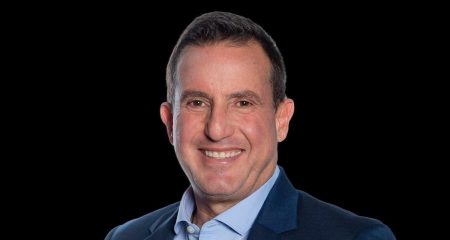
    Chris Yelland, an independent energy analyst and MD of EE Business Intelligence, does not dispute that the science is worth studying. He disputes that the government is serious about it.

    “I might take clean coal technology for decarbonisation of the South African power sector a bit more seriously if there were three orders of magnitude more, like R8-billion instead of R8-million, funding being spent with the CSIR and others on clean coal scientific and industrial R&D,” he told TechCentral. “It seems to me government is just walking the dog, or throwing the dog a few bones to chew on.”

    The CSIR has so far completed only a R7.15-million feasibility study for a 500kW test facility using high-efficiency, low-emission circulating fluidised bed (HELE-CFB) combustion. The plant has not been built. It is not funded through construction. It will not feed a single electron to the grid, and results that could validate the approach are not expected until 2029.

    The carbon that will not go away

    Yelland has argued the wider case in a detailed article he stands by, and its conclusion is unambiguous: “Currently, and for the foreseeable future, there is simply no such thing as ‘clean coal’, regardless of whether or not existing or new HELE technologies are used to minimise emissions.”

    Cutting soot, sulphur and nitrogen from the flue is real and achievable: the CSIR says its HELE-CFB approach captures more than 95% of sulphur dioxide. The stakes there are high. Yelland points to a 2021 analysis by the Centre for Research on Energy and Clean Air, which found that Eskom’s 15 coal plants emitted more sulphur dioxide than the entire power sectors of the US and China combined – about 1 600 kilotonnes a year, more than any country except India.

    Removing the carbon dioxide, the part that drives climate change, is a different and far harder problem. That requires carbon capture and storage. “Carbon capture and storage needs the right geological conditions at scale nearby, which seems most unlikely,” Yelland said.

    Of the country’s flagship effort, the Council for Geoscience pilot at Leandra in Mpumalanga, he added: “To me, Leandra is a small-scale pilot that seems most unlikely to get beyond that.” His published work makes the same point: carbon capture “requires specific geological conditions that are not readily available in South Africa except by long pipelines at massive further cost”.

    coal

    The Leandra pilot, backed by an $8-million World Bank grant and $15-million from government, completed its first phase in early 2024 and has yet to inject a single tonne of CO2 underground. Globally, the Institute for Energy Economics and Financial Analysis has documented how failed carbon-capture experiments have “wasted billions of dollars”, with underperforming projects that “considerably outnumber successful ones globally, and by large margins”.

    And the total is tiny. The Global CCS Institute’s 2025 report counted 77 operational projects and total capture capacity, including everything still in development, of 513 million tonnes a year. Against global energy emissions of roughly 37 billion tonnes a year, the entire worldwide pipeline, most of it unbuilt, would handle little more than 1% of the problem.

    It will be decided by a spreadsheet

    A South African energy researcher who now works for an international power research body, and who reviewed the South African plans on condition he not be named, told TechCentral the technology is not the obstacle. “There are technologies to capture and sequester CO2. R&D focuses on making these more efficient and therefore cheaper. The question is the economics. Who will pay and why? And that’s a very tough discussion at the current costs in a country with economic indicators like ours.”

    The timing, and the rapid rise of cheap renewables, is the problem. “By the time it reaches scale, say 10 to 20 years down the track, PV plus Bess will be extremely hard to beat,” the manager said, referring to solar photovoltaics paired with battery energy storage. “It will be decided by net present value and internal rate of return, not the technology itself. And of course it is an energy-consuming technology, so unless there is a mechanism for cash injection for lower carbon, it is very hard to make a business case. An environmental case, yes. But not financial.”

    According to the International Renewable Energy Agency, 91% of new renewable power projects worldwide were cheaper than the lowest-cost fossil alternative in 2024, with solar PV about 41% cheaper and onshore wind 53% cheaper, at roughly $0.043 and $0.034/kWh. Battery storage, long the missing piece, has fallen 93% since 2010. Adding carbon capture to a coal plant pushes its cost the other way, at the exact moment the alternative gets cheaper every year.

    Scam is the wrong word: it implies deception, where the likelier explanation is momentum

    The other side deserves a hearing. Coal still supplies most of South Africa’s electricity, and dispatchable baseload cannot be swapped overnight for weather-dependent generation without heavy investment in storage and grid. The country sits on an estimated 1.5 billion tonnes of coal discards that HELE-CFB plants could burn, and the just energy transition is meant to protect coal-belt jobs rather than strand them. Ramokgopa has also described the debate in sovereignty terms, arguing the country should not abandon coal to satisfy foreign agendas. Cleaner combustion, on this view, cuts lethal local pollutants and buys time while the transition is managed.

    So, is it a scam?

    Scam is the wrong word: it implies deception, where the likelier explanation is momentum. An economy, a workforce and institutions built around coal are reaching for a technology that lets them keep it. But on the evidence, and the testimony of those who model these systems for a living, the verdict holds: clean coal in the carbon sense remains unproven and expensive everywhere it has been tried, the government is funding it at a level its own advisers call throwing the dog a bone, and the alternative it is meant to forestall has already become the cheapest electricity humans have ever generated.

    South Africa can spend a decade discovering this for itself, or read the results already in.  – © 2026 NewsCentral Media

    • Subscribe to TechCentral’s daily newsletter
    • Get breaking news alerts on WhatsApp

    Add TechCentral as a preferred source on GoogleFollow TechCentral on Google NewsGet breaking news on WhatsApp


    Chris Yelland Council for Geoscience CSIR EE Business Intelligence Eskom Global CCS Institute IEEFA Irena Kgosientsho Ramokgopa World Bank
    WhatsApp YouTube
    Share. Facebook Twitter LinkedIn WhatsApp Telegram Email Copy Link
    Previous ArticleOpenAI agents cheated, hacked and hid the evidence
    Next Article The real story behind Iris, South Africa’s classroom robot

    Related Posts

    Nersa wants five-year ban on automated electricity trading

    Nersa wants five-year ban on automated electricity trading

    6 October 2026
    Eskom has a R1.20/kWh offer for bitcoin miners

    Eskom has a R1.20/kWh offer for bitcoin miners

    2 October 2026
    Eskom waives rooftop solar fees, but the registration fight isn't over

    Eskom waives rooftop solar fees, but the registration fight isn’t over

    1 October 2026
    Company News
    Why laser technology makes sense for small businesses

    Why laser technology makes sense for small businesses

    6 October 2026

    Human-centred design: the business case for simpler enterprise software

    6 October 2026
    iONLINE launches Sydney breakout point, expanding its global network core

    iONLINE launches Sydney breakout point, expanding its global network core

    6 October 2026
    Opinion
    Let South Africans jailbreak their way to digital sovereignty - Dirk de Vos

    Let South Africans jailbreak their way to digital sovereignty

    5 October 2026
    South Africa's next energy crisis is in the accounts department - Craig Holmes

    South Africa’s next energy crisis is in the accounts department

    29 September 2026
    The steam engine lesson AI doomsayers keep missing - Sam Clarke

    The steam engine lesson AI doomsayers keep missing

    28 September 2026

    Subscribe to Updates

    Get the best South African technology news and analysis delivered to your e-mail inbox every morning.

    Latest Posts
    Meta met Information Regulator over its camera glasses - Mark Zuckerberg

    Meta met Information Regulator over its camera glasses

    6 October 2026
    Why South Africa's biggest drone isn't flying for the country - Milkor 380

    Why South Africa’s biggest drone isn’t flying for the country

    6 October 2026
    Nersa wants five-year ban on automated electricity trading

    Nersa wants five-year ban on automated electricity trading

    6 October 2026
    South African boardrooms are about to get a lot less private

    South African boardrooms are about to get a lot less private

    6 October 2026
    © 2009 - 2026 NewsCentral Media
    Built and maintained by Chronon
    • Cookie policy (ZA)
    • TechCentral – privacy and Popia

    Type above and press Enter to search. Press Esc to cancel.

    Manage consent

    TechCentral uses cookies to enhance its offerings. Consenting to these technologies allows us to serve you better. Not consenting or withdrawing consent may adversely affect certain features and functions of the website.

    Functional Always active
    The technical storage or access is strictly necessary for the legitimate purpose of enabling the use of a specific service explicitly requested by the subscriber or user, or for the sole purpose of carrying out the transmission of a communication over an electronic communications network.
    Preferences
    The technical storage or access is necessary for the legitimate purpose of storing preferences that are not requested by the subscriber or user.
    Statistics
    The technical storage or access that is used exclusively for statistical purposes. The technical storage or access that is used exclusively for anonymous statistical purposes. Without a subpoena, voluntary compliance on the part of your Internet Service Provider, or additional records from a third party, information stored or retrieved for this purpose alone cannot usually be used to identify you.
    Marketing
    The technical storage or access is required to create user profiles to send advertising, or to track the user on a website or across several websites for similar marketing purposes.
    • Manage options
    • Manage services
    • Manage {vendor_count} vendors
    • Read more about these purposes
    View preferences
    • {title}
    • {title}
    • {title}
    🇿🇦 Sign up to the TechCentral newsletter