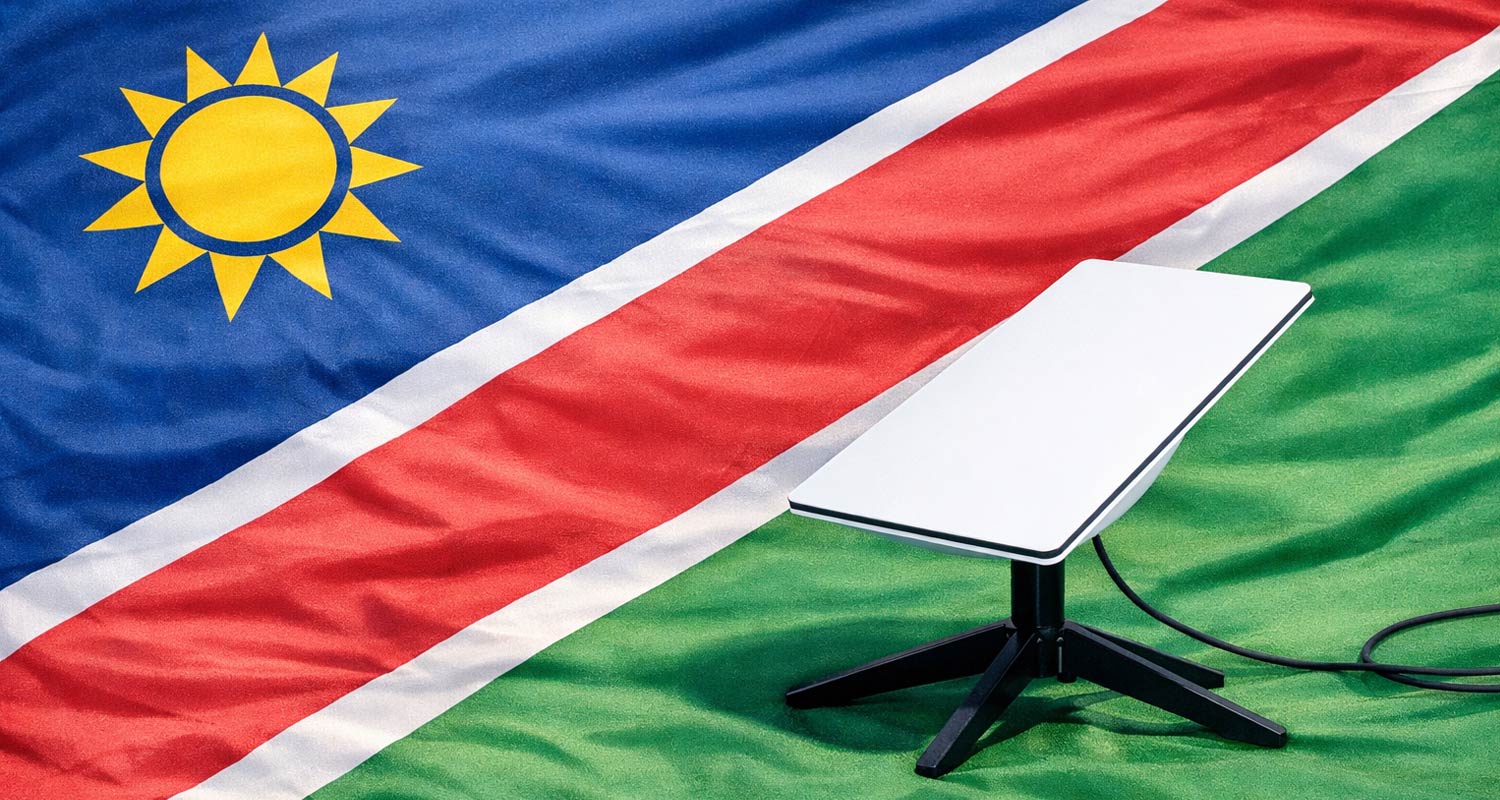
Starlink has hit back at Namibia’s decision to reject its licence application, calling the regulator’s characterisation of its non-compliance “misleading” and urging Namibians to request a formal appeal.
In a statement published on its website, the satellite internet provider owned by Elon Musk’s SpaceX said it had made clear over the past three years its commitment to establishing a local entity, complying with national security requirements and paying all applicable taxes and fees – consistent with how it operates in 164 markets worldwide.
The Communications Regulatory Authority of Namibia (Cran) declined Starlink’s applications for a telecommunications service licence and radio spectrum access on 23 March, citing failure to meet ownership and compliance criteria.
Now, in its first public response, the company has broken its silence – and adopted a combative tone.
Starlink said the primary obstacle was Namibia’s requirement for a minimum of 51% local ownership. It acknowledged that the country’s regulatory framework allows for ministerial exemptions to this rule but said no exemption was granted in its case.
The company maintains a global policy against local equity dilution – the same position that has stalled its entry into South Africa, where Icasa requires telecoms licensees to sell 30% of their equity to historically disadvantaged South Africans.
‘Misunderstanding’
Starlink also took aim at Cran’s public interest finding, saying it “appears to reflect a misunderstanding” of how the company complies with local laws, protects data sovereignty and supports national security in the markets where it operates.
Perhaps most striking is the company’s claim that 98.6% of public submissions during Cran’s consultation process supported its application. Starlink did not provide detail on how many submissions were received or how the consultation was structured.
Read: Why Namibia slammed the door on Starlink
The company has urged Namibians to request an appeal directly to Cran, a move that mirrors its public advocacy strategy in South Africa, where it has launched a dedicated website, pledged R500-million to connect rural schools and encouraged South Africans to write to regulator Icasa in support of regulatory reform.
Starlink also pointed to what it described as its impact elsewhere in Southern Africa. It said more than 600 health facilities had been connected in Zambia, more than 300 schools in Mozambique and 150 connectivity kits provided at reduced prices in Botswana in support of that country’s SmartBots digital transformation programme.

It also sought to address what it called common misconceptions, including claims that it would become a monopoly, pose a risk to national sovereignty or turn off service for non-technical reasons.
“Contrary to erroneous reporting, Starlink has never turned off access to the internet in any market, unless legally required to do so,” the company said.
Read: Starlink considers building its own phone
More than 30% of Namibians still lack internet access, according to the statement, with 65% of schools lacking reliable connectivity and 80% of health facilities operating on 3G or worse.
Cran’s regulatory process allows for the decision to be reconsidered “on its own motion or on a petition filed by an aggrieved party” within 90 days. — (c) 2026 NewsCentral Media
Get breaking news from TechCentral on WhatsApp. Sign up here.