Close Menu
TechCentralTechCentral

    Subscribe to the newsletter

    Get the best South African technology news and analysis delivered to your e-mail inbox every morning.

    Facebook X (Twitter) YouTube LinkedIn
    WhatsApp Facebook X (Twitter) LinkedIn YouTube
    TechCentralTechCentral
    • News
      MultiChoice scraps annual DStv price hikes for 2026 - David Mignot

      MultiChoice scraps annual DStv price hike

      20 February 2026
      What Gen Z really thinks about the tech world it inherited - Tinashe Mazodze

      What Gen Z really thinks about the tech world it inherited

      20 February 2026
      Showmax 'can't continue' in its current form

      Showmax ‘can’t continue’ in its current form

      20 February 2026
      Free Market Foundation slams treasury's proposed gambling tax

      Free Market Foundation slams treasury’s proposed gambling tax

      20 February 2026
      South Africa's dynamic spectrum breakthrough - Paul Colmer

      South Africa’s dynamic spectrum breakthrough

      20 February 2026
    • World
      Prominent Southern African journalist targeted with Predator spyware

      Prominent Southern African journalist targeted with Predator spyware

      18 February 2026
      More drama in Warner Bros tug of war

      More drama in Warner Bros tug of war

      17 February 2026
      Russia bans WhatsApp

      Russia bans WhatsApp

      12 February 2026
      EU regulators take aim at WhatsApp

      EU regulators take aim at WhatsApp

      9 February 2026
      Musk hits brakes on Mars mission

      Musk hits brakes on Mars mission

      9 February 2026
    • In-depth
      How liberalisation is rewiring South Africa's power sector

      How liberalisation is rewiring South Africa’s power sector

      21 January 2026
      The top-performing South African tech shares of 2025

      The top-performing South African tech shares of 2025

      12 January 2026
      Digital authoritarianism grows as African states normalise internet blackouts

      Digital authoritarianism grows as African states normalise internet blackouts

      19 December 2025
      TechCentral's South African Newsmakers of 2025

      TechCentral’s South African Newsmakers of 2025

      18 December 2025
      Black Friday goes digital in South Africa as online spending surges to record high

      Black Friday goes digital in South Africa as online spending surges to record high

      4 December 2025
    • TCS
      Watts & Wheels S1E4: 'We drive an electric Uber'

      Watts & Wheels S1E4: ‘We drive an electric Uber’

      10 February 2026
      TCS+ | How Cloud On Demand is helping SA businesses succeed in the cloud - Xhenia Rhode, Dion Kalicharan

      TCS+ | Cloud On Demand and Consnet: inside a real-world AWS partner success story

      30 January 2026
      Watts & Wheels S1E4: 'We drive an electric Uber'

      Watts & Wheels S1E3: ‘BYD’s Corolla Cross challenger’

      30 January 2026
      Watts & Wheels S1E4: 'We drive an electric Uber'

      Watts & Wheels S1E2: ‘China attacks, BMW digs in, Toyota’s sublime supercar’

      23 January 2026

      TCS+ | Why cybersecurity is becoming a competitive advantage for SA businesses

      20 January 2026
    • Opinion
      A million reasons monopolies don't work - Duncan McLeod

      A million reasons monopolies don’t work

      10 February 2026
      The author, Business Leadership South Africa CEO Busi Mavuso

      Eskom unbundling U-turn threatens to undo hard-won electricity gains

      9 February 2026
      South Africa's skills advantage is being overlooked at home - Richard Firth

      South Africa’s skills advantage is being overlooked at home

      29 January 2026
      Why Elon Musk's Starlink is a 'hard no' for me - Songezo Zibi

      Why Elon Musk’s Starlink is a ‘hard no’ for me

      26 January 2026
      A million reasons monopolies don't work - Duncan McLeod

      South Africa’s new fibre broadband battle

      20 January 2026
    • Company Hubs
      • Africa Data Centres
      • AfriGIS
      • Altron Digital Business
      • Altron Document Solutions
      • Altron Group
      • Arctic Wolf
      • AvertITD
      • Braintree
      • CallMiner
      • CambriLearn
      • CYBER1 Solutions
      • Digicloud Africa
      • Digimune
      • Domains.co.za
      • ESET
      • Euphoria Telecom
      • Incredible Business
      • iONLINE
      • IQbusiness
      • Iris Network Systems
      • LSD Open
      • Mitel
      • NEC XON
      • Netstar
      • Network Platforms
      • Next DLP
      • Ovations
      • Paracon
      • Paratus
      • Q-KON
      • SevenC
      • SkyWire
      • Solid8 Technologies
      • Telit Cinterion
      • Tenable
      • Vertiv
      • Videri Digital
      • Vodacom Business
      • Wipro
      • Workday
      • XLink
    • Sections
      • AI and machine learning
      • Banking
      • Broadcasting and Media
      • Cloud services
      • Contact centres and CX
      • Cryptocurrencies
      • Education and skills
      • Electronics and hardware
      • Energy and sustainability
      • Enterprise software
      • Financial services
      • Information security
      • Internet and connectivity
      • Internet of Things
      • Investment
      • IT services
      • Lifestyle
      • Motoring
      • Public sector
      • Retail and e-commerce
      • Satellite communications
      • Science
      • SMEs and start-ups
      • Social media
      • Talent and leadership
      • Telecoms
    • Events
    • Advertise
    TechCentralTechCentral
    Home » Opinion » Jane Duncan » State Security Agency needs speedy reform – or it must be shut down

    State Security Agency needs speedy reform – or it must be shut down

    South Africa’s civilian intelligence service, the State Security Agency, is a broken institution.
    By Jane Duncan7 March 2023
    Twitter LinkedIn Facebook WhatsApp Email Telegram Copy Link
    News Alerts
    WhatsApp
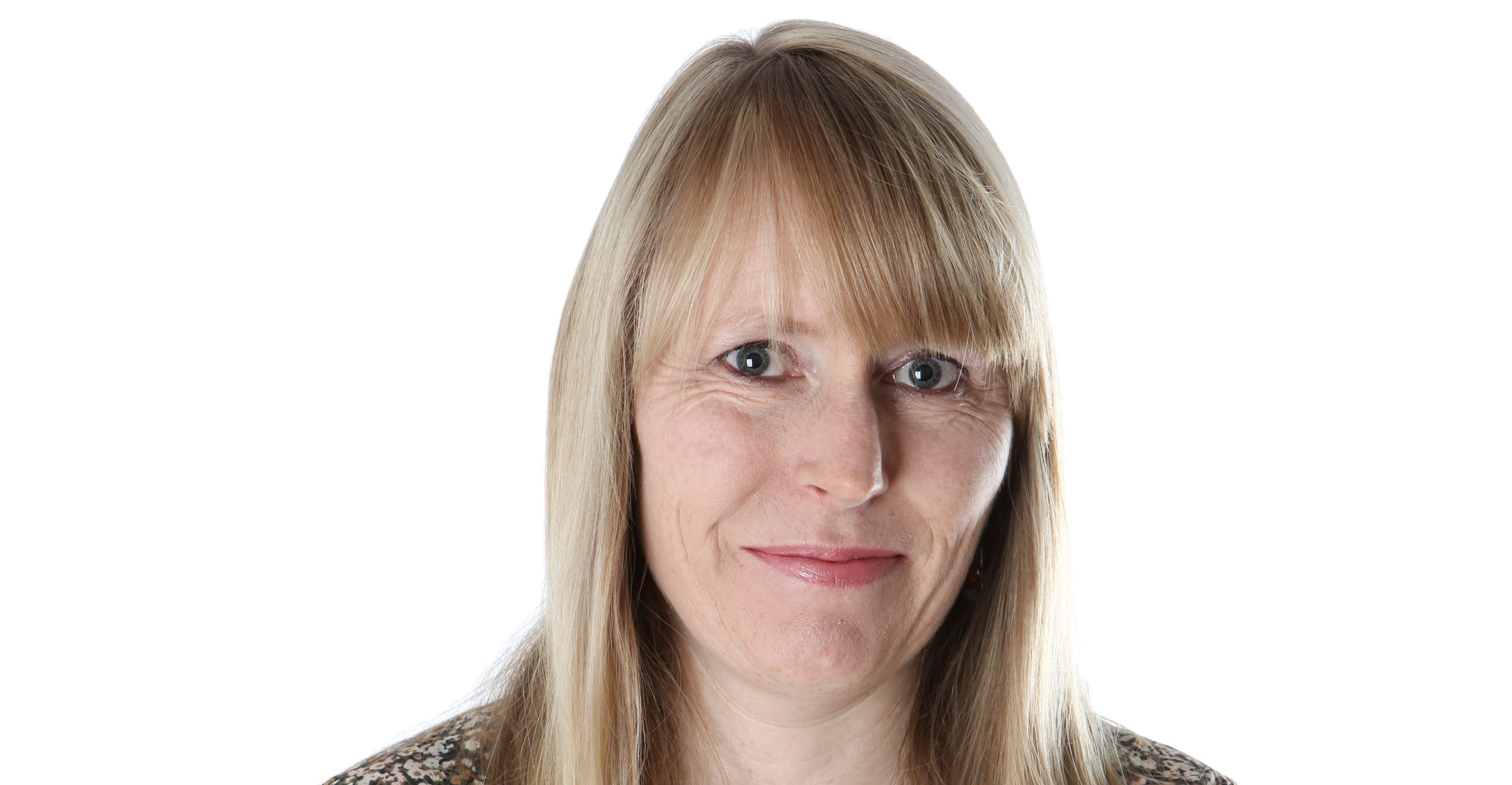
    The author, Jane Duncan

    South Africa’s civilian intelligence service, the State Security Agency, is a broken institution. It is meant to provide intelligence to forewarn the country about national security threats.

    Powerful individuals aligned to former President Jacob Zuma, presumably at his behest, repurposed the institution to help him maintain his grip on power. It was one of many institutions that were repurposed for improper personal or political gain during his tenure (May 2009 to February 2018): a process that has become known as state capture.

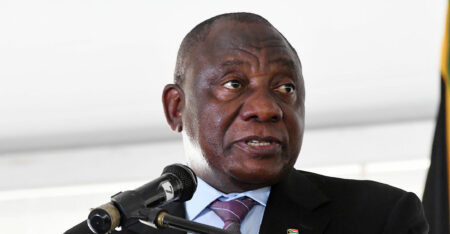
    His successor, President Cyril Ramaphosa, promised in 2022 to reform the agency so it would serve its original mission. He committed to returning it to the pre-2009 era of having separate domestic and foreign branches, each led by its own director-general.

    The intelligence agency during the Zuma era concentrated too much power in one entity

    This decision is a major positive development. The Zuma administration merged the two branches and abused the centralised model to protect the president from criticism.

    Dismantling this architecture of abuse is happening too slowly, however, with no transitional plan having been announced publicly. Such a plan should include appointing interim heads for the domestic and foreign branches, rather than relying on people in acting positions. The government’s underestimation of the time needed to restructure the intelligence agency could have potentially serious, even dangerous, consequences.

    The government under Zuma established the State Security Agency in 2009 as an amalgamation of the National Intelligence Agency, the domestic intelligence service, and the South African Secret Service, the foreign service.

    At that stage, the directors-general and other intelligence entities reported directly to the minister of intelligence. A coordinating mechanism ensured overall coherence. But in 2021 Ramaphosa dissolved the ministry. The agency now reports to the minister in the presidency.

    ‘Protective service’

    The intelligence agency during the Zuma era concentrated too much power in one entity, specifically a super director-general. Hence, it took very little to capture the entire entity for abusive purposes. Officials loyal to the former president used this merged structure to turn the agency into a protective service for him and those close to him politically.

    Testimony before the state capture commission showed how the agency’s resources were used to improve the fortunes of the ANC under Zuma’s leadership, by providing his supporters with resources to campaign on his behalf.

    Despite his administration’s stated objective of integrating the two services, they continued to operate on separate tracks. In fact, the merger eroded the very essence of the intelligence mandate – of forewarning the state of national security threats. The failure of intelligence ahead of the July 2021 riots is a glaring example.

    During the Zuma years, the focus on protecting the president led to the intelligence agency prioritising domestic intelligence by spying on citizens at the expense of foreign intelligence. Officials with ill intent also undermined the agency’s intelligence gathering capacity.

    Following Ramaphosa’s promises, minister in the presidency Mondli Gungubele has committed the presidency to ongoing reforms.
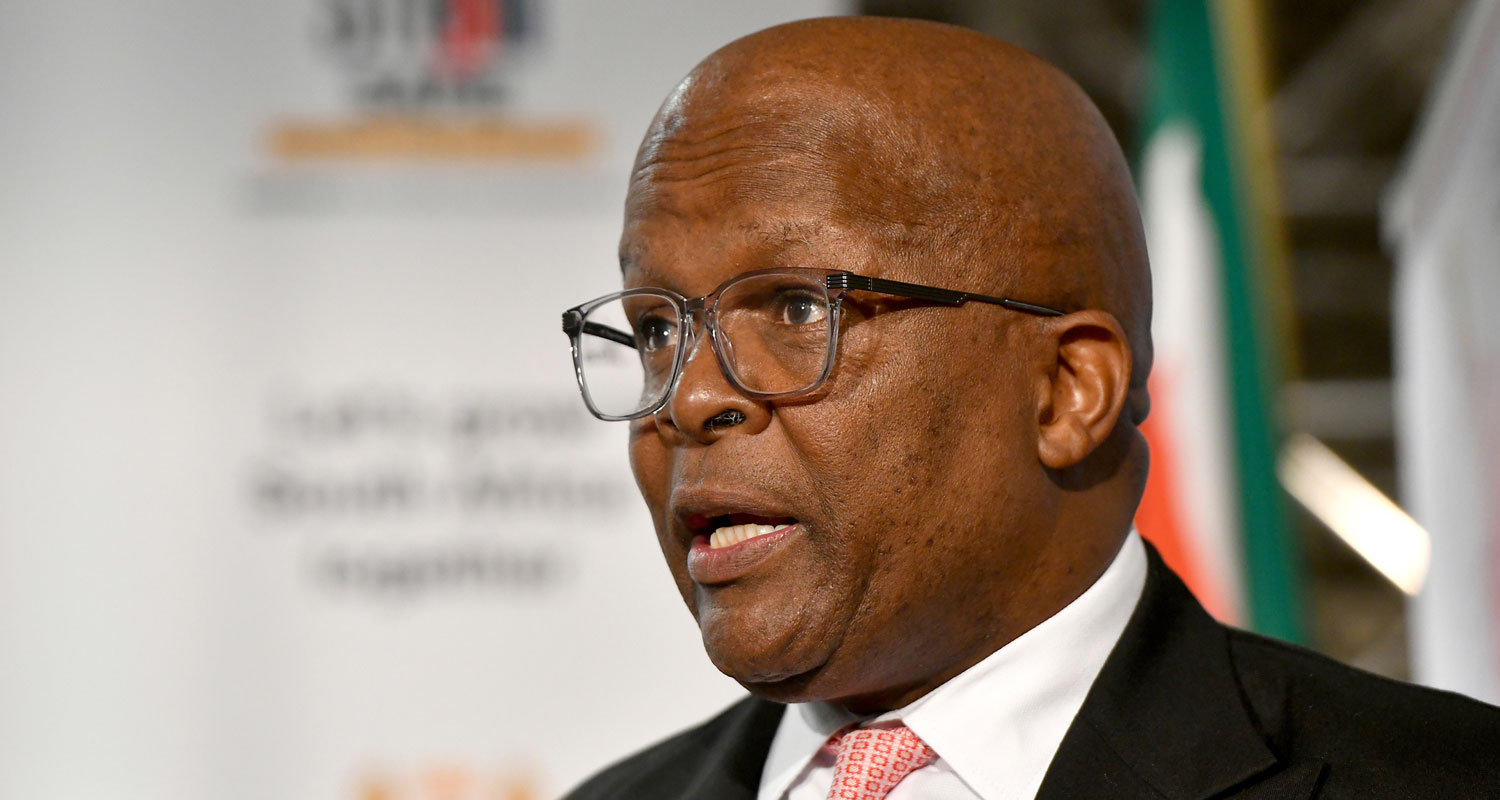
    Mondli Gungubele. Image: GCIS

    He highlighted the unbundling into foreign and domestic branches. This was one of the key recommendations of the 2018 High-Level Review Panel on the State Security Agency’s report.

    This would be done through an intelligence laws amendment bill that the intelligence agency intends to introduce to parliament by the end of the current financial year.

    This is not the first time Gungubele has made this promise. He did so in May 2022, saying that the bill had been finalised and would be submitted to parliament in September of that year. So, it should surprise no one if the new timeline isn’t followed once again.

    A new bill should ensure that the new heads of domestic and foreign intelligence have more discretionary power, reducing the power of the director-general. Doing so should make it more likely that this person will confine themselves to an oversight role rather than becoming involved in operational matters.

    The fact that the State Security Agency has been absorbed into the presidency – which is also accumulating other government entities and functions – could be a gift to any president intent on repeating the abuses of the Zuma administration.

    One of the biggest dangers is a delay in appointing leaders of the domestic and foreign intelligence branches. They need direction

    One of the biggest dangers is a delay in appointing leaders of the domestic and foreign intelligence branches. They need direction. The head of the foreign branch was suspended in July 2021 and the head of the domestic branch left after his contract expired at the end of the same month.

    The agency told me that they cannot appoint permanent heads until the bill to restructure the agency becomes a law, and its disestablishment is complete.

    The 2011 bill that established the amalgamated agency took 20 months to be signed into law. It would make sense to have a transitional plan, appointing individuals on two-year contracts.

    The Zuma administration was characterised by many acting appointments in key positions across government, including the State Security Agency and the National Prosecuting Authority. Relying so heavily on acting appointments weakened the government structures, to enable state capture.

    People in acting positions are unable to take strong positions as they lack the security of tenure to do so. But the domestic and foreign branches need strong positions to safeguard South Africa’s security and stability.

    Vulnerable

    The result of an intelligence service that is not fit for purpose is that the country is vulnerable to security threats from within and without. South Africans are living with the disastrous consequences – such as rising organised crime.

    Going back to separate foreign and domestic services is the last chance civilian intelligence has to re-establish its credibility.

    The current round of restructuring the State Security Agency cannot fail. If it does it will have to be shut down and restarted from scratch.

    The South American country Colombia did just that. In 2011, the government there shut down the Administrative Department of Security (DAS), after it went rogue and engaged in criminal activities under the guise of fighting the war on drugs.

    Unless the Ramaphosa administration expedites the State Security Agency’s restructuring, then the Colombian option will be the only one that makes sense for the agency.The Conversation

    • The author, Jane Duncan, is professor of digital society, University of Glasgow
    • This article is republished from The Conversation under a Creative Commons licence

    Get TechCentral’s daily newsletter

    Follow TechCentral on Google News Add TechCentral as your preferred source on Google


    Cyril Ramaphosa Jacob Zuma Jane Duncan Mondli Gungubele SSA State Security Agency
    WhatsApp YouTube
    Share. Facebook Twitter LinkedIn WhatsApp Telegram Email Copy Link
    Previous ArticleMicrosoft is infusing AI into business apps, including Teams
    Next Article Eskom load shedding sends economy into a tailspin

    Related Posts

    The biggest thing missing from the state of the nation address - Cyril Ramaphosa

    The biggest thing missing from the state of the nation address

    16 February 2026
    Ramaphosa presses ahead with Eskom break-up - Cyril Ramaphosa

    Ramaphosa presses ahead with Eskom break-up

    13 February 2026
    The key technology takeaways from Ramaphosa's 2026 Sona - Cyril Ramaphosa

    The key technology takeaways from Ramaphosa’s 2026 Sona

    13 February 2026
    Company News
    Service is everyone's problem now - and that's exactly why the Atlassian Service Collection matters

    Service is everyone’s problem now – why the Atlassian Service Collection matters

    20 February 2026
    Customers have new expectations. Is your CX ready? 1Stream

    Customers have new expectations. Is your CX ready?

    19 February 2026
    South Africa's cybersecurity challenge is not a tool problem - Nicholas Applewhite, Trinexia South Africa

    South Africa’s cybersecurity challenge is not a tool problem

    19 February 2026
    Opinion
    A million reasons monopolies don't work - Duncan McLeod

    A million reasons monopolies don’t work

    10 February 2026
    The author, Business Leadership South Africa CEO Busi Mavuso

    Eskom unbundling U-turn threatens to undo hard-won electricity gains

    9 February 2026
    South Africa's skills advantage is being overlooked at home - Richard Firth

    South Africa’s skills advantage is being overlooked at home

    29 January 2026

    Subscribe to Updates

    Get the best South African technology news and analysis delivered to your e-mail inbox every morning.

    Latest Posts
    MultiChoice scraps annual DStv price hikes for 2026 - David Mignot

    MultiChoice scraps annual DStv price hike

    20 February 2026
    What Gen Z really thinks about the tech world it inherited - Tinashe Mazodze

    What Gen Z really thinks about the tech world it inherited

    20 February 2026
    Showmax 'can't continue' in its current form

    Showmax ‘can’t continue’ in its current form

    20 February 2026
    Free Market Foundation slams treasury's proposed gambling tax

    Free Market Foundation slams treasury’s proposed gambling tax

    20 February 2026
    © 2009 - 2026 NewsCentral Media
    • Cookie policy (ZA)
    • TechCentral – privacy and Popia

    Type above and press Enter to search. Press Esc to cancel.

    Manage consent

    TechCentral uses cookies to enhance its offerings. Consenting to these technologies allows us to serve you better. Not consenting or withdrawing consent may adversely affect certain features and functions of the website.

    Functional Always active
    The technical storage or access is strictly necessary for the legitimate purpose of enabling the use of a specific service explicitly requested by the subscriber or user, or for the sole purpose of carrying out the transmission of a communication over an electronic communications network.
    Preferences
    The technical storage or access is necessary for the legitimate purpose of storing preferences that are not requested by the subscriber or user.
    Statistics
    The technical storage or access that is used exclusively for statistical purposes. The technical storage or access that is used exclusively for anonymous statistical purposes. Without a subpoena, voluntary compliance on the part of your Internet Service Provider, or additional records from a third party, information stored or retrieved for this purpose alone cannot usually be used to identify you.
    Marketing
    The technical storage or access is required to create user profiles to send advertising, or to track the user on a website or across several websites for similar marketing purposes.
    • Manage options
    • Manage services
    • Manage {vendor_count} vendors
    • Read more about these purposes
    View preferences
    • {title}
    • {title}
    • {title}