Close Menu
TechCentralTechCentral

    Subscribe to the newsletter

    Get the best South African technology news and analysis delivered to your e-mail inbox every morning.

    Facebook X (Twitter) YouTube LinkedIn
    WhatsApp Facebook X (Twitter) LinkedIn YouTube
    TechCentralTechCentral
    • News
      FNB CEO Harry Kellan steps down after just two years

      FNB CEO Harry Kellan steps down after just two years

      30 March 2026
      The staggering cost of connecting every South African household - Pieter Grootes

      The staggering cost of connecting every South African household

      30 March 2026
      Starlink fires back after Namibia rejects licence bid

      Starlink fires back after Namibia rejects licence bid

      30 March 2026
      MTN lobs a grenade into SA's mobile market with Pi launch

      MTN lobs a grenade into SA’s mobile market with Pi launch

      30 March 2026
      Standard Bank moved R164-trillion in payments in 2025

      Standard Bank moved R164-trillion in payments in 2025

      30 March 2026
    • World

      Apple plans to open Siri to rival AI services

      27 March 2026
      It's official: ads are coming to ChatGPT

      It’s official: ads are coming to ChatGPT

      23 March 2026
      Mystery Chinese AI model revealed to be Xiaomi's

      Mystery Chinese AI model revealed to be Xiaomi’s

      19 March 2026
      A mystery AI model has developers buzzing

      A mystery AI model has developers buzzing

      18 March 2026
      Samsung's trifold gamble ends in retreat

      Samsung’s trifold gamble ends in retreat

      17 March 2026
    • In-depth
      The R18-billion tech giant hiding in plain sight - Jens Montanana

      The R16-billion tech giant hiding in plain sight

      26 March 2026
      The last generation of coders

      The last generation of coders

      18 February 2026
      Sentech is in dire straits

      Sentech is in dire straits

      10 February 2026
      How liberalisation is rewiring South Africa's power sector

      How liberalisation is rewiring South Africa’s power sector

      21 January 2026
      The top-performing South African tech shares of 2025

      The top-performing South African tech shares of 2025

      12 January 2026
    • TCS
      Anoosh Rooplal

      TCS | Anoosh Rooplal on the Post Office’s last stand

      27 March 2026
      Meet the CIO | HealthBridge CTO Anton Fatti on the future of digital health

      Meet the CIO | Healthbridge CTO Anton Fatti on the future of digital health

      23 March 2026
      TCS+ | Arctic Wolf unpacks the evolving threat landscape for SA businesses - Clare Loveridge and Jason Oehley

      TCS+ | Arctic Wolf unpacks the evolving threat landscape for SA businesses

      19 March 2026
      TCS+ | Vox Kiwi: a wireless solution promising a fibre-like experience - Theo van Zyl

      TCS+ | Vox Kiwi: a wireless solution promising a fibre-like experience

      13 March 2026
      TCS+ | Flipping the narrative on AI in the Global South - Josefin Rosén

      TCS+ | Flipping the narrative on AI in the Global South

      13 March 2026
    • Opinion
      The conflict of interest at the heart of PayShap's slow adoption - Cheslyn Jacobs

      The conflict of interest at the heart of PayShap’s slow adoption

      26 March 2026
      South Africa's energy future hinges on getting wheeling right - Aishah Gire

      South Africa’s energy future hinges on getting wheeling right

      10 March 2026
      Hold the doom: the case for a South African comeback - Duncan McLeod

      Apple just dropped a bomb on the Windows world

      5 March 2026
      VC's centre of gravity is shifting - and South Africa is in the frame - Alison Collier

      VC’s centre of gravity is shifting – and South Africa is in the frame

      3 March 2026
      Hold the doom: the case for a South African comeback - Duncan McLeod

      Hold the doom: the case for a South African comeback

      26 February 2026
    • Company Hubs
      • 1Stream
      • Africa Data Centres
      • AfriGIS
      • Altron Digital Business
      • Altron Document Solutions
      • Altron Group
      • Arctic Wolf
      • Ascent Technology
      • AvertITD
      • Braintree
      • CallMiner
      • CambriLearn
      • CYBER1 Solutions
      • Digicloud Africa
      • Digimune
      • Domains.co.za
      • ESET
      • Euphoria Telecom
      • HOSTAFRICA
      • Incredible Business
      • iONLINE
      • IQbusiness
      • Iris Network Systems
      • LSD Open
      • Mitel
      • NEC XON
      • Netstar
      • Network Platforms
      • Next DLP
      • Ovations
      • Paracon
      • Paratus
      • Q-KON
      • SevenC
      • SkyWire
      • Solid8 Technologies
      • Telit Cinterion
      • Telviva
      • Tenable
      • Vertiv
      • Videri Digital
      • Vodacom Business
      • Wipro
      • Workday
      • XLink
    • Sections
      • AI and machine learning
      • Banking
      • Broadcasting and Media
      • Cloud services
      • Contact centres and CX
      • Cryptocurrencies
      • Education and skills
      • Electronics and hardware
      • Energy and sustainability
      • Enterprise software
      • Financial services
      • HealthTech
      • Information security
      • Internet and connectivity
      • Internet of Things
      • Investment
      • IT services
      • Lifestyle
      • Motoring
      • Policy and regulation
      • Public sector
      • Retail and e-commerce
      • Satellite communications
      • Science
      • SMEs and start-ups
      • Social media
      • Talent and leadership
      • Telecoms
    • Events
    • Advertise
    TechCentralTechCentral
    Home » Opinion » Reshaad Sha » Taking the pulse of the natural world

    Taking the pulse of the natural world

    By Reshaad Sha31 August 2017
    Twitter LinkedIn Facebook WhatsApp Email Telegram Copy Link
    News Alerts
    WhatsApp

    The rise of the Internet of things (IoT) and other mobile technologies offers humanity the opportunity to advance efforts in preserving and saving the environment in more innovative and relevant ways.

    We are living in the Anthropocene Age, or the age of man. This is characterised by the massive environmental modifications occurring on Earth, encompassing such issues as climate change and the rapid loss of biodiversity.

    There is another age we are living in, namely the Information Age, where the Internet, social networks, mobile devices and incredible computing power mean that people and things are more connected than at any time in the past.

    Ultimately, being able to gather and analyse vast amounts of data rapidly will allow us to close the environmental loop

    The latter clearly offers humanity a huge opportunity to change the impact of the former, as there is enormous potential for data analytics and technology to play a major role in monitoring, modelling and responding to the challenges of global biodiversity loss and climate change. IoT, in particular, provides an opportunity to monitor the pulse of the natural world.

    IoT has taken off, thanks to cost-effective production at scale of hi-tech sensors, and allow scientists to capture more comprehensive and complete data in a more contextual, frequent and secure manner than was previously possible.

    There are, in fact, many ways that IoT is enabling more frequent monitoring of the natural environment, and on a much larger spatial scale. Sensors allow for finer-resolution monitoring to take place in previously inaccessible or dangerous locations, as these allow for the automated capture of data. This means that once activated, these devices require minimal further human involvement. It is obvious that solutions such as these offer clear benefits to conservation science and management.

    Vast amounts of data

    Ultimately, being able to gather and analyse vast amounts of data rapidly will allow us to close the environmental loop, as it will allow us to determine the consequences of our actions are and thus ensure we take smarter actions as a result. Of course, the environment is vast and complex, so the first question we will need to answer is what do we want to measure? Once we know this, we need to decide what we do with this data and — once we have used the data — how we can manage things differently, based on this information.

    The good news is scientists and conservationists are already hard at work using IoT to answer these questions. Spain offers a fantastic example of how to save a species on the verge of extinction, using technology. At the turn of the century, there were fewer than 100 Iberian lynxes left. Thanks to a cutting-edge captive breeding centre, the numbers within this critically endangered species have more than tripled and it is now being reintroduced into safe habitats, as a second stage of this repopulation effort.

    Spain offers a fantastic example of how to save a species on the verge of extinction, using technology

    Today, these lynxes are tracked with location collars that geo-reference individual animals in the same manner an asset management system would. This allows scientists to study behavioural uses of space and territories by these animals in the wild. In addition, connected drones are used to provide additional monitoring, to see how they are doing from a distance. The next step is to move away from the current battery-dependent collars to subcutaneous sensors that would remain under a lynx’s skin for its lifetime.

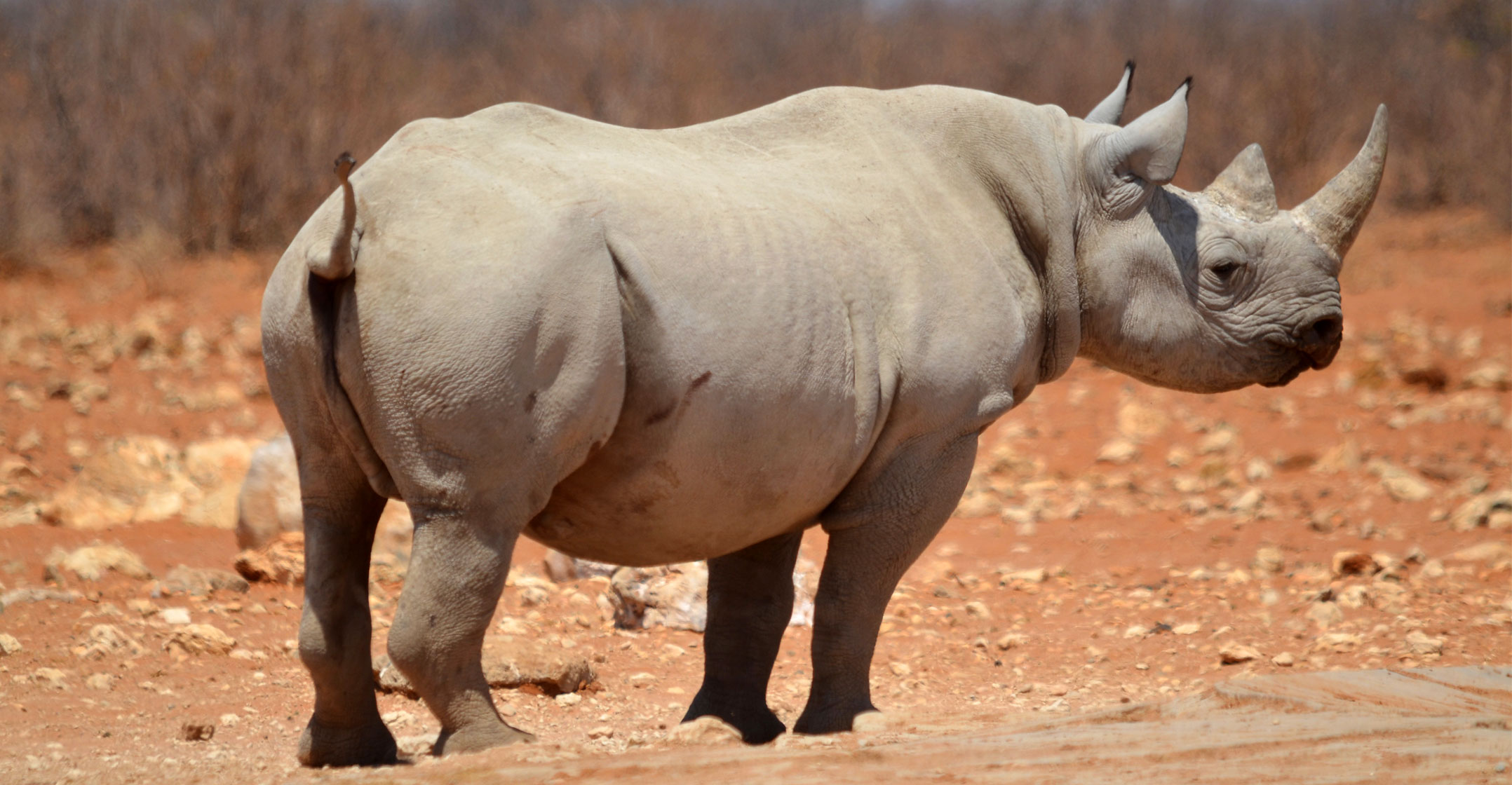
    Another good example of IoT-related conservation is the efforts being put in place by the Sigfox Foundation. Its parent company, Sigfox, has recently partnered with Dark Fibre Africa to launch SqwidNet, an IoT network that is built on Sigfox technology. The foundation is using connected sensors to assist conservationists in better monitoring rhino populations, since there are only estimated to be around 29 000 individual animals left.

    Although still in prototype form, it uses a GPS tracker that is implanted in the horns of the rhinos, which securely sends out three GPS signals per day via the Sigfox network, on a dedicated secured platform. By knowing the exact locations of these animals, the conservationists are thus better able to protect them. The end goal, naturally, is to produce 29 000 connected sensors to monitor all the living rhinos around the world.

    Author Reshaad Sha says technology can be used to eliminate some the biggest challenges posed by the Anthropocene Age

    Just a few months ago, there was much ado about three male lions that escaped from the Kruger National Park. Despite valiant attempts to find and bring them back to the reserve, two were killed by a farmer after he discovered they had killed one of his cattle, and the third was put down by South African National Parks staff.

    This sad story serves to illustrate yet again the benefits of location tracking and real-time IoT connectivity. Had these lions been tagged the way the rhinos in the Sigfox project are, it would have been easy to determine where these animals were at any given time, and SanParks staff could have darted them and returned them to the Kruger long before they attacked any cattle.

    Of course, the three examples are just some of the more basic methods conservationists are using to improve the natural world. Many others can also be cited, including initiatives whereby drones are being used as an anti-poaching measure, or where GPS-tagged sharks not only provide scientists with invaluable information about the animals themselves, but the tags can also tweet the locations of these fish to nervous beach-goers. Remote camera traps are starting to lead to the discovery or rediscovery of species in inaccessible regions while still others are using this technology to enable the monitoring of illegal fishing.

    IoT and other modern technologies clearly offer humanity the chance to change the conservation game, giving us the tools to tackle some of the trickiest problems facing the natural environment. By properly leveraging the benefits of the Information Age, we at last can eliminate some the greatest challenges posed by the Anthropocene Age.

    • Reshaad Sha is CEO of SqwidNet
    Follow TechCentral on Google News Add TechCentral as your preferred source on Google


    Dark Fibre Africa Reshaad Sha Sigfox SqwidNet top
    WhatsApp YouTube
    Share. Facebook Twitter LinkedIn WhatsApp Telegram Email Copy Link
    Previous ArticleInterview: Barclays Africa Group CIO Ashley Veasey
    Next Article What happens when Zuma goes

    Related Posts

    Remgro's fibre empire roars back

    Remgro’s fibre empire roars back

    25 March 2026
    Maziv plots fibre expansion blitz - Dietlof Mare

    Maziv plots fibre expansion blitz

    25 March 2026
    South Africa's IoT growth will stall without infrastructure discipline - Sigfox

    South Africa’s IoT growth will stall without infrastructure discipline

    25 March 2026
    Company News
    How consumers can identify a true QLED TV

    How consumers can identify a true QLED TV

    30 March 2026
    Kaspersky, Afripol team up to combat African cybercrime

    Kaspersky, Afripol team up to combat African cybercrime

    30 March 2026
    Modernise infrastructure with next-gen compute using HPE VM Essentials - Riaan Swart Tarsus Distribution

    Modernise infrastructure with next-gen compute using HPE VM Essentials

    30 March 2026
    Opinion
    The conflict of interest at the heart of PayShap's slow adoption - Cheslyn Jacobs

    The conflict of interest at the heart of PayShap’s slow adoption

    26 March 2026
    South Africa's energy future hinges on getting wheeling right - Aishah Gire

    South Africa’s energy future hinges on getting wheeling right

    10 March 2026
    Hold the doom: the case for a South African comeback - Duncan McLeod

    Apple just dropped a bomb on the Windows world

    5 March 2026

    Subscribe to Updates

    Get the best South African technology news and analysis delivered to your e-mail inbox every morning.

    Latest Posts
    FNB CEO Harry Kellan steps down after just two years

    FNB CEO Harry Kellan steps down after just two years

    30 March 2026
    How consumers can identify a true QLED TV

    How consumers can identify a true QLED TV

    30 March 2026
    The staggering cost of connecting every South African household - Pieter Grootes

    The staggering cost of connecting every South African household

    30 March 2026
    Kaspersky, Afripol team up to combat African cybercrime

    Kaspersky, Afripol team up to combat African cybercrime

    30 March 2026
    © 2009 - 2026 NewsCentral Media
    • Cookie policy (ZA)
    • TechCentral – privacy and Popia

    Type above and press Enter to search. Press Esc to cancel.

    Manage consent

    TechCentral uses cookies to enhance its offerings. Consenting to these technologies allows us to serve you better. Not consenting or withdrawing consent may adversely affect certain features and functions of the website.

    Functional Always active
    The technical storage or access is strictly necessary for the legitimate purpose of enabling the use of a specific service explicitly requested by the subscriber or user, or for the sole purpose of carrying out the transmission of a communication over an electronic communications network.
    Preferences
    The technical storage or access is necessary for the legitimate purpose of storing preferences that are not requested by the subscriber or user.
    Statistics
    The technical storage or access that is used exclusively for statistical purposes. The technical storage or access that is used exclusively for anonymous statistical purposes. Without a subpoena, voluntary compliance on the part of your Internet Service Provider, or additional records from a third party, information stored or retrieved for this purpose alone cannot usually be used to identify you.
    Marketing
    The technical storage or access is required to create user profiles to send advertising, or to track the user on a website or across several websites for similar marketing purposes.
    • Manage options
    • Manage services
    • Manage {vendor_count} vendors
    • Read more about these purposes
    View preferences
    • {title}
    • {title}
    • {title}