Close Menu
TechCentralTechCentral

    Subscribe to the newsletter

    Get the best South African technology news and analysis delivered to your e-mail inbox every morning.

    Facebook X (Twitter) YouTube LinkedIn
    WhatsApp Facebook X (Twitter) LinkedIn YouTube
    TechCentralTechCentral
    • News
      Fintech takes ATM fight to competition regulator

      Fintech takes ATM fight to competition regulator

      14 July 2026
      The lone ship guarding Africa's internet - Léon Thévenin

      The lone ship guarding Africa’s internet

      14 July 2026
      The Popia problem with agentic AI

      The Popia problem with agentic AI

      14 July 2026
      Djima Antaley delivers a package for Afrety in Dakar, Senegal. Ricci Shryock/Reuters

      The middlemen powering Africa’s online shopping boom

      14 July 2026
      Purple Group buys AI fintech Telescope in R177-million deal

      Purple Group buys AI fintech Telescope in R177-million deal

      14 July 2026
    • World
      Swingeing jobs cuts at Microsoft's Xbox unit

      Swingeing jobs cuts at Microsoft’s Xbox unit

      6 July 2026

      SK Hynix ends Samsung’s 26-year reign at the top

      22 June 2026
      Google on the hook for what its AI tells users, court rules

      Google on the hook for what its AI tells users, court rules

      15 June 2026
      How Russians juggle VPNs to outwit the Kremlin

      How Russians juggle VPNs to outwit the Kremlin

      15 June 2026
      Amazon CEO flagged Anthropic AI risks to Washington - Andy Jassy

      Amazon CEO flagged Anthropic AI risks to Washington

      14 June 2026
    • In-depth
      AI boom sparks rally, frenzy and fear

      AI boom sparks rally, frenzy and fear

      11 June 2026
      Every plug-in hybrid on sale in South Africa, ranked by price - Lamborghini Temerario

      Every plug-in hybrid on sale in South Africa, ranked by price

      7 June 2026
      What Wi-Fi 8 will mean for wireless networks

      What Wi-Fi 8 will mean for wireless networks

      1 June 2026
      Alfa's electric rebel - Alfa Romeo Junior Elettrica Veloce

      Alfa’s electric rebel

      29 April 2026
      Africa switches on as Europe dims the lights

      Africa switches on as Europe dims the lights

      9 April 2026
    • TCS
      Watts & Wheels S1E7: 'Ferrari's EV breaks the internet'

      Watts & Wheels S1E7: ‘Ferrari’s EV breaks the internet’

      8 July 2026
      TCS+ | How Tracker is turning vehicle data into business strategy - Silvia Schollenberger

      TCS+ | How Tracker is turning vehicle data into business strategy

      1 July 2026
      TCS+ | IBM Bob: an AI-powered 'development partner' for the enterprise - David Spurway

      TCS+ | IBM Bob: an AI-powered development partner for the enterprise

      30 June 2026
      Watts & Wheels S1E6: 'A flawless Alfa and a bakkie that divides'

      Watts & Wheels S1E6: ‘A flawless Alfa and a bakkie that divides’

      17 June 2026
      Watts & Wheels S1E6: 'A flawless Alfa and a bakkie that divides'

      Watts & Wheels S1E5: ‘A Bentley of the bush and a car that swims’

      8 June 2026
    • Opinion
      The author, Fanie van Rooyen

      South Africa can still catch the AI wave – here’s how

      7 July 2026
      The author, Fanie van Rooyen

      The AI utopia South Africa can’t afford

      1 July 2026
      The author, Jannie van Zyl

      South Africa’s broadband future is being decided in orbit, not in Pretoria

      30 June 2026
      The author, Pambos Soteriades

      The pivot South Africa’s MVNOs cannot afford to miss

      23 June 2026
      Brazil's online gambling crackdown is a lesson for South Africa

      Brazil’s online gambling crackdown is a lesson for South Africa

      22 June 2026
    • Company Hubs
      • 1Stream
      • Africa Data Centres
      • AfriGIS
      • Altron Digital Business
      • Altron Document Solutions
      • Altron Group
      • Arctic Wolf
      • Ascent Technology
      • AvertITD
      • BBD
      • Braintree
      • CallMiner
      • CambriLearn
      • CM Telecom
      • Contactable
      • CYBER1 Solutions
      • Digicloud Africa
      • Digimune
      • Domains.co.za
      • ESET
      • Euphoria Telecom
      • HOSTAFRICA
      • Incredible Business
      • iONLINE
      • IQbusiness
      • Iris Network Systems
      • Kaspersky
      • LSD Open
      • Mitel
      • NEC XON
      • Netstar
      • Network Platforms
      • Next DLP
      • Ovations
      • Paracon
      • Paratus
      • Q-KON
      • SevenC
      • SkyWire
      • Solid8 Technologies
      • Telit Cinterion
      • Telviva
      • Tenable
      • Vertiv
      • Videri Digital
      • Vodacom Business
      • Wipro
      • Workday
      • XLink
    • Sections
      • AI and machine learning
      • Banking
      • Broadcasting and Media
      • Cloud services
      • Contact centres and CX
      • Cryptocurrencies
      • Education and skills
      • Electronics and hardware
      • Energy and sustainability
      • Enterprise software
      • Financial services
      • HealthTech
      • Information security
      • Internet and connectivity
      • Internet of Things
      • Investment
      • IT services
      • Lifestyle
      • Policy and regulation
      • Public sector
      • Retail and e-commerce
      • Satellite communications
      • Science
      • SMEs and start-ups
      • Social media
      • Talent and leadership
      • Telecoms
      • Watts & Wheels
    • Events
    • Advertise
    TechCentralTechCentral
    Home » In-depth » Tech in schools won’t fix education

    Tech in schools won’t fix education

    By The Conversation18 September 2015
    Twitter LinkedIn Facebook WhatsApp Email Telegram Copy Link
    News Alerts
    WhatsApp

    school-pupil-640

    The OECD has just given the world an F when it comes to using computers to improve educational outcomes in schools and to give teenagers the digital skills they will increasingly need in life. In a report released this week entitled “Students, Computers and Learning”, Andreas Schleicher, OECD director for education and skills said that the report showed “no appreciable improvements in student achievement in reading, mathematics or science in the countries that had invested heavily in ICT for education”.

    In fact, for countries that invested heavily in ensuring that every child had access to laptops in schools, digital reading performance actually got worse between 2009 and 2012. In fact, as Schleicher goes on to say that “students who use computers very frequently at school do a lot worse in most learning outcomes, even after accounting for social background and student demographics”.

    The general conclusion of the report is that if child is smart and good at reading, they will be good at reading on a computer. Perhaps this shouldn’t surprise us, but it does because we have imbued technology with almost magical powers.

    The technical ability of having a world of information that is instantly searchable, was somehow confused with meaning that the child would automatically know how to formulate the right questions and understand, filter and assemble the appropriate answer from the results. It also assumed that “digital natives” would be more motivated to do this because it would be “natural” to them. We somehow forgot that in the days of the “paper natives” children were not necessarily inspired to study or explore just because they could.

    The more deeply worrying aspect of the OECD report is that it is based on a relatively superficial view of digital skills. It doesn’t assess the ability to do more complex tasks online nor to use software like spreadsheets for example to actually record, organise and analyse data. The assessment used as the basis for the OECD report is the Programme for International Assessment (Pisa). In a typical Pisa question designed to assesses digital reading skills, the student is asked to navigate a website and find the times of an event. This requires being able to read a Web page and understand what links to click on to navigate to other pages to get to the information.

    While these types of tasks may highlight the very rudimentary digital skills someone would need in order to use the Internet, it doesn’t really say very much about how someone would cope using a corporate system that they are given very specific training to use.
    School-computers-640

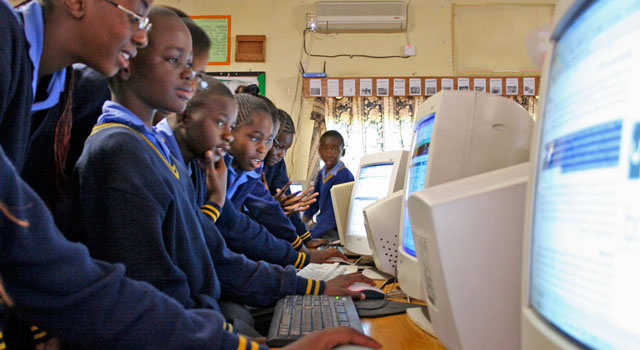
    The availability of computers by themselves doesn’t alter the need for teachers to teach students basic skills and content, nor does it change the need for students to study, practice and learn those skills and content. In fact, having computers in schools serves as a distraction rather than an aid according to the OECD report:

    “Students who use computers very frequently at school do a lot worse in most learning outcomes, even after accounting for social background and student demographics.”

    Supporters for the idea of use of computers in school may argue that the study simply highlights the fact that the technology was not used “correctly”, or that teachers were not adequately trained in how to use the technology in their teaching, or that educational software and resources are typically not very good.

    There may be some truth in all of these points but it is hard to believe that this would actually make a substantial difference to the outcomes.

    Much is made about the lack of digital skills of both the young and the elderly. If predictions of robots replacing jobs become true, it is believed that the only jobs left for humans will require high levels of digital skills. This argument is being used to justify teaching computer programming in schools on the basis that somehow this will give students a greater understanding of how to use software generally. As with computers, knowing some basic coding is very much like knowing basic sentences of French or how to play simple songs on the recorder. A broadening experience perhaps but of no use to a world needing a software engineer, translator or concert musician.The Conversation

    • David Glance is director of the UWA Centre for Software Practice at theUniversity of Western Australia
    • This article was originally published on The Conversation

    Follow TechCentral on Google News Add TechCentral as your preferred source on Google


    Andreas Schleicher David Glance OECD
    WhatsApp YouTube
    Share. Facebook Twitter LinkedIn WhatsApp Telegram Email Copy Link
    Previous ArticleBackspace: ‘Facebook’s new buttons’
    Next Article The SA MVNOs that offer the best deals

    Related Posts

    South Africa is sleepwalking into another AI policy failure - Celeste Labuschagne

    South Africa is sleepwalking into another AI policy failure

    20 May 2026
    OECD publishes treaty that would replace national digital taxes

    OECD publishes treaty that would replace national digital taxes

    11 October 2023

    Fibre uptake hurting mobile in rich countries

    17 July 2023
    Company News
    How Paratus and Eutelsat are connecting Southern Africa's mines

    How Paratus and Eutelsat are connecting Southern Africa’s mines

    14 July 2026
    Rain supercharges 5G with Huawei

    Rain supercharges 5G with Huawei

    10 July 2026
    Africa's data centres: AI, edge computing and new energy demands - Vertiv OADC Open Access Data Centres

    Africa’s data centres: AI, edge computing and new energy demands

    9 July 2026
    Opinion
    The author, Fanie van Rooyen

    South Africa can still catch the AI wave – here’s how

    7 July 2026
    The author, Fanie van Rooyen

    The AI utopia South Africa can’t afford

    1 July 2026
    The author, Jannie van Zyl

    South Africa’s broadband future is being decided in orbit, not in Pretoria

    30 June 2026

    Subscribe to Updates

    Get the best South African technology news and analysis delivered to your e-mail inbox every morning.

    Latest Posts
    Fintech takes ATM fight to competition regulator

    Fintech takes ATM fight to competition regulator

    14 July 2026
    The lone ship guarding Africa's internet - Léon Thévenin

    The lone ship guarding Africa’s internet

    14 July 2026
    The Popia problem with agentic AI

    The Popia problem with agentic AI

    14 July 2026
    How Paratus and Eutelsat are connecting Southern Africa's mines

    How Paratus and Eutelsat are connecting Southern Africa’s mines

    14 July 2026
    © 2009 - 2026 NewsCentral Media
    Built and maintained by Chronon
    • Cookie policy (ZA)
    • TechCentral – privacy and Popia

    Type above and press Enter to search. Press Esc to cancel.

    Manage consent

    TechCentral uses cookies to enhance its offerings. Consenting to these technologies allows us to serve you better. Not consenting or withdrawing consent may adversely affect certain features and functions of the website.

    Functional Always active
    The technical storage or access is strictly necessary for the legitimate purpose of enabling the use of a specific service explicitly requested by the subscriber or user, or for the sole purpose of carrying out the transmission of a communication over an electronic communications network.
    Preferences
    The technical storage or access is necessary for the legitimate purpose of storing preferences that are not requested by the subscriber or user.
    Statistics
    The technical storage or access that is used exclusively for statistical purposes. The technical storage or access that is used exclusively for anonymous statistical purposes. Without a subpoena, voluntary compliance on the part of your Internet Service Provider, or additional records from a third party, information stored or retrieved for this purpose alone cannot usually be used to identify you.
    Marketing
    The technical storage or access is required to create user profiles to send advertising, or to track the user on a website or across several websites for similar marketing purposes.
    • Manage options
    • Manage services
    • Manage {vendor_count} vendors
    • Read more about these purposes
    View preferences
    • {title}
    • {title}
    • {title}