
Close Menu
TechCentralTechCentral

    Subscribe to the newsletter

    Get the best South African technology news and analysis delivered to your e-mail inbox every morning.

    Facebook X (Twitter) YouTube LinkedIn
    WhatsApp Facebook X (Twitter) LinkedIn YouTube
    TechCentralTechCentral
    • News
      The AI reckoning arrives at South Africa's universities

      The AI reckoning arrives at South Africa’s universities

      3 July 2026
      South Africa's IoT opportunity is smaller than it looks - and already taken

      South Africa’s IoT opportunity is smaller than it looks – and already taken

      3 July 2026
      SA business grows even as optimism sinks to five-year low

      SA business grows even as optimism sinks to five-year low

      3 July 2026
      A degree is no longer enough

      A degree is no longer enough

      3 July 2026
      New rules on how operators can cut off your dormant Sim

      New rules on how operators can cut off your dormant Sim

      2 July 2026
    • World

      SK Hynix ends Samsung’s 26-year reign at the top

      22 June 2026
      Google on the hook for what its AI tells users, court rules

      Google on the hook for what its AI tells users, court rules

      15 June 2026
      How Russians juggle VPNs to outwit the Kremlin

      How Russians juggle VPNs to outwit the Kremlin

      15 June 2026
      Amazon CEO flagged Anthropic AI risks to Washington - Andy Jassy

      Amazon CEO flagged Anthropic AI risks to Washington

      14 June 2026
      Trouble at Xbox

      Trouble at Xbox

      11 June 2026
    • In-depth
      AI boom sparks rally, frenzy and fear

      AI boom sparks rally, frenzy and fear

      11 June 2026
      Every plug-in hybrid on sale in South Africa, ranked by price - Lamborghini Temerario

      Every plug-in hybrid on sale in South Africa, ranked by price

      7 June 2026
      What Wi-Fi 8 will mean for wireless networks

      What Wi-Fi 8 will mean for wireless networks

      1 June 2026
      Alfa's electric rebel - Alfa Romeo Junior Elettrica Veloce

      Alfa’s electric rebel

      29 April 2026
      Africa switches on as Europe dims the lights

      Africa switches on as Europe dims the lights

      9 April 2026
    • TCS
      TCS+ | How Tracker is turning vehicle data into business strategy - Silvia Schollenberger

      TCS+ | How Tracker is turning vehicle data into business strategy

      1 July 2026
      TCS+ | IBM Bob: an AI-powered 'development partner' for the enterprise - David Spurway

      TCS+ | IBM Bob: an AI-powered development partner for the enterprise

      30 June 2026
      Watts & Wheels S1E6: 'A flawless Alfa and a bakkie that divides'

      Watts & Wheels S1E6: ‘A flawless Alfa and a bakkie that divides’

      17 June 2026
      Watts & Wheels S1E6: 'A flawless Alfa and a bakkie that divides'

      Watts & Wheels S1E5: ‘A Bentley of the bush and a car that swims’

      8 June 2026
      TCS | Charge's R1.8-billion bet on an off-grid EV future - Charge chairman Joubert Roux

      TCS | Charge’s R1.8-billion bet on an off-grid EV future

      18 May 2026
    • Opinion
      The author, Jannie van Zyl

      South Africa’s broadband future is being decided in orbit, not in Pretoria

      30 June 2026
      The author, Pambos Soteriades

      The pivot South Africa’s MVNOs cannot afford to miss

      23 June 2026
      Brazil's online gambling crackdown is a lesson for South Africa

      Brazil’s online gambling crackdown is a lesson for South Africa

      22 June 2026
      Finish the job Mandela started - Farzam Ehsani

      Finish the job Mandela started

      18 June 2026
      The author, Fanie van Rooyen

      The US just showed it can switch off our AI

      17 June 2026
    • Company Hubs
      • 1Stream
      • Africa Data Centres
      • AfriGIS
      • Altron Digital Business
      • Altron Document Solutions
      • Altron Group
      • Arctic Wolf
      • Ascent Technology
      • AvertITD
      • BBD
      • Braintree
      • CallMiner
      • CambriLearn
      • CM Telecom
      • Contactable
      • CYBER1 Solutions
      • Digicloud Africa
      • Digimune
      • Domains.co.za
      • ESET
      • Euphoria Telecom
      • HOSTAFRICA
      • Incredible Business
      • iONLINE
      • IQbusiness
      • Iris Network Systems
      • Kaspersky
      • LSD Open
      • Mitel
      • NEC XON
      • Netstar
      • Network Platforms
      • Next DLP
      • Ovations
      • Paracon
      • Paratus
      • Q-KON
      • SevenC
      • SkyWire
      • Solid8 Technologies
      • Telit Cinterion
      • Telviva
      • Tenable
      • Vertiv
      • Videri Digital
      • Vodacom Business
      • Wipro
      • Workday
      • XLink
    • Sections
      • AI and machine learning
      • Banking
      • Broadcasting and Media
      • Cloud services
      • Contact centres and CX
      • Cryptocurrencies
      • Education and skills
      • Electronics and hardware
      • Energy and sustainability
      • Enterprise software
      • Financial services
      • HealthTech
      • Information security
      • Internet and connectivity
      • Internet of Things
      • Investment
      • IT services
      • Lifestyle
      • Motoring
      • Policy and regulation
      • Public sector
      • Retail and e-commerce
      • Satellite communications
      • Science
      • SMEs and start-ups
      • Social media
      • Talent and leadership
      • Telecoms
    • Events
    • Advertise
    TechCentralTechCentral
    Home » In-depth » The best tech businesses aren’t really tech

    The best tech businesses aren’t really tech

    By Agency Staff10 August 2016
    Twitter LinkedIn Facebook WhatsApp Email Telegram Copy Link
    News Alerts
    WhatsApp

    silicon-640

    Technology companies are a lot like contemporary art. Their valuations reflect narratives more than anything else, and it’s just as important to devise the right framework to describe a phenomenon as it is to build a beautiful product.

    Two New York consultants, Alex Moazed and Nicholas Johnson, have suggested an interesting way of looking at most of Silicon Valley’s biggest tech-company successes: they are all platforms.

    The European Commission defines an online platform as a business that employs “information and communication technologies to facilitate interactions (including commercial transactions) between users, collection and use of data about these interactions, and network effects which make the use of the platforms with most users most valuable to other users”.

    In their book, Modern Monopolies: What It Takes to Dominate the 21st Century Economy, Moazed and Johnson have a punchier definition: “A business that connects two or more mutually dependent groups in a way that benefits all sides.”

    Uber, Airbnb, Alphabet, Facebook, Amazon, PayPal, Apple, Snapchat, Alibaba, Tencent — all of them fit this definition to various degrees. There’s no need for narrower definitions such as “sharing economy”, “social networks”, “messaging services”, “app ecosystems”, “fintech”. Platforms, not software, are eating the world, despite what venture capitalist Marc Andreessen once said. Software is just a tool that helps turn a business into a platform. Last year in the US, Moazed and Johnson write, every one of the top 10 websites by traffic was a platform, and so were 58% of “unicorns”, start-ups valued at US$1bn or more.

    An old-school, 20th-century company is linear in nature, Moazed and Johnson explain. It produces goods or offers services and sells them to customers — a one-way street. On a platform, that’s not the case. Value is exchanged rather than transferred down a chain. “In the old model, scale was a result of investing in and growing a business’s internal resources,” they write. “But in a networked world, scale comes from cultivating an external network built on top of your business.”

    eBay, one of the first platforms, is a perfect example. It doesn’t sell anything at all; it just facilitates the interactions of a network of buyers and sellers. Similarly, Facebook depends on user content, and Apple makes it possible for developers to sell their apps to iPhone users. Platforms sell a specific “core transaction” to those who offer, create and consume goods and services.

    The question that arises at this point is, what exactly is new about intermediation? Moazed and Johnson note that the concept is not exactly novel: the Roman marketplace and the modern shopping mall served the same purpose. Technology, however, has turned the platform model into a dominant one. It has allowed the winners of the economic paradigm shift from linear to platform models to combine the power of markets with that of computerised coordination. “In a manner of speaking, Google is now creating the socialist utopia that all the might of Soviet Russia could not,” Moazed and Johnson write. “Google is making you feel empowered, even though it’s telling you what you want.”

    If this sounds dystopian, it should, just a little. Successful platforms are monopolies, or at least members of small oligopolies, thanks to the difficulty of getting a huge number of people to use one specific platform.

    That difficulty translates to the magic sauce needed to build a successful platform: the skill of building up, then managing and policing large communities. Facebook defeated such social platforms as Friendster and MySpace because it started out by methodically signing up colleges, then high schools, facilitating communication between people who actually wanted to communicate with each other.
    Banking is very different to the taxi business
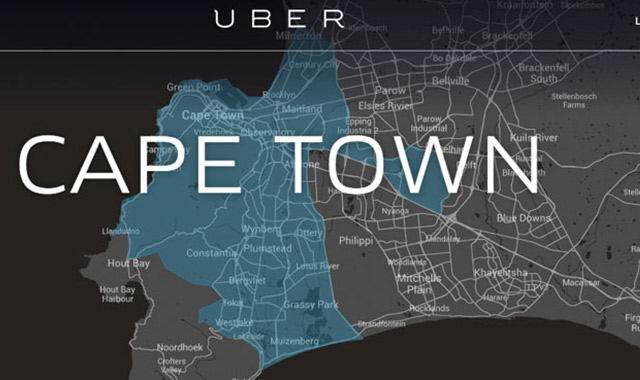
    Uber initially paid drivers to wait around so that new users could always find a driver ready to take them somewhere

    Moazed and Johnson point out that the much-touted “network effect”, which successful platform businesses use to grow and maintain their monopoly positions, is essentially local: the number of people on a network only matters to a user if these people are the kind he needs to be in touch with, and that often means geographical closeness — or, at best, the commonality of interests.

    The skill set needed to create a platform company is essentially social. It has little to do with engineering or product design and everything to do with knowing how to get people to interact.

    Uber initially paid drivers to wait around so that new users could always find a driver ready to take them somewhere. Reddit originally created or seeded all of the content it wanted people to discuss, and even set up fake accounts to make the site look populated. Airbnb leeched onto Craigslist’s existing network until Craigslist found out what was going on and made this impossible, not just for Airbnb but for anyone else who’d get the same idea. Tinder grew by holding presentations at sororities.

    Even if tech investors don’t apply this framework, they feel its power intuitively. According to Moazed and Johnson, platforms among unicorns are on average valued at $4,5bn, while “linear” businesses are worth an average of $2,5bn. Apple is forgiven flagging hardware sales for showing healthy growth in its services business — the platform part of the enterprise.

    It probably makes sense to push the intuition further, though. When discussing the prospects of Facebook, Twitter or other platform businesses, investors often concentrate on user-base growth. The obsession with size is wrong: the quality of the community organisation, curation and policing is likely much more important. How a company solves the user recruitment problem is a good predictor of how it will hold up. Measures of user satisfaction and ways to gauge the quality of the user experience are needed to figure out which platforms stand the best chance of making it to the top or remaining there. The tech industry is not so much technologically focused as it is socially focused. Success is based on the ability to draw — and keep — the crowds.  — (c) 2016 Bloomberg LP

    Follow TechCentral on Google News Add TechCentral as your preferred source on Google


    Airbnb Alex Moazed Alibaba Alphabet Amazon Apple Facebook Google Nicholas Johnson PayPal Snapchat Tencent Uber
    WhatsApp YouTube
    Share. Facebook Twitter LinkedIn WhatsApp Telegram Email Copy Link
    Previous ArticleSA marks one year of no load shedding
    Next Article MTN’s not-so-little reputation nightmare

    Related Posts

    South Africa's IoT opportunity is smaller than it looks - and already taken

    South Africa’s IoT opportunity is smaller than it looks – and already taken

    3 July 2026
    Meet Penny, Pick n Pay's new AI shopping companion

    Meet Penny, Pick n Pay’s new AI shopping companion

    2 July 2026
    Google plots E Cape as southern anchor of four-hub Africa network - Alex Okosi

    Google plots E Cape as southern anchor of four-hub Africa network

    1 July 2026
    Company News
    Powertel, Paratus Zimbabwe switch on new digital highway

    Powertel, Paratus Zimbabwe switch on new digital highway

    3 July 2026
    Mitel Workflow Studio wins global remote-work innovation award

    Mitel Workflow Studio wins global remote-work innovation award

    3 July 2026
    The data sovereignty rules African and EU firms can't ignore - BBD Software

    The data sovereignty rules African and EU firms can’t ignore

    2 July 2026
    Opinion
    The author, Jannie van Zyl

    South Africa’s broadband future is being decided in orbit, not in Pretoria

    30 June 2026
    The author, Pambos Soteriades

    The pivot South Africa’s MVNOs cannot afford to miss

    23 June 2026
    Brazil's online gambling crackdown is a lesson for South Africa

    Brazil’s online gambling crackdown is a lesson for South Africa

    22 June 2026

    Subscribe to Updates

    Get the best South African technology news and analysis delivered to your e-mail inbox every morning.

    Latest Posts
    The AI reckoning arrives at South Africa's universities

    The AI reckoning arrives at South Africa’s universities

    3 July 2026
    South Africa's IoT opportunity is smaller than it looks - and already taken

    South Africa’s IoT opportunity is smaller than it looks – and already taken

    3 July 2026
    SA business grows even as optimism sinks to five-year low

    SA business grows even as optimism sinks to five-year low

    3 July 2026
    A degree is no longer enough

    A degree is no longer enough

    3 July 2026
    © 2009 - 2026 NewsCentral Media
    Built and maintained by Chronon
    • Cookie policy (ZA)
    • TechCentral – privacy and Popia

    Type above and press Enter to search. Press Esc to cancel.

    Manage consent

    TechCentral uses cookies to enhance its offerings. Consenting to these technologies allows us to serve you better. Not consenting or withdrawing consent may adversely affect certain features and functions of the website.

    Functional Always active
    The technical storage or access is strictly necessary for the legitimate purpose of enabling the use of a specific service explicitly requested by the subscriber or user, or for the sole purpose of carrying out the transmission of a communication over an electronic communications network.
    Preferences
    The technical storage or access is necessary for the legitimate purpose of storing preferences that are not requested by the subscriber or user.
    Statistics
    The technical storage or access that is used exclusively for statistical purposes. The technical storage or access that is used exclusively for anonymous statistical purposes. Without a subpoena, voluntary compliance on the part of your Internet Service Provider, or additional records from a third party, information stored or retrieved for this purpose alone cannot usually be used to identify you.
    Marketing
    The technical storage or access is required to create user profiles to send advertising, or to track the user on a website or across several websites for similar marketing purposes.
    • Manage options
    • Manage services
    • Manage {vendor_count} vendors
    • Read more about these purposes
    View preferences
    • {title}
    • {title}
    • {title}