
Close Menu
TechCentralTechCentral

    Subscribe to the newsletter

    Get the best South African technology news and analysis delivered to your e-mail inbox every morning.

    Facebook X (Twitter) YouTube LinkedIn
    WhatsApp Facebook X (Twitter) LinkedIn YouTube
    TechCentralTechCentral
    • News
      Watts & Wheels: S1E1 - 'William, Prince of Wheels'

      Watts & Wheels: S1E1 – ‘William, Prince of Wheels’

      8 January 2026
      Television at 50 | How the internet broke the broadcast schedule

      Television at 50 | How the internet broke the broadcast schedule

      8 January 2026
      Safety recall hits Volvo's best-selling EV in South Africa

      Safety recall hits Volvo’s best-selling EV in South Africa

      8 January 2026
      South Africa's giant SKA telescope clears major technical hurdle

      South Africa’s giant SKA telescope clears major technical hurdle

      8 January 2026
      'The robot will see you now': OpenAI launches ChatGPT Health

      ‘The robot will see you now’: OpenAI launches ChatGPT Health

      8 January 2026
    • World
      Samsung forecasts record operating profit as AI demand sends memory chip prices sharply higher worldwide - TM Roh

      Samsung cashes in on AI data centre boom as memory prices soar

      8 January 2026
      EU pressure mounts on Musk's X over AI 'undressing' images - Wolfram Weimer

      EU pressure mounts on Musk’s X over AI ‘undressing’ images

      7 January 2026
      Intel launches Panther Lake, its next-gen PC chip

      Intel launches Panther Lake, its next-gen PC chip

      6 January 2026
      Starlink plans to lower satellite orbit to enhance safety

      Starlink plans to lower satellite orbit to enhance safety

      4 January 2026
      Lou Gerstner, the man who saved IBM, dies at 83

      Lou Gerstner, the man who saved IBM, dies at 83

      29 December 2025
    • In-depth
      Digital authoritarianism grows as African states normalise internet blackouts

      Digital authoritarianism grows as African states normalise internet blackouts

      19 December 2025
      TechCentral's South African Newsmakers of 2025

      TechCentral’s South African Newsmakers of 2025

      18 December 2025
      Black Friday goes digital in South Africa as online spending surges to record high

      Black Friday goes digital in South Africa as online spending surges to record high

      4 December 2025
      DStv dodges channel blackout in last-minute deal with Warner Bros

      Canal+ plays hardball – and DStv viewers feel the pain

      3 December 2025
      Jensen Huang Nvidia

      So, will China really win the AI race?

      14 November 2025
    • TCS
      TCS+ | Africa's digital transformation - unlocking AI through cloud and culture - Cliff de Wit Accelera Digital Group

      TCS+ | Cloud without culture won’t deliver AI: Accelera’s Cliff de Wit

      12 December 2025
      TCS+ | How Cloud on Demand helps partners thrive in the AWS ecosystem - Odwa Ndyaluvane and Xenia Rhode

      TCS+ | How Cloud On Demand helps partners thrive in the AWS ecosystem

      4 December 2025
      TCS | MTN Group CEO Ralph Mupita on competition, AI and the future of mobile

      TCS | Ralph Mupita on competition, AI and the future of mobile

      28 November 2025
      TCS | Dominic Cull on fixing South Africa's ICT policy bottlenecks

      TCS | Dominic Cull on fixing South Africa’s ICT policy bottlenecks

      21 November 2025
      TCS | BMW CEO Peter van Binsbergen on the future of South Africa's automotive industry

      TCS | BMW CEO Peter van Binsbergen on the future of South Africa’s automotive industry

      6 November 2025
    • Opinion
      ANC's attack on Solly Malatsi shows how BEE dogma trumps economic reality - Duncan McLeod

      ANC’s attack on Solly Malatsi shows how BEE dogma trumps economic reality

      14 December 2025
      Netflix, Warner Bros deal raises fresh headaches for MultiChoice - Duncan McLeod

      Netflix, Warner Bros deal raises fresh headaches for MultiChoice

      5 December 2025
      BIN scans, DDoS and the next cybercrime wave hitting South Africa's banks - Entersekt Gerhard Oosthuizen

      BIN scans, DDoS and the next cybercrime wave hitting South Africa’s banks

      3 December 2025
      ANC's attack on Solly Malatsi shows how BEE dogma trumps economic reality - Duncan McLeod

      Your data, your hardware: the DIY AI revolution is coming

      20 November 2025
      Zero Carbon Charge founder Joubert Roux

      The energy revolution South Africa can’t afford to miss

      20 November 2025
    • Company Hubs
      • Africa Data Centres
      • AfriGIS
      • Altron Digital Business
      • Altron Document Solutions
      • Altron Group
      • Arctic Wolf
      • AvertITD
      • Braintree
      • CallMiner
      • CambriLearn
      • CYBER1 Solutions
      • Digicloud Africa
      • Digimune
      • Domains.co.za
      • ESET
      • Euphoria Telecom
      • Incredible Business
      • iONLINE
      • IQbusiness
      • Iris Network Systems
      • LSD Open
      • NEC XON
      • Netstar
      • Network Platforms
      • Next DLP
      • Ovations
      • Paracon
      • Paratus
      • Q-KON
      • SevenC
      • SkyWire
      • Solid8 Technologies
      • Telit Cinterion
      • Tenable
      • Vertiv
      • Videri Digital
      • Vodacom Business
      • Wipro
      • Workday
      • XLink
    • Sections
      • AI and machine learning
      • Banking
      • Broadcasting and Media
      • Cloud services
      • Contact centres and CX
      • Cryptocurrencies
      • Education and skills
      • Electronics and hardware
      • Energy and sustainability
      • Enterprise software
      • Financial services
      • Information security
      • Internet and connectivity
      • Internet of Things
      • Investment
      • IT services
      • Lifestyle
      • Motoring
      • Public sector
      • Retail and e-commerce
      • Satellite communications
      • Science
      • SMEs and start-ups
      • Social media
      • Talent and leadership
      • Telecoms
    • Events
    • Advertise
    TechCentralTechCentral
    Home » Sections » Investment » The next wave: 10 technologies that will define 2026
    The next wave: 10 technologies that will define 2026

    The next wave: 10 technologies that will define 2026

    By Nkosinathi Ndlovu7 January 2026

    The technology sector flourished in 2025, with AI taking centre stage. Massive investments in data centre capacity by the likes of OpenAI, Meta Platforms and Google fed into a boom that some have predicted is a bubble waiting to burst.

    Perhaps the main beneficiary of AI’s rise in 2025 was chip maker Nvidia, whose market capitalisation breached the US$4-trillion mark in July – the first company in history to do so. Then, in October, its valuation peaked at just over $5-trillion – another first.

    AI will undoubtedly continue to be an influential force in 2026, but there are other technologies, like silicon-carbon batteries, 2nm chips, neuromorphic computers and other advances that may also have considerable impact on the sector and the world at large. Here, then, are TechCentral’s top 10 technologies that are likely to have an impact in 2026.

    The Honor Power2’s battery uses silicon carbon technology to deliver 10 080mAh capacity
    The Honor Power2’s battery uses silicon-carbon technology to deliver 10 080mAh capacity

    1. Silicon-carbon and silicon-carbide battery technology

    Using silicon-carbon anodes instead of graphite allows for larger battery capacities in a smaller form factors. Meanwhile, the use of silicon carbide as a semiconductor makes for chargers that are more efficient. This not only makes using gadgets more convenient but promises to reduce the charging time of electric vehicles. In 2026, silicon-carbon and silicon-carbide technology is likely to expand into electric vehicles, laptops, cellphones and a host of other gadgets.

    2. Agent-to-agent economics

    Initially developed by Google and now managed as an open-source project by the Linux Foundation, the Agent2Agent (A2A) protocol is an emerging standard for inter-agent communication. As agents gain greater autonomy, many will be given the ability make commercial decisions without any human intervention. Picture an AI-powered smart-home system that can use its own telemetry data to assess the accuracy of monthly utility bills and even send queries to the municipality in case of disputes. Service providers can in turn have their own AI agents handling those queries, allowing them to settle disputes autonomously.
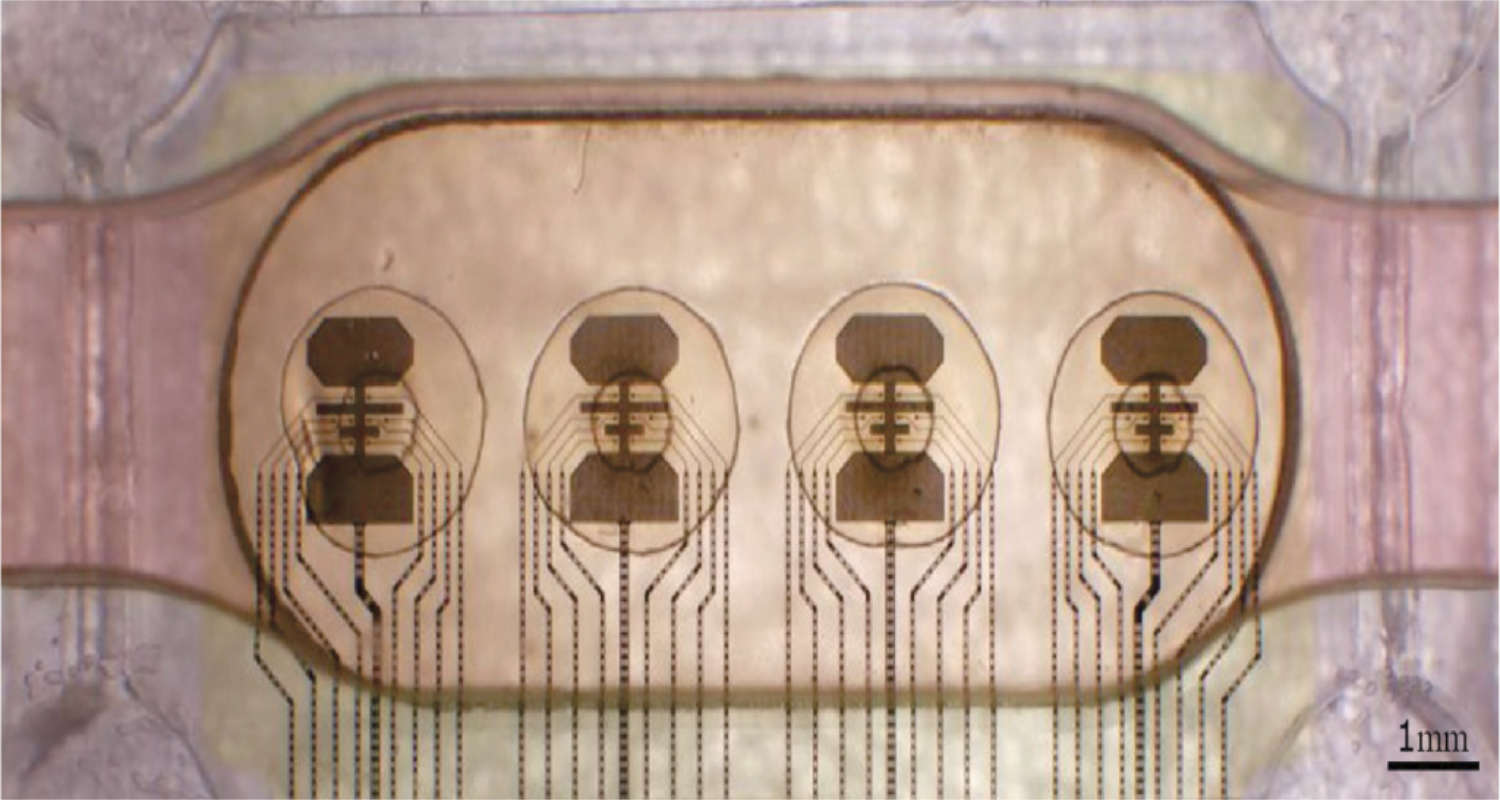
    FinalSpark's “mini brains” connected to living tissue
    FinalSpark’s “mini brains” connected to living tissue

    3. Neuromorphic computing

    A major flaw of the current approach to AI computing is that it is resource intensive. At the data centre level, this leads to more electricity being used, more heat generated as a by-product and more water needed for cooling.

    Attempts to find more efficient methods of AI computing include a peek into using biological material, instead of silicon chips, as a processing material. Fred Jordan, co-founder and CEO of Swiss biocomputing firm FinalSpark, calls this living material “wetware”. Some firms, like FinalSpark, use human skin cells to build neurons that do the computing.

    Expect to hear more noise about this in 2026, though the technology is far from going mainstream.

    4. Humanoid robot workers

    Vehicle manufacturer Hyundai and Google DeepMind have confirmed their first orders of Boston Dynamics’ Electric Atlas robot. These humanoid workers can lift up to 50kg and have 360-degree mobility in their joints, allowing them to perform repetitive tasks in warehouse and factory-like environments.

    BMW, meanwhile, is moving its humanoid plant worker pilot, which it ran in 2025, into production. BMW’s robots watch human workers performing tasks and then learn by copying them. The Figure 02, tested at BMW’s Spartanburg plant, moved 90 000 metal sheets in 2025, according to the company.

    TSMC
    TSMC

    5. 2nm chips

    In 2026, the world’s foundries, such as those owned and operated by Taiwan’s TSMC and Korea’s Samsung Electronics, are moving their production to more advanced 2-nanometre manufacturing nodes. The move promises to produce chips that perform 10-15% more than the previous generation of 3nm chips at the same power level. Alternatively, users may experience a 25-30% reduction in power consumption for the same performance, according to TSMC.

    Consumers can probably expect to see these new high-end chips in the iPhone 18 and Nvidia’s Vera Rubin GPUs, scheduled to enter the market in late 2026. AMD is also working on 2nm computer chips, expected either late this year or early in 2027. Moore’s Law isn’t dead yet.

    6. Photonic computing

    In traditional chips, electrons carry signals by moving through copper and silicon. This generates considerable heat. In data centres, the heat problem scales with the amount of hardware deployed, leading to performance degradation, impaired hardware health and higher maintenance costs. The rise of generative AI and its massive compute demands has only magnified these constraints.

    Using light may prove to be far more efficient as it produces far less excess heat, leading to more consistent performance while keeping hardware healthier for longer.

    Read: Surgeons make South African history with first robotic kidney donation

    Broadcom released its Tomahawk 6-Davisson network switch in 2025, which can carry more than 102.4Tbit/s of data using photonics.

    Nvidia launched its Vera Rubin architecture at the 2026 CES event in Las Vegas. According to Nvidia, Vera Rubin chips will perform 3.5x more efficiently because more of them are clustered together – their performance would degrade due to excess heat if they did not use photonics.

    Continuous authentication

    7. Continuous authentication

    Even with the advent of multifactor authentication through push notifications on specialised credential management apps, cybercriminals continue to find ways to exploit users and gain access to sensitive information. In 2026, the cybersecurity industry is honing in on ways to assess continuously a user’s authenticity using a mix of physical and digital markers, without them having endlessly to enter their credentials or verify their biometrics.

    Jason Lane-Sellers, director of fraud and identity for Europe at LexisNexis Risk Solutions, outlined how some of these tools work in a September 2025 interview with TechCentral. Some markers include device-specific information such as IP addresses and IMEI numbers. More sophisticated is telemetry data such as typing speed, rhythm and gait analysis that can give an application service provider hints as to whether the person using the device is who they say they are.

    8. Stablecoins

    The US’s introduction of landmark stablecoin legislation in July 2025 in the form of the Genius Act has laid the foundation for stablecoin adoption to grow rapidly in 2026. It has helped legitimise their use among institutional investors and the general public.

    As a result, the number of stablecoins in circulation has increased dramatically, with the combined market capitalisation of the investment type hitting a record highs above $283-billion by the end of 2025.

    Read: Sarb weighs stablecoins and CBDCs as digital money gains global momentum

    In 2026, stablecoin adoption may be driven by innovations not visible to the user. An example of this is Visa’s December 2025 launch of a USD Coin settlement layer, meaning that when a customer taps their card to make a payment, the underlying infrastructure uses stablecoins and blockchain technology to facilitate immediate interbank settlement. Other service providers like Stripe use similar technology to allow crypto users to pay for goods and have them settled in fiat currency at merchant outlets.

    IBM's Q quantum computer
    IBM’s Q quantum computer

    9. Quantum in manufacturing

    For all their processing power, quantum computers are not yet ready for primetime. They are notoriously expensive to build, run and maintain. They are sensitive to external environment factors, often heavier than a house and need teams of scientist to maintain just the right conditions for them to function.

    This has not stopped forward-looking organisations from using early quantum computing to take their manufacturing capabilities to the next level. Using cloud access to quantum processors offered by IBM, BMW and Boeing are using quantum annealing – a specialised methodology for solving combinatorial problems – to manage factory schedules with over 150 000 simultaneous constraints.

    What used to take hours of classical computing time now takes just minutes to complete. Quantum computing is also playing a role in quality control, where quantum sensors are being used to detect imperfections in 2nm chips that traditional optical sensors would miss.

    10. Domain-specific language models

    The rise of generic large language models such as OpenAI’s ChatGPT and Google’s Gemini has come as a boon to productivity, but this hasn’t been without drawbacks. Generic LLMs are prone to hallucination, are costly to train and run, and are often slow in generating responses to complex queries.

    Read: Nvidia’s next AI chips are in full production

    In contrast, domain-specific language models are cheaper to run and, while consuming fewer computing resources, they run faster, too. Domain-specific models work like a specialist to provide higher levels of utility to subject-matter experts.  – © 2026 NewsCentral Media

    Get breaking news from TechCentral on WhatsApp. Sign up here.



    BMW Broadcom CES FinalSpark Fred Jordan IBM Neuralink Nvidia Vera Rubin
    Subscribe to TechCentral Subscribe to TechCentral
    Share. Facebook Twitter LinkedIn WhatsApp Telegram Email Copy Link
    Previous ArticleSouth Africa’s new car market roared back to life in 2025, with NEVs gaining ground
    Next Article South Africa lets rivals team up to cut crippling electricity costs

    Related Posts

    Samsung forecasts record operating profit as AI demand sends memory chip prices sharply higher worldwide - TM Roh

    Samsung cashes in on AI data centre boom as memory prices soar

    8 January 2026
    Autonomous AI agents emerge as the next major cybersecurity risk

    Autonomous AI agents emerge as the next major cybersecurity risk

    6 January 2026
    Nvidia's next AI chips are in full production - Jensen Huang

    Nvidia’s next AI chips are in full production

    6 January 2026
    Company News
    Why trust is the real currency in modern media

    Why trust is the real currency in modern media

    6 January 2026
    Why banks and insurers need a single decisioning brain as pressures collide - SAS

    Why banks and insurers need a single decisioning brain as pressures collide

    29 December 2025
    First Technology Western Cape delivers the tools - and intelligence - behind modern business - Dell Technologies

    First Technology Western Cape delivers the tools – and intelligence – behind modern business

    29 December 2025
    Opinion
    ANC's attack on Solly Malatsi shows how BEE dogma trumps economic reality - Duncan McLeod

    ANC’s attack on Solly Malatsi shows how BEE dogma trumps economic reality

    14 December 2025
    Netflix, Warner Bros deal raises fresh headaches for MultiChoice - Duncan McLeod

    Netflix, Warner Bros deal raises fresh headaches for MultiChoice

    5 December 2025
    BIN scans, DDoS and the next cybercrime wave hitting South Africa's banks - Entersekt Gerhard Oosthuizen

    BIN scans, DDoS and the next cybercrime wave hitting South Africa’s banks

    3 December 2025

    Subscribe to Updates

    Get the best South African technology news and analysis delivered to your e-mail inbox every morning.

    Latest Posts
    Watts & Wheels: S1E1 - 'William, Prince of Wheels'

    Watts & Wheels: S1E1 – ‘William, Prince of Wheels’

    8 January 2026
    Television at 50 | How the internet broke the broadcast schedule

    Television at 50 | How the internet broke the broadcast schedule

    8 January 2026
    Safety recall hits Volvo's best-selling EV in South Africa

    Safety recall hits Volvo’s best-selling EV in South Africa

    8 January 2026
    Samsung forecasts record operating profit as AI demand sends memory chip prices sharply higher worldwide - TM Roh

    Samsung cashes in on AI data centre boom as memory prices soar

    8 January 2026
    © 2009 - 2026 NewsCentral Media
    • Cookie policy (ZA)
    • TechCentral – privacy and Popia

    Type above and press Enter to search. Press Esc to cancel.

    Manage consent

    TechCentral uses cookies to enhance its offerings. Consenting to these technologies allows us to serve you better. Not consenting or withdrawing consent may adversely affect certain features and functions of the website.

    Functional Always active
    The technical storage or access is strictly necessary for the legitimate purpose of enabling the use of a specific service explicitly requested by the subscriber or user, or for the sole purpose of carrying out the transmission of a communication over an electronic communications network.
    Preferences
    The technical storage or access is necessary for the legitimate purpose of storing preferences that are not requested by the subscriber or user.
    Statistics
    The technical storage or access that is used exclusively for statistical purposes. The technical storage or access that is used exclusively for anonymous statistical purposes. Without a subpoena, voluntary compliance on the part of your Internet Service Provider, or additional records from a third party, information stored or retrieved for this purpose alone cannot usually be used to identify you.
    Marketing
    The technical storage or access is required to create user profiles to send advertising, or to track the user on a website or across several websites for similar marketing purposes.
    • Manage options
    • Manage services
    • Manage {vendor_count} vendors
    • Read more about these purposes
    View preferences
    • {title}
    • {title}
    • {title}