Close Menu
TechCentralTechCentral

    Subscribe to the newsletter

    Get the best South African technology news and analysis delivered to your e-mail inbox every morning.

    Facebook X (Twitter) YouTube LinkedIn
    WhatsApp Facebook X (Twitter) LinkedIn YouTube
    TechCentralTechCentral
    • News
      Djima Antaley delivers a package for Afrety in Dakar, Senegal. Ricci Shryock/Reuters

      The middlemen powering Africa’s online shopping boom

      14 July 2026
      Purple Group buys AI fintech Telescope in R177-million deal

      Purple Group buys AI fintech Telescope in R177-million deal

      14 July 2026
      Openserve launches its own ISP, rattling wholesale partners

      Openserve launches its own ISP, rattling wholesale partners

      13 July 2026
      Why eMedia's Openview Stream is skipping South Africa - for now - Khalik Sherrif

      Why eMedia’s Openview Stream is skipping South Africa – for now

      13 July 2026
      Trading rules near as Eskom tools up to compete - Dan Marokane

      Trading rules near as Eskom tools up to compete

      13 July 2026
    • World
      Swingeing jobs cuts at Microsoft's Xbox unit

      Swingeing jobs cuts at Microsoft’s Xbox unit

      6 July 2026

      SK Hynix ends Samsung’s 26-year reign at the top

      22 June 2026
      Google on the hook for what its AI tells users, court rules

      Google on the hook for what its AI tells users, court rules

      15 June 2026
      How Russians juggle VPNs to outwit the Kremlin

      How Russians juggle VPNs to outwit the Kremlin

      15 June 2026
      Amazon CEO flagged Anthropic AI risks to Washington - Andy Jassy

      Amazon CEO flagged Anthropic AI risks to Washington

      14 June 2026
    • In-depth
      AI boom sparks rally, frenzy and fear

      AI boom sparks rally, frenzy and fear

      11 June 2026
      Every plug-in hybrid on sale in South Africa, ranked by price - Lamborghini Temerario

      Every plug-in hybrid on sale in South Africa, ranked by price

      7 June 2026
      What Wi-Fi 8 will mean for wireless networks

      What Wi-Fi 8 will mean for wireless networks

      1 June 2026
      Alfa's electric rebel - Alfa Romeo Junior Elettrica Veloce

      Alfa’s electric rebel

      29 April 2026
      Africa switches on as Europe dims the lights

      Africa switches on as Europe dims the lights

      9 April 2026
    • TCS
      Watts & Wheels S1E7: 'Ferrari's EV breaks the internet'

      Watts & Wheels S1E7: ‘Ferrari’s EV breaks the internet’

      8 July 2026
      TCS+ | How Tracker is turning vehicle data into business strategy - Silvia Schollenberger

      TCS+ | How Tracker is turning vehicle data into business strategy

      1 July 2026
      TCS+ | IBM Bob: an AI-powered 'development partner' for the enterprise - David Spurway

      TCS+ | IBM Bob: an AI-powered development partner for the enterprise

      30 June 2026
      Watts & Wheels S1E6: 'A flawless Alfa and a bakkie that divides'

      Watts & Wheels S1E6: ‘A flawless Alfa and a bakkie that divides’

      17 June 2026
      Watts & Wheels S1E6: 'A flawless Alfa and a bakkie that divides'

      Watts & Wheels S1E5: ‘A Bentley of the bush and a car that swims’

      8 June 2026
    • Opinion
      The author, Fanie van Rooyen

      South Africa can still catch the AI wave – here’s how

      7 July 2026
      The author, Fanie van Rooyen

      The AI utopia South Africa can’t afford

      1 July 2026
      The author, Jannie van Zyl

      South Africa’s broadband future is being decided in orbit, not in Pretoria

      30 June 2026
      The author, Pambos Soteriades

      The pivot South Africa’s MVNOs cannot afford to miss

      23 June 2026
      Brazil's online gambling crackdown is a lesson for South Africa

      Brazil’s online gambling crackdown is a lesson for South Africa

      22 June 2026
    • Company Hubs
      • 1Stream
      • Africa Data Centres
      • AfriGIS
      • Altron Digital Business
      • Altron Document Solutions
      • Altron Group
      • Arctic Wolf
      • Ascent Technology
      • AvertITD
      • BBD
      • Braintree
      • CallMiner
      • CambriLearn
      • CM Telecom
      • Contactable
      • CYBER1 Solutions
      • Digicloud Africa
      • Digimune
      • Domains.co.za
      • ESET
      • Euphoria Telecom
      • HOSTAFRICA
      • Incredible Business
      • iONLINE
      • IQbusiness
      • Iris Network Systems
      • Kaspersky
      • LSD Open
      • Mitel
      • NEC XON
      • Netstar
      • Network Platforms
      • Next DLP
      • Ovations
      • Paracon
      • Paratus
      • Q-KON
      • SevenC
      • SkyWire
      • Solid8 Technologies
      • Telit Cinterion
      • Telviva
      • Tenable
      • Vertiv
      • Videri Digital
      • Vodacom Business
      • Wipro
      • Workday
      • XLink
    • Sections
      • AI and machine learning
      • Banking
      • Broadcasting and Media
      • Cloud services
      • Contact centres and CX
      • Cryptocurrencies
      • Education and skills
      • Electronics and hardware
      • Energy and sustainability
      • Enterprise software
      • Financial services
      • HealthTech
      • Information security
      • Internet and connectivity
      • Internet of Things
      • Investment
      • IT services
      • Lifestyle
      • Policy and regulation
      • Public sector
      • Retail and e-commerce
      • Satellite communications
      • Science
      • SMEs and start-ups
      • Social media
      • Talent and leadership
      • Telecoms
      • Watts & Wheels
    • Events
    • Advertise
    TechCentralTechCentral
    Home » Sections » Financial services » The spaza is not informal – it is foundational

    The spaza is not informal – it is foundational

    Promoted | The spaza shop is not an informal side hustle; it is our economy's resilient foundation, writes Lincoln Mali.
    By The Nielsen Network24 June 2026
    Twitter LinkedIn Facebook WhatsApp Email Telegram Copy Link
    News Alerts
    WhatsApp

    The spaza is not informal - it is foundational - Lesaka Technologies Lincoln Mali

    My father-in-law ran a shop in the village of Mpoza, Mount Frere. He is gone now. The shop is still there, still open, still serving Mpoza, because the community still needs it, and so it continues. When CK Prahalad wrote that the world’s poorest people are not a problem to be managed but a market to be understood, he was describing something my street in Kwazakhele already knew. The spaza doesn’t need a theory. It has a track record.

    When I was 15, an informal settlement arrived at our doorstep in Kwazakhele. Forty years later it remains. Its people, some on the old-age grant, some on the child-support grant, some on the social relief of distress grant, some with work that comes and goes, still shop at that same spaza. My mother still shops there. My sister still shops there. Governments changed. Policies came and went. The grants arrived; the jobs, largely, did not. And the spaza is still the answer, every single morning.

    South Africa has over 28 million grant recipients, nearly 45% of the population, with R267-billion distributed in 2024/2025 alone. Where does that money get spent? Carefully, deliberately, in small amounts, at the nearest spaza. This is not a niche market. This is the market.

    Where does grant money get spent? Carefully, deliberately, in small amounts, at the nearest spaza

    With unemployment above 30% for decades and youth joblessness near 60%, people who had no place in the formal economy built their own. Not a lifestyle choice. Survival. This is the economy the formal sector calls informal. I call it the economy that showed up when everything else failed.

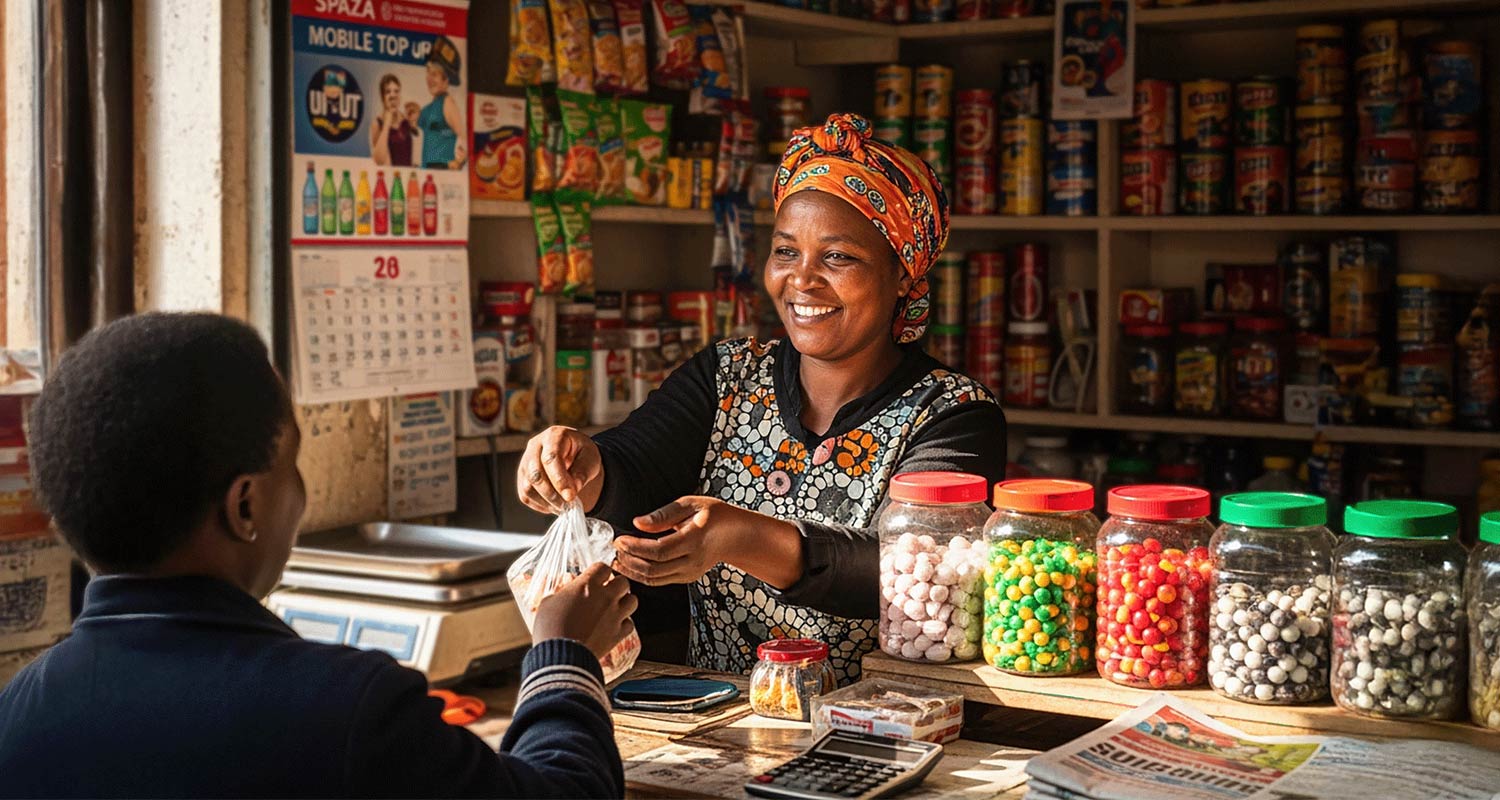
    People imagine a spaza sells only groceries. They miss the point. A single egg at R3. Half a loaf at R8. A R10 airtime voucher. A R20 electricity token. A R2 sachet of washing powder. Increasingly, it is also where grant recipients withdraw cash, avoiding the taxi fare and the two-hour ATM queue. And it is where a schoolgirl buys the one sanitary pad her family can afford that morning, in a country where over two million girls miss school while menstruating. This is not a tuck shop. It is a financial services centre, a pharmacy, a communications hub and a grocer, run from a converted room before sunrise by someone who knows every customer by name.

    The spaza is winning

    The price point is the point. The spaza restructured its entire offering around what people could actually spend, eliminated transport costs that consume up to 10% of a poor household’s monthly income, and extended credit based on relationship rather than score.

    NIQ’s State of the Retail Nation for Q1 2026 confirms what my street has always known: traditional trade generated R43.1-billion in the first quarter alone, with unit sales up 9.1% year on year against just 1.7% for formal modern trade. With over 140 000 traditional outlets versus around 11 000 modern ones, the spaza is winning.

    Yet the dominant narrative about spazas is almost entirely negative. Unsafe food. Unlicensed operators. Foreign ownership. Price gouging. What you rarely hear is the obvious counter-question: if the spaza is so dangerous, so exploitative, so beneath standard, why do millions of South Africans, in townships, in villages, on the edges of suburbs, choose it every single day?

    They choose it because it is open at 5am when the shift starts. Because it sells one egg, not 12. Because the owner knows their name and will carry them when the grant is late. Consumer behaviour, in every market in the world, is a vote. In the spaza economy, millions of people are voting the same way, every morning. That is not a problem to be solved. It is a signal to be read.

    Lincoln Mali
    The author, Lesaka Southern Africa CEO Lincoln Mali

    When the factory closed, some opened spazas. Others had no room, no stock, no energy left for that. What they had was a spare room, a backyard structure, a converted garage. So, they rented it. The woman on the old-age grant of R2 090/month, the retrenched worker with no severance and a bond still to pay – for many of them the rent from a spaza operator is not supplementary income; it is the income.

    Foreign-owned spazas contribute an estimated R25-billion annually in rent to South African landlords. My father-in-law rented his shop before he passed; the family still receives that rental. Strip out the foreign operator without understanding that web, and you do not protect the community. You impoverish it.

    I have sat in boardrooms where this economy is reduced to a slide and the phrase ‘hard to reach’

    The food safety crisis was real. Children died, and they will die again, not because the spaza owner is reckless, but because we have not fixed what we know is broken. Think about who she is. She lost her job when the factory closed. She had no severance, no safety net beyond a grant, and mouths to feed. So, she opened a spaza, not as a business plan, but as an act of will. Then the system that denied her a bank account, blocked her from buying directly from manufacturers and forced her through unaccountable middlemen. That same system watched a child get sick and pointed at her shop. The stigma lands on her. It lands on every spaza. And the supply chain that failed that child walks away clean. The question is no longer whether we understand the problem. It is whether we care enough to solve it before it costs another life.

    A world to be respected

    I have sat in boardrooms where this economy is reduced to a slide and the phrase “hard to reach”. The spaza is not hard to reach. It is on every street, open before you wake. My ask is to every bank and every company with a transformation budget and a canteen its own guards cannot afford: go to the spaza, not to study or regulate or acquire it, but to understand it. Bring your supply chain. Formalise the banking relationship. Design for the customer who buys one egg, not a dozen. The spaza owner who serves 200 customers a day and manages credit, stock and cash without a system is not a problem of the economy. She is a lesson in it.

    I am not a neutral observer. I left a well-established institution to lead Lesaka Southern Africa, a fintech serving more than two million customers and over 100 000 merchants. The data tells one story: small, frequent, purposeful, relentless. One egg. One voucher. One pad. Each invisible to the formal economy; each, to the person making it, everything.
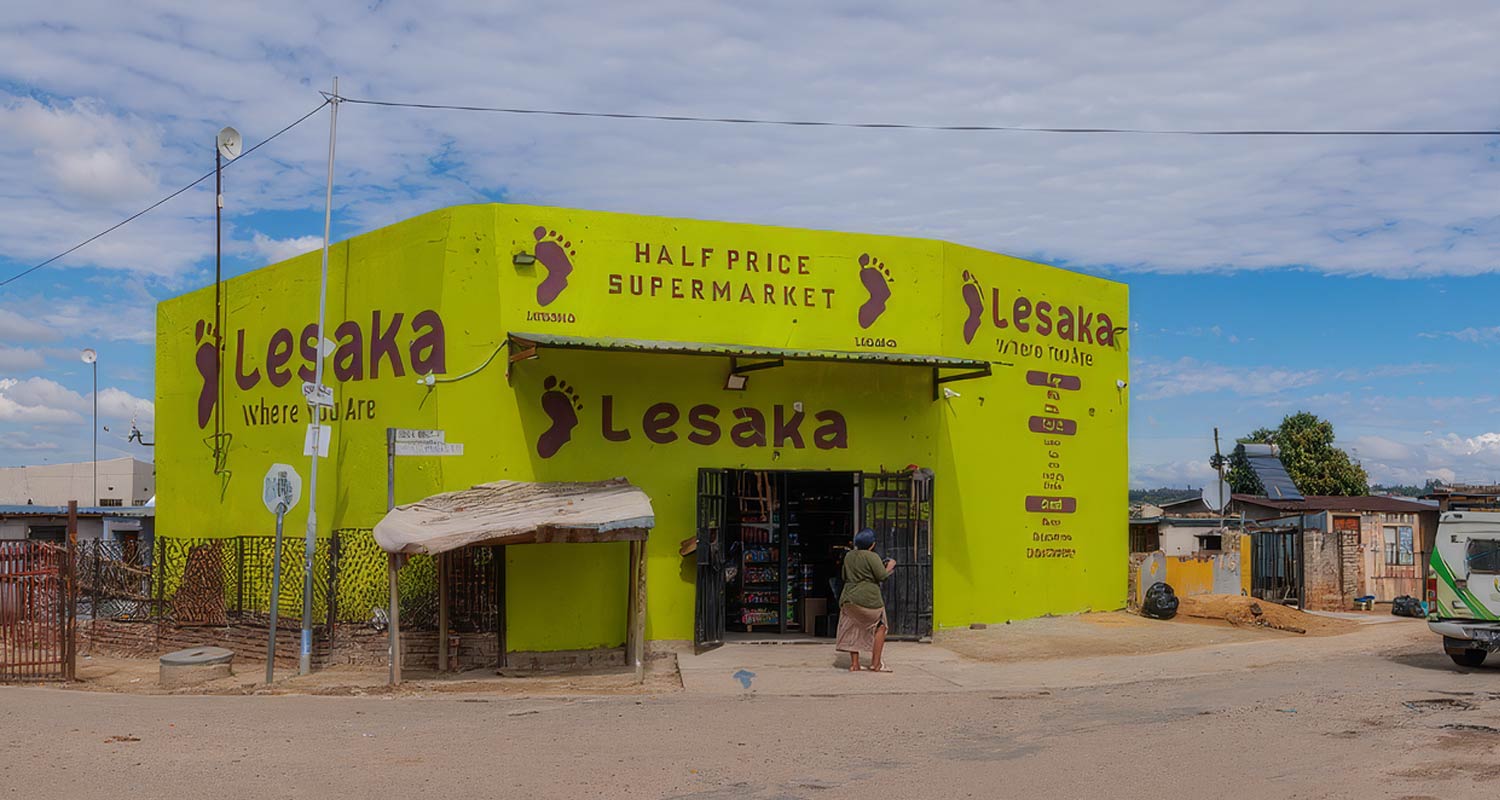
    Lesaka spaza

    The spaza has never run a promotion. It has never needed one. It simply opens, every day, for people everything else has walked past. I know those people. I am from those people. Serving the underserved has not been a career choice for me; it has been a life’s calling, shaped by the streets of Kwazakhele, by my father-in-law’s shop in Mpoza, by every community that made me and that I carry with me still. I did not come to this argument from a boardroom. I came to it from a street corner, before sunrise, where someone who looked like my mother was already open for business. That is not a market to be studied. That is a world to be respected.

    • Lincoln Mali is CEO of Lesaka Southern Africa
    • This promoted content was paid for by the party concerned

    Follow TechCentral on Google News Add TechCentral as your preferred source on Google


    Lesaka Southern Africa Lesaka Technologies Lincoln Mali
    WhatsApp YouTube
    Share. Facebook Twitter LinkedIn WhatsApp Telegram Email Copy Link
    Previous ArticleHave your say on the bill that could reshape SA telecoms
    Next Article Anthropic puts Claude inside Slack as a tagable co-worker

    Related Posts

    Lesaka pushes out Bank Zero deal deadline

    Lesaka pushes out Bank Zero deal deadline

    18 June 2026
    Lincoln Mali

    The remarkable story of Lesaka’s Lincoln Mali

    1 June 2026
    Lesaka lifts full-year earnings guidance - Lesaka Technologies chairman Ali Mazanderani

    Lesaka lifts full-year earnings guidance

    7 May 2026
    Add A Comment

    Comments are closed.

    Company News
    How Paratus and Eutelsat are connecting Southern Africa's mines

    How Paratus and Eutelsat are connecting Southern Africa’s mines

    14 July 2026
    Rain supercharges 5G with Huawei

    Rain supercharges 5G with Huawei

    10 July 2026
    Africa's data centres: AI, edge computing and new energy demands - Vertiv OADC Open Access Data Centres

    Africa’s data centres: AI, edge computing and new energy demands

    9 July 2026
    Opinion
    The author, Fanie van Rooyen

    South Africa can still catch the AI wave – here’s how

    7 July 2026
    The author, Fanie van Rooyen

    The AI utopia South Africa can’t afford

    1 July 2026
    The author, Jannie van Zyl

    South Africa’s broadband future is being decided in orbit, not in Pretoria

    30 June 2026

    Subscribe to Updates

    Get the best South African technology news and analysis delivered to your e-mail inbox every morning.

    Latest Posts
    How Paratus and Eutelsat are connecting Southern Africa's mines

    How Paratus and Eutelsat are connecting Southern Africa’s mines

    14 July 2026
    Djima Antaley delivers a package for Afrety in Dakar, Senegal. Ricci Shryock/Reuters

    The middlemen powering Africa’s online shopping boom

    14 July 2026
    Purple Group buys AI fintech Telescope in R177-million deal

    Purple Group buys AI fintech Telescope in R177-million deal

    14 July 2026
    Openserve launches its own ISP, rattling wholesale partners

    Openserve launches its own ISP, rattling wholesale partners

    13 July 2026
    © 2009 - 2026 NewsCentral Media
    Built and maintained by Chronon
    • Cookie policy (ZA)
    • TechCentral – privacy and Popia

    Type above and press Enter to search. Press Esc to cancel.

    Manage consent

    TechCentral uses cookies to enhance its offerings. Consenting to these technologies allows us to serve you better. Not consenting or withdrawing consent may adversely affect certain features and functions of the website.

    Functional Always active
    The technical storage or access is strictly necessary for the legitimate purpose of enabling the use of a specific service explicitly requested by the subscriber or user, or for the sole purpose of carrying out the transmission of a communication over an electronic communications network.
    Preferences
    The technical storage or access is necessary for the legitimate purpose of storing preferences that are not requested by the subscriber or user.
    Statistics
    The technical storage or access that is used exclusively for statistical purposes. The technical storage or access that is used exclusively for anonymous statistical purposes. Without a subpoena, voluntary compliance on the part of your Internet Service Provider, or additional records from a third party, information stored or retrieved for this purpose alone cannot usually be used to identify you.
    Marketing
    The technical storage or access is required to create user profiles to send advertising, or to track the user on a website or across several websites for similar marketing purposes.
    • Manage options
    • Manage services
    • Manage {vendor_count} vendors
    • Read more about these purposes
    View preferences
    • {title}
    • {title}
    • {title}