Close Menu
TechCentralTechCentral

    Subscribe to the newsletter

    Get the best South African technology news and analysis delivered to your e-mail inbox every morning.

    Facebook X (Twitter) YouTube LinkedIn
    WhatsApp Facebook X (Twitter) LinkedIn YouTube
    TechCentralTechCentral
    • News
      Toyota SA CEO: NEV inaction will cost South Africa its motoring industry - Andrew Kirby

      Toyota SA CEO: NEV inaction will cost South Africa its motoring industry

      12 February 2026
      Censorship-resistant internet from space - Spacecoin

      Censorship-resistant internet from space

      12 February 2026
      Chip shortage hits PCs as AI swallows the world's memory supply

      Chip shortage hits PCs as AI swallows the world’s memory supply

      12 February 2026
      Altron jumps after company flags strong earnings growth

      Altron jumps after company flags strong earnings growth

      12 February 2026
      Here comes the next wave of Chinese AI models

      Here comes the next wave of Chinese AI models

      12 February 2026
    • World
      Russia bans WhatsApp

      Russia bans WhatsApp

      12 February 2026
      EU regulators take aim at WhatsApp

      EU regulators take aim at WhatsApp

      9 February 2026
      Musk hits brakes on Mars mission

      Musk hits brakes on Mars mission

      9 February 2026
      Crypto firm accidentally sends R700-billion in bitcoin to its users

      Crypto firm accidentally sends R700-billion in bitcoin to its users

      8 February 2026
      AI won't replace software, says Nvidia CEO amid market rout - Jensen Huang

      AI won’t replace software, says Nvidia CEO amid market rout

      4 February 2026
    • In-depth
      How liberalisation is rewiring South Africa's power sector

      How liberalisation is rewiring South Africa’s power sector

      21 January 2026
      The top-performing South African tech shares of 2025

      The top-performing South African tech shares of 2025

      12 January 2026
      Digital authoritarianism grows as African states normalise internet blackouts

      Digital authoritarianism grows as African states normalise internet blackouts

      19 December 2025
      TechCentral's South African Newsmakers of 2025

      TechCentral’s South African Newsmakers of 2025

      18 December 2025
      Black Friday goes digital in South Africa as online spending surges to record high

      Black Friday goes digital in South Africa as online spending surges to record high

      4 December 2025
    • TCS
      Watts & Wheels S1E4: 'We drive an electric Uber'

      Watts & Wheels S1E4: ‘We drive an electric Uber’

      10 February 2026
      TCS+ | How Cloud On Demand is helping SA businesses succeed in the cloud - Xhenia Rhode, Dion Kalicharan

      TCS+ | Cloud On Demand and Consnet: inside a real-world AWS partner success story

      30 January 2026
      Watts & Wheels S1E4: 'We drive an electric Uber'

      Watts & Wheels S1E3: ‘BYD’s Corolla Cross challenger’

      30 January 2026
      Watts & Wheels S1E4: 'We drive an electric Uber'

      Watts & Wheels S1E2: ‘China attacks, BMW digs in, Toyota’s sublime supercar’

      23 January 2026

      TCS+ | Why cybersecurity is becoming a competitive advantage for SA businesses

      20 January 2026
    • Opinion
      South Africa's skills advantage is being overlooked at home - Richard Firth

      South Africa’s skills advantage is being overlooked at home

      29 January 2026
      Why Elon Musk's Starlink is a 'hard no' for me - Songezo Zibi

      Why Elon Musk’s Starlink is a ‘hard no’ for me

      26 January 2026
      South Africa's new fibre broadband battle - Duncan McLeod

      South Africa’s new fibre broadband battle

      20 January 2026
      AI moves from pilots to production in South African companies - Nazia Pillay SAP

      AI moves from pilots to production in South African companies

      20 January 2026
      South Africa's new fibre broadband battle - Duncan McLeod

      ANC’s attack on Solly Malatsi shows how BEE dogma trumps economic reality

      14 December 2025
    • Company Hubs
      • Africa Data Centres
      • AfriGIS
      • Altron Digital Business
      • Altron Document Solutions
      • Altron Group
      • Arctic Wolf
      • AvertITD
      • Braintree
      • CallMiner
      • CambriLearn
      • CYBER1 Solutions
      • Digicloud Africa
      • Digimune
      • Domains.co.za
      • ESET
      • Euphoria Telecom
      • Incredible Business
      • iONLINE
      • IQbusiness
      • Iris Network Systems
      • LSD Open
      • Mitel
      • NEC XON
      • Netstar
      • Network Platforms
      • Next DLP
      • Ovations
      • Paracon
      • Paratus
      • Q-KON
      • SevenC
      • SkyWire
      • Solid8 Technologies
      • Telit Cinterion
      • Tenable
      • Vertiv
      • Videri Digital
      • Vodacom Business
      • Wipro
      • Workday
      • XLink
    • Sections
      • AI and machine learning
      • Banking
      • Broadcasting and Media
      • Cloud services
      • Contact centres and CX
      • Cryptocurrencies
      • Education and skills
      • Electronics and hardware
      • Energy and sustainability
      • Enterprise software
      • Financial services
      • Information security
      • Internet and connectivity
      • Internet of Things
      • Investment
      • IT services
      • Lifestyle
      • Motoring
      • Public sector
      • Retail and e-commerce
      • Satellite communications
      • Science
      • SMEs and start-ups
      • Social media
      • Talent and leadership
      • Telecoms
    • Events
    • Advertise
    TechCentralTechCentral
    Home » Reviews & Weekend » The tiny chip that changed music forever

    The tiny chip that changed music forever

    By The Conversation27 March 2017
    Twitter LinkedIn Facebook WhatsApp Email Telegram Copy Link
    News Alerts
    WhatsApp
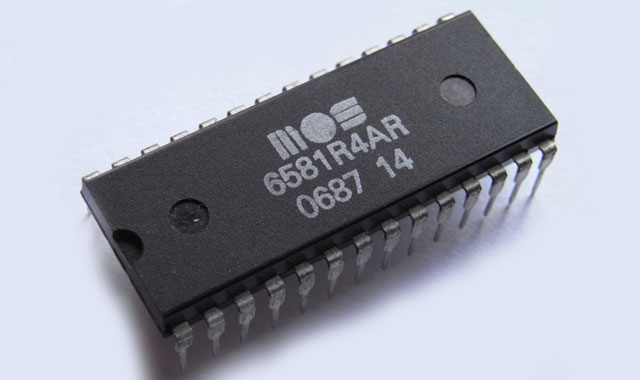
    The MOS 6581, or SID to his friends

    It can be hard to write about the music of videogames while we are bathed in the projected glory of today’s high-definition, 4K, 60-frames-per-second photorealistic graphics. And given that in the roots of videogaming we find an often eerily quiet world, perhaps it’s not surprising that we sometimes forget that there’s an audio in audio-visual.

    The earliest videogames, such as Spacewar!, created at MIT in 1962, had no sound at all. While this might be a ruthless dedication to authenticity (after all, in space no one can hear you scream) in reality, it was due to technical limitations. A decade later, things were not much different: the first home console, the Magnavox Odyssey, introduced a generation to the thrills of electronic gameplay without so much as a beep. This was a quiet revolution. Even the phenomenally successful Atari VCS/2600 put graphics before sound and sound before music. It did a good line in raucous engine noises and explosions but was not especially musician friendly, nor particularly listener friendly.

    Quoted in Brian Bagnall’s History of Commodore, electronics engineer Rob Yannes summed up the situation: “I thought the sound chips on the market, including those in the Atari computers, were primitive and obviously had been designed by people who knew nothing about music.”

    Fortunately, Yannes did know something about music, as well as semiconductors and designing chips. And so, in 1981, he began work on what would arguably become the most important milestone in videogame music and one whose influence still resonates to this day: the MOS Technology 6581, also known as the Sound Interface Device, but much better known as the SID.

    As the sound chip in the Commodore 64 — the best-selling home computer and games machine of all time — the SID was remarkably sophisticated: a well-specified synthesiser with features more usually found on cutting-edge electronic keyboards of the time such as the Mini Moog and Roland Jupiter 8. Although it was designed to be part of a home computer, the SID chip was above all a musical instrument — but at US$595 for a C64 compared to $5 195 for a Jupiter 8, it came at a fraction of the price.

    Technically, the SID is a three-voice synthesiser module — it can play three sounds simultaneously. They can each be one different note, played together as a three-note chord. Or they can be three different sounds, such as a bass, a melody and a harmony. But three voices, and only three — that is until a glitch in the chip was discovered that allowed a fourth voice to play sampled drums or speech.
    In the right hands, the Commodore 64 home computer was a powerful synthesiser

    Each of those voices can generate a sawtooth, variable pulsewidth, triangle or noise waveform, or an intriguing, unique and not well-documented combination of them. Various modulation effects can be applied to these voices to give bell-like or other metallic effects, or voices may be “hard-synced” together to create a characteristic rasping sound common in early electronic music solos.

    The sound of the voices can be further contoured using an envelope generator capable of altering the sound’s attack (how quickly the sound grows once the note is played), decay (how quickly it tails off from peak to sustain level), sustain (the level while the note is held), and release (how quickly it tails off to nil), or through various filters (which due to manufacturing tolerances vary immensely in sound between different versions of the SID).

    While the same “subtractive” synthesis techniques are used today, for anybody who has used even entry-level music production software such as Apple’s Garageband, with its huge library of acoustic and electronic instruments, drums and loops, the SID probably looks horribly limited.

    Musicianship vs limitations

    To surmount its limitations, one of the simplest strategies was to switch rapidly between sounds to simulate the effect of a larger palette of instruments. Listen to a piece like Rob Hubbard’s Monty on the Run, for instance, and you’ll hear numerous short passages of just a few bars, shifting between different sounds which share the main melody. It’s as though members of a big band take turns to stand up and riff around the solo.

    Or composers could dig deeper into the SID’s synthesis capabilities, adding movement and interest by modulating the pulsewidth of a sound over time, creating a thicker, more dynamic effect. Composer Martin Galway was a master of this technique, which can be heard in tunes such as Parallax, Wizball, and his seminal Ocean Loader music that made waiting for a game to load from cassette a pleasure rather than a chore.

    More than any other technique, though, the use of arpeggiation was the SID chip’s — and by extension videogame music’s — most evocative and enduring sonic fingerprint. If you don’t recognise the term arpeggio, you’ll recognise the effect: an often-rapid sequence of rising and falling notes. From contemporary music a good example is Clocks by Coldplay, but on the SID and other sound chips from home computers of the era, it’s the warbling sound of two or more extremely rapidly alternating notes. Rather than play the C, E and G of a C-major chord and use up all three of SID’s previous voices, composers rapidly triggered each note in turn far faster than even the most nimble-fingered of musicians could perform. And thus, a three-note chord plays from just one voice.

    Musicianship vs programming

    If that seems straightforward remember that the SID wasn’t a synthesiser with a piano keyboard, but merely a chip inside the C64. There was no audio workstation software like Cubase or even a Tracker to sequence the SID’s sounds. Although consumer programs and add-on devices would come later, these were too inefficient for composers eking out every drop of the C64’s performance and embedding their music into games. For early C64 composers there were, in fact, no libraries, no middleware, no tools at all. The only way to make SID sing was through programming.

    If you wanted to be a videogame musician in the early 1980s, having a fantastic tune and even a Royal College of Music diploma meant nothing without some lateral thinking and a significant amount of programming skills, because the SID chip needed special software routines to turn its potential into sound. You had to know how to compose both melodies and machine code.

    Given these achievements, it’s no wonder that C64 musicians were well known and well respected. Alongside features on programmers such as Jeff Minter or Andrew Braybrook, SID composers such as Rob Hubbard, Martin Galway and Ben Daglish would grace the pages of magazines like Zzap!64, satisfying gamers’ interest in the technical prowess of their musical heroes.

    Each composer had their own unique and identifiable style that exploited different aspects of the SID chip and brought different musical sensibilities. Where Hubbard was the master of percussion with an ability to tease out complex rhythms, Galway’s deceptively simple, melodic compositions revealed the softer, more mellow side of the SID chip. So revered were their compositions that many players would buy games just for the music. In the world of 1980s computer gaming, these musicians were superstars.

    And they still are. The chiptune culture of music made with SID and other computer sound chips is alive and well. In fact, it’s probably stronger today than ever. The original themes are rearranged by their original composers and others and played live at concerts, even with symphony orchestras. The High Voltage SID Collection has collected nearly 50 000 SID tunes, which can be replayed with emulators made for modern computer and mobile platforms.

    This isn’t just nostalgia. New SID tunes are being written by composers rediscovering the chip’s distinctive sonic quality. Chiptunes’ influence can be identified across electronic music through direct sampling, such as Zombie Nation’s use of David Whittaker’s tune from the C64 game Lazy Jones, producer Timbaland’s sampling of an SID tune by Finnish musician Janne Suni for Do It by Nelly Furtado, or Crystal Castles’ pillaging of 8-bit chiptune sounds.

    But more so, the hyperactive sounds of the SID have become part of the lexicon of electronic music-making. Sample libraries for modern music software include SID and chiptune sounds alongside other archetypes of modern electronic music such as the classic sounds of the Roland TB-303 bass station and TR-808 and TR-909 drum machines. In fact, such is the popularity of the SID sound that you can buy hardware devices that include genuine SID chips pulled from vintage C64s that can be integrated into modular synthesiser and studio setups, or software emulations that allow the gloriously lo-fi, 8-bit, ultra-fast arpeggios and barely intelligible digitised speech to be reproduced with pristine fidelity.

    And as for Bob Yannes, father of SID, he was far from done. After Commodore, he co-founded music technology company Ensoniq, which would go on to make an enormous impact on music-making again with the release of the Mirage sampler. The Mirage was the first affordable digital sampler — one that musicians would use to capture and mash-up snippets of C64 tunes, ensuring that SID would never be silenced. The Conversation

    • James Newman is professor of media at The Digital Academy, Bath Spa University
    • This article was originally published on The Conversation


    WhatsApp YouTube Follow on Google News Add as preferred source on Google
    Share. Facebook Twitter LinkedIn WhatsApp Telegram Email Copy Link
    Previous ArticleDid gov’t stake in Telkom dip below 50%?
    Next Article Surge in sale of feature phones in Africa

    Related Posts

    Toyota SA CEO: NEV inaction will cost South Africa its motoring industry - Andrew Kirby

    Toyota SA CEO: NEV inaction will cost South Africa its motoring industry

    12 February 2026
    Russia bans WhatsApp

    Russia bans WhatsApp

    12 February 2026
    Censorship-resistant internet from space - Spacecoin

    Censorship-resistant internet from space

    12 February 2026
    Company News
    How NEC XON tackled identity risk for a major telco - Michael de Neuilly Rice

    How NEC XON tackled identity risk for a major telco

    11 February 2026

    Why Acer is the strategic choice for South Africa’s educational future

    11 February 2026
    Fyndae is building Africa's human verification layer for community security and collaboration

    Fyndae wants to turn lost-item recovery into Africa’s trust infrastructure

    11 February 2026
    Opinion
    South Africa's skills advantage is being overlooked at home - Richard Firth

    South Africa’s skills advantage is being overlooked at home

    29 January 2026
    Why Elon Musk's Starlink is a 'hard no' for me - Songezo Zibi

    Why Elon Musk’s Starlink is a ‘hard no’ for me

    26 January 2026
    South Africa's new fibre broadband battle - Duncan McLeod

    South Africa’s new fibre broadband battle

    20 January 2026

    Subscribe to Updates

    Get the best South African technology news and analysis delivered to your e-mail inbox every morning.

    Latest Posts
    Toyota SA CEO: NEV inaction will cost South Africa its motoring industry - Andrew Kirby

    Toyota SA CEO: NEV inaction will cost South Africa its motoring industry

    12 February 2026
    Russia bans WhatsApp

    Russia bans WhatsApp

    12 February 2026
    Censorship-resistant internet from space - Spacecoin

    Censorship-resistant internet from space

    12 February 2026
    Chip shortage hits PCs as AI swallows the world's memory supply

    Chip shortage hits PCs as AI swallows the world’s memory supply

    12 February 2026
    © 2009 - 2026 NewsCentral Media
    • Cookie policy (ZA)
    • TechCentral – privacy and Popia

    Type above and press Enter to search. Press Esc to cancel.

    Manage consent

    TechCentral uses cookies to enhance its offerings. Consenting to these technologies allows us to serve you better. Not consenting or withdrawing consent may adversely affect certain features and functions of the website.

    Functional Always active
    The technical storage or access is strictly necessary for the legitimate purpose of enabling the use of a specific service explicitly requested by the subscriber or user, or for the sole purpose of carrying out the transmission of a communication over an electronic communications network.
    Preferences
    The technical storage or access is necessary for the legitimate purpose of storing preferences that are not requested by the subscriber or user.
    Statistics
    The technical storage or access that is used exclusively for statistical purposes. The technical storage or access that is used exclusively for anonymous statistical purposes. Without a subpoena, voluntary compliance on the part of your Internet Service Provider, or additional records from a third party, information stored or retrieved for this purpose alone cannot usually be used to identify you.
    Marketing
    The technical storage or access is required to create user profiles to send advertising, or to track the user on a website or across several websites for similar marketing purposes.
    • Manage options
    • Manage services
    • Manage {vendor_count} vendors
    • Read more about these purposes
    View preferences
    • {title}
    • {title}
    • {title}