Close Menu
TechCentralTechCentral

    Subscribe to the newsletter

    Get the best South African technology news and analysis delivered to your e-mail inbox every morning.

    Facebook X (Twitter) YouTube LinkedIn
    WhatsApp Facebook X (Twitter) LinkedIn YouTube
    TechCentralTechCentral
    • News
      Vuyani Jarana: Mobile coverage masks a deeper broadband failure

      Vuyani Jarana: Mobile coverage masks a deeper broadband failure

      30 January 2026
      SABC Plus to flight Microsoft AI training videos

      SABC Plus to flight Microsoft AI training videos

      30 January 2026
      Fibre ducts

      Fibre industry consolidation in KZN

      30 January 2026
      Watts & Wheels S1E3: 'BYD's Corolla Cross challenger'

      Watts & Wheels S1E3: ‘BYD’s Corolla Cross challenger’

      30 January 2026
      What ordinary South Africans really think of AI

      What ordinary South Africans really think of AI

      30 January 2026
    • World
      Apple acquires audio AI start-up Q.ai

      Apple acquires audio AI start-up Q.ai

      30 January 2026
      SpaceX IPO may be largest in history

      SpaceX IPO may be largest in history

      28 January 2026
      Nvidia throws AI at the weather

      Nvidia throws AI at weather forecasting

      27 January 2026
      Debate erupts over value of in-flight Wi-Fi

      Debate erupts over value of in-flight Wi-Fi

      26 January 2026
      Intel takes another hit - Intel CEO Lip-Bu Tan. Laure Andrillon/Reuters

      Intel takes another hit

      23 January 2026
    • In-depth
      How liberalisation is rewiring South Africa's power sector

      How liberalisation is rewiring South Africa’s power sector

      21 January 2026
      The top-performing South African tech shares of 2025

      The top-performing South African tech shares of 2025

      12 January 2026
      Digital authoritarianism grows as African states normalise internet blackouts

      Digital authoritarianism grows as African states normalise internet blackouts

      19 December 2025
      TechCentral's South African Newsmakers of 2025

      TechCentral’s South African Newsmakers of 2025

      18 December 2025
      Black Friday goes digital in South Africa as online spending surges to record high

      Black Friday goes digital in South Africa as online spending surges to record high

      4 December 2025
    • TCS
      TCS+ | How Cloud On Demand is helping SA businesses succeed in the cloud - Xhenia Rhode, Dion Kalicharan

      TCS+ | Cloud On Demand and Consnet: inside a real-world AWS partner success story

      30 January 2026
      Watts & Wheels S1E3: 'BYD's Corolla Cross challenger'

      Watts & Wheels S1E2: ‘China attacks, BMW digs in, Toyota’s sublime supercar’

      23 January 2026

      TCS+ | Why cybersecurity is becoming a competitive advantage for SA businesses

      20 January 2026
      Watts & Wheels S1E3: 'BYD's Corolla Cross challenger'

      Watts & Wheels: S1E1 – ‘William, Prince of Wheels’

      8 January 2026
      TCS+ | Africa's digital transformation - unlocking AI through cloud and culture - Cliff de Wit Accelera Digital Group

      TCS+ | Cloud without culture won’t deliver AI: Accelera’s Cliff de Wit

      12 December 2025
    • Opinion
      South Africa's skills advantage is being overlooked at home - Richard Firth

      South Africa’s skills advantage is being overlooked at home

      29 January 2026
      Why Elon Musk's Starlink is a 'hard no' for me - Songezo Zibi

      Why Elon Musk’s Starlink is a ‘hard no’ for me

      26 January 2026
      South Africa's new fibre broadband battle - Duncan McLeod

      South Africa’s new fibre broadband battle

      20 January 2026
      AI moves from pilots to production in South African companies - Nazia Pillay SAP

      AI moves from pilots to production in South African companies

      20 January 2026
      South Africa's new fibre broadband battle - Duncan McLeod

      ANC’s attack on Solly Malatsi shows how BEE dogma trumps economic reality

      14 December 2025
    • Company Hubs
      • Africa Data Centres
      • AfriGIS
      • Altron Digital Business
      • Altron Document Solutions
      • Altron Group
      • Arctic Wolf
      • AvertITD
      • Braintree
      • CallMiner
      • CambriLearn
      • CYBER1 Solutions
      • Digicloud Africa
      • Digimune
      • Domains.co.za
      • ESET
      • Euphoria Telecom
      • Incredible Business
      • iONLINE
      • IQbusiness
      • Iris Network Systems
      • LSD Open
      • NEC XON
      • Netstar
      • Network Platforms
      • Next DLP
      • Ovations
      • Paracon
      • Paratus
      • Q-KON
      • SevenC
      • SkyWire
      • Solid8 Technologies
      • Telit Cinterion
      • Tenable
      • Vertiv
      • Videri Digital
      • Vodacom Business
      • Wipro
      • Workday
      • XLink
    • Sections
      • AI and machine learning
      • Banking
      • Broadcasting and Media
      • Cloud services
      • Contact centres and CX
      • Cryptocurrencies
      • Education and skills
      • Electronics and hardware
      • Energy and sustainability
      • Enterprise software
      • Financial services
      • Information security
      • Internet and connectivity
      • Internet of Things
      • Investment
      • IT services
      • Lifestyle
      • Motoring
      • Public sector
      • Retail and e-commerce
      • Satellite communications
      • Science
      • SMEs and start-ups
      • Social media
      • Talent and leadership
      • Telecoms
    • Events
    • Advertise
    TechCentralTechCentral
    Home » In-depth » Too much hot air in renewables talk

    Too much hot air in renewables talk

    By Sipho Kings19 November 2014
    Twitter LinkedIn Facebook WhatsApp Email Telegram Copy Link
    News Alerts
    WhatsApp

    wind-farm-640

    Normally futurologists, especially those who deal with the impact of climate change, paint a picture so dystopian that even Hollywood runs screaming for the hills. But at last week’s four-day climate change conference, hosted by the department of environmental affairs in Midrand, it was different.

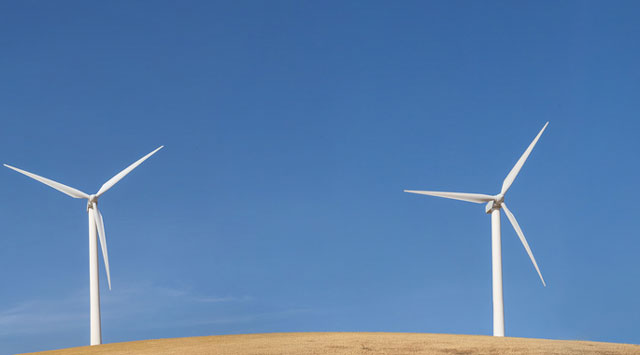
    This is what South Africa will look like by 2030: coal power stations will be switching off and renewable energy will be powering a third of the national grid. Nuclear and renewables together will provide half the power. The concentrated economy of today, based on mining and coal power, will be decentralised. People will have affordable local power, which they will own.

    It is not a scenario dreamed up by some sandal-wearing idealist. It is contained in the government’s energy plans, discussed at the conference, although there was caution that these plans are still largely in theory.

    “The infrastructure that we have is ultimately going to be decommissioned and we have an ­opportunity to change to a low-carbon future when this happens,” said Gina Downes, corporate consultant of environmental economics at Eskom.

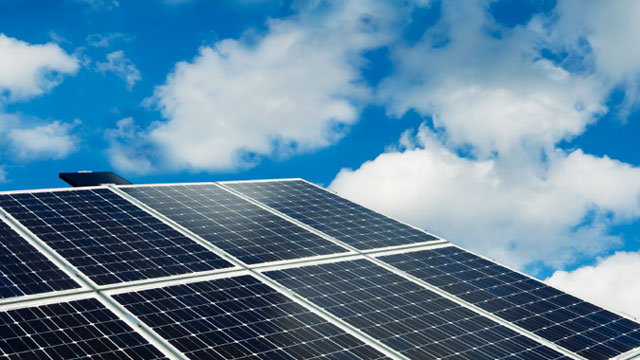
    The official energy plan, Integrated Resource Plan 2010, envisions a country where coal contributes 36GW of power by 2030. The whole grid will have increased in capacity to 61GW. Nuclear will provide 11GW, solar 9,8GW, concentrated solar 3,3GW, wind 4,4GW and hydro 3GW.

    Hours of panel discussions in ­cavernous halls tackled the “how” of lowering South Africa’s carbon emissions. Per capita, it is the 11th highest emitter in the world. At the 2009 Copenhagen climate ­conference, it pledged to lower it emissions by 42% by 2025. The agreement was not legally binding and South Africa has started to build two new coal-fired power stations since then. Next year governments will sign an agreement at COP21 in Paris, which will legally compel them to lower emissions.

    “The South African economy is overly reliant on the traditional minerals and energy complex,” said Khwezilomsa Mabasa of trade union federation Cosatu. Outright capitalism drove the economy, he said. The effects of climate change are felt mostly by the poor, yet it’s the rich who cause them.

    Renewable energy presented a chance to change the entire structure of South African society. “Any scenario we [Cosatu] pursue will create a low-carbon and just society,” Mabasa said.

    If the government followed its plans for renewable energy, reindustrialisation would occur. Renewable plants would create factories and drive climate jobs. Power would be taken away from an elite few and given to all the people, he said.

    Jacklyn Cock, of the University of the Witwatersrand, said the “expansionist model of capitalism” still drove planning in South Africa. This had seen ambitious plans to embrace decentralised renewable energy watered down. The 4,8GW coal-powered Medupi and Kusile power stations had been built instead. These replicated the current political order, she said. “There is no sense that the current situation is unjust and unsustainable, and will get worse with climate change.”

    A shift in the way energy is valued, so that it includes the likes of health costs, will drive a new type of industry in South Africa, said Prof Harald Winkler of the University of Cape Town. The economy focused on producing minerals. This would change, he said. “We need to promote higher value-added sectors and ambitious energy-efficiency targets.”

    These ambitions are set out in the National Planning Commission’s “Vision 2030”.

    But Tasneem Essop, one of its commissioners, said the hard decisions required to make the shift were not being made. Rather than progressing, economic players stuck to their “corners” and refused to “rise to the challenges” that the country faced, she said.

    A clear example was the continued investment in coal. The International Energy Agency said last year that 80% of coal had to be left in the ground for the world to keep temperature increases below 2°C. By planning its economy on coal, South Africa was in danger of investing in assets that could not be used, she said.

    Part of this is the ­uncertainty continually shown by the government when it came to renewables.
    solar-640

    Joanne Yawitch, head of the National Business Initiative, said: “For a century we built one of the most fossil fuel-intensive economies in the world. We did it in a very focused way.” This meant South Africa had 42GW of coal power. “Now we are saying, change that, but we don’t have the ‘hows’ pinned down in any kind of substantive way.”

    This criticism bedevilled a great deal of the climate meeting. Richard Worthington, a freelance energy expert, said a white paper on renewable energy was published in 1998. This said that an “equitable level of national resources” needed to be invested in renewable energy sources. But this had not gone ­anywhere until the 2008 energy crisis. Then a relatively small amount of renewables — 3,7GW — was commissioned.

    “Our old view that renewables is a niche technology has held us back,” he said. The country should rather be planning to run on renewables. “We need to think of the world differently. A low-carbon world is not going to come about incrementally.”

    Renewables on a large scale would drive a whole new economy. Without this kind of scale, the dream of a local industry and decentralised power would fail, he said. “For manufacturing, you need to prove there is a market at scale.”

    Melita Steele, of Greenpeace Africa, said it seemed that renewables were a token thought in the energy mix. Each government department was doing its own thing. There was policy uncertainty. Decisions were made behind closed doors. And renewables were given artificial caps on how much was needed. “We are talking about moving to renewables by 2030. But we are already talking about delaying the decommissioning of our coal-fired fleet.”

    Significant progress
    But significant progress has been made. In 2008, there was no renewable energy programme. Now 3,9GW have been procured, with over 500MW already producing power. The country’s largest solar farm, producing 96MW, was turned on last week. Factories producing wind turbines have been opened.

    Judy Beaumont, director-general of climate change and energy at the environment department, said this had all happened because of aspirational goals. “This was a launch into the future. A decision was taken on very little information and it has been a phenomenal success.”

    Other government departments are also doing their bit. Public works minister Thulas Nxesi said his department was retrofitting thousands of government buildings to be energy and water efficient. By 2030, all new buildings would be carbon neutral.

    But he also noted that it could only happen across departments. Factionalism would have to stop. “We cannot talk about turfs,” he said. “We will have to break the silos. We owe it to our children to exercise stewardship over the land.”

    If this did not happen, the usually polite environment department indicated it would get pushier. Nosipho Ngcaba, its director-general, said it was struggling to get information about energy use and emissions from companies, and the energy department. This information was critical for moving from plans to implementation.

    “The department of environmental affairs is considering climate change legislation to enforce some of the responses.”  — (c) 2014 Mail & Guardian

    • Visit the Mail & Guardian Online, the smart news source

    Cosatu Eskom Jacklyn Cock Joanne Yawitch Judy Beaumont Khwezilomsa Mabasa Melita Steele Richard Worthington
    WhatsApp YouTube Follow on Google News Add as preferred source on Google
    Share. Facebook Twitter LinkedIn WhatsApp Telegram Email Copy Link
    Previous ArticlePublishers call Post Office to account
    Next Article SA Bitcoin exchange debuts mobile wallet

    Related Posts

    Outa warns homeowners against rushing to register rooftop solar

    Outa warns homeowners against rushing to register rooftop solar

    27 January 2026
    How liberalisation is rewiring South Africa's power sector

    How liberalisation is rewiring South Africa’s power sector

    21 January 2026
    No risk of load shedding after Koeberg output scaled back

    No risk of load shedding after Koeberg output scaled back

    21 January 2026
    Company News
    Huawei turns 25 in South Africa, celebrates with major device discounts

    Huawei turns 25 in South Africa, celebrates with major device discounts

    30 January 2026
    Phishing has not disappeared, but it has grown up - KnowBe4

    Phishing has not disappeared, but it has grown up

    30 January 2026
    Smartphone affordability: South Africa's new economic divide - PayJoy

    Smartphone affordability: South Africa’s new economic divide

    29 January 2026
    Opinion
    South Africa's skills advantage is being overlooked at home - Richard Firth

    South Africa’s skills advantage is being overlooked at home

    29 January 2026
    Why Elon Musk's Starlink is a 'hard no' for me - Songezo Zibi

    Why Elon Musk’s Starlink is a ‘hard no’ for me

    26 January 2026
    South Africa's new fibre broadband battle - Duncan McLeod

    South Africa’s new fibre broadband battle

    20 January 2026

    Subscribe to Updates

    Get the best South African technology news and analysis delivered to your e-mail inbox every morning.

    Latest Posts
    Vuyani Jarana: Mobile coverage masks a deeper broadband failure

    Vuyani Jarana: Mobile coverage masks a deeper broadband failure

    30 January 2026
    TCS+ | How Cloud On Demand is helping SA businesses succeed in the cloud - Xhenia Rhode, Dion Kalicharan

    TCS+ | Cloud On Demand and Consnet: inside a real-world AWS partner success story

    30 January 2026
    Huawei turns 25 in South Africa, celebrates with major device discounts

    Huawei turns 25 in South Africa, celebrates with major device discounts

    30 January 2026
    SABC Plus to flight Microsoft AI training videos

    SABC Plus to flight Microsoft AI training videos

    30 January 2026
    © 2009 - 2026 NewsCentral Media
    • Cookie policy (ZA)
    • TechCentral – privacy and Popia

    Type above and press Enter to search. Press Esc to cancel.

    Manage consent

    TechCentral uses cookies to enhance its offerings. Consenting to these technologies allows us to serve you better. Not consenting or withdrawing consent may adversely affect certain features and functions of the website.

    Functional Always active
    The technical storage or access is strictly necessary for the legitimate purpose of enabling the use of a specific service explicitly requested by the subscriber or user, or for the sole purpose of carrying out the transmission of a communication over an electronic communications network.
    Preferences
    The technical storage or access is necessary for the legitimate purpose of storing preferences that are not requested by the subscriber or user.
    Statistics
    The technical storage or access that is used exclusively for statistical purposes. The technical storage or access that is used exclusively for anonymous statistical purposes. Without a subpoena, voluntary compliance on the part of your Internet Service Provider, or additional records from a third party, information stored or retrieved for this purpose alone cannot usually be used to identify you.
    Marketing
    The technical storage or access is required to create user profiles to send advertising, or to track the user on a website or across several websites for similar marketing purposes.
    • Manage options
    • Manage services
    • Manage {vendor_count} vendors
    • Read more about these purposes
    View preferences
    • {title}
    • {title}
    • {title}