

Close Menu
TechCentralTechCentral

    Subscribe to the newsletter

    Get the best South African technology news and analysis delivered to your e-mail inbox every morning.

    Facebook X (Twitter) YouTube LinkedIn
    WhatsApp Facebook X (Twitter) LinkedIn YouTube
    TechCentralTechCentral
    • News
      Vuyani Jarana: Mobile coverage masks a deeper broadband failure

      Vuyani Jarana: Mobile coverage masks a deeper broadband failure

      30 January 2026
      SABC Plus to flight Microsoft AI training videos

      SABC Plus to flight Microsoft AI training videos

      30 January 2026
      Fibre ducts

      Fibre industry consolidation in KZN

      30 January 2026
      Watts & Wheels S1E3: 'BYD's Corolla Cross challenger'

      Watts & Wheels S1E3: ‘BYD’s Corolla Cross challenger’

      30 January 2026
      What ordinary South Africans really think of AI

      What ordinary South Africans really think of AI

      30 January 2026
    • World
      Apple acquires audio AI start-up Q.ai

      Apple acquires audio AI start-up Q.ai

      30 January 2026
      SpaceX IPO may be largest in history

      SpaceX IPO may be largest in history

      28 January 2026
      Nvidia throws AI at the weather

      Nvidia throws AI at weather forecasting

      27 January 2026
      Debate erupts over value of in-flight Wi-Fi

      Debate erupts over value of in-flight Wi-Fi

      26 January 2026
      Intel takes another hit - Intel CEO Lip-Bu Tan. Laure Andrillon/Reuters

      Intel takes another hit

      23 January 2026
    • In-depth
      How liberalisation is rewiring South Africa's power sector

      How liberalisation is rewiring South Africa’s power sector

      21 January 2026
      The top-performing South African tech shares of 2025

      The top-performing South African tech shares of 2025

      12 January 2026
      Digital authoritarianism grows as African states normalise internet blackouts

      Digital authoritarianism grows as African states normalise internet blackouts

      19 December 2025
      TechCentral's South African Newsmakers of 2025

      TechCentral’s South African Newsmakers of 2025

      18 December 2025
      Black Friday goes digital in South Africa as online spending surges to record high

      Black Friday goes digital in South Africa as online spending surges to record high

      4 December 2025
    • TCS
      TCS+ | How Cloud On Demand is helping SA businesses succeed in the cloud - Xhenia Rhode, Dion Kalicharan

      TCS+ | Cloud On Demand and Consnet: inside a real-world AWS partner success story

      30 January 2026
      Watts & Wheels S1E3: 'BYD's Corolla Cross challenger'

      Watts & Wheels S1E2: ‘China attacks, BMW digs in, Toyota’s sublime supercar’

      23 January 2026

      TCS+ | Why cybersecurity is becoming a competitive advantage for SA businesses

      20 January 2026
      Watts & Wheels S1E3: 'BYD's Corolla Cross challenger'

      Watts & Wheels: S1E1 – ‘William, Prince of Wheels’

      8 January 2026
      TCS+ | Africa's digital transformation - unlocking AI through cloud and culture - Cliff de Wit Accelera Digital Group

      TCS+ | Cloud without culture won’t deliver AI: Accelera’s Cliff de Wit

      12 December 2025
    • Opinion
      South Africa's skills advantage is being overlooked at home - Richard Firth

      South Africa’s skills advantage is being overlooked at home

      29 January 2026
      Why Elon Musk's Starlink is a 'hard no' for me - Songezo Zibi

      Why Elon Musk’s Starlink is a ‘hard no’ for me

      26 January 2026
      South Africa's new fibre broadband battle - Duncan McLeod

      South Africa’s new fibre broadband battle

      20 January 2026
      AI moves from pilots to production in South African companies - Nazia Pillay SAP

      AI moves from pilots to production in South African companies

      20 January 2026
      South Africa's new fibre broadband battle - Duncan McLeod

      ANC’s attack on Solly Malatsi shows how BEE dogma trumps economic reality

      14 December 2025
    • Company Hubs
      • Africa Data Centres
      • AfriGIS
      • Altron Digital Business
      • Altron Document Solutions
      • Altron Group
      • Arctic Wolf
      • AvertITD
      • Braintree
      • CallMiner
      • CambriLearn
      • CYBER1 Solutions
      • Digicloud Africa
      • Digimune
      • Domains.co.za
      • ESET
      • Euphoria Telecom
      • Incredible Business
      • iONLINE
      • IQbusiness
      • Iris Network Systems
      • LSD Open
      • NEC XON
      • Netstar
      • Network Platforms
      • Next DLP
      • Ovations
      • Paracon
      • Paratus
      • Q-KON
      • SevenC
      • SkyWire
      • Solid8 Technologies
      • Telit Cinterion
      • Tenable
      • Vertiv
      • Videri Digital
      • Vodacom Business
      • Wipro
      • Workday
      • XLink
    • Sections
      • AI and machine learning
      • Banking
      • Broadcasting and Media
      • Cloud services
      • Contact centres and CX
      • Cryptocurrencies
      • Education and skills
      • Electronics and hardware
      • Energy and sustainability
      • Enterprise software
      • Financial services
      • Information security
      • Internet and connectivity
      • Internet of Things
      • Investment
      • IT services
      • Lifestyle
      • Motoring
      • Public sector
      • Retail and e-commerce
      • Satellite communications
      • Science
      • SMEs and start-ups
      • Social media
      • Talent and leadership
      • Telecoms
    • Events
    • Advertise
    TechCentralTechCentral
    Home » Sections » Telecoms » Trump’s Huawei problem: Asia doesn’t want US to kneecap China

    Trump’s Huawei problem: Asia doesn’t want US to kneecap China

    By Agency Staff2 June 2019
    Twitter LinkedIn Facebook WhatsApp Email Telegram Copy Link
    News Alerts
    WhatsApp

    Smoking cigarettes at Singapore’s Shangri-La Hotel, the site of Asia’s most prominent annual defence forum, members of China’s military found themselves surprisingly upbeat this weekend.

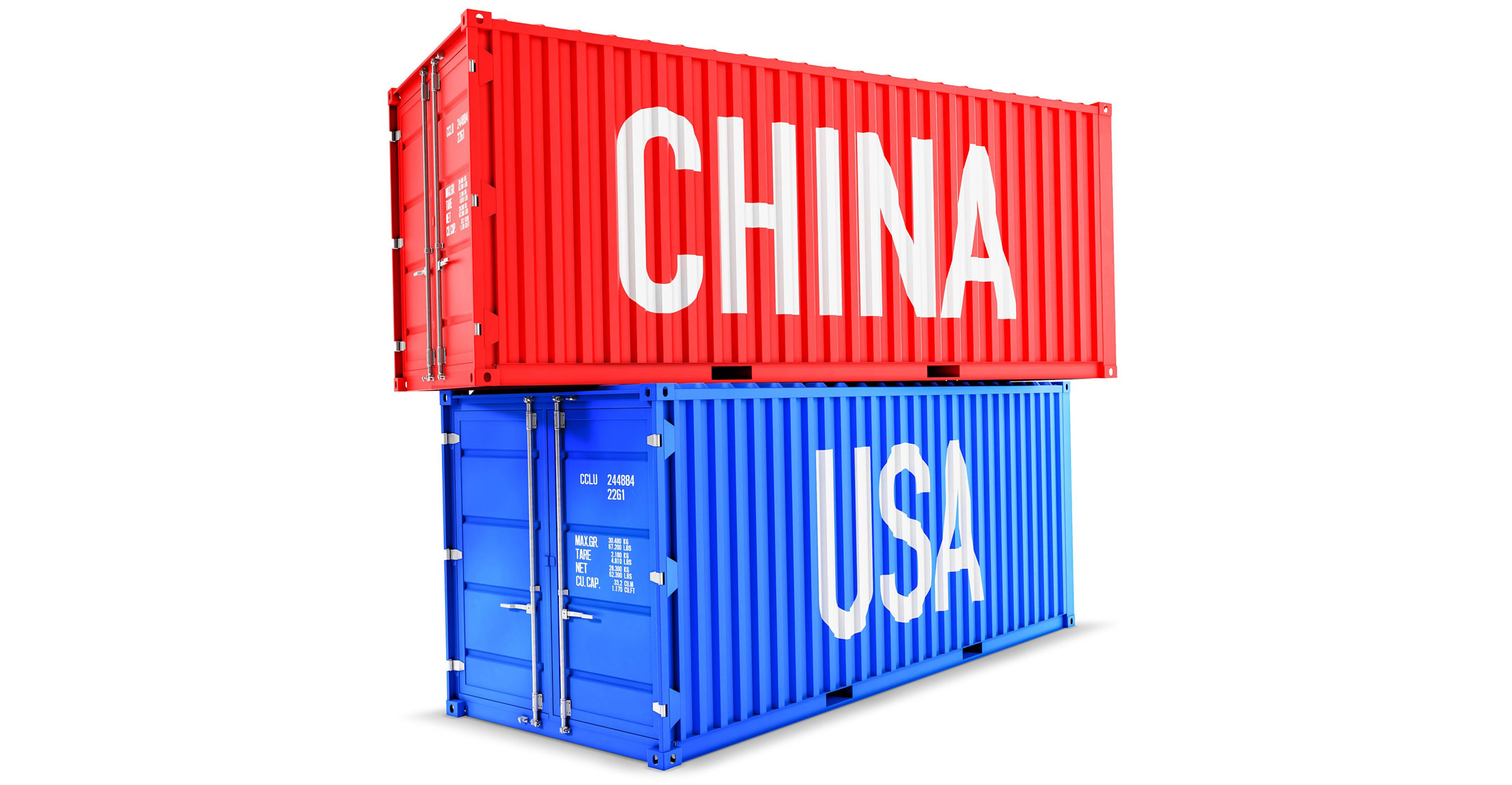
    They expected the event to follow a typical routine: the US and its friends gang up on China, leaving it alone to push back against a host of complaints. But this year, with an escalating trade war threatening global growth, the People’s Liberation Army officers saw other Asian leaders critiquing key aspects of the Donald Trump administration’s attacks on China.

    Singapore Prime Minister Lee Hsien Loong set the tone in his opening remarks, calling on the US to accommodate China’s rise while downplaying the threat posed by Huawei Technologies. A Myanmar minister suggested US warnings about China’s debt-trap diplomacy were overblown. And nearly everyone wanted the trade war to end.

    What is at stake is the existing global order, that even if not perfect has ensured peace and progress these last 70 years

    “What is at stake is the existing global order, that even if not perfect has ensured peace and progress these last 70 years,” Singapore defence minister Ng Eng Hen told the Shangri-La Dialogue. “It would be an egregious folly to throw this baby out with the bath water.”

    Fears are growing throughout Asia that a clash of superpowers will end up hurting smaller nations, many of which rely on exports to fuel the economic growth that provides jobs for millions of people. And while many Asian countries view the US as an essential check on China’s power, they are also wary that President Trump is going too far in trying to halt its rise.

    Trump’s decision last month to blacklist Huawei, one of China’s most strategically important companies, has roiled global markets already trying to digest the impact of higher tariffs in a year-long trade war that risks upending global supply chains.

    Threatened to retaliate

    China has threatened to retaliate with a planned list of “unreliable” entities that could potentially affect thousands of foreign firms. On Saturday, Beijing said it opened an investigation into FedEx after it accused the company of misdirecting packages. The company has apologised.

    In the middle are nations facing pressure from the US to avoid using Huawei equipment in 5G networks or take China’s cash to fund infrastructure like deep-sea ports and high-speed railways. But that poses a problem: how else will they afford to move up the value chain and deliver growth in the future?

    “Some if not all regional countries may harbour concerns about the security ramifications of using Huawei, but there are real pragmatic considerations,” said Collin Koh Swee Lean, a research fellow at the S Rajaratnam School of International Studies in Singapore. “Cost-wise in particular, Chinese offers for infrastructure development present more attractive propositions.”
    Acting US defence secretary Patrick Shanahan sought to address funding worries in his speech, mentioning that the US roughly doubled a competing infrastructure fund to US$60-billion. He contrasted the American vision of a “free and open” region with one “where power determines place and debt determines destiny”.

    For many Asian countries, however, US funding isn’t enough to meet their needs and generally comes with too many strings attached. Myanmar, for instance, found that China was the only country willing to finance a deep-sea port and industrial park on its coastline near Bangladesh.

    “In the end, the decision to accept or not to accept such financing rests with the recipient country and not with Beijing,” Thaung Tun, Myanmar’s national security adviser, told the conference, dismissing the notion that China would indebt the country for strategic gains.

    If you want to expose your network – to be a dirty network, an untrusted network – there’s a price to pay with that

    “We’re looking for partners so we can take quantum leaps,” he said later in an interview. “And at the moment the funding is not forthcoming from the World Bank and other financial institutions.”

    The same considerations are at play with Huawei. Nations around the world are looking to build 5G networks that will power the modern economy, from self-driving cars to smart homes to advanced medicine. Andrea L Thompson, a US state department official who attended the meeting in Singapore, said on Sunday that it “takes time” to convince nations in the region to avoid using Huawei.

    “It’s the lowest bidder for a reason — it’s backed by the Chinese government,” she told reporters. “If you want to expose your network — to be a dirty network, an untrusted network — there’s a price to pay with that.”

    So far, Asia’s not really buying it. Malaysian Prime Minister Mahathir Mohamad praised Huawei last week, saying it offers a “tremendous advance over American technology”. A Philippine official said on Sunday it was hard to tell if US-based Apple contained the same security risks as Huawei.

    ‘Cannot be sure’

    “You cannot be sure anymore,” Rufino Lopez Jr, deputy director-general of the Philippine National Security Council, said in an interview.

    Asian countries are listening to the US on Huawei but drawing different conclusions, according to David Gordon, former vice chairman of the US National Intelligence Council who is now a senior adviser at the International Institute for Strategic Studies.

    “What they’re taking from the message is ,‘We have to watch this, we have to be careful, we have to mitigate,’” he said. “Rather than what the US would like them to say, which is, ‘We need to stay away.’”

    That’s not to say that Asia is embracing China with open arms. Speakers at the Shangri-La Dialogue challenged China’s actions in contested waters, particularly regarding its assertiveness over territory claimed by other nations and moves that could hinder freedom of navigation.

    Countries in the region cannot afford to sign up to an uncompromising US line

    Defence minister Wei Fenghe, who said on Sunday that China has no intention to replace the US as “the boss of this world”, also irked Southeast Asian nations with his defence of construction work on disputed land features in the South China Sea.

    But overall Asian leaders peppered their comments with nuance, a reflection of the constant need to leverage China’s rise for economic gains without becoming so dependent that Beijing dictates political outcomes. And that balancing act stands in sharp contrast to the aggressive tactics currently employed by the White House.

    “Countries in the region cannot afford to sign up to an uncompromising US line,” said Lynn Kuok, a visiting scholar at Yale Law School’s Paul Tsai China Centre. “They are in a region with a powerful neighbour and have always been pragmatic and flexible. Being uncompromising is not in their DNA.”  — Reported by Iain Marlow and Philip J. Heijmans, with assistance from Krystal Chia, Sungwoo Park, Alfred Cang and Jon Herskovitz, (c) 2019 Bloomberg LP



    Donald Trump Huawei Lee Hsien Loong
    WhatsApp YouTube Follow on Google News Add as preferred source on Google
    Share. Facebook Twitter LinkedIn WhatsApp Telegram Email Copy Link
    Previous ArticleIt’s official: BBM is dead
    Next Article Key union tells Eskom’s top bondholder to sell its holdings

    Related Posts

    Huawei turns 25 in South Africa, celebrates with major device discounts

    Huawei turns 25 in South Africa, celebrates with major device discounts

    30 January 2026
    Taiwan, US strike strategic AI and chip supply-chain pact - TSMC

    Taiwan, US strike strategic AI and chip supply-chain pact

    20 January 2026
    Nvidia's next AI chips are in full production - Jensen Huang

    Nvidia’s next AI chips are in full production

    6 January 2026
    Company News
    Huawei turns 25 in South Africa, celebrates with major device discounts

    Huawei turns 25 in South Africa, celebrates with major device discounts

    30 January 2026
    Phishing has not disappeared, but it has grown up - KnowBe4

    Phishing has not disappeared, but it has grown up

    30 January 2026
    Smartphone affordability: South Africa's new economic divide - PayJoy

    Smartphone affordability: South Africa’s new economic divide

    29 January 2026
    Opinion
    South Africa's skills advantage is being overlooked at home - Richard Firth

    South Africa’s skills advantage is being overlooked at home

    29 January 2026
    Why Elon Musk's Starlink is a 'hard no' for me - Songezo Zibi

    Why Elon Musk’s Starlink is a ‘hard no’ for me

    26 January 2026
    South Africa's new fibre broadband battle - Duncan McLeod

    South Africa’s new fibre broadband battle

    20 January 2026

    Subscribe to Updates

    Get the best South African technology news and analysis delivered to your e-mail inbox every morning.

    Latest Posts
    Vuyani Jarana: Mobile coverage masks a deeper broadband failure

    Vuyani Jarana: Mobile coverage masks a deeper broadband failure

    30 January 2026
    TCS+ | How Cloud On Demand is helping SA businesses succeed in the cloud - Xhenia Rhode, Dion Kalicharan

    TCS+ | Cloud On Demand and Consnet: inside a real-world AWS partner success story

    30 January 2026
    Huawei turns 25 in South Africa, celebrates with major device discounts

    Huawei turns 25 in South Africa, celebrates with major device discounts

    30 January 2026
    SABC Plus to flight Microsoft AI training videos

    SABC Plus to flight Microsoft AI training videos

    30 January 2026
    © 2009 - 2026 NewsCentral Media
    • Cookie policy (ZA)
    • TechCentral – privacy and Popia

    Type above and press Enter to search. Press Esc to cancel.

    Manage consent

    TechCentral uses cookies to enhance its offerings. Consenting to these technologies allows us to serve you better. Not consenting or withdrawing consent may adversely affect certain features and functions of the website.

    Functional Always active
    The technical storage or access is strictly necessary for the legitimate purpose of enabling the use of a specific service explicitly requested by the subscriber or user, or for the sole purpose of carrying out the transmission of a communication over an electronic communications network.
    Preferences
    The technical storage or access is necessary for the legitimate purpose of storing preferences that are not requested by the subscriber or user.
    Statistics
    The technical storage or access that is used exclusively for statistical purposes. The technical storage or access that is used exclusively for anonymous statistical purposes. Without a subpoena, voluntary compliance on the part of your Internet Service Provider, or additional records from a third party, information stored or retrieved for this purpose alone cannot usually be used to identify you.
    Marketing
    The technical storage or access is required to create user profiles to send advertising, or to track the user on a website or across several websites for similar marketing purposes.
    • Manage options
    • Manage services
    • Manage {vendor_count} vendors
    • Read more about these purposes
    View preferences
    • {title}
    • {title}
    • {title}