Close Menu
TechCentralTechCentral

    Subscribe to the newsletter

    Get the best South African technology news and analysis delivered to your e-mail inbox every morning.

    Facebook X (Twitter) YouTube LinkedIn
    WhatsApp Facebook X (Twitter) LinkedIn YouTube
    TechCentralTechCentral
    • News
      Broadband Infraco in limbo

      Broadband Infraco in limbo

      11 February 2026
      Home affairs' R10 ID fee is forcing companies to rethink identity verification

      Standard Bank joins smart ID push with fee-free launch

      11 February 2026
      Zscaler assets seized from South African data centres

      Zscaler assets seized from South African data centres

      11 February 2026
      SA app wants to end guesswork in online grocery shopping - We Need Milk CEO Arjan van den Berg

      SA app wants to end guesswork in online grocery shopping

      11 February 2026
      Absa appoints M-Pesa boss to lead personal and private banking - Sitoyo Lopokoiyit

      Absa appoints M-Pesa boss to lead personal and private banking

      11 February 2026
    • World
      EU regulators take aim at WhatsApp

      EU regulators take aim at WhatsApp

      9 February 2026
      Musk hits brakes on Mars mission

      Musk hits brakes on Mars mission

      9 February 2026
      Crypto firm accidentally sends R700-billion in bitcoin to its users

      Crypto firm accidentally sends R700-billion in bitcoin to its users

      8 February 2026
      AI won't replace software, says Nvidia CEO amid market rout - Jensen Huang

      AI won’t replace software, says Nvidia CEO amid market rout

      4 February 2026
      Apple acquires audio AI start-up Q.ai

      Apple acquires audio AI start-up Q.ai

      30 January 2026
    • In-depth
      How liberalisation is rewiring South Africa's power sector

      How liberalisation is rewiring South Africa’s power sector

      21 January 2026
      The top-performing South African tech shares of 2025

      The top-performing South African tech shares of 2025

      12 January 2026
      Digital authoritarianism grows as African states normalise internet blackouts

      Digital authoritarianism grows as African states normalise internet blackouts

      19 December 2025
      TechCentral's South African Newsmakers of 2025

      TechCentral’s South African Newsmakers of 2025

      18 December 2025
      Black Friday goes digital in South Africa as online spending surges to record high

      Black Friday goes digital in South Africa as online spending surges to record high

      4 December 2025
    • TCS
      Watts & Wheels S1E4: 'We drive an electric Uber'

      Watts & Wheels S1E4: ‘We drive an electric Uber’

      10 February 2026
      TCS+ | How Cloud On Demand is helping SA businesses succeed in the cloud - Xhenia Rhode, Dion Kalicharan

      TCS+ | Cloud On Demand and Consnet: inside a real-world AWS partner success story

      30 January 2026
      Watts & Wheels S1E4: 'We drive an electric Uber'

      Watts & Wheels S1E3: ‘BYD’s Corolla Cross challenger’

      30 January 2026
      Watts & Wheels S1E4: 'We drive an electric Uber'

      Watts & Wheels S1E2: ‘China attacks, BMW digs in, Toyota’s sublime supercar’

      23 January 2026

      TCS+ | Why cybersecurity is becoming a competitive advantage for SA businesses

      20 January 2026
    • Opinion
      South Africa's skills advantage is being overlooked at home - Richard Firth

      South Africa’s skills advantage is being overlooked at home

      29 January 2026
      Why Elon Musk's Starlink is a 'hard no' for me - Songezo Zibi

      Why Elon Musk’s Starlink is a ‘hard no’ for me

      26 January 2026
      South Africa's new fibre broadband battle - Duncan McLeod

      South Africa’s new fibre broadband battle

      20 January 2026
      AI moves from pilots to production in South African companies - Nazia Pillay SAP

      AI moves from pilots to production in South African companies

      20 January 2026
      South Africa's new fibre broadband battle - Duncan McLeod

      ANC’s attack on Solly Malatsi shows how BEE dogma trumps economic reality

      14 December 2025
    • Company Hubs
      • Africa Data Centres
      • AfriGIS
      • Altron Digital Business
      • Altron Document Solutions
      • Altron Group
      • Arctic Wolf
      • AvertITD
      • Braintree
      • CallMiner
      • CambriLearn
      • CYBER1 Solutions
      • Digicloud Africa
      • Digimune
      • Domains.co.za
      • ESET
      • Euphoria Telecom
      • Incredible Business
      • iONLINE
      • IQbusiness
      • Iris Network Systems
      • LSD Open
      • NEC XON
      • Netstar
      • Network Platforms
      • Next DLP
      • Ovations
      • Paracon
      • Paratus
      • Q-KON
      • SevenC
      • SkyWire
      • Solid8 Technologies
      • Telit Cinterion
      • Tenable
      • Vertiv
      • Videri Digital
      • Vodacom Business
      • Wipro
      • Workday
      • XLink
    • Sections
      • AI and machine learning
      • Banking
      • Broadcasting and Media
      • Cloud services
      • Contact centres and CX
      • Cryptocurrencies
      • Education and skills
      • Electronics and hardware
      • Energy and sustainability
      • Enterprise software
      • Financial services
      • Information security
      • Internet and connectivity
      • Internet of Things
      • Investment
      • IT services
      • Lifestyle
      • Motoring
      • Public sector
      • Retail and e-commerce
      • Satellite communications
      • Science
      • SMEs and start-ups
      • Social media
      • Talent and leadership
      • Telecoms
    • Events
    • Advertise
    TechCentralTechCentral
    Home » Sections » Investment » Latest US offensive against China risks faster technological decoupling
    US offensive against China risks faster technological decoupling

    Latest US offensive against China risks faster technological decoupling

    By Agency Staff8 January 2025

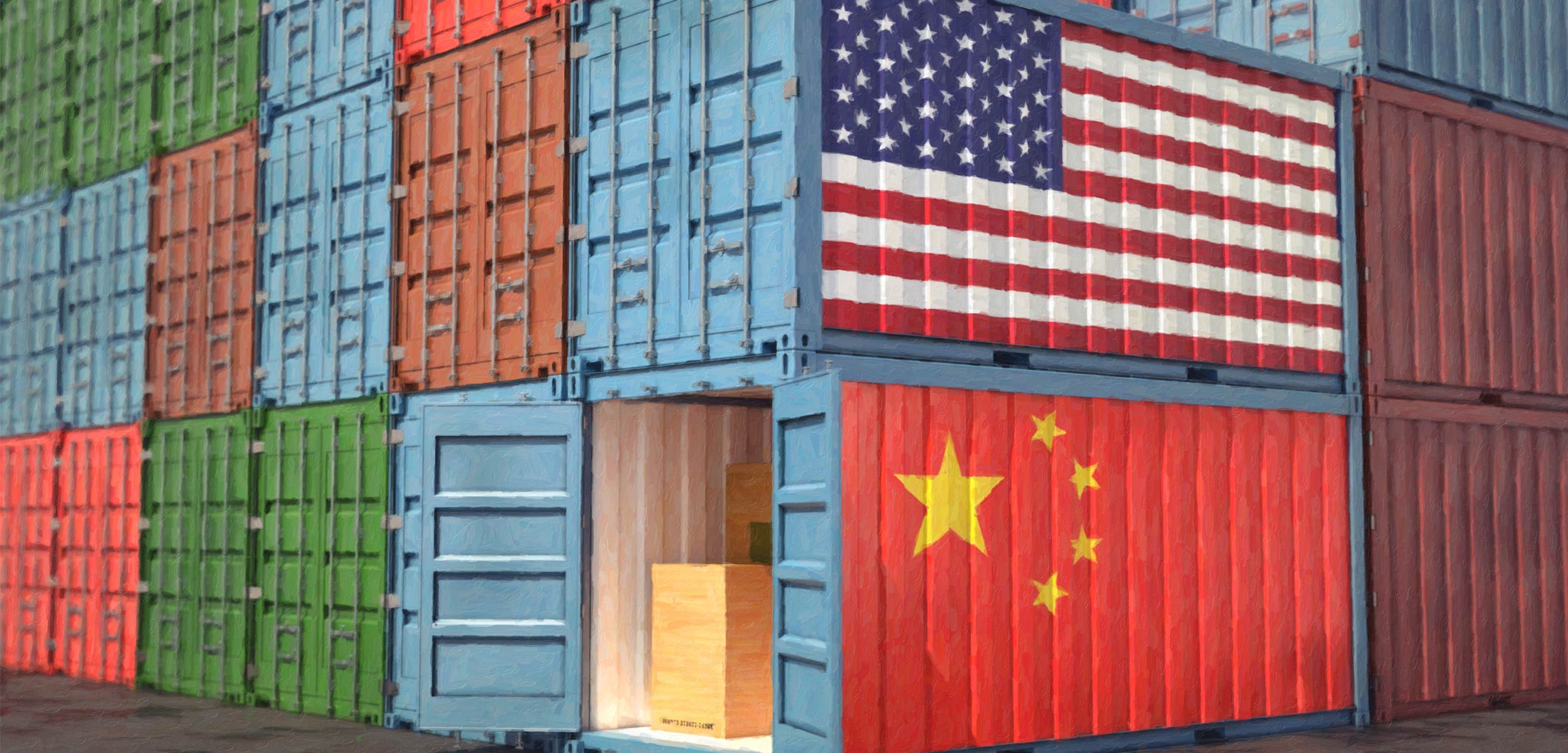
    The US’s latest move to expand its list of Chinese military companies risks doing more than tanking the shares of some of its most valuable companies: it also threatens to accelerate decoupling of the world’s biggest economies.

    The Biden administration on Monday added Tencent Holdings, the world’s largest gaming publisher, and Contemporary Amperex Technology (CATL), a key battery supplier to Tesla, to its list of “Chinese military companies” — firms it says are working directly or indirectly with the People’s Liberation Army, or contributing significantly to China’s industrial base.

    Since the first list was put out in 2021, as mandated by a law passed in the waning days of Donald Trump’s first term, it has expanded to 134 companies — including four of China’s top 20 in terms of market capitalisation, which together are valued at almost US$1-trillion.

    The whole world will move towards relying on Chinese companies for a whole range of products

    While the list carries no specific sanctions, unlike the commerce department’s Entity List, it still discourages US firms from dealing with its members and amounts to a reputational hit for the firms involved. More broadly, the rapid expansion of the register shows the extent to which lines are being blurred between military and civilian enterprises, and risks accelerating the bifurcation of supply chains if stronger measures are applied down the road.

    It’s an approach that risks backfiring on Washington, according to Kishore Mahbubani, Singapore’s former ambassador to the United Nations, who called the latest addition “unwise”.

    “The whole world will move towards relying on Chinese companies for a whole range of products, including companies like Tencent and CATL,” said Mahbubani, who’s also the author of Has China Won?

    Decoupling from the world

    “If the US tries to decouple from Chinese companies and their global reach, the US is not just decoupling from China,” Mahbubani said. “It is decoupling from the rest of the world, too.”

    Although the list comes at the end of Joe Biden’s term, one major proponent of tagging CATL and other major Chinese firms has been Marco Rubio, who is nominated to become the secretary of state in Trump’s second term.

    That raises the question of whether Trump will adopt a hardline stance towards China, as indicated by his threats to impose tariffs as high as 60%, or take a more pragmatic view — as suggested by his efforts to overturn a ban on TikTok and his close ties with Tesla founder Elon Musk.

    Read: Tax break plan may lure China to build electric cars in South Africa

    “We’ll have to see whether this strategy is revised significantly by the incoming Trump administration,” said Josef Gregory Mahoney, a professor of international relations at Shanghai’s East China Normal University. “Conventional wisdom indicates it won’t be, but there are some compelling reasons to change course.”

    The US has described the list as a way to highlight and counter what it calls China’s “military-civil fusion strategy” — which supports the modernisation goals of the PLA by ensuring it can acquire advanced technologies and expertise developed by Chinese companies, universities and research programmes that appear to be civilian entities.
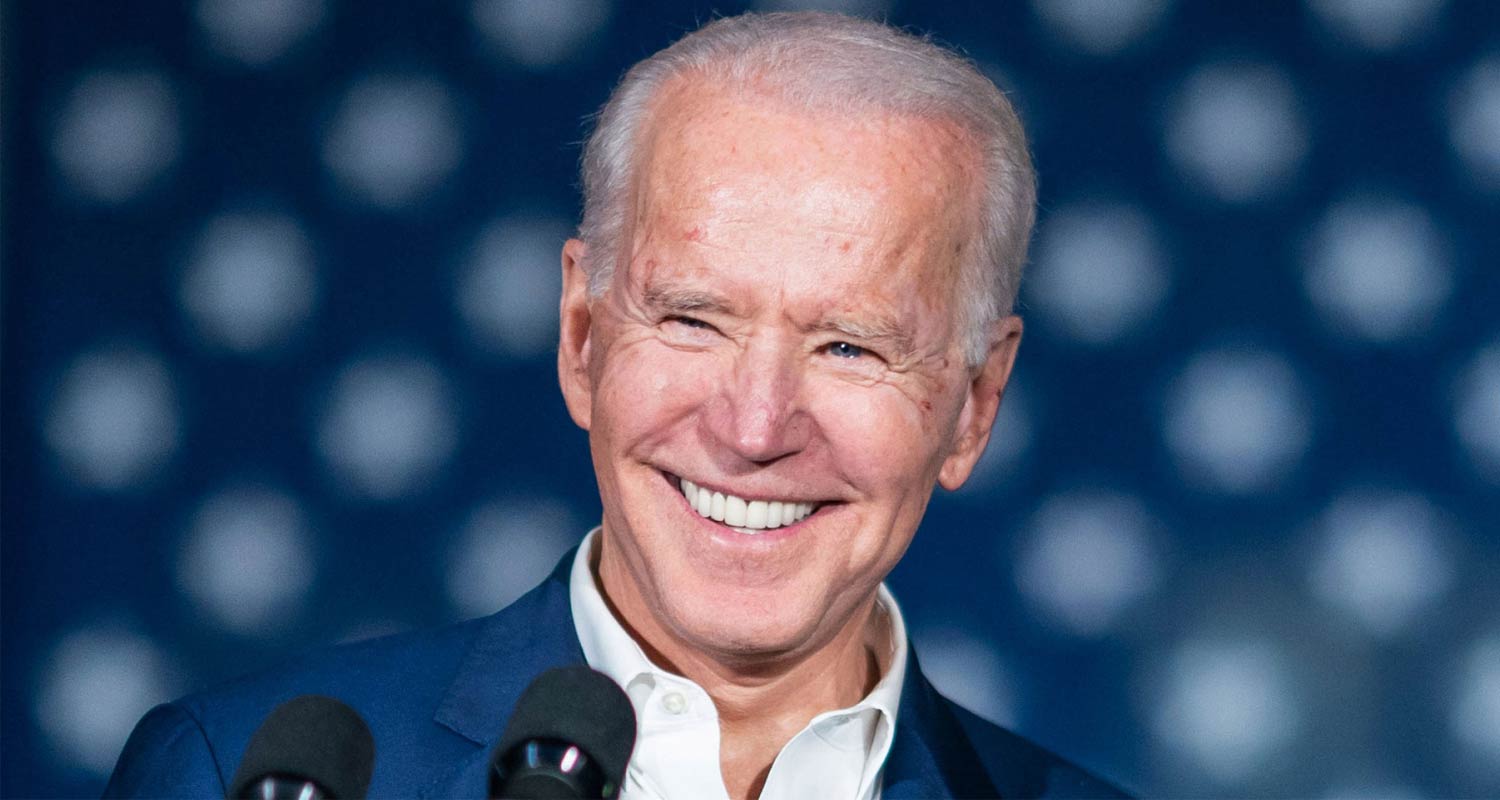
    US President Joe Biden
    Outgoing US President Joe Biden

    This broad strategy, known as “integrated national strategies and capabilities” in China, has been increasingly promoted under President Xi Jinping and frequently highlighted in state media.

    The Pentagon on Monday also added SenseTime Group and Changxin Memory Technologies, singling out a Chinese maker of memory chips considered crucial to Beijing’s semiconductor and AI development endeavours. And the agency named oil major Cnooc and Cosco Shipping Holdings, both of which have been previously targeted by Washington.

    The focus has shifted from “traditional” military contractors to include companies that develop tech products with potential military applications, according to Dylan Loh, assistant professor of politics at Nanyang Technological University in Singapore.

    We urge the US to immediately correct its wrongdoings and end the illegal unilateral sanctions…

    It shows “the broadening ambit of national security”, Loh said. “This is not just from the US but an arguably global one, where countries are increasingly securitising products, technologies in the name of national security.”

    The move comes amid an intensifying tech rivalry between the two countries. The US has imposed export controls to restrict China’s ability to build an advanced semiconductor industry and use artificial intelligence for military purposes. In response, Beijing has tightened its own export controls, including a ban last month on several materials with hi-tech and military uses to the US.

    The Biden administration has used the metaphor “small yard, high fence” over the past two years to explain its move to limit China’s access to technology. The concept is that sensitive technologies should be contained within a small yard, secured by a high fence of trade and investment controls. This would apply only to advanced technologies with military applications, while broader commercial trade and investment with China would remain unaffected.

    Tencent a private-sector pioneer

    But the latest move targets Tencent and CATL, which, on paper, don’t appear to have regular business dealings with the PLA. Tencent, China’s most valuable company, is seen as a pioneer in China’s internet and private sector, creating a so-called everything app that Elon Musk has held up as a model for X.

    During the first Trump administration, the US government sought to ban WeChat — Tencent’s messaging service that has evolved into a payment, social media and online services platform — citing national security concerns.

    CATL is not only a major supplier to Tesla, but also to many of the world’s biggest car makers, including Stellantis and Volkswagen. In August, Rubio asked the Pentagon to target the Chinese battery maker because of its potential to become a crucial supplier to the PLA.

    Read: Prosus nosedives on news Tencent added to US military blacklist

    Around one in three electric cars are powered by CATL batteries, and its widespread presence in the motoring supply chain could cause major disruptions to the global car industry if car makers are forced to find alternatives.

    Beijing has repeatedly criticised what it sees as the over-securitisation of the US. “Small yard, high fence shouldn’t become large yard, iron curtains,” foreign minister Wang Yi told US state secretary Antony Blinken in September.
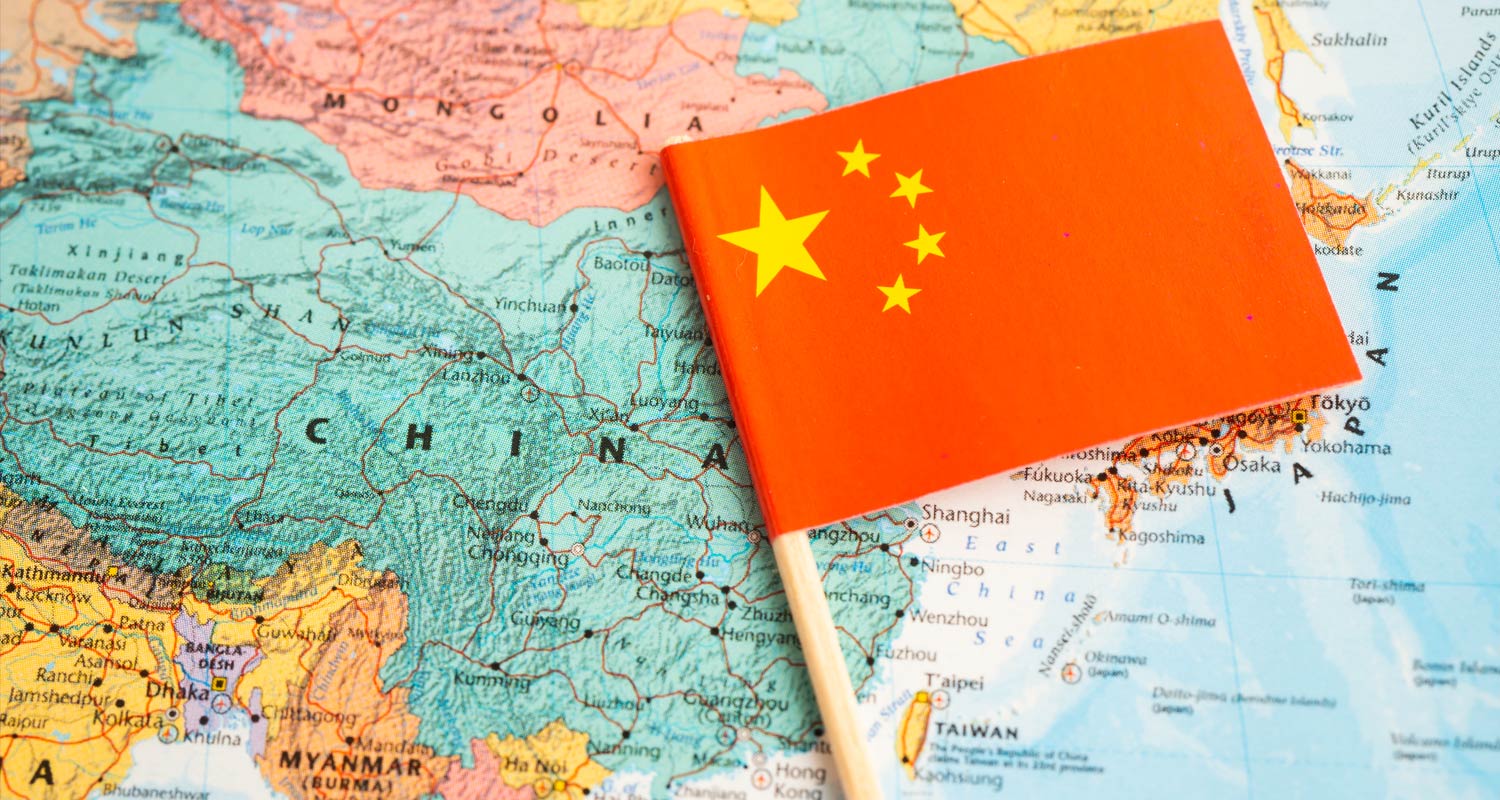
    On Tuesday, China’s foreign ministry again condemned US sanctions and vowed to defend its companies’ rights. “We urge the US to immediately correct its wrongdoings and end the illegal unilateral sanctions and long-arm jurisdiction on Chinese companies,” Guo Jiakun, a ministry spokesman, said at a regular press briefing in Beijing.

    China has made it clear it’s prepared to challenge the US in any future trade disputes. On top of its export ban on critical minerals including germanium and gallium, Beijing last week announced plans for stricter controls on shipments of technology used in battery materials. It’s also placing more American companies on its Unreliable Entity List, taking a similar approach to the US.

    “Given Beijing’s propensity to respond to US actions with tit-for-tat moves, it wouldn’t be out of the question for Beijing to place a non-defence-related company on one of these lists in symbolic retaliation,” said Kendra Schaefer, a partner at consultancy Trivium China.  — (c) 2025 Bloomberg LP

    Get breaking news from TechCentral on WhatsApp. Sign up here

    Don’t miss:

    Naspers plunges 10% on Tencent worries


    CATL Donald Trump Elon Musk Joe Biden Tencent Xi Jinping
    WhatsApp YouTube Follow on Google News Add as preferred source on Google
    Share. Facebook Twitter LinkedIn WhatsApp Telegram Email Copy Link
    Previous ArticleUK to make sexually explicit deepfakes a crime
    Next Article Lonely people have high levels of harmful proteins – new research

    Related Posts

    Musk hits brakes on Mars mission

    Musk hits brakes on Mars mission

    9 February 2026
    Starlink considers building its own phone - Elon Musk

    Starlink considers building its own phone

    5 February 2026
    SpaceX acquires xAI in record-breaking deal

    SpaceX acquires xAI in record-breaking deal

    3 February 2026
    Company News

    Why Acer is the strategic choice for South Africa’s educational future

    11 February 2026
    Fyndae is building Africa's human verification layer for community security and collaboration

    Fyndae wants to turn lost-item recovery into Africa’s trust infrastructure

    11 February 2026
    How NEC XON tackled identity risk for a major telco - Michael de Neuilly Rice

    How NEC XON tackled identity risk for a major telco

    11 February 2026
    Opinion
    South Africa's skills advantage is being overlooked at home - Richard Firth

    South Africa’s skills advantage is being overlooked at home

    29 January 2026
    Why Elon Musk's Starlink is a 'hard no' for me - Songezo Zibi

    Why Elon Musk’s Starlink is a ‘hard no’ for me

    26 January 2026
    South Africa's new fibre broadband battle - Duncan McLeod

    South Africa’s new fibre broadband battle

    20 January 2026

    Subscribe to Updates

    Get the best South African technology news and analysis delivered to your e-mail inbox every morning.

    Latest Posts
    Broadband Infraco in limbo

    Broadband Infraco in limbo

    11 February 2026

    Why Acer is the strategic choice for South Africa’s educational future

    11 February 2026
    Home affairs' R10 ID fee is forcing companies to rethink identity verification

    Standard Bank joins smart ID push with fee-free launch

    11 February 2026
    Zscaler assets seized from South African data centres

    Zscaler assets seized from South African data centres

    11 February 2026
    © 2009 - 2026 NewsCentral Media
    • Cookie policy (ZA)
    • TechCentral – privacy and Popia

    Type above and press Enter to search. Press Esc to cancel.

    Manage consent

    TechCentral uses cookies to enhance its offerings. Consenting to these technologies allows us to serve you better. Not consenting or withdrawing consent may adversely affect certain features and functions of the website.

    Functional Always active
    The technical storage or access is strictly necessary for the legitimate purpose of enabling the use of a specific service explicitly requested by the subscriber or user, or for the sole purpose of carrying out the transmission of a communication over an electronic communications network.
    Preferences
    The technical storage or access is necessary for the legitimate purpose of storing preferences that are not requested by the subscriber or user.
    Statistics
    The technical storage or access that is used exclusively for statistical purposes. The technical storage or access that is used exclusively for anonymous statistical purposes. Without a subpoena, voluntary compliance on the part of your Internet Service Provider, or additional records from a third party, information stored or retrieved for this purpose alone cannot usually be used to identify you.
    Marketing
    The technical storage or access is required to create user profiles to send advertising, or to track the user on a website or across several websites for similar marketing purposes.
    • Manage options
    • Manage services
    • Manage {vendor_count} vendors
    • Read more about these purposes
    View preferences
    • {title}
    • {title}
    • {title}