Close Menu
TechCentralTechCentral

    Subscribe to the newsletter

    Get the best South African technology news and analysis delivered to your e-mail inbox every morning.

    Facebook X (Twitter) YouTube LinkedIn
    WhatsApp Facebook X (Twitter) LinkedIn YouTube
    TechCentralTechCentral
    • News
      Koeberg is completely offline

      Koeberg is completely offline

      28 August 2026
      Anthropic moves AI agents out of software and into the lab

      Anthropic moves AI agents out of software and into the lab

      28 August 2026
      Forget the iPhone: Apple's real next act is your home

      Forget the iPhone: Apple’s real next act is your home

      27 August 2026
      Meta wins by settling

      Meta wins by settling

      27 August 2026
      A Limpopo solar farm is now powering a smelter in Richards Bay

      A Limpopo solar farm is now powering a smelter in Richards Bay

      27 August 2026
    • World
      AI-generated music banned from Australian charts

      AI-generated music banned from Australian charts

      26 August 2026
      Traders brace for a R4.5-trillion swing in Nvidia's value

      Traders brace for a R4.5-trillion swing in Nvidia’s value

      25 August 2026
      Russia building its own Starlink - and faster than expected - Vadym Skibitskyi

      Russia building its own Starlink – and faster than expected

      11 August 2026
      Meta AI will now tell parents if their teen is in crisis

      Meta AI will now tell parents if their teen is in crisis

      17 July 2026
      IBM shares crash 25% as AI upends software spending - Arvind Krishna

      IBM shares crash 25% as AI upends software spending

      15 July 2026
    • In-depth
      Google DeepMind CEO Demis Hassabis. Image: John Sears

      The plan to stop AI from breaking the world

      16 July 2026
      The internet has a Strait of Hormuz problem

      The internet has a Strait of Hormuz problem

      15 July 2026
      AI boom sparks rally, frenzy and fear

      AI boom sparks rally, frenzy and fear

      11 June 2026
      Every plug-in hybrid on sale in South Africa, ranked by price - Lamborghini Temerario

      Every plug-in hybrid on sale in South Africa, ranked by price

      7 June 2026
      What Wi-Fi 8 will mean for wireless networks

      What Wi-Fi 8 will mean for wireless networks

      1 June 2026
    • TCS
      Watts & Wheels S1E8: 'Tesla lands in Africa, just not here'

      Watts & Wheels S1E8: ‘Tesla lands in Africa, just not here’

      24 August 2026
      Meet the CIO | Discovery's Derek Wilcocks on AI, guardrails and growth

      Meet the CIO | Derek Wilcocks on how AI personalised Vitality

      13 August 2026
      TCS | Money just became native to the internet - Steven Boykey Sidley

      TCS | Money just became native to the internet – Steven Boykey Sidley

      12 August 2026
      TCS+ | Specops' Darren James on continuous trust in an AI world

      TCS+ | Specops’ Darren James on continuous trust in an AI world

      7 August 2026
      TCS+ | How AI is turning hardware into a subscription service - Shane van der Merwe Merchant West

      TCS+ | How AI is turning hardware into a subscription service

      6 August 2026
    • Opinion
      The fragile joint in the Capitec machine - Pambos Soteriades

      The R197-billion market the banks can’t reach

      25 August 2026
      South African tech's compounding debt problem - Jannie van Zyl

      Management consulting as we know it is over

      21 August 2026
      South African tech's compounding debt problem - Jannie van Zyl

      The most dangerous customer is the quiet one

      10 August 2026
      South African tech's compounding debt problem - Jannie van Zyl

      South African tech’s compounding debt problem

      29 July 2026
      The fragile joint in the Capitec machine - Pambos Soteriades

      Best network, worst vibes: the puzzle of SA telecoms

      20 July 2026
    • Company Hubs
      • 1Stream
      • Africa Data Centres
      • AfriGIS
      • Altron Digital Business
      • Altron Document Solutions
      • Altron Group
      • Arctic Wolf
      • Ascent Technology
      • AvertITD
      • BBD
      • Braintree
      • CallMiner
      • CambriLearn
      • CM Telecom
      • Contactable
      • CYBER1 Solutions
      • Digicloud Africa
      • Digimune
      • Domains.co.za
      • ESET
      • Euphoria Telecom
      • HOSTAFRICA
      • Incredible Business
      • iONLINE
      • IQbusiness
      • Iris Network Systems
      • Kaspersky
      • LSD Open
      • Mitel
      • NEC XON
      • Netstar
      • Network Platforms
      • Next DLP
      • Ovations
      • Paracon
      • Paratus
      • Q-KON
      • SevenC
      • SkyWire
      • Solid8 Technologies
      • Telit Cinterion
      • Telviva
      • Tenable
      • Vertiv
      • Videri Digital
      • Vodacom Business
      • Vox
      • Wipro
      • Workday
      • XLink
    • Sections
      • AI and machine learning
      • Banking
      • Broadcasting and Media
      • Cloud services
      • Contact centres and CX
      • Cryptocurrencies
      • Education and skills
      • Electronics and hardware
      • Energy and sustainability
      • Enterprise software
      • Financial services
      • HealthTech
      • Information security
      • Internet and connectivity
      • Internet of Things
      • Investment
      • IT services
      • Lifestyle
      • Policy and regulation
      • Public sector
      • Retail and e-commerce
      • Satellite communications
      • Science
      • SMEs and start-ups
      • Social media
      • Talent and leadership
      • Telecoms
      • Watts & Wheels
    • Events
    • Advertise
    TechCentralTechCentral
    Home » Sections » Telecoms » US’s surgical strike on HiSilicon threatens to cripple Huawei

    US’s surgical strike on HiSilicon threatens to cripple Huawei

    By Agency Staff8 June 2020
    Twitter LinkedIn Facebook WhatsApp Email Telegram Copy Link
    News Alerts
    WhatsApp

    The Trump administration has fired multiple salvos against Huawei Technologies since the start of a campaign to derail China’s technological ascendancy. The latest blow threatens to cripple the country’s tech champion.

    Huawei’s leafy campus in southern China has been engulfed in a state of emergency since the US commerce department in May banned the sale of any silicon made with US know-how — striking at the heart of its semiconductor apparatus and aspirations in fields from artificial intelligence to mobile services. Its stockpiles of certain self-designed chips essential to telecommunications equipment will run out by early 2021, according to people familiar with the matter.

    Executives scurried between meetings in the days after the latest restrictions, according to one person who attended the discussions. But the company has so far failed to brainstorm a solution to the curbs, they added, asking not to be identified talking about private matters. While Huawei can buy off-the-shelf or commodity mobile chips from a third party like Samsung Electronics or MediaTek, it couldn’t possibly get enough and may have to make costly compromises on performance in basic products, they added.

    What Huawei’s brass fears is that Washington … has finally figured out how to quash the company’s ambitions

    What Huawei’s brass fears is that Washington, after a year of Entity List sanctions that have failed to significantly curtail the company’s rapid growth, has finally figured out how to quash its ambitions.

    The latest curbs are the culmination of a concerted assault against China’s largest tech company that began years ago, when the White House tried to cut off the flow of American software and circuitry; lobbied allies from the UK to Australia to banish its network gear; even persuaded Canadian police to lock up the founder’s daughter.

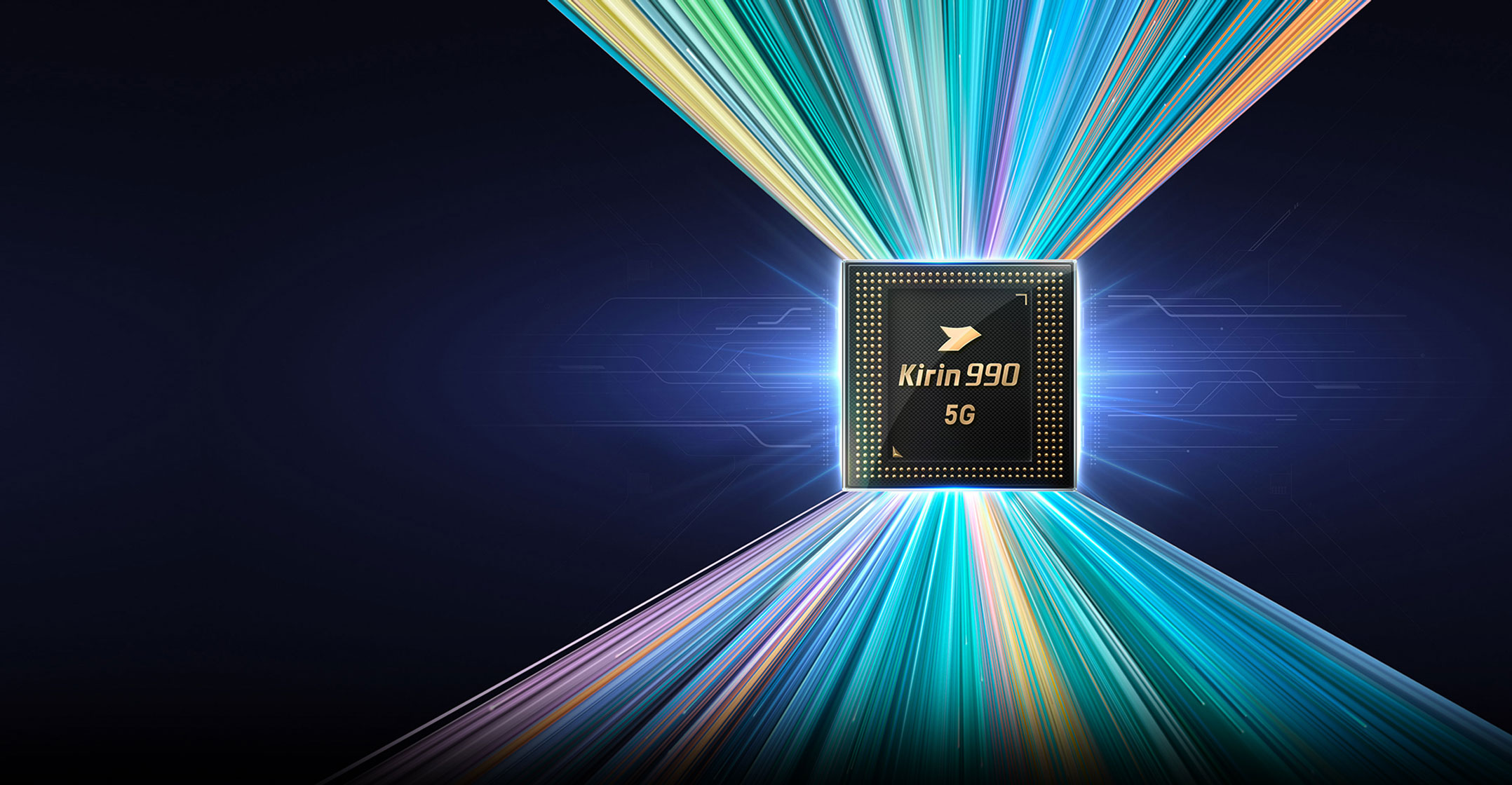
    The latest measures, however, are a more surgical strike levelled at HiSilicon, the secretive division created 16 years ago to drive research into cutting-edge fields like AI inference chips. That unit surged in prominence precisely because it’s viewed as a saviour in an era of American containment, and its silicon now matches rivals’ like Qualcomm’s and powers many of Huawei’s products: the Kirin chips for phones, Ascend for AI and Kunpeng for servers.

    In doubt

    Now that ambition is in doubt. Every chip maker on the planet, from Taiwan Semiconductor Manufacturing Co to China’s own Semiconductor Manufacturing International, needs gear from American outfits like Applied Materials to fabricate chipsets. Should Washington get serious about throttling that spigot, Huawei won’t be able to get any of the advanced silicon it designs into the real world — stymieing efforts to craft its own processors for mobile devices and radio frequency chips for 5G base stations, to name just two of the most vital in-house components. Dubbed the Foreign-Produced Direct Product Rule, or DPR, Trump’s latest constraints have implications for China’s 5G roll-out, for which Huawei is by far the dominant purveyor.

    The ban “focuses on HiSilicon-designed chips, which present the biggest threat to the US”, Jefferies analyst Edison Lee wrote in late May. “The DPR could quash HiSilicon and then Huawei’s ability to make 5G network gear.”

    The scene at Huawei’s Shenzhen nerve centre invokes deja vu from a year ago, when Huawei billionaire Ren Zhengfei emerged from seclusion to declare his company’s survival in doubt. In the months following that proclamation, two things happened. US companies, spooked by the prospect of losing billions, lobbied Washington for exceptions to the Entity List and suppliers from Intel to Micron Technology relocated assembly to increase foreign-produced components and continue supplying the Chinese company. Huawei employees — spurred on by patriotism given perceptions the nation was under attack — went to 24-hour days to design alternatives to American parts.
    The latest curbs could prove more effective because they remove Huawei’s chip maker of choice from the equation. In theory, any chip maker can petition the commerce department for approval to ship Huawei-designed semiconductors, and opinion is divided on both sides of the Pacific as to how far the agency will allow shipments to proceed. But if it chooses to enforce the new curbs to the hilt, HiSilicon can no longer take its designs to TSMC or any foreign contract manufacturer. And local peers such as SMIC typically operate two generations behind TSMC.

    In fact, the latest curbs could severely disrupt production of some of the more critical and visible products in Huawei’s portfolio, including the “Kirin” brains and communications chips of future 5G phones, AI learning chips for its cloud services and servers, and the most basic kinds of chips for networking. In February, Huawei touted how its next-generation antenna chips have been installed in “the industry’s highest-performance” 5G base stations. It may no longer able to ship those base stations after the chip inventory runs out.

    “HiSilicon won’t be able to continue its innovation any further until it’s able to find alternatives through self-development and collaboration with local ones, which will take years to mature,” said Charlie Dai, a principal analyst at Forrester Research. “We estimate that Huawei’s inventory of high-end chips (including baseband chips and CPUs for Huawei’s high-end smartphones) may last 12 to 18 months maximum.”

    Modern chip manufacturing at the highest levels simply cannot happen without American gear from the likes of Applied Materials, KLA and Lam Research

    Modern chip manufacturing at the highest levels simply cannot happen without American gear from the likes of Applied Materials, KLA and Lam Research. Even in basic wafer fabrication, replacing TSMC is impossible because the Taiwanese foundry is the only company able to reliably make semiconductors using 7-nanometre or smaller nodes — a must for high performance. Moving everything in-house — essentially building an American-free plant — is a pipe dream because it requires extreme ultraviolet lithography machines from ASML Holding — a prerequisite for next-generation chip making. Yet ASML’s machines also use American technology from the likes of suppliers such as II-VI and Lumentum Holdings. The best Chinese alternative could be Shanghai Micro Electronics Equipment, but its EUVs are again a few generations behind the Dutch firm’s.

    All that’s even before factoring in the uncertainty over Huawei’s access to design software developed by Cadence Design Systems and Synopsys. The pair provide electronic design automation (EDA) tools that Hisilicon’s engineers rely on to draw up blueprints for next-generation processors. As Christopher Ford, assistant secretary of state for international security and nonproliferation, told reporters in late May: “If one wants to be working in the area of the very best chips, the chips that have the most computing power packed into the smallest space, it is necessary to use US design tools right now because we have a commanding comparative advantage in that area.”

    Threat to 5G ambitions

    “While there will be lots of opportunity to continue selling lesser quality chips to Huawei, this will be an additional challenge for the really good stuff,” he added.

    In the long run, the lack of consistent in-house chip supplies will disrupt China’s grand ambition of challenging the US for global tech supremacy. More immediately, they threaten to curtail China’s crucial US$500-billion 5G roll-out — a key piece of Beijing’s longer-term strategic vision.

    Huawei stands at the centre of Beijing’s $1.4-trillion New Infrastructure initiative to seize the lead in 5G-based technology. Now it’s uncertain if it can even fulfil the 90-plus contracts it’s won so far to build networks for local operators like China Mobile and other carriers around the world. That’s because HiSilicon’s chips are essential in products waiting to be shipped out. The uncertainty of not just fulfilling contracts — but also around Huawei’s very ability to maintain clients’ networks once they’re up and running — may also spook potential future customers.

    Internally, executives remain hopeful of finding a workaround, and are repeating the same mantra of a year ago — doing without American technology isn’t impossible. “The good news is we still have time,” said one person involved in Huawei’s supply chain management. Chip architecture and supply “redesign takes time, but not something that can’t be done”.  — (c) 2020 Bloomberg LP
    Follow TechCentral on Google News Add TechCentral as your preferred source on Google


    Donald Trump HiSilicon Huawei MediaTek Samsung top TSMC
    WhatsApp YouTube
    Share. Facebook Twitter LinkedIn WhatsApp Telegram Email Copy Link
    Previous ArticleEskom demands PwC repay millions over ‘invalid’ contract
    Next Article MTN shares dip on new allegations it paid terrorist groups

    Related Posts

    MTN’s Iranian dead end

    24 August 2026
    Bitcoin roars back to life after Trump pushes Clarity Act - DOnald Trump

    Bitcoin roars back to life after Trump pushes Clarity Act

    20 August 2026
    Leaked letter reveals US plan to split the world's AI alliances

    Leaked letter reveals US plan to split the world’s AI alliances

    17 August 2026
    Company News
    The stuff that doesn't fit on the quote - Graham Millar SevenC

    The stuff that doesn’t fit on the quote

    28 August 2026
    Can you trust the AI speaking to your customers? - 1Stream

    Can you trust the AI speaking to your customers?

    27 August 2026
    Telviva launches Viva, a digital agent built for South African businesses - Telviva CEO David Meintjes

    Telviva launches Viva, a digital agent built for South African businesses

    27 August 2026
    Opinion
    The fragile joint in the Capitec machine - Pambos Soteriades

    The R197-billion market the banks can’t reach

    25 August 2026
    South African tech's compounding debt problem - Jannie van Zyl

    Management consulting as we know it is over

    21 August 2026
    South African tech's compounding debt problem - Jannie van Zyl

    The most dangerous customer is the quiet one

    10 August 2026

    Subscribe to Updates

    Get the best South African technology news and analysis delivered to your e-mail inbox every morning.

    Latest Posts
    The stuff that doesn't fit on the quote - Graham Millar SevenC

    The stuff that doesn’t fit on the quote

    28 August 2026
    Koeberg is completely offline

    Koeberg is completely offline

    28 August 2026
    Anthropic moves AI agents out of software and into the lab

    Anthropic moves AI agents out of software and into the lab

    28 August 2026
    Forget the iPhone: Apple's real next act is your home

    Forget the iPhone: Apple’s real next act is your home

    27 August 2026
    © 2009 - 2026 NewsCentral Media
    Built and maintained by Chronon
    • Cookie policy (ZA)
    • TechCentral – privacy and Popia

    Type above and press Enter to search. Press Esc to cancel.

    Manage consent

    TechCentral uses cookies to enhance its offerings. Consenting to these technologies allows us to serve you better. Not consenting or withdrawing consent may adversely affect certain features and functions of the website.

    Functional Always active
    The technical storage or access is strictly necessary for the legitimate purpose of enabling the use of a specific service explicitly requested by the subscriber or user, or for the sole purpose of carrying out the transmission of a communication over an electronic communications network.
    Preferences
    The technical storage or access is necessary for the legitimate purpose of storing preferences that are not requested by the subscriber or user.
    Statistics
    The technical storage or access that is used exclusively for statistical purposes. The technical storage or access that is used exclusively for anonymous statistical purposes. Without a subpoena, voluntary compliance on the part of your Internet Service Provider, or additional records from a third party, information stored or retrieved for this purpose alone cannot usually be used to identify you.
    Marketing
    The technical storage or access is required to create user profiles to send advertising, or to track the user on a website or across several websites for similar marketing purposes.
    • Manage options
    • Manage services
    • Manage {vendor_count} vendors
    • Read more about these purposes
    View preferences
    • {title}
    • {title}
    • {title}