Close Menu
TechCentralTechCentral

    Subscribe to the newsletter

    Get the best South African technology news and analysis delivered to your e-mail inbox every morning.

    Facebook X (Twitter) YouTube LinkedIn
    WhatsApp Facebook X (Twitter) LinkedIn YouTube
    TechCentralTechCentral
    • News

      MTN’s Iranian dead end

      24 August 2026
      MTN is cutting airtime credit while its rivals lean on it

      MTN is cutting airtime credit while its rivals lean on it

      24 August 2026
      You still can't choose who sells you electricity in South Africa

      You still can’t choose who sells you electricity in South Africa

      24 August 2026
      MTN is spending less on the best network in South Africa - Ralph Mupita

      MTN is spending less on the best network in South Africa

      24 August 2026
      Frogfoot to expand township fibre roll-out after major fundraising - Abraham van der Merwe and Shane Chorley - Abraham van der Merwe and Shane Chorley - Abraham van der Merwe and Shane Chorley

      Frogfoot to expand township fibre roll-out after major fundraising round

      24 August 2026
    • World
      Russia building its own Starlink - and faster than expected - Vadym Skibitskyi

      Russia building its own Starlink – and faster than expected

      11 August 2026
      Meta AI will now tell parents if their teen is in crisis

      Meta AI will now tell parents if their teen is in crisis

      17 July 2026
      IBM shares crash 25% as AI upends software spending - Arvind Krishna

      IBM shares crash 25% as AI upends software spending

      15 July 2026
      Jony Ive's first OpenAI device: an AI smart speaker - Jony Ive and Sam Altman

      Jony Ive’s first OpenAI device: an AI smart speaker

      15 July 2026
      Stripe, Advent in talks to buy PayPal for $53-billion

      Stripe, Advent in talks to buy PayPal for $53-billion

      15 July 2026
    • In-depth
      Google DeepMind CEO Demis Hassabis. Image: John Sears

      The plan to stop AI from breaking the world

      16 July 2026
      The internet has a Strait of Hormuz problem

      The internet has a Strait of Hormuz problem

      15 July 2026
      AI boom sparks rally, frenzy and fear

      AI boom sparks rally, frenzy and fear

      11 June 2026
      Every plug-in hybrid on sale in South Africa, ranked by price - Lamborghini Temerario

      Every plug-in hybrid on sale in South Africa, ranked by price

      7 June 2026
      What Wi-Fi 8 will mean for wireless networks

      What Wi-Fi 8 will mean for wireless networks

      1 June 2026
    • TCS
      Meet the CIO | Discovery's Derek Wilcocks on AI, guardrails and growth

      Meet the CIO | Derek Wilcocks on how AI personalised Vitality

      13 August 2026
      TCS | Money just became native to the internet - Steven Boykey Sidley

      TCS | Money just became native to the internet – Steven Boykey Sidley

      12 August 2026
      TCS+ | Specops' Darren James on continuous trust in an AI world

      TCS+ | Specops’ Darren James on continuous trust in an AI world

      7 August 2026
      TCS+ | How AI is turning hardware into a subscription service - Shane van der Merwe Merchant West

      TCS+ | How AI is turning hardware into a subscription service

      6 August 2026
      TCS+ | Why South African workers must become supervisors of digital labour - Accelera Digital Group Cliff de Wit

      TCS+ | Why South African workers must become supervisors of digital labour

      31 July 2026
    • Opinion
      The author, Jannie van Zyl

      Selling vapour is corporate suicide in slow motion

      16 July 2026
      Brazil's online gambling crackdown is a lesson for South Africa

      How Amazon outmanoeuvred Starlink in South Africa

      15 July 2026
      The Popia problem with agentic AI - Herman Haasbroek

      The Popia problem with agentic AI

      14 July 2026
      The author, Fanie van Rooyen

      South Africa can still catch the AI wave – here’s how

      7 July 2026
      The author, Fanie van Rooyen

      The AI utopia South Africa can’t afford

      1 July 2026
    • Company Hubs
      • 1Stream
      • Africa Data Centres
      • AfriGIS
      • Altron Digital Business
      • Altron Document Solutions
      • Altron Group
      • Arctic Wolf
      • Ascent Technology
      • AvertITD
      • BBD
      • Braintree
      • CallMiner
      • CambriLearn
      • CM Telecom
      • Contactable
      • CYBER1 Solutions
      • Digicloud Africa
      • Digimune
      • Domains.co.za
      • ESET
      • Euphoria Telecom
      • HOSTAFRICA
      • Incredible Business
      • iONLINE
      • IQbusiness
      • Iris Network Systems
      • Kaspersky
      • LSD Open
      • Mitel
      • NEC XON
      • Netstar
      • Network Platforms
      • Next DLP
      • Ovations
      • Paracon
      • Paratus
      • Q-KON
      • SevenC
      • SkyWire
      • Solid8 Technologies
      • Telit Cinterion
      • Telviva
      • Tenable
      • Vertiv
      • Videri Digital
      • Vodacom Business
      • Vox
      • Wipro
      • Workday
      • XLink
    • Sections
      • AI and machine learning
      • Banking
      • Broadcasting and Media
      • Cloud services
      • Contact centres and CX
      • Cryptocurrencies
      • Education and skills
      • Electronics and hardware
      • Energy and sustainability
      • Enterprise software
      • Financial services
      • HealthTech
      • Information security
      • Internet and connectivity
      • Internet of Things
      • Investment
      • IT services
      • Lifestyle
      • Policy and regulation
      • Public sector
      • Retail and e-commerce
      • Satellite communications
      • Science
      • SMEs and start-ups
      • Social media
      • Talent and leadership
      • Telecoms
      • Watts & Wheels
    • Events
    • Advertise
    TechCentralTechCentral
    Home » Sections » Telecoms » MTN’s Iranian dead end

    MTN’s Iranian dead end

    MTN Group faces a R3.9-billion write-down, cash it cannot move and a stake it cannot sell, just as Washington escalates.
    By Fanie van Rooyen24 August 2026
    Twitter LinkedIn Facebook WhatsApp Email Telegram Copy Link
    News Alerts
    WhatsApp

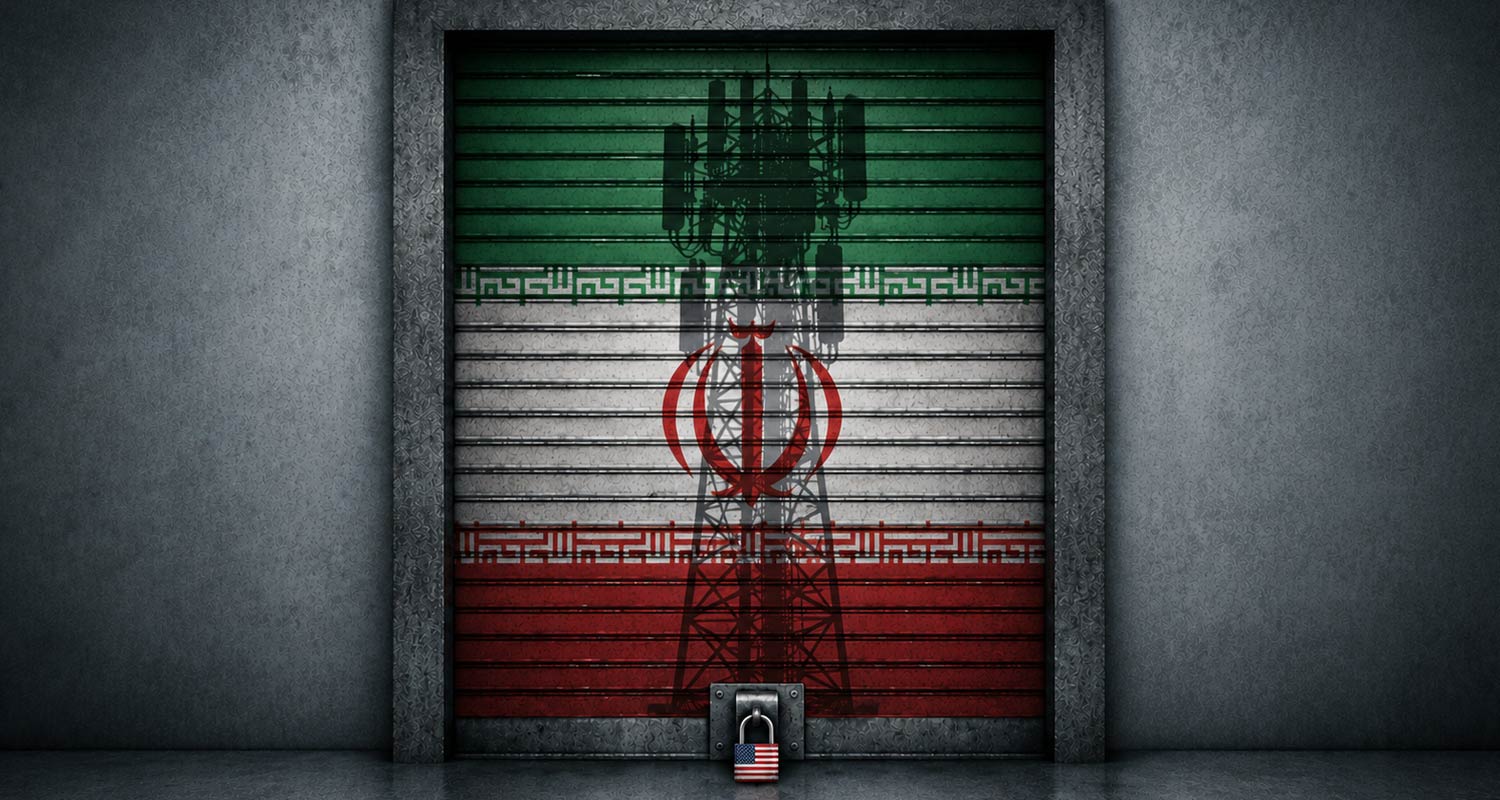
    MTN's Iranian dead end

    MTN Group wrote down its Iranian investment by R3.9-billion in the six months to end-June, and still carries R10.5-billion of Irancell net assets on its books. Both numbers now sit directly in the path of what US treasury secretary Scott Bessent has promised will be “the toughest sanctions in history” on Iran.

    US President Donald Trump posted on Truth Social last week that “any country that allows its financial institutions, businesses, airports or government entities to provide any type of lifeline to Iran will itself face tremendous economic consequences”. He listed the conduits he had in mind: “Oil smuggling, swap lines, cash transfers, exchange houses, ship registries, front companies – it all needs to stop now.”

    Bessent followed the next day on CNBC: “It is a one-two punch. We have the blockade, and we are going to have the toughest sanctions in history.” He returned to it in a Financial Times op-ed on Sunday and was due to set out the detail on Monday, the same day MTN released its interim results.

    With sanctions in place as they stand right now, we can’t put any money in, and we can’t take any money out

    MTN owns 49% of Irancell, licensed in 2005 as Iran’s second mobile network. The other 51% sits with Iranian state-linked shareholders. It is a non-controlling, equity-accounted stake that MTN has been trying to leave for years, and cannot.

    “With sanctions in place as they stand right now, we can’t put any money in, and we can’t take any money out,” group CEO Ralph Mupita told journalists on Monday.

    That has been the position since May 2018, when the first Trump administration abandoned the Iran nuclear deal. The snapback that followed cut designated Iranian banks off from the Swift messaging network by that November. “Iran has been a trapped investment since May 2018 … we haven’t put any money in, haven’t taken any money out,” Mupita said.

    Stranded cash

    The stranded cash is smaller than it was, but only because the currency collapsed. MTN disclosed about R886-million of receivables owed by Irancell at period end, with repatriation “constrained by the prevailing sanctions regime”. Mupita put it more plainly: “Post the devaluation, the total amount is just over R880-million equivalent of trapped dividends.”

    That is not the only Irancell receivable on the books. A separate note puts the outstanding Irancell loan and receivable at R2.01-billion, classified as non-current because settlement is “neither planned nor likely to occur in the foreseeable future” and carried within investment in associates and joint ventures. It stood at R2.31-billion in December and R2.55-billion a year ago. The results do not spell out how the two figures relate.

    It is not the first such trap. Under an earlier sanctions round MTN had roughly US$1-billion stuck in Iran, which it only recovered in 2017, shortly before the door slammed shut again.

    Read: MTN sheds prepaid customers as voice decline accelerates

    Irancell has been legally fraught from the start. Turkcell, originally selected for the licence, has for more than a decade alleged that MTN won the concession through bribery and political influence in South Africa and Iran. Its $4.2-billion claim has reached the constitutional court and names former group CEO Phuthuma Nhleko and former director Irene Charnley, both of whom deny the allegations. Separately, MTN disclosed last August that a US justice department grand jury is examining its former Afghan and current Iranian operations; it says it is cooperating.

    Meanwhile the rest of the Middle East portfolio has been dismantled. MTN left Syria and Yemen in 2021 and Afghanistan last year, and this year agreed a settlement with Syria’s telecoms regulator worth $43.9-million, booked as a R716-million gain.

    US treasury secretary Scott Bessent
    US treasury secretary Scott Bessent

    “The only thing that’s left is the investment in Iran,” Mupita said. “In an environment where sanctions were removed, we would continue to execute and exit the market best we can. But obviously, that’s not the case right now.”

    MTN has also lost what little visibility it had. As TechCentral reported in March, its position had deteriorated to “can’t stay, can’t leave” after Irancell’s state-backed majority appointed a new chief executive without consulting it, leaving MTN with no executive on the ground and no seat on the board.

    The war did the damage

    The write-down was flagged two weeks before results. A trading statement on 11 August attributed the impairment to “geopolitical and economic conditions as well as the war in Iran”, after a US and Israeli air campaign struck targets across the country.

    The latest impairment came to 213c/share, up from 104c a year earlier. It is why basic earnings per share, which carries the hit, came in at 404c while headline EPS, which strips impairments out, came in higher at 615c. The 211c gap between the two is almost entirely the write-down.

    Adjusted headline EPS, MTN’s preferred operating measure, rose 21.3% to 793c, within its 775c-to-808c guidance. Strip Irancell out and the figure is lower in rand, at 767c, yet the growth rate is higher, at 23.7%, because Irancell adds to adjusted earnings – about 26c/share this half – and that contribution was bigger a year earlier.

    MTN’s balance sheet is otherwise in good shape, with group net debt to Ebitda steady at 0.3x

    One quirk will trip up anyone checking those percentages against the 11 August trading statement. MTN restated its first-half 2025 comparatives 8c higher, to 547c basic EPS and 653c headline EPS, for MTN Ghana accounting changes. Off the restated bases the falls are 26.1% and 5.8%; off the originals, nearer 25% and 5%.

    On the call, Mupita put the write-down down to accounting rather than politics: Iran’s persistent hyperinflation and the rial’s sharp depreciation over the past six months. That leaves R10.5-billion on the balance sheet. “At the full year we’ll reassess what that investment level will be and apply whatever are the necessary accounting adjustments, up or down.”

    The exposure

    MTN’s practical defence against secondary sanctions is the very thing that makes Irancell useless to it: there are no flows. No capital goes in, no dividends come out, and MTN neither runs the business nor sits on its board.

    But the character of the asset has changed. A 49% stake in an operator MTN no longer helps run, in a country under a tightening blockade, is very different to a company already answering a US grand jury’s questions about the same country. Washington’s message last week was that any conduit, however passive, is fair game.

    Read: MTN is spending less on the best network in South Africa

    A harsher regime makes the relief MTN’s exit depends on less likely, pushing recovery of the trapped receivables further out and raising the odds of another impairment at year-end. It also keeps an Iranian line on the books of a group that needs continuous dollar funding, with a Eurobond maturity ahead, just as Washington tells banks everywhere to sever anything resembling a lifeline to Tehran.

    MTN’s balance sheet is otherwise in good shape, with group net debt to Ebitda steady at 0.3x, R39.1-billion in liquidity headroom and a R6-billion share buyback about to start. Iran is a rounding error against that. It is also the one exposure on which the company has no lever to pull.  – © 2026 NewsCentral Media

    • Subscribe to TechCentral’s daily newsletter
    • Get breaking news alerts on WhatsApp

    Follow TechCentral on Google News Add TechCentral as your preferred source on Google


    Donald Trump Irancell Irene Charnley MTN MTN Group Phuthuma Nhleko Ralph Mupita Scott Bessent Turkcell
    WhatsApp YouTube
    Share. Facebook Twitter LinkedIn WhatsApp Telegram Email Copy Link
    Previous ArticleMTN is cutting airtime credit while its rivals lean on it
    Next Article From data cabling to leading Lenovo at Pinnacle ICT

    Related Posts

    MTN is cutting airtime credit while its rivals lean on it

    MTN is cutting airtime credit while its rivals lean on it

    24 August 2026
    MTN is spending less on the best network in South Africa - Ralph Mupita

    MTN is spending less on the best network in South Africa

    24 August 2026
    MTN sheds prepaid customers as voice decline accelerates

    MTN sheds prepaid customers as voice decline accelerates

    24 August 2026
    Company News
    From data cabling to leading Lenovo at Pinnacle ICT - Inge Middlemas

    From data cabling to leading Lenovo at Pinnacle ICT

    24 August 2026
    Paratus Uganda first to market with Starlink service

    Paratus Uganda first to market with Starlink service

    21 August 2026
    Smarter operations take centre stage at Electra Mining Africa 2026

    Smarter operations take centre stage at Electra Mining Africa 2026

    20 August 2026
    Opinion
    The author, Jannie van Zyl

    Selling vapour is corporate suicide in slow motion

    16 July 2026
    Brazil's online gambling crackdown is a lesson for South Africa

    How Amazon outmanoeuvred Starlink in South Africa

    15 July 2026
    The Popia problem with agentic AI - Herman Haasbroek

    The Popia problem with agentic AI

    14 July 2026

    Subscribe to Updates

    Get the best South African technology news and analysis delivered to your e-mail inbox every morning.

    Latest Posts
    From data cabling to leading Lenovo at Pinnacle ICT - Inge Middlemas

    From data cabling to leading Lenovo at Pinnacle ICT

    24 August 2026

    MTN’s Iranian dead end

    24 August 2026
    MTN is cutting airtime credit while its rivals lean on it

    MTN is cutting airtime credit while its rivals lean on it

    24 August 2026
    You still can't choose who sells you electricity in South Africa

    You still can’t choose who sells you electricity in South Africa

    24 August 2026
    © 2009 - 2026 NewsCentral Media
    Built and maintained by Chronon
    • Cookie policy (ZA)
    • TechCentral – privacy and Popia

    Type above and press Enter to search. Press Esc to cancel.

    Manage consent

    TechCentral uses cookies to enhance its offerings. Consenting to these technologies allows us to serve you better. Not consenting or withdrawing consent may adversely affect certain features and functions of the website.

    Functional Always active
    The technical storage or access is strictly necessary for the legitimate purpose of enabling the use of a specific service explicitly requested by the subscriber or user, or for the sole purpose of carrying out the transmission of a communication over an electronic communications network.
    Preferences
    The technical storage or access is necessary for the legitimate purpose of storing preferences that are not requested by the subscriber or user.
    Statistics
    The technical storage or access that is used exclusively for statistical purposes. The technical storage or access that is used exclusively for anonymous statistical purposes. Without a subpoena, voluntary compliance on the part of your Internet Service Provider, or additional records from a third party, information stored or retrieved for this purpose alone cannot usually be used to identify you.
    Marketing
    The technical storage or access is required to create user profiles to send advertising, or to track the user on a website or across several websites for similar marketing purposes.
    • Manage options
    • Manage services
    • Manage {vendor_count} vendors
    • Read more about these purposes
    View preferences
    • {title}
    • {title}
    • {title}