South Africa has made progress on gender equality, but its ICT sector still lags. Women account for 39.5% of the ICT workforce, according to research by the Institute of Information Technology Professionals South Africa and Africa Analysis, and the shortfall is sharpest in the specialised technical roles the industry depends on.
Centracom’s view is that changing this takes more than encouraging women into technology. It takes opportunities, mentorship and an employer prepared to invest in their development.
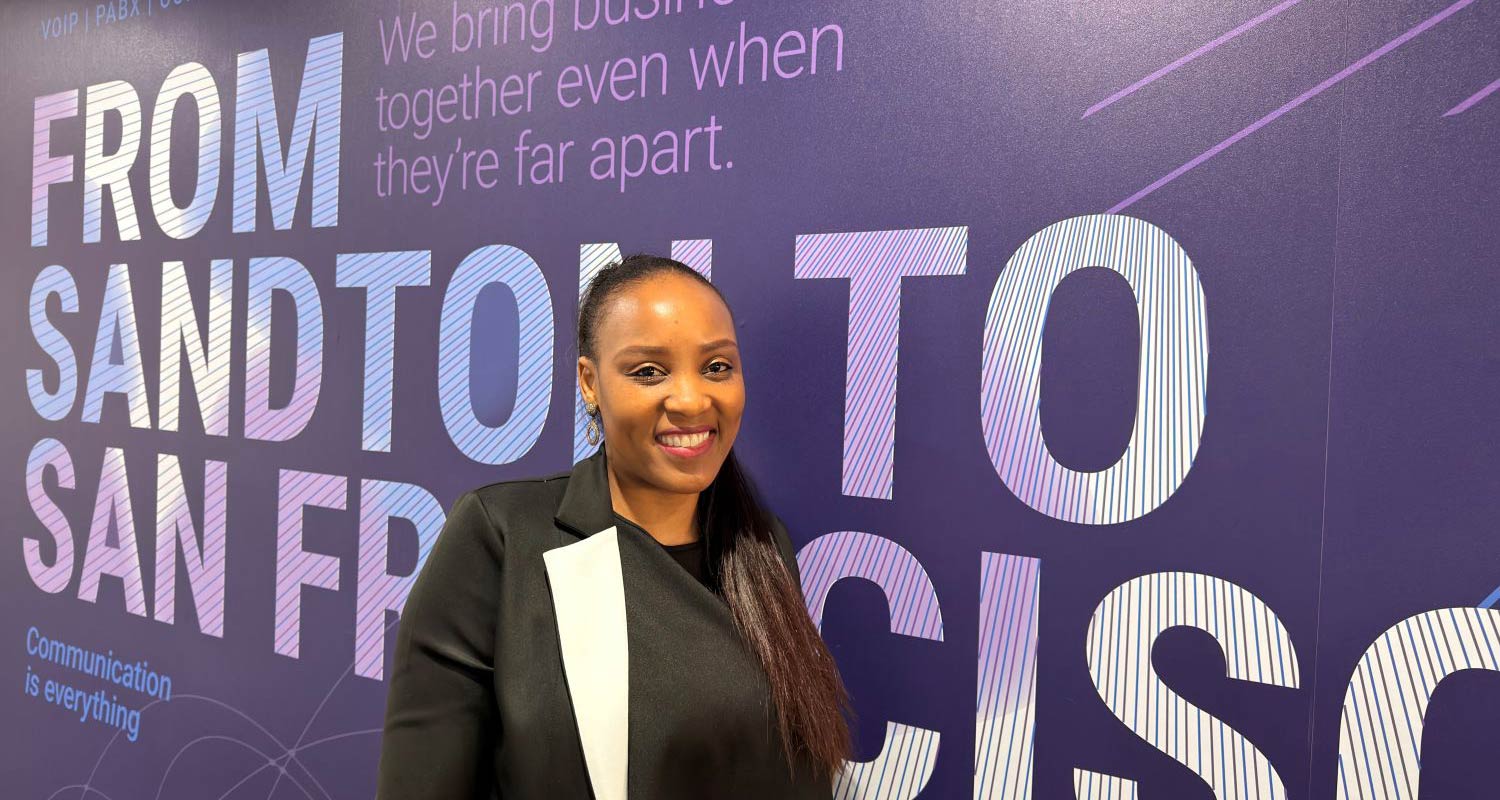
Elizabeth Makudubela is the company’s project office manager. Originally from Limpopo, she moved to Gauteng to study telecommunications at Tshwane University of Technology. In her third year she was recommended to Centracom and joined as a support engineer in February 2013. Eleven months later she moved into project coordination. Further training and mentoring followed, and she became a team leader before taking responsibility for the project office. She now manages a team of five and oversees project governance, reporting and service delivery across customers, suppliers and contractors.
A career path, not just a job
Centracom has funded short courses in project management, general management and leadership, including an advanced project management course she completed recently.
“Centracom didn’t just give me a job. It gave me a career path from support to leadership,” Makudubela says.
She points to others. The company’s network manager started as a level-1 service desk agent and now leads the team running Centracom’s entire voice and data network. Women hold senior executive and management positions.
In her own case, Makudubela says the company recognised her potential early and let her develop where technical training was not restricted by gender. She was often the only woman in the room at technical training sessions. Rather than being steered away from a male-dominated environment, she was given the chance to learn and prove herself.
Individual mentors and former colleagues helped her build technical and management skills. “The most important thing is recognising that women’s empowerment is important,” she says. “They should recognise talent, pick up these young women and show them that there’s a role and there’s a space for them in the telecommunications and IT industry.”

Where the imbalance persists
Space for women in telecoms remains most limited in technical roles. Makudubela says she has seen a persistent imbalance among field technicians, engineers and cybersecurity professionals. Women can do these jobs, she argues, but are held back by social expectations, confidence and the assumption that certain work is inherently male.
She met that assumption early, when male customers questioned whether a young woman could provide sufficiently technical support. Her answer was to learn more. “Not everybody will like it,” she says. “The best thing you can do for yourself is just to keep flourishing, keep growing and keep teaching yourself.”
Opportunity rather than special treatment
Makudubela rejects the idea that women need to fit a particular model to succeed in technology. Patience, listening and the ability to manage competing demands matter in technical and project environments, she says, particularly where delivery depends as much on communication and coordination as on the technology itself.
Her argument is about opportunity rather than special treatment. South African telecoms faces growing demand for skills as 5G, fibre and rural connectivity expand. Shutting women out of technical career paths narrows a pipeline that is already thin.
She is now doing for her own team what was done for her. Running her own business is a longer-term ambition; developing others is the immediate one.
“The sky’s the limit,” she says. “Women shouldn’t be intimidated. They should become who they want to be and push to reach those levels.”
For an industry short of specialised skills, her case is that the next generation of technical leaders may already be on the payroll.
- Read more articles by Centracom on TechCentral
- This promoted content was paid for by the party concerned