Close Menu
TechCentralTechCentral

    Subscribe to the newsletter

    Get the best South African technology news and analysis delivered to your e-mail inbox every morning.

    Facebook X (Twitter) YouTube LinkedIn
    WhatsApp Facebook X (Twitter) LinkedIn YouTube
    TechCentralTechCentral
    • News
      Every plug-in hybrid on sale in South Africa, ranked by price - Lamborghini Temerario

      Every plug-in hybrid on sale in South Africa, ranked by price

      7 June 2026
      SpaceX IPO set to be two times oversubscribed

      Everyone wants a piece of SpaceX

      7 June 2026
      OpenAI plans ChatGPT 'super app'

      OpenAI plans ChatGPT ‘super app’

      7 June 2026
      Cabinet hands the Post Office a board, but not a bailout

      Cabinet hands the Post Office a board, but not a bailout

      5 June 2026
      In South Africa, the bundle is the new battleground

      In South Africa, the bundle is the new battleground

      5 June 2026
    • World
      Meta takes on OpenAI and Anthropic in enterprise AI

      Meta takes on OpenAI and Anthropic in enterprise AI

      4 June 2026
      AI demand sparks 'chipflation' warning

      AI demand sparks ‘chipflation’ warning

      4 June 2026
      Astronomers discover exoplanets with magnetic fields

      Strange winds reveal magnetic fields on distant ‘hot Jupiters’

      2 June 2026
      AI giant Anthropic files for landmark US listing

      AI giant Anthropic files for landmark US listing

      1 June 2026
      Dell guns for MacBook Neo with low-cost laptop

      Dell guns for MacBook Neo with low-cost laptop

      1 June 2026
    • In-depth
      What Wi-Fi 8 will mean for wireless networks

      What Wi-Fi 8 will mean for wireless networks

      1 June 2026
      Alfa's electric rebel - Alfa Romeo Junior Elettrica Veloce

      Alfa’s electric rebel

      29 April 2026
      Africa switches on as Europe dims the lights

      Africa switches on as Europe dims the lights

      9 April 2026
      The biggest untapped EV market on Earth is hiding in plain sight

      The biggest untapped EV market on Earth is hiding in plain sight

      1 April 2026
      AI, cybersecurity power standout year for Datatec - Jens Montanana

      The R16-billion tech giant hiding in plain sight

      26 March 2026
    • TCS
      TCS | Charge's R1.8-billion bet on an off-grid EV future - Charge chairman Joubert Roux

      TCS | Charge’s R1.8-billion bet on an off-grid EV future

      18 May 2026
      TCS+ | The Up&Up Group on the hidden cost of AI - Jason Harrison

      TCS+ | The Up&Up Group on the hidden cost of AI

      13 May 2026
      Michael Rossouw

      TCS+ | The retirement decision most South Africans get wrong

      6 May 2026
      TCS | The Cape Town start-up listening for TB with AI - Braden van Breda

      TCS | The Cape Town start-up listening for TB with AI

      4 May 2026

      TCS+ | ‘The ISP for ISPs’: Vox’s shift to wholesale aggregator

      20 April 2026
    • Opinion

      Clashing judgments leave South Africa’s crypto law unsettled

      2 June 2026
      The author, Pambos Soteriades

      The trap inside South Africa’s banking MVNO boom

      1 June 2026
      The hidden cost of social media age bans is everyone's privacy - Petrus Potgieter

      The hidden cost of social media age bans is everyone’s privacy

      29 May 2026
      Treasury's crypto crackdown is a betrayal of Mandela's promise - Duncan McLeod

      Treasury’s crypto crackdown is a betrayal of Mandela’s promise

      22 May 2026
      South Africa is sleepwalking into another AI policy failure - Celeste Labuschagne

      South Africa is sleepwalking into another AI policy failure

      20 May 2026
    • Company Hubs
      • 1Stream
      • Africa Data Centres
      • AfriGIS
      • Altron Digital Business
      • Altron Document Solutions
      • Altron Group
      • Arctic Wolf
      • Ascent Technology
      • AvertITD
      • BBD
      • Braintree
      • CallMiner
      • CambriLearn
      • CM Telecom
      • Contactable
      • CYBER1 Solutions
      • Digicloud Africa
      • Digimune
      • Domains.co.za
      • ESET
      • Euphoria Telecom
      • HOSTAFRICA
      • Incredible Business
      • iONLINE
      • IQbusiness
      • Iris Network Systems
      • Kaspersky
      • LSD Open
      • Mitel
      • NEC XON
      • Netstar
      • Network Platforms
      • Next DLP
      • Ovations
      • Paracon
      • Paratus
      • Q-KON
      • SevenC
      • SkyWire
      • Solid8 Technologies
      • Telit Cinterion
      • Telviva
      • Tenable
      • Vertiv
      • Videri Digital
      • Vodacom Business
      • Wipro
      • Workday
      • XLink
    • Sections
      • AI and machine learning
      • Banking
      • Broadcasting and Media
      • Cloud services
      • Contact centres and CX
      • Cryptocurrencies
      • Education and skills
      • Electronics and hardware
      • Energy and sustainability
      • Enterprise software
      • Financial services
      • HealthTech
      • Information security
      • Internet and connectivity
      • Internet of Things
      • Investment
      • IT services
      • Lifestyle
      • Motoring
      • Policy and regulation
      • Public sector
      • Retail and e-commerce
      • Satellite communications
      • Science
      • SMEs and start-ups
      • Social media
      • Talent and leadership
      • Telecoms
    • Events
    • Advertise
    TechCentralTechCentral
    Home » Sections » Energy and sustainability » Why Eskom’s power stations are always breaking down

    Why Eskom’s power stations are always breaking down

    Eskom has stated that boiler-tube failures are the leading cause of unavailability of power generation. Why?
    By Neil Thomas Stacey12 December 2022
    Twitter LinkedIn Facebook WhatsApp Email Telegram Copy Link
    News Alerts
    WhatsApp

    For the time being at least, coal-fired boilers remain the backbone of Eskom’s electricity generation fleet. Coal-fired boilers work by boiling water to produce high-pressure steam that is then used to spin a turbine. To do this, water is pumped at high pressure through boiler tubes that are heated by a coal-fired furnace to produce high-pressure steam.

    This combination of extreme pressure and temperature places severe stress on these tubes and, over time, they corrode and fail, sometimes accelerated by the presence of corrosive chemicals in the hot furnace gases. This corrosion inevitably results in a rupture and requiring that the whole unit be shut down for maintenance. These occasional failures are a normal part of a power station’s operation, and are factored into power generation planning. When they happen more often than expected, however, they result in under-delivery of power and, in South Africa’s case, load shedding.

    Eskom has stated that boiler-tube failures are the leading cause of unavailability of power generation or, in simpler terms, they are the main culprits for load shedding. The rate at which these failures occur has been rising. Eskom set itself a target of one tube failure per year per unit but, as of 2021, were averaging 2.3 failures a year. One can only assume that this number has been rising since then, with 2022 by far our worst year of load shedding ever.

    Eskom set itself a target of one tube failure per year per unit but, as of 2021, were averaging 2.3 failures a year

    On 8 December it was reported that Eskom’s coal fleet was operating with just 40% of its installed capacity available, woefully short of its stated target, a more normal 75% availability. Part of the problem lies in maintenance. Eskom has reported that funding delays, among other issues, often force it to delay planned maintenance on units, heightening the risk of failure, particularly unexpected failure. Perhaps more alarming, when maintenance is carried out, it doesn’t always meet standards and the units fail anyway.

    Researchers at Wits, however, have identified underlying causes that are more fundamental to the coal fleet’s chronic boiler-tube failures.

    Prof Josias van der Merwe, the head of the Wits School of Chemical and Metallurgical Engineering, and KG Moloko, a postgraduate researcher in that school, have conducted a range of chemical analyses on boiler tubes from Eskom power stations to determine the mechanisms and causes behind their corrosion.

    ‘Suphidation’

    They found that the main culprit is “sulphidation”, a chemical process that degrades steel through the formation of brittle compounds of iron and sulphur. Two chemical conditions must be in place for this to occur – the presence of sulphur, and a low concentration of oxygen, which allows the sulphur to react with iron rather than being oxidised.

    The Wits analyses indicate that these conditions are both present in the Eskom boilers that they examined, creating chemical pre-conditions that lead to heightened rates of corrosion and frequent failures.

    There is no doubt that Eskom is beset by a multitude of crises ranging from shortages in funding and personnel, along with an ageing fleet that has been overworked to keep the lights on, and even sabotage and threats of violence.

    Nevertheless, as long as the chemical pre-conditions for high failure rates are present, energy availability will remain low even if these issues were resolved and, perhaps more concerning, availability could deteriorate further still as more units fail.

    Eliminating or mitigating the chemical pre-conditions for high failure rates, therefore, is a crucial first step that must be taken for Eskom to start working its way back towards a functioning coal fleet. Unfortunately, it is more easily said than done.
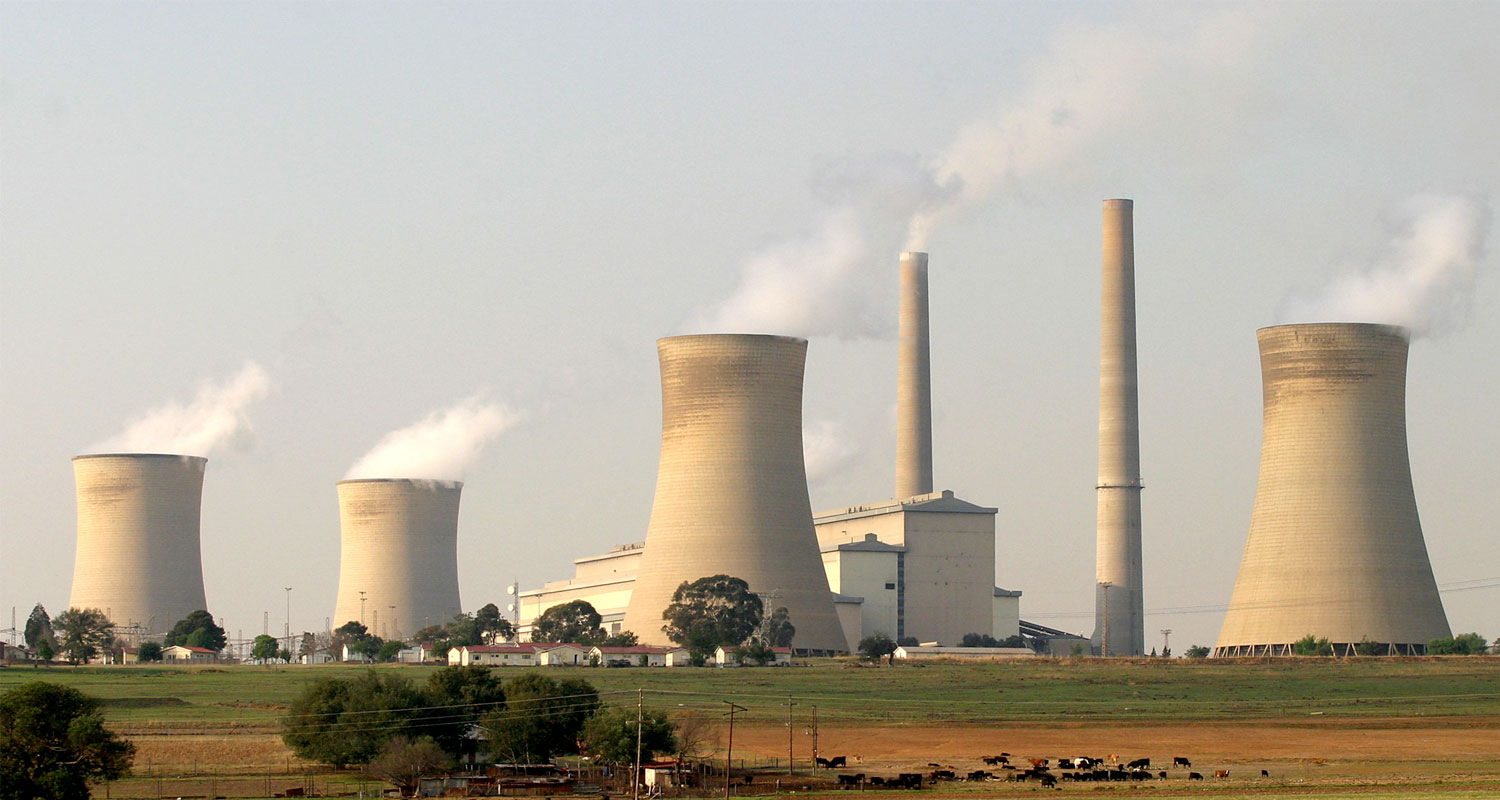
    The first root cause of these chemical conditions is high sulphur content in the coal fed to the burners. Coal reserves vary considerably in their sulphur content and, generally speaking, lower sulphur content coal comes with a higher price tag because the presence of sulphur is problematic for most coal uses. Sulphur also results in emissions that are damaging to the environment and to human health.

    As with most mining activities, the most appealing reserves tend to be mined first and therefore, the standards of remaining reserves decline over time. This trend is one factor in the declining performance of Eskom’s coal fleet, but several scientific articles have found that South Africa’s coal reserves are generally low in sulphur and so, in principle, they should be able to avoid sulphur-driven corrosion if motivated to do so.

    The issue, then, is not what coal South Africa has, but what coal Eskom chooses to buy and use. This has long been a politicised matter and Eskom has a proven history of purchasing substandard coal, having spent hundreds of millions purchasing coal containing 2% sulphur from the Gupta-owned Tegeta mining, well above the specified limit of 1.3%.

    Investigators also found evidence that coal inspection processes had been interfered with, with samples from one mine allegedly swapped out to obscure their sulphur content.

    Other aspects of coal quality have come to light previously, with reports that some of the coal supplied to Eskom is even mixed with sand and rocks as a means of increasing the weight of what is sold. The fact that such obviously substandard product manages to make it into Eskom’s boilers reveals shocking deficiencies in inspection and quality control, leaving South Africa entirely at the mercy of unscrupulous coal producers.

    Some of the coal supplied to Eskom is even mixed with sand and rocks as a means of increasing the weight of what is sold

    The second chemical pre-condition identified by the Wits researchers, low oxygen levels inside the boiler tubes, is itself a complex operational issue.

    I asked Prof Van der Merwe whether feeding higher ratios of air to coal could reduce the rate at which this type of corrosion occurs and he indicated that while it may help, it would result in increased emissions of NOx compounds which have extremely high global warming potential (many times that of CO2), as well as a range of detrimental health effects. The main reason that boilers are operated in conditions of restricted oxygen is to prevent the formation of these compounds, which form when oxygen and nitrogen (the main constituents of air) react together at high temperatures.

    That may be a trade-off that South Africa simply has to accept as a stopgap to slow the fleet’s deterioration, while Eskom hopefully finds a way to switch to coal of an adequate standard – a task which should be treated as a key national priority.

    • The author, Neil Thomas Stacey, lectures in biomedical engineering and on waste-water management at Wits University
    • This article was originally published by GroundUp and is republished here under a under a Creative Commons Attribution-NoDerivatives 4.0 International Licence. Read the original article here

    Get TechCentral’s daily newsletter

    Follow TechCentral on Google News Add TechCentral as your preferred source on Google


    Eskom Josias van der Merwe KG Moloko Neil Thomas Stacey
    WhatsApp YouTube
    Share. Facebook Twitter LinkedIn WhatsApp Telegram Email Copy Link
    Previous ArticleJoburg seeks three-day exemption from Eskom load shedding
    Next Article The US is poised to announce a breakthrough in fusion energy

    Related Posts

    Moody's flags risk in Eskom grid split

    Moody’s flags risk in Eskom grid split

    1 June 2026
    SA telecoms industry veteran appointed to top Eskom job - Junaid Munshi

    SA telecoms industry veteran appointed to top Eskom job

    29 May 2026
    Eskom breaks ground on R1.2-billion Lethabo solar plant

    Eskom breaks ground on R1.2-billion Lethabo solar plant

    27 May 2026
    Company News
    The real hurdle for South Africa's AI voicebots isn't the AI - 1Stream

    The real hurdle for South Africa’s AI voicebots isn’t the AI

    5 June 2026
    The real cloud challenge isn't adoption – it's doing it well

    The real cloud challenge isn’t adoption – it’s doing it well

    5 June 2026
    Payments Live returns to Johannesburg for 2nd edition

    Payments Live returns to Johannesburg for 2nd edition

    4 June 2026
    Opinion

    Clashing judgments leave South Africa’s crypto law unsettled

    2 June 2026
    The author, Pambos Soteriades

    The trap inside South Africa’s banking MVNO boom

    1 June 2026
    The hidden cost of social media age bans is everyone's privacy - Petrus Potgieter

    The hidden cost of social media age bans is everyone’s privacy

    29 May 2026

    Subscribe to Updates

    Get the best South African technology news and analysis delivered to your e-mail inbox every morning.

    Latest Posts
    Every plug-in hybrid on sale in South Africa, ranked by price - Lamborghini Temerario

    Every plug-in hybrid on sale in South Africa, ranked by price

    7 June 2026
    SpaceX IPO set to be two times oversubscribed

    Everyone wants a piece of SpaceX

    7 June 2026
    OpenAI plans ChatGPT 'super app'

    OpenAI plans ChatGPT ‘super app’

    7 June 2026
    Cabinet hands the Post Office a board, but not a bailout

    Cabinet hands the Post Office a board, but not a bailout

    5 June 2026
    © 2009 - 2026 NewsCentral Media
    • Cookie policy (ZA)
    • TechCentral – privacy and Popia

    Type above and press Enter to search. Press Esc to cancel.

    Manage consent

    TechCentral uses cookies to enhance its offerings. Consenting to these technologies allows us to serve you better. Not consenting or withdrawing consent may adversely affect certain features and functions of the website.

    Functional Always active
    The technical storage or access is strictly necessary for the legitimate purpose of enabling the use of a specific service explicitly requested by the subscriber or user, or for the sole purpose of carrying out the transmission of a communication over an electronic communications network.
    Preferences
    The technical storage or access is necessary for the legitimate purpose of storing preferences that are not requested by the subscriber or user.
    Statistics
    The technical storage or access that is used exclusively for statistical purposes. The technical storage or access that is used exclusively for anonymous statistical purposes. Without a subpoena, voluntary compliance on the part of your Internet Service Provider, or additional records from a third party, information stored or retrieved for this purpose alone cannot usually be used to identify you.
    Marketing
    The technical storage or access is required to create user profiles to send advertising, or to track the user on a website or across several websites for similar marketing purposes.
    • Manage options
    • Manage services
    • Manage {vendor_count} vendors
    • Read more about these purposes
    View preferences
    • {title}
    • {title}
    • {title}