Close Menu
TechCentralTechCentral

    Subscribe to the newsletter

    Get the best South African technology news and analysis delivered to your e-mail inbox every morning.

    Facebook X (Twitter) YouTube LinkedIn
    WhatsApp Facebook X (Twitter) LinkedIn YouTube
    TechCentralTechCentral
    • News
      Nedbank hires MTN's former tech chief as group CIO - Nikos Angelopoulos

      Nedbank hires MTN’s former tech chief as group CIO

      31 July 2026
      Eskom's diesel bill falls 86% as breakdowns hit eight-year low

      Eskom’s diesel bill falls 86% as breakdowns hit eight-year low

      31 July 2026
      Ramaphosa signs off on taking the grid away from Eskom

      Ramaphosa signs off on taking the grid away from Eskom

      31 July 2026
      Microsoft just had the biggest day in stock market history

      Microsoft just had the biggest day in stock market history

      31 July 2026
      MTN Nigeria's growth engine stalled in second quarter - Karl Toriola

      MTN Nigeria’s growth engine stalled in second quarter

      31 July 2026
    • World
      Meta AI will now tell parents if their teen is in crisis

      Meta AI will now tell parents if their teen is in crisis

      17 July 2026
      IBM shares crash 25% as AI upends software spending - Arvind Krishna

      IBM shares crash 25% as AI upends software spending

      15 July 2026
      Jony Ive's first OpenAI device: an AI smart speaker - Jony Ive and Sam Altman

      Jony Ive’s first OpenAI device: an AI smart speaker

      15 July 2026
      Stripe, Advent in talks to buy PayPal for $53-billion

      Stripe, Advent in talks to buy PayPal for $53-billion

      15 July 2026
      Memory crisis sends smartphone market into steep decline

      Memory crisis sends smartphone market into steep decline

      13 July 2026
    • In-depth
      The plan to stop AI from breaking the world - Google DeepMind CEO Demis Hassabis. Image: John Sears

      The plan to stop AI from breaking the world

      16 July 2026
      The internet has a Strait of Hormuz problem

      The internet has a Strait of Hormuz problem

      15 July 2026
      AI boom sparks rally, frenzy and fear

      AI boom sparks rally, frenzy and fear

      11 June 2026
      Every plug-in hybrid on sale in South Africa, ranked by price - Lamborghini Temerario

      Every plug-in hybrid on sale in South Africa, ranked by price

      7 June 2026
      What Wi-Fi 8 will mean for wireless networks

      What Wi-Fi 8 will mean for wireless networks

      1 June 2026
    • TCS
      TCS+ | Why South African workers must become supervisors of digital labour - Accelera Digital Group Cliff de Wit

      TCS+ | Why South African workers must become supervisors of digital labour

      31 July 2026
      TCS | Rapid deployment rules can't work without municipalities: ACT - Nomvuyiso Batyi

      TCS | Icasa’s rules skip the real bottleneck: ACT

      30 July 2026
      TCS+ | iStore Business on why Apple makes sense for SMEs - Sudesh Pillay and Tamia Nontsikelelo

      TCS+ | iStore Business on why Apple makes sense for SMEs

      30 July 2026
      TCS+ | A smarter approach to cloud for South African businesses - Joel Chacko and Jonathan Oaker

      TCS+ | A smarter approach to cloud for South African businesses

      28 July 2026
      TCS | How Optasia lends billions to people banks can't see - Salvador Anglada

      TCS | How Optasia lends billions to people banks can’t see

      23 July 2026
    • Opinion
      The author, Jannie van Zyl

      Selling vapour is corporate suicide in slow motion

      16 July 2026
      Brazil's online gambling crackdown is a lesson for South Africa

      How Amazon outmanoeuvred Starlink in South Africa

      15 July 2026
      The Popia problem with agentic AI - Herman Haasbroek

      The Popia problem with agentic AI

      14 July 2026
      The author, Fanie van Rooyen

      South Africa can still catch the AI wave – here’s how

      7 July 2026
      The author, Fanie van Rooyen

      The AI utopia South Africa can’t afford

      1 July 2026
    • Company Hubs
      • 1Stream
      • Africa Data Centres
      • AfriGIS
      • Altron Digital Business
      • Altron Document Solutions
      • Altron Group
      • Arctic Wolf
      • Ascent Technology
      • AvertITD
      • BBD
      • Braintree
      • CallMiner
      • CambriLearn
      • CM Telecom
      • Contactable
      • CYBER1 Solutions
      • Digicloud Africa
      • Digimune
      • Domains.co.za
      • ESET
      • Euphoria Telecom
      • HOSTAFRICA
      • Incredible Business
      • iONLINE
      • IQbusiness
      • Iris Network Systems
      • Kaspersky
      • LSD Open
      • Mitel
      • NEC XON
      • Netstar
      • Network Platforms
      • Next DLP
      • Ovations
      • Paracon
      • Paratus
      • Q-KON
      • SevenC
      • SkyWire
      • Solid8 Technologies
      • Telit Cinterion
      • Telviva
      • Tenable
      • Vertiv
      • Videri Digital
      • Vodacom Business
      • Vox
      • Wipro
      • Workday
      • XLink
    • Sections
      • AI and machine learning
      • Banking
      • Broadcasting and Media
      • Cloud services
      • Contact centres and CX
      • Cryptocurrencies
      • Education and skills
      • Electronics and hardware
      • Energy and sustainability
      • Enterprise software
      • Financial services
      • HealthTech
      • Information security
      • Internet and connectivity
      • Internet of Things
      • Investment
      • IT services
      • Lifestyle
      • Policy and regulation
      • Public sector
      • Retail and e-commerce
      • Satellite communications
      • Science
      • SMEs and start-ups
      • Social media
      • Talent and leadership
      • Telecoms
      • Watts & Wheels
    • Events
    • Advertise
    TechCentralTechCentral
    Home » Sections » Why is everyone so obsessed with going to Mars?

    Why is everyone so obsessed with going to Mars?

    By The Conversation17 June 2021
    Twitter LinkedIn Facebook WhatsApp Email Telegram Copy Link
    News Alerts
    WhatsApp
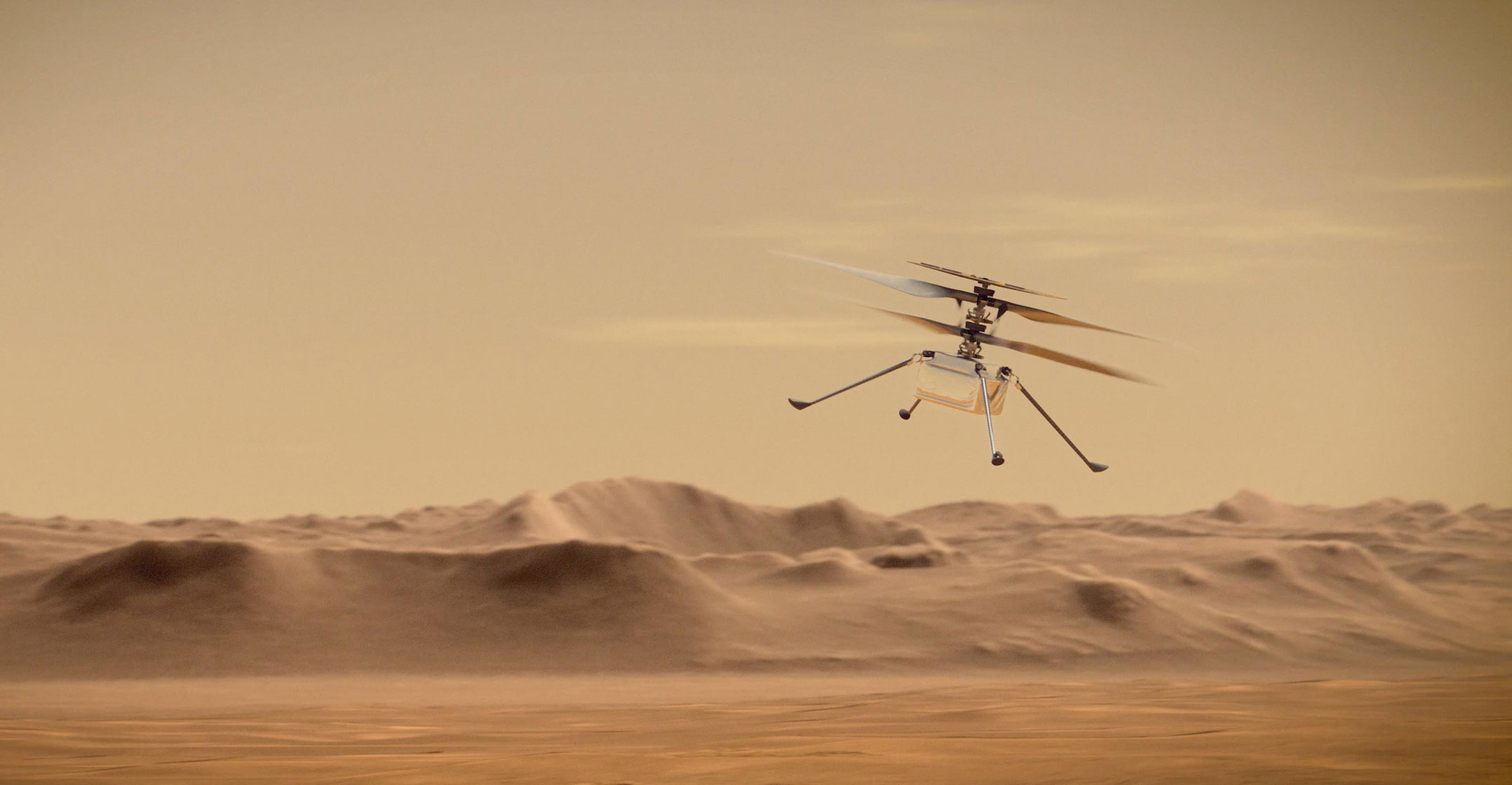
    An artist’s concept of Nasa’s Ingenuity Mars Helicopter flying through the Red Planet’s skies. Nasa/JPL-Caltech

    Last month, China successfully landed and deployed the Zhurong rover on Mars, becoming the second country ever to set wheels on the surface of the Red Planet.

    Last year, the US, the United Arab Emirates and China all launched missions to Mars, taking advantage of the relatively short journey time offered by the two planets’ unusually close proximity.

    Why are planetary scientists so obsessed with Mars? Why spend so much time and money on this one planet when there are at least seven others in our solar system, more than 200 moons, countless asteroids and much more besides?

    Fortunately, we are going to other worlds, and there are lots of missions to very exciting places in our solar system

    Fortunately, we are going to other worlds, and there are lots of missions to very exciting places in our solar system — worlds bursting with exotic features such as ice volcanoes, rings of icy debris and huge magnetic fields.

    There are currently 26 active spacecraft dotted around our solar system. Some are orbiting other planets and moons, some have landed on the surfaces of other worlds, and some have performed fly-bys to beam back images. Only half of them are visiting Mars.

    Long-term missions

    Included in those 26 spacecraft are long-term missions like Voyager 1 and 2 — which are still operational after over 40 years and have now left the solar system and ventured into interstellar space. And it also includes some less famous but no less weird and wonderful spacecraft.

    Take the Juno spacecraft in orbit around Jupiter, for example. Launched in 2011, it arrived in orbit around Jupiter almost five years later. It is now measuring various properties of the giant planet, including its magnetic field and atmospheric conditions, and determining how much water is in Jupiter’s atmosphere. This will help theorists work out which planet formation theory is correct (or if new theories are needed). Juno has already surpassed its planned seven-year mission duration, and has been extended to at least 2025.

    One of the most complex feats of astrodynamics was completed late last year when the Japanese Space Agency (Jaxa) not only landed a spacecraft on an asteroid, but in a spectacular slingshot manoeuvre, returned a sample to Earth.
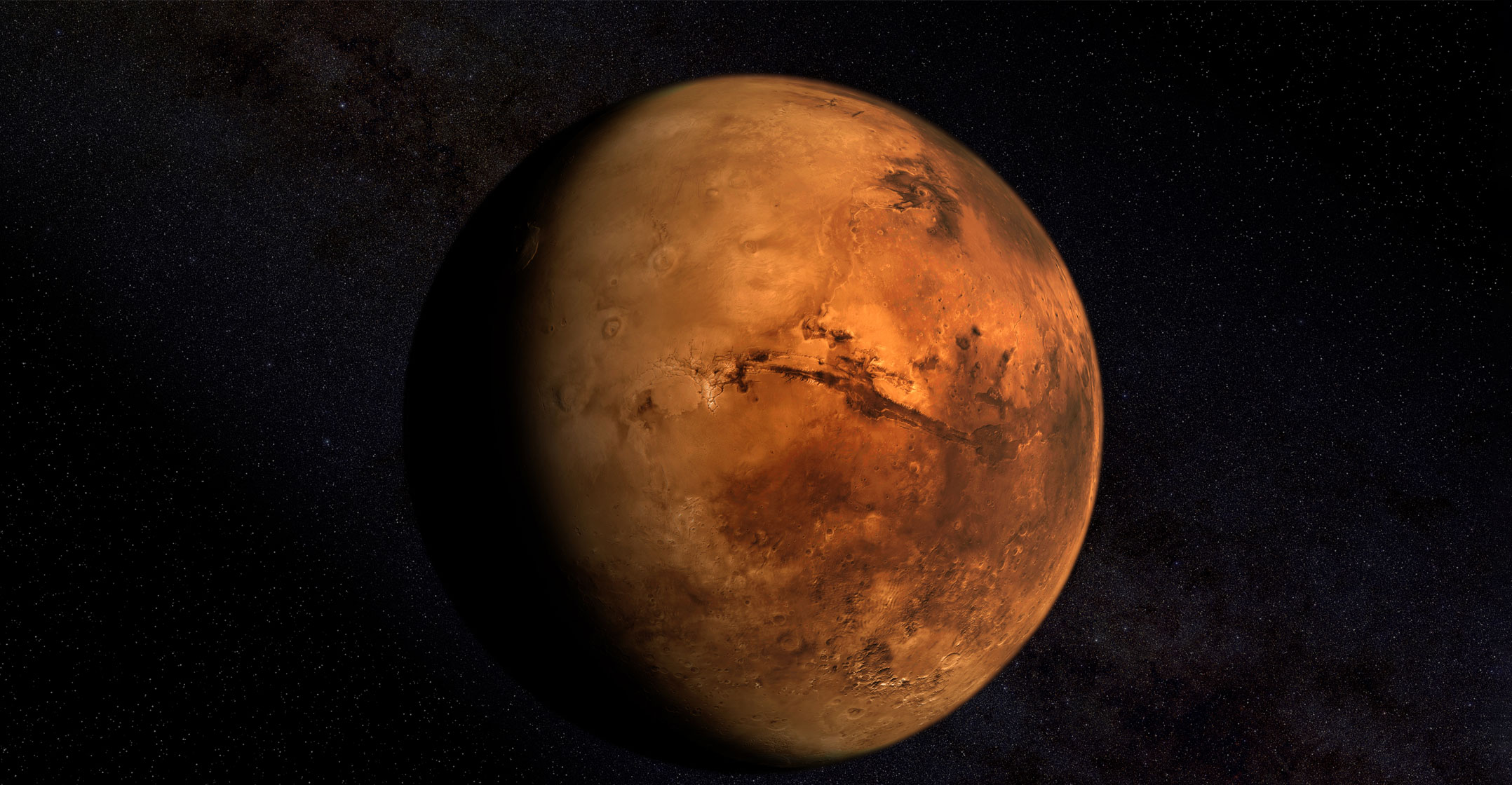
    Mars … the Red Planet

    Hayabusa2, named after the Japanese term for a peregrine falcon, completed a rendezvous with asteroid 162173 Ryugu in 2018, surveying the surface and taking samples.

    Departing in 2019, Hayabusa2 used its ion engines to change orbit and return to Earth. On 5 December 2020, a sample-return capsule about the size of a hatbox and weighing 16kg was dropped through Earth’s atmosphere, landing unscathed at the Woomera Test Range in Australia.

    As Jaxa begins analysing the rocks and dust collected on the Ryugu asteroid, Hayabusa2 is off on its travels once more — this time to meet up with a second asteroid, 1998 KY_(26), sometime in 2031.

    Governments tend to allocate relatively small amounts of their budgets to science and space exploration

    Not included in the list of planetary missions earlier are those spacecraft trapped in “gravitational wells” within our solar system.

    There are special locations in orbits called “Lagrangian points”, which are gravitationally balanced spots between two bodies.

    The Solar and Heliospheric Observatory (Soho) is one of four spacecraft close to the Lagrangian point between the Earth and the sun, roughly 1.5km from Earth (about four times further away than the moon).

    Early warnings

    It makes observations of the sun’s outer layer and the solar wind, sending early warning back to Earth of potentially disastrous space weather. Geomagnetic storms from the sun are powerful enough to hit the Earth with electromagnetic blasts so strong they have been known to take out countrywide power grids.

    Another hostile location is our nearest planetary neighbour, Venus. Despite the searing temperatures and crushing pressures on the surface, Nasa recently approved funding for two big missions to explore the origins of Venus and its atmosphere. The discovery of phosphine gas in the upper atmosphere led life scientists to believe life may exist at the more habitable and cooler temperatures of higher altitudes.

    Hot on the heels of the successful flight of the Ingenuity helicopter on Mars — the first flight of any powered aircraft on another world — Nasa’s Dragonfly mission will fly a drone through the atmosphere of Saturn’s icy moon, Titan. Launching in 2026 and arriving in 2034, the rotorcraft will fly to dozens of promising locations on Titan looking for any chemical precursors or life similar to those on Earth.
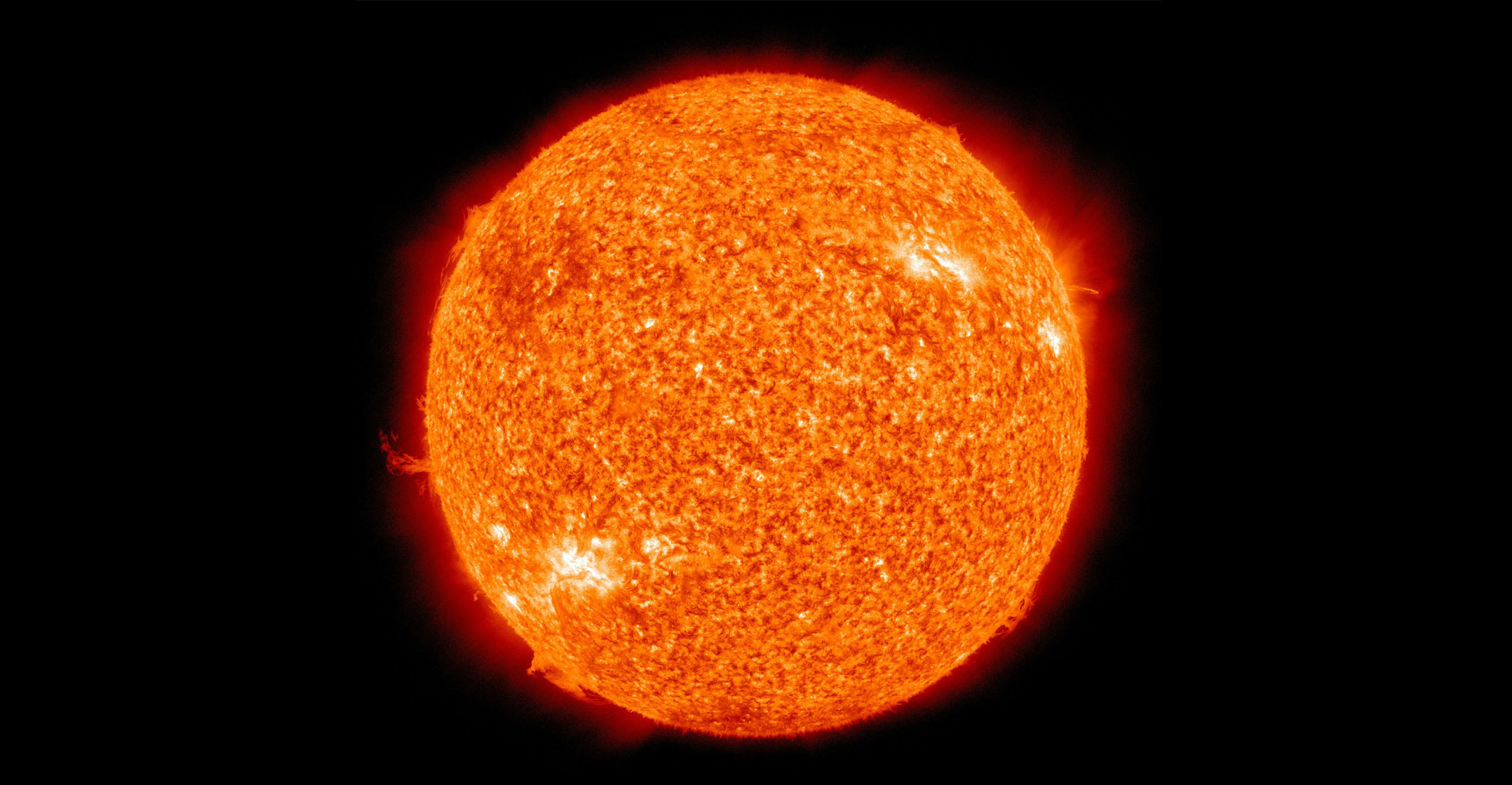
    The sun

    Governments tend to allocate relatively small amounts of their budgets to science and space exploration. Countries typically spend less than 1% of their budget on space missions — far less than social services or military defence.

    Deciding what space missions will receive that money is very often driven by public interest. But trying to decide definitively which probe or spacecraft offers the most bang for buck is almost impossible.

    When humans first set foot on the moon, 25% of the world’s population watched the video with bated breath, inspiring several generations of space explorers. You can’t put a price on that.The Conversation

    • Written by Gail Iles, senior lecturer in physics, RMIT University
    • This article is republished from The Conversation under a Creative Commons licence

    Follow TechCentral on Google News Add TechCentral as your preferred source on Google


    Jaxa Nasa top Voyager 1 Voyager 2 Zhurong Zhurong rover
    WhatsApp YouTube
    Share. Facebook Twitter LinkedIn WhatsApp Telegram Email Copy Link
    Previous ArticleCovid-19 is surging across Africa, with fewer than 1% vaccinated
    Next Article Former Telkom chairman Jabu Mabuza dies, age 63

    Related Posts

    SpaceX is the Dutch East India Company of the space age

    SpaceX is the Dutch East India Company of the space age

    15 July 2026
    More organic compounds detected on Mars - Nasa Curiosity rover

    More organic compounds detected on Mars

    21 April 2026

    The cameras behind Artemis II’s stunning lunar images

    15 April 2026
    Company News
    Domains.co.za launches self-hosted n8n VPS hosting

    Domains.co.za launches self-hosted n8n VPS hosting

    31 July 2026
    Smarter.tech '26 shows why smarter technology begins with context - Obsidian Systems

    Context is the missing piece in enterprise AI: Obsidian

    31 July 2026
    Huawei launches 12 intelligent transport solutions in South Africa - Sam Tang

    Huawei launches 12 intelligent transport solutions in South Africa

    30 July 2026
    Opinion
    The author, Jannie van Zyl

    Selling vapour is corporate suicide in slow motion

    16 July 2026
    Brazil's online gambling crackdown is a lesson for South Africa

    How Amazon outmanoeuvred Starlink in South Africa

    15 July 2026
    The Popia problem with agentic AI - Herman Haasbroek

    The Popia problem with agentic AI

    14 July 2026

    Subscribe to Updates

    Get the best South African technology news and analysis delivered to your e-mail inbox every morning.

    Latest Posts
    Nedbank hires MTN's former tech chief as group CIO - Nikos Angelopoulos

    Nedbank hires MTN’s former tech chief as group CIO

    31 July 2026
    Eskom's diesel bill falls 86% as breakdowns hit eight-year low

    Eskom’s diesel bill falls 86% as breakdowns hit eight-year low

    31 July 2026
    Ramaphosa signs off on taking the grid away from Eskom

    Ramaphosa signs off on taking the grid away from Eskom

    31 July 2026
    TCS+ | Why South African workers must become supervisors of digital labour - Accelera Digital Group Cliff de Wit

    TCS+ | Why South African workers must become supervisors of digital labour

    31 July 2026
    © 2009 - 2026 NewsCentral Media
    Built and maintained by Chronon
    • Cookie policy (ZA)
    • TechCentral – privacy and Popia

    Type above and press Enter to search. Press Esc to cancel.

    Manage consent

    TechCentral uses cookies to enhance its offerings. Consenting to these technologies allows us to serve you better. Not consenting or withdrawing consent may adversely affect certain features and functions of the website.

    Functional Always active
    The technical storage or access is strictly necessary for the legitimate purpose of enabling the use of a specific service explicitly requested by the subscriber or user, or for the sole purpose of carrying out the transmission of a communication over an electronic communications network.
    Preferences
    The technical storage or access is necessary for the legitimate purpose of storing preferences that are not requested by the subscriber or user.
    Statistics
    The technical storage or access that is used exclusively for statistical purposes. The technical storage or access that is used exclusively for anonymous statistical purposes. Without a subpoena, voluntary compliance on the part of your Internet Service Provider, or additional records from a third party, information stored or retrieved for this purpose alone cannot usually be used to identify you.
    Marketing
    The technical storage or access is required to create user profiles to send advertising, or to track the user on a website or across several websites for similar marketing purposes.
    • Manage options
    • Manage services
    • Manage {vendor_count} vendors
    • Read more about these purposes
    View preferences
    • {title}
    • {title}
    • {title}