Close Menu
TechCentralTechCentral

    Subscribe to the newsletter

    Get the best South African technology news and analysis delivered to your e-mail inbox every morning.

    Facebook X (Twitter) YouTube LinkedIn
    WhatsApp Facebook X (Twitter) LinkedIn YouTube
    TechCentralTechCentral
    • News
      Hyperscalers ate my next computer

      Hyperscalers ate my next computer

      8 May 2026
      Major African telco postpones mobile money listing

      Major African telco postpones mobile money listing

      8 May 2026
      Cabinet approves new permanent Sita board, ending years of turmoil - State IT Agency

      Cabinet approves new permanent Sita board, ending years of turmoil

      8 May 2026
      A 12-year-old competition case lands on Canal+'s desk - Altech Node

      A 12-year-old competition case lands on Canal+’s desk

      8 May 2026
      Why South Africa is Zoho's third-fastest-growing market - Andrew Bourne

      Why South Africa is Zoho’s third-fastest-growing market

      8 May 2026
    • World
      OpenAI's new audio APIs aim for conversational voice agents

      OpenAI’s new audio APIs aim for conversational voice agents

      8 May 2026
      'It was my idea': Musk claims paternity of OpenAI - Elon Musk

      ‘It was my idea’: Musk claims paternity of OpenAI

      29 April 2026
      Pivotal week for US tech stocks

      Pivotal week for US tech stocks

      28 April 2026
      Worries over OpenAI's growth as Anthropic gains ground - Sam Altman. Shelby Tauber/Reuters

      Worries over OpenAI’s growth as Anthropic gains ground

      28 April 2026
      Taylor Swift trademarks her voice to fight AI fakes

      Taylor Swift trademarks her voice to fight AI fakes

      28 April 2026
    • In-depth
      Alfa's electric rebel - Alfa Romeo Junior Elettrica Veloce

      Alfa’s electric rebel

      29 April 2026
      Africa switches on as Europe dims the lights

      Africa switches on as Europe dims the lights

      9 April 2026
      The biggest untapped EV market on Earth is hiding in plain sight

      The biggest untapped EV market on Earth is hiding in plain sight

      1 April 2026
      Datatec is firing on all cylinders - Jens Montanana

      The R16-billion tech giant hiding in plain sight

      26 March 2026
      The last generation of coders

      The last generation of coders

      18 February 2026
    • TCS
      Michael Rossouw

      TCS+ | The retirement decision most South Africans get wrong

      6 May 2026
      TCS | The Cape Town start-up listening for TB with AI - Braden van Breda

      TCS | The Cape Town start-up listening for TB with AI

      4 May 2026

      TCS+ | ‘The ISP for ISPs’: Vox’s shift to wholesale aggregator

      20 April 2026
      TCS | Werner Lindemann on how AI is rewriting the infosec rulebook

      TCS | Werner Lindemann on how AI is rewriting the infosec rulebook

      15 April 2026
      TCS | Donovan Marsh on AI and the future of filmmaking

      TCS | Donovan Marsh on AI and the future of filmmaking

      7 April 2026
    • Opinion
      Free calls, dead voice and Shameel Joosub's Spanish ghost - Duncan McLeod

      Free calls, dead voice and Shameel Joosub’s Spanish ghost

      22 April 2026
      The conflict of interest at the heart of PayShap's slow adoption - Cheslyn Jacobs

      The conflict of interest at the heart of PayShap’s slow adoption

      26 March 2026
      South Africa's energy future hinges on getting wheeling right - Aishah Gire

      South Africa’s energy future hinges on getting wheeling right

      10 March 2026
      Free calls, dead voice and Shameel Joosub's Spanish ghost - Duncan McLeod

      Apple just dropped a bomb on the Windows world

      5 March 2026
      R230-million in the bag for Endeavor's third Harvest Fund - Alison Collier

      VC’s centre of gravity is shifting – and South Africa is in the frame

      3 March 2026
    • Company Hubs
      • 1Stream
      • Africa Data Centres
      • AfriGIS
      • Altron Digital Business
      • Altron Document Solutions
      • Altron Group
      • Arctic Wolf
      • Ascent Technology
      • AvertITD
      • BBD
      • Braintree
      • CallMiner
      • CambriLearn
      • Contactable
      • CYBER1 Solutions
      • Digicloud Africa
      • Digimune
      • Domains.co.za
      • ESET
      • Euphoria Telecom
      • HOSTAFRICA
      • Incredible Business
      • iONLINE
      • IQbusiness
      • Iris Network Systems
      • Kaspersky
      • LSD Open
      • Mitel
      • NEC XON
      • Netstar
      • Network Platforms
      • Next DLP
      • Ovations
      • Paracon
      • Paratus
      • Q-KON
      • SevenC
      • SkyWire
      • Solid8 Technologies
      • Telit Cinterion
      • Telviva
      • Tenable
      • Vertiv
      • Videri Digital
      • Vodacom Business
      • Wipro
      • Workday
      • XLink
    • Sections
      • AI and machine learning
      • Banking
      • Broadcasting and Media
      • Cloud services
      • Contact centres and CX
      • Cryptocurrencies
      • Education and skills
      • Electronics and hardware
      • Energy and sustainability
      • Enterprise software
      • Financial services
      • HealthTech
      • Information security
      • Internet and connectivity
      • Internet of Things
      • Investment
      • IT services
      • Lifestyle
      • Motoring
      • Policy and regulation
      • Public sector
      • Retail and e-commerce
      • Satellite communications
      • Science
      • SMEs and start-ups
      • Social media
      • Talent and leadership
      • Telecoms
    • Events
    • Advertise
    TechCentralTechCentral
    Home » In-depth » Why paper maps still matter in the digital age

    Why paper maps still matter in the digital age

    By The Conversation23 January 2019
    Twitter LinkedIn Facebook WhatsApp Email Telegram Copy Link
    News Alerts
    WhatsApp

    Ted Florence is ready for his family trip to Botswana. He has looked up his hotel on Google Maps and downloaded a digital map of the country to his phone. He has also packed a large paper map. “I travel all over the world,” says Florence, the president of the international board of the International Map Industry Association and Avenza, a digital map software company. “Everywhere I go, my routine is the same: I get a paper map, and I keep it in my back pocket.”

    With the proliferation of smartphones, it’s easy to assume that the era of the paper map is over. That attitude, that digital is better than print, is what I call “technochauvinism”. In my book, Artificial Unintelligence: How Computers Misunderstand the World, I look at how technochauvinism has been used to create an unnecessary, occasionally harmful bias for digital over print or any other kind of interface. A glance at the research reveals that the paper map still thrives in the digital era, and there are distinct advantages to using print maps.

    Cognitive researchers generally make a distinction between surface knowledge and deep knowledge. Experts have deep knowledge of a subject or a geography; amateurs have surface knowledge.

    With the proliferation of smartphones, it’s easy to assume that the era of the paper map is over

    Digital interfaces are good for acquiring surface knowledge. Answering the question, “How do I get from the airport to my hotel in a new-to-me city?” is a pragmatic problem that requires only shallow information to answer. If you’re travelling to a city for only 24 hours for a business meeting, there’s usually no need to learn much about a city’s layout.

    When you live in a place, or you want to travel meaningfully, deep knowledge of the geography will help you to navigate it and to understand its culture and history. Print maps help you acquire deep knowledge faster and more efficiently. In experiments, people who read on paper consistently demonstrate better reading comprehension than people who read the same material on a screen. A 2013 study showed that, as a person’s geographic skill increases, so does their preference for paper maps.

    Cognitive map

    For me, the difference between deep knowledge and surface knowledge is the difference between what I know about New York City, where I have lived for years, and San Francisco, which I have visited only a handful of times. In New York, I can tell you where all the neighbourhoods are and which train lines to take and speculate about whether the prevalence of Manhattan schist in the geological substrate influenced the heights of the buildings that are in Greenwich Village versus Midtown. I’ve invested a lot of time in looking at both paper and digital maps of New York. In San Francisco, I’ve only ever used digital maps to navigate from point to point. I’ll be the first to admit that I don’t know where anything is in the Bay Area.

    Our brains encode knowledge as what scientists call a cognitive map. In psychology-speak, I lack a cognitive map of San Francisco.

    “When the human brain gathers visual information about an object, it also gathers information about its surroundings, and associates the two,” wrote communication researchers Jinghui Hou, Justin Rashid and Kwan Min Lee in a 2017 study. “In a similar manner to how people construct a mental map of a physical environment (for example, a desk in the centre of an office facing the door), readers form a ‘cognitive map’ of the physical location of a text and its spatial relationship to the text as a whole.”
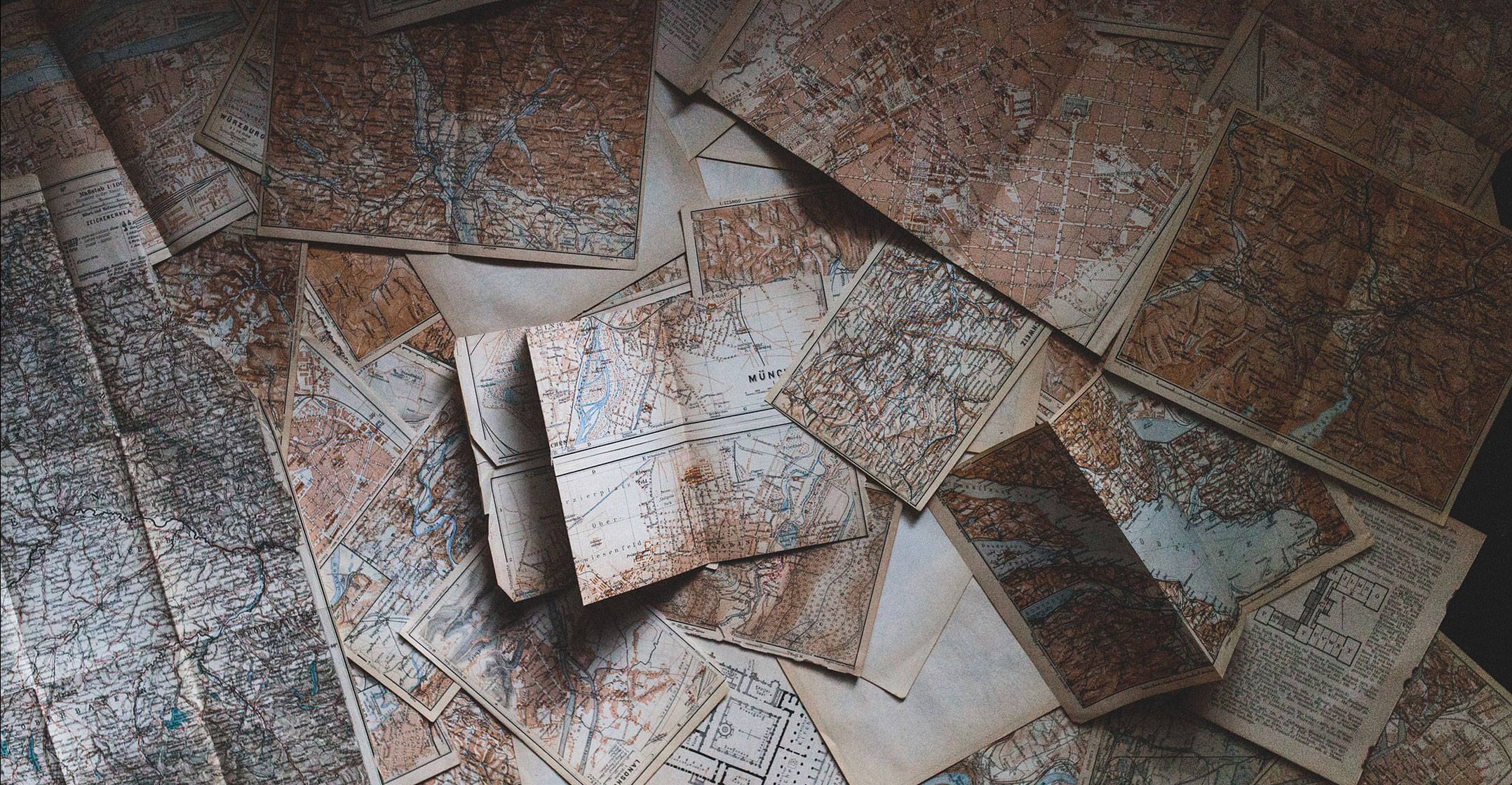
    Reading in print makes it easier for the brain to encode knowledge and to remember things. Sensory cues, like unfolding the complicated folds of a paper map, help create that cognitive map in the brain and help the brain to retain the knowledge.

    The same is true for a simple practice like tracing out a hiking route on a paper map with your finger. The physical act of moving your arm and feeling the paper under your finger gives your brain haptic and sensorimotor cues that contribute to the formation and retention of the cognitive map.

    Another factor in the paper versus digital debate is accuracy. Obviously, a good digital map is better than a bad paper map, just like a good paper map is better than a bad digital map.

    Fanatical attention to detail is necessary to keep digital maps up to date, as conditions in the real world change constantly

    Technochauvinists may believe that all digital maps are good, but just as in the paper world, the accuracy of digital maps depends entirely on the level of detail and fact-checking invested by the company making the map.
    For example, a 2012 survey by the crowdsourcing company Crowdflower found that Google Maps accurately located 89% of businesses, while Apple Maps correctly found 74%. This isn’t surprising, as Google invests millions in sending people around the world to map terrain for Google StreetView. Google Maps is good because the company invests time, money and human effort in making its maps good — not because digital maps are inherently better.

    Fanatical attention to detail is necessary to keep digital maps up to date, as conditions in the real world change constantly. Companies like Google are constantly updating their maps, and will have to do so regularly for as long as they continue to publish. The maintenance required for digital content is substantial — a cost that technochauvinists often ignore.

    Deeper flaws

    It’s easier to forgive the errors in a paper map. Physical maps usually include an easily visible publication date so users can see when the map was published. (When was the last time you noticed the date-of-last-update on your car navigation system?) When you are passively following the spoken GPS directions of a navigation system, and there is, say, an unmarked exit, it confuses the GPS system and causes chaos among the people in the car. (Especially the backseat drivers.)

    Some of the deeper flaws of digital maps are not readily apparent to the public. Digital systems, including cartographic ones, are more interconnected than most people realise. Mistakes, which are inevitable, can go viral and create more trouble than anyone anticipates.

    For example, reporter Kashmir Hill has written about a Kansas farm in the geographic centre of the US that has been plagued by legal trouble and physical harassment, because a digital cartography database mistakenly uses the farm’s location as a default every time the database can’t identify the real answer.

    “As a result, for the last 14 years, every time MaxMind’s database has been queried about the location of an IP address in the US it can’t identify, it has spit out the default location of a spot two hours away from the geographic centre of the country,” Hill wrote. “This happens a lot: 5 000 companies rely on MaxMind’s IP mapping information, and in all, there are now over 600 million IP addresses associated with that default coordinate.”

    A technochauvinist mindset assumes everything in the future will be digital. But what happens if a major company like Google stops offering its maps? What happens when a government shutdown means that satellite data powering smartphone GPS systems isn’t transmitted? Right now, ambulances and fire trucks can keep a road atlas in the front seat in case electronic navigation fails. If society doesn’t maintain physical maps, first responders won’t be able to get to addresses when there is a fire or someone is critically ill.

    Interrupting a country’s GPS signals is also a realistic cyberwarfare tactic. The US navy has resumed training new recruits in celestial navigation, a technique that dates back to ancient Greece, as a guard against when the digital grid gets hacked.

    Ultimately, I don’t think it should be a competition between physical and digital. In the future, people will continue to need both kinds of maps. Instead of arguing whether paper or digital is a better map interface, people should consider what map is the right tool for the task.The Conversation

    • Written by Meredith Broussard, assistant professor of journalism, New York University
    • This article is republished from The Conversation under a Creative Commons licence

    Follow TechCentral on Google News Add TechCentral as your preferred source on Google


    Apple Google top
    WhatsApp YouTube
    Share. Facebook Twitter LinkedIn WhatsApp Telegram Email Copy Link
    Previous ArticleTencent targeted in China censorship crackdown
    Next Article Is Europe trying to kill the digital ad business?

    Related Posts

    Hyperscalers ate my next computer

    Hyperscalers ate my next computer

    8 May 2026
    Alphabet closes in on Nvidia as world's most valuable company

    Alphabet closes in on Nvidia as world’s most valuable company

    6 May 2026
    More details about Apple's AI plans emerge

    More details about Apple’s AI plans emerge

    6 May 2026
    Company News
    Your databases are being watched - just not by you - Ascent Technology Johan Lambert

    Your databases are being watched – just not by you

    8 May 2026
    Hexion deploys 30 petabyte sovereign data archive in South Africa

    Hexion deploys 30 petabyte sovereign data archive in South Africa

    7 May 2026
    We're hiring: TechCentral is looking for technology journalists

    We’re hiring: TechCentral is looking for technology journalists

    6 May 2026
    Opinion
    Free calls, dead voice and Shameel Joosub's Spanish ghost - Duncan McLeod

    Free calls, dead voice and Shameel Joosub’s Spanish ghost

    22 April 2026
    The conflict of interest at the heart of PayShap's slow adoption - Cheslyn Jacobs

    The conflict of interest at the heart of PayShap’s slow adoption

    26 March 2026
    South Africa's energy future hinges on getting wheeling right - Aishah Gire

    South Africa’s energy future hinges on getting wheeling right

    10 March 2026

    Subscribe to Updates

    Get the best South African technology news and analysis delivered to your e-mail inbox every morning.

    Latest Posts
    Hyperscalers ate my next computer

    Hyperscalers ate my next computer

    8 May 2026
    Major African telco postpones mobile money listing

    Major African telco postpones mobile money listing

    8 May 2026
    Cabinet approves new permanent Sita board, ending years of turmoil - State IT Agency

    Cabinet approves new permanent Sita board, ending years of turmoil

    8 May 2026
    Your databases are being watched - just not by you - Ascent Technology Johan Lambert

    Your databases are being watched – just not by you

    8 May 2026
    © 2009 - 2026 NewsCentral Media
    • Cookie policy (ZA)
    • TechCentral – privacy and Popia

    Type above and press Enter to search. Press Esc to cancel.

    Manage consent

    TechCentral uses cookies to enhance its offerings. Consenting to these technologies allows us to serve you better. Not consenting or withdrawing consent may adversely affect certain features and functions of the website.

    Functional Always active
    The technical storage or access is strictly necessary for the legitimate purpose of enabling the use of a specific service explicitly requested by the subscriber or user, or for the sole purpose of carrying out the transmission of a communication over an electronic communications network.
    Preferences
    The technical storage or access is necessary for the legitimate purpose of storing preferences that are not requested by the subscriber or user.
    Statistics
    The technical storage or access that is used exclusively for statistical purposes. The technical storage or access that is used exclusively for anonymous statistical purposes. Without a subpoena, voluntary compliance on the part of your Internet Service Provider, or additional records from a third party, information stored or retrieved for this purpose alone cannot usually be used to identify you.
    Marketing
    The technical storage or access is required to create user profiles to send advertising, or to track the user on a website or across several websites for similar marketing purposes.
    • Manage options
    • Manage services
    • Manage {vendor_count} vendors
    • Read more about these purposes
    View preferences
    • {title}
    • {title}
    • {title}