Close Menu
TechCentralTechCentral

    Subscribe to the newsletter

    Get the best South African technology news and analysis delivered to your e-mail inbox every morning.

    Facebook X (Twitter) YouTube LinkedIn
    WhatsApp Facebook X (Twitter) LinkedIn YouTube
    TechCentralTechCentral
    • News
      Seacom earnings surge as subsea cable disruptions ease

      Seacom earnings surge as subsea cable disruptions ease

      25 March 2026
      Remgro's fibre empire roars back

      Remgro’s fibre empire roars back

      25 March 2026
      The Post Office is out of options - Anoosh Rooplal

      The Post Office is out of options

      24 March 2026
      Namibia rejects Starlink

      Namibia rejects Starlink

      24 March 2026
      Optasia wants to do for banks what it did for telcos - Salvador Anglada

      Optasia wants to do for banks what it did for telcos

      24 March 2026
    • World
      It's official: ads are coming to ChatGPT

      It’s official: ads are coming to ChatGPT

      23 March 2026
      Mystery Chinese AI model revealed to be Xiaomi's

      Mystery Chinese AI model revealed to be Xiaomi’s

      19 March 2026
      A mystery AI model has developers buzzing

      A mystery AI model has developers buzzing

      18 March 2026
      Samsung's trifold gamble ends in retreat

      Samsung’s trifold gamble ends in retreat

      17 March 2026
      Nvidia targets $1-trillion in AI chip sales as inference demand surges - Jensen Huang

      Nvidia targets $1-trillion in AI chip sales as inference demand surges

      17 March 2026
    • In-depth
      The last generation of coders

      The last generation of coders

      18 February 2026
      Sentech is in dire straits

      Sentech is in dire straits

      10 February 2026
      How liberalisation is rewiring South Africa's power sector

      How liberalisation is rewiring South Africa’s power sector

      21 January 2026
      The top-performing South African tech shares of 2025

      The top-performing South African tech shares of 2025

      12 January 2026
      Digital authoritarianism grows as African states normalise internet blackouts

      Digital authoritarianism grows as African states normalise internet blackouts

      19 December 2025
    • TCS
      Meet the CIO | HealthBridge CTO Anton Fatti on the future of digital health

      Meet the CIO | Healthbridge CTO Anton Fatti on the future of digital health

      23 March 2026
      TCS+ | Arctic Wolf unpacks the evolving threat landscape for SA businesses - Clare Loveridge and Jason Oehley

      TCS+ | Arctic Wolf unpacks the evolving threat landscape for SA businesses

      19 March 2026
      TCS+ | Vox Kiwi: a wireless solution promising a fibre-like experience - Theo van Zyl

      TCS+ | Vox Kiwi: a wireless solution promising a fibre-like experience

      13 March 2026
      TCS+ | Flipping the narrative on AI in the Global South - Josefin Rosén

      TCS+ | Flipping the narrative on AI in the Global South

      13 March 2026
      TCS | Sink or swim? Antony Makins on how AI is rewriting the rules of work

      TCS | Sink or swim? Antony Makins on how AI is rewriting the rules of work

      5 March 2026
    • Opinion
      South Africa's energy future hinges on getting wheeling right - Aishah Gire

      South Africa’s energy future hinges on getting wheeling right

      10 March 2026
      Hold the doom: the case for a South African comeback - Duncan McLeod

      Apple just dropped a bomb on the Windows world

      5 March 2026
      VC's centre of gravity is shifting - and South Africa is in the frame - Alison Collier

      VC’s centre of gravity is shifting – and South Africa is in the frame

      3 March 2026
      Hold the doom: the case for a South African comeback - Duncan McLeod

      Hold the doom: the case for a South African comeback

      26 February 2026
      The AI fraud crisis your bank is not ready for - Andries Maritz

      The AI fraud crisis your bank is not ready for

      18 February 2026
    • Company Hubs
      • 1Stream
      • Africa Data Centres
      • AfriGIS
      • Altron Digital Business
      • Altron Document Solutions
      • Altron Group
      • Arctic Wolf
      • Ascent Technology
      • AvertITD
      • Braintree
      • CallMiner
      • CambriLearn
      • CYBER1 Solutions
      • Digicloud Africa
      • Digimune
      • Domains.co.za
      • ESET
      • Euphoria Telecom
      • HOSTAFRICA
      • Incredible Business
      • iONLINE
      • IQbusiness
      • Iris Network Systems
      • LSD Open
      • Mitel
      • NEC XON
      • Netstar
      • Network Platforms
      • Next DLP
      • Ovations
      • Paracon
      • Paratus
      • Q-KON
      • SevenC
      • SkyWire
      • Solid8 Technologies
      • Telit Cinterion
      • Tenable
      • Vertiv
      • Videri Digital
      • Vodacom Business
      • Wipro
      • Workday
      • XLink
    • Sections
      • AI and machine learning
      • Banking
      • Broadcasting and Media
      • Cloud services
      • Contact centres and CX
      • Cryptocurrencies
      • Education and skills
      • Electronics and hardware
      • Energy and sustainability
      • Enterprise software
      • Financial services
      • HealthTech
      • Information security
      • Internet and connectivity
      • Internet of Things
      • Investment
      • IT services
      • Lifestyle
      • Motoring
      • Policy and regulation
      • Public sector
      • Retail and e-commerce
      • Satellite communications
      • Science
      • SMEs and start-ups
      • Social media
      • Talent and leadership
      • Telecoms
    • Events
    • Advertise
    TechCentralTechCentral
    Home » In-depth » Why Telegram became the go-to app for Ukrainians

    Why Telegram became the go-to app for Ukrainians

    By The Conversation25 March 2022
    Twitter LinkedIn Facebook WhatsApp Email Telegram Copy Link
    News Alerts
    WhatsApp

    For weeks, Russia’s military assault on Ukraine has been complemented by full-fledged information warfare. The Kremlin has propagandised Russian state media, and is trying to control the narrative online, too.

    We’ve seen a bombardment of “imposter content” circulating – including fake news reports and deepfake videos – while Ukranians and the rest of the world have scrambled to find ways to tell the real story of the invasion.

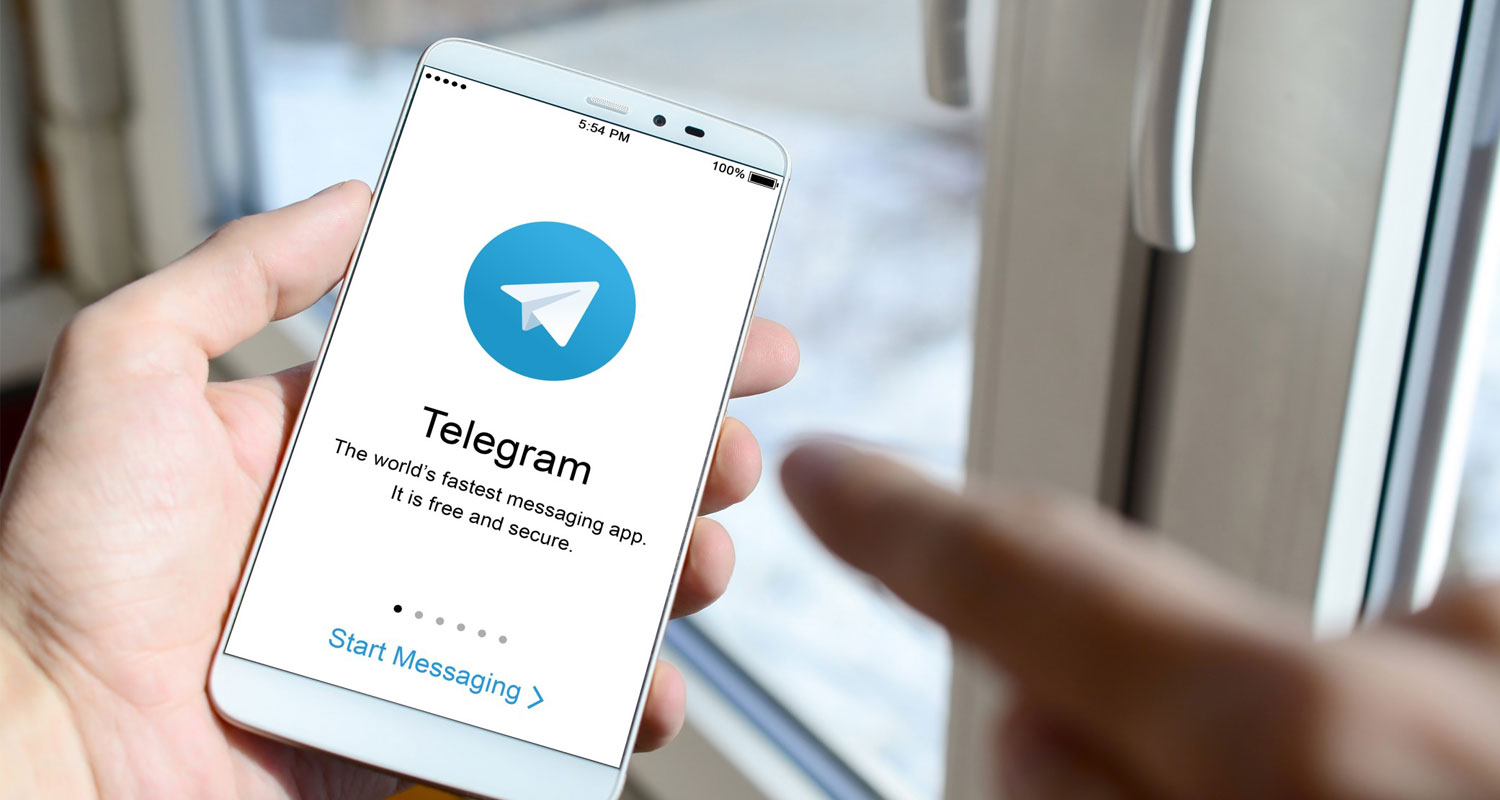
    The instant messaging app Telegram has surfaced as one of the most important channels through which to do so. But what is it about Telegram that has millions flocking to it amid the chaos?

    What is Telegram?

    Telegram is one of the most popular social apps in Ukraine and Russia, and has been since before the invasion began. It’s a free cloud-based app that allows users to send and receive messages, calls, photos, videos, audio and other files.

    The platform was first created in 2013 by Russian-born tech entrepreneur Pavel Durov – a figure who has butted heads with the increasingly authoritarian Russian state on numerous occasions.

    Now Telegram is providing some clarity in a foggy environment of (mostly Russian) disinformation. It has even been a go-to point of contact for Ukrainian President Volodymyr Zelenskyy.

    Telegram has several key features that make it an appealing option for communications relating to the war

    Telegram has several key features that make it an appealing option for communications relating to the war.

    It facilitates public and private groups of up to 200 000 users (where individuals can send messages and interact), and channels (which allow one-way broadcasting to channel subscribers).

    Through these groups and channels, organisations can reach hundreds of thousands of people with messages and audio/video live-streaming – all of which is encrypted and stored on the Telegram “cloud”.

    However, while both public and private communications on Telegram are encrypted, the default encryption setting is not end-to-end encryption, and instead happens on a client/server basis.

    The data is stored (albeit in an encrypted form) in the cloud and distributed across multiple data centres throughout the world. These data centres are controlled by legal entities in various jurisdictions, and subject to the laws of those jurisdictions. This data could be decrypted, although doing so would be difficult.

    ‘Secret chat’

    But Telegram does offer another layer of security through its “secret chat” feature. When this is enabled, the communication between two users becomes end-to-end encrypted. This data isn’t stored anywhere apart from the sender’s and receiver’s device. Not even Telegram can access it. Users can also set a “self-destruct” timer on secret chats. Once the timer ends, the communication disappears forever.

    Telegram claims to be even more secure than similar apps such as WhatsApp and Line.

    One feature that differentiates it from WhatsApp is anonymous forwarding. When this is enabled, any message forwarded by a user is no longer traceable back to them. The message includes their display name in plain, unlinked text, but this display name can easily be changed or deleted.

    Also, while users do need a phone number to create a Telegram account, the number doesn’t have to remain linked to the account (whereas a phone number will always remain linked to a WhatsApp account).

    Telegram has a history of being leveraged as a protest tool in times of conflict and oppression.

    In 2020, people in Belarus opposing the Russian-supported authoritarian leader Alexander Lukashenko used the platform to organise a mass protest of around 100 000 people.

    It’s likely similar actions have taken place in the context of the war on Ukraine. President Zelenskyy has openly used Telegram to urge men to take up arms and resist the invasion.

    Many Russians have also turned to the app for independent information, following the Kremlin’s clampdown on free media. Russian journalist Ilya Varlamov used Telegram to live-stream the invasion, and has acquired 1.3 million subscribers since the war began.

    According to Time, there has been a 48% increase in the number of Russian subscribers on Telegram since 24 February when Russia’s invasion began. Presumably the bulk of these people are looking for independent news. Western outlets including the Guardian, the Wall Street Journal and the Washington Post have also joined.

    Telegram is also valuable for Ukraine’s military, as it can help circumvent Russian surveillance and conduct intelligence operations. Russia’s penetration of Ukraine’s telecommunications networks has been pervasive during the invasion.

    As is the case with any powerful technology, the privacy afforded by Telegram is also a problem in the wrong hands.

    Telegram has a record of refusing calls to moderate content, perhaps due to Durov’s libertarian view of how such technologies should be governed

    The Russian government is running Telegram channels for state-affiliated media, including Sputnik and RT, and has encouraged users to turn to the app for pro-Kremlin content. Meanwhile, Russian bot accounts are spreading disinformation, often by posing as fake “war correspondents” supporting the Kremlin’s narrative.

    Historically, Telegram has been profiled for all the wrong reasons. End-to-end encryption has enabled illegal activity on the app (including by extremist groups such as the Islamic State).

    One study found the number of Telegram groups or channels shared in dark web cybercrime and hacking forums increased from 172 035 in 2020, to more than one million in 2021.

    Telegram provides criminals and hackers the same opportunities as the dark web, VPNs and proxy servers: all of these tools make it difficult to trace the location of a cybercriminal, and therefore hinder efforts to gather intelligence.

    For example, the private Telegram channel “combolist” – on which hackers sold and circulated large amounts of stolen data – had more than 47 000 users before it was taken down.

    And last year, a US non-profit group sued Apple and demanded it remove Telegram from its app store (just as it removed Parler) for failing to prevent violent content spreading after the 6 January 2021 Capitol attack. Telegram remains available on both the Apple and Google app stores.

    Telegram has a record of refusing calls to moderate content (perhaps due to Durov’s libertarian view of how such technologies should be governed). Moreover, the way the platform is built means there is a limit to how much it can be moderated. In many cases, Telegram won’t be aware of illegal activity until it is notified.

    And with end-to-end encryption, it’s difficult to know just how much harmful content is making the rounds. Telegram can only intervene in a limited number of cases, and with narrow capacity.

    Still, it seems mounting threats and legal concerns have started to chip away at Durov’s resolve.

    A ban on Telegram was enacted by Brazil’s supreme court last Friday, in a bid to stop fake news spreading ahead of Brazil’s October elections.

    Lifeline

    The ban was lifted two days later, after Durov took actions to comply with the court’s requirements. He deleted posts by Brazilian President Jair Bolsonaro, removed one supporter account and promised the monitoring of others.

    Similarly, Germany threatened to shut down Telegram in February to prevent “hate and incitement” from far-right groups and Covid conspiracists. It’s reported more than 60 channels were removed in response.

    It seems Telegram finds itself between a rock and a hard place. It’s limited, by design, in how much it can filter content. Yet despite the social and enforcement challenges, it continues to be a lifeline for those resisting the Russian invasion.The Conversation

    • Written by Mamoun Alazab, associate professor, and Kate Macfarlane, senior lecturer in Southeast Asian studies, Charles Darwin University
    • This article is republished from The Conversation under a Creative Commons licence

    Follow TechCentral on Google News Add TechCentral as your preferred source on Google


    Line Pavel Durov Telegram WhatsApp
    WhatsApp YouTube
    Share. Facebook Twitter LinkedIn WhatsApp Telegram Email Copy Link
    Previous ArticleIs your intelligent process automation capability keeping up with trends?
    Next Article Driving licence card backlog to be ‘cleared by September’

    Related Posts

    Meta to allow rival AI chatbots on WhatsApp amid EU pressure

    Meta to allow rival AI chatbots on WhatsApp amid EU pressure

    6 March 2026
    Russia bans WhatsApp

    Russia bans WhatsApp

    12 February 2026
    EU regulators take aim at WhatsApp

    EU regulators take aim at WhatsApp

    9 February 2026
    Company News
    South Africa's IoT growth will stall without infrastructure discipline - Sigfox

    South Africa’s IoT growth will stall without infrastructure discipline

    25 March 2026
    AnyDesk - high-performance remote access built for the modern enterprise

    AnyDesk – high-performance remote access built for the modern enterprise

    23 March 2026

    How South African executives can crack the AI ROI code

    20 March 2026
    Opinion
    South Africa's energy future hinges on getting wheeling right - Aishah Gire

    South Africa’s energy future hinges on getting wheeling right

    10 March 2026
    Hold the doom: the case for a South African comeback - Duncan McLeod

    Apple just dropped a bomb on the Windows world

    5 March 2026
    VC's centre of gravity is shifting - and South Africa is in the frame - Alison Collier

    VC’s centre of gravity is shifting – and South Africa is in the frame

    3 March 2026

    Subscribe to Updates

    Get the best South African technology news and analysis delivered to your e-mail inbox every morning.

    Latest Posts
    South Africa's IoT growth will stall without infrastructure discipline - Sigfox

    South Africa’s IoT growth will stall without infrastructure discipline

    25 March 2026
    Seacom earnings surge as subsea cable disruptions ease

    Seacom earnings surge as subsea cable disruptions ease

    25 March 2026
    Remgro's fibre empire roars back

    Remgro’s fibre empire roars back

    25 March 2026
    The Post Office is out of options - Anoosh Rooplal

    The Post Office is out of options

    24 March 2026
    © 2009 - 2026 NewsCentral Media
    • Cookie policy (ZA)
    • TechCentral – privacy and Popia

    Type above and press Enter to search. Press Esc to cancel.

    Manage consent

    TechCentral uses cookies to enhance its offerings. Consenting to these technologies allows us to serve you better. Not consenting or withdrawing consent may adversely affect certain features and functions of the website.

    Functional Always active
    The technical storage or access is strictly necessary for the legitimate purpose of enabling the use of a specific service explicitly requested by the subscriber or user, or for the sole purpose of carrying out the transmission of a communication over an electronic communications network.
    Preferences
    The technical storage or access is necessary for the legitimate purpose of storing preferences that are not requested by the subscriber or user.
    Statistics
    The technical storage or access that is used exclusively for statistical purposes. The technical storage or access that is used exclusively for anonymous statistical purposes. Without a subpoena, voluntary compliance on the part of your Internet Service Provider, or additional records from a third party, information stored or retrieved for this purpose alone cannot usually be used to identify you.
    Marketing
    The technical storage or access is required to create user profiles to send advertising, or to track the user on a website or across several websites for similar marketing purposes.
    • Manage options
    • Manage services
    • Manage {vendor_count} vendors
    • Read more about these purposes
    View preferences
    • {title}
    • {title}
    • {title}