
Close Menu
TechCentralTechCentral

    Subscribe to the newsletter

    Get the best South African technology news and analysis delivered to your e-mail inbox every morning.

    Facebook X (Twitter) YouTube LinkedIn
    WhatsApp Facebook X (Twitter) LinkedIn YouTube
    TechCentralTechCentral
    • News
      Shoprite ranks cybersecurity as its number one risk - Pieter Engelbrecht

      Shoprite ranks cybersecurity as its number one risk

      9 October 2026
      Standard Bank to take up to $200-million stake in OPay - Sim Tshabalala

      Standard Bank to take up to $200-million stake in OPay

      9 October 2026
      Shoprite takes on the banking apps with airtime on Sixty60

      Shoprite takes on the banking apps with airtime on Sixty60

      9 October 2026
      How to tell telemarketers to get lost - officially

      How to tell telemarketers to get lost – officially

      9 October 2026
      Data centres are the new front line in the Russia-Ukraine war

      Data centres are the new front line in the Russia-Ukraine war

      9 October 2026
    • World
      SpaceX takes aim at US wireless carriers with spectrum acquisition

      Starlink is coming for your mobile operator

      9 October 2026
      The AI PC is finally here. It's just very expensive - Jensen Huang, Satya Nadella

      The AI PC is finally here. It’s just very expensive

      8 October 2026
      The memory crunch is making Samsung fabulously rich

      The memory crunch is making Samsung fabulously rich

      8 October 2026
      SpaceX to borrow $40-billion to buy Nvidia chips

      SpaceX to borrow $40-billion to buy Nvidia chips

      7 October 2026
      South Pole neutrino hunter wins Nobel Prize in Physics - Francis Halzen

      South Pole neutrino hunter wins Nobel Prize in Physics

      7 October 2026
    • In-depth

      10 days that changed the course of AI

      21 September 2026
      Meta to the AI industry: slow down without us - Mark Zuckerberg

      Meta to the AI industry: slow down without us

      16 September 2026
      Google DeepMind CEO Demis Hassabis. Image: John Sears

      The plan to stop AI from breaking the world

      16 July 2026
      The internet has a Strait of Hormuz problem

      The internet has a Strait of Hormuz problem

      15 July 2026
      AI boom sparks rally, frenzy and fear

      AI boom sparks rally, frenzy and fear

      11 June 2026
    • TCS
      W&W | LDV's Gerhard Moolman on electric bakkies, fleet orders and 'school fees'

      W&W | LDV’s Gerhard Moolman on electric bakkies and fleets

      9 October 2026
      TCS | Frogfoot sees bigger fibre deals coming - TechCentral Show guests Abraham van der Merwe and Shane Chorley

      TCS | Frogfoot sees bigger fibre deals coming

      8 October 2026
      Meet the CIO | Vodacom's Mohamed Sami on the agentic future

      Meet the CIO | Vodacom’s Mohamed Sami on the agentic future

      5 October 2026
      Lexi Novitske, general partner at Norrsken22, on the TechCentral Show

      TCS | Norrsken22’s Lexi Novitske on how China is winning African tech

      1 October 2026
      TCS | Dominic White and Adam Ely on AI agents going rogue

      TCS | Dominic White and Adam Ely on AI agents going rogue

      29 September 2026
    • Opinion
      When a machine can choose, who does it become? Fanie van Rooyen

      When a machine can choose, who does it become?

      9 October 2026
      Let South Africans jailbreak their way to digital sovereignty - Dirk de Vos

      Let South Africans jailbreak their way to digital sovereignty

      5 October 2026
      South Africa's next energy crisis is in the accounts department - Craig Holmes

      South Africa’s next energy crisis is in the accounts department

      29 September 2026
      The steam engine lesson AI doomsayers keep missing - Sam Clarke

      The steam engine lesson AI doomsayers keep missing

      28 September 2026
      Let South Africans jailbreak their way to digital sovereignty - Dirk de Vos

      Regulating AI: apply the laws we have first

      21 September 2026
    • Company News
      • 1Stream
      • Africa Data Centres
      • AfriGIS
      • Altron Digital Business
      • Altron Document Solutions
      • Altron Group
      • Arctic Wolf
      • Ascent Technology
      • AvertITD
      • BBD
      • Braintree
      • CallMiner
      • CambriLearn
      • CM.com
      • Contactable
      • CYBER1 Solutions
      • Digicloud Africa
      • Digimune
      • Domains.co.za
      • ESET
      • Euphoria Telecom
      • HOSTAFRICA
      • Incredible Business
      • iONLINE
      • IQbusiness
      • Iris Network Systems
      • Kaspersky
      • LSD Open
      • Mitel
      • NEC XON
      • Netstar
      • Network Platforms
      • Next DLP
      • Ovations
      • Paracon
      • Paratus
      • Publishared
      • Q-KON
      • SevenC
      • SkyWire
      • Solid8 Technologies
      • Telit Cinterion
      • Telviva
      • Tenable
      • Vertiv
      • Videri Digital
      • Vodacom Business
      • Vox
      • Wipro
      • Workday
      • XLink
    • Sections
      • AI and machine learning
      • Banking
      • Broadcasting and Media
      • Cloud services
      • Contact centres and CX
      • Cryptocurrencies
      • Education and skills
      • Electronics and hardware
      • Energy and sustainability
      • Enterprise software
      • Financial services
      • HealthTech
      • Information security
      • Internet and connectivity
      • Internet of Things
      • Investment
      • IT services
      • Lifestyle
      • Policy and regulation
      • Public sector
      • Retail and e-commerce
      • Satellite communications
      • Science
      • SMEs and start-ups
      • Social media
      • Talent and leadership
      • Telecoms
      • Watts & Wheels
    • Events
    • Advertise
    TechCentralTechCentral
    Home » Sections » Electronics and hardware » World’s supply of chips is endangered

    World’s supply of chips is endangered

    By Agency Staff24 May 2021
    Twitter LinkedIn Facebook WhatsApp Email Telegram Copy Link
    Get breaking news on WhatsApp

    Outside a TSMC fabrication plant in Taiwan. Image: TSMC

    Back in February, as the world was beating a path to Taiwan’s door for help to tackle a shortage of semiconductors, the health minister got into a scrap with China over Covid-19 vaccines.

    Beijing, he suggested, had used political pressure to derail Taiwan’s plan to purchase five million doses directly from Germany’s BioNTech, rather than via a Chinese company which held the rights to develop and market the BioNTech-Pfizer vaccine across China, Hong Kong, Macau and Taiwan. Foreign ministry spokeswoman Hua Chunying retorted that Taipei “should stop hyping up political issues under the pretext of vaccine issues”.

    Three months later, Taiwan is paying the price for a lack of vaccines, with a surge in virus cases that threatens to trigger a lockdown. Having successfully sidestepped the first Covid wave, the government now faces a health emergency — only about 1% of its population is vaccinated so far — with the potential to disrupt the chip industry that dominates the local economy, and which is critical to an already-squeezed global supply.

    TSMC is the world’s leading provider of cutting-edge semiconductors and holds 56% of the so-called foundry business

    That’s a link made by the head of Taiwan’s office in New York, who warned of “logistical problems” without access to more shots. Yet by shunning vaccines from China and warning of more chip shortages if it can’t source enough doses elsewhere, the government is giving even greater incentive to the world’s biggest economies to make investments that may erode Taiwan’s competitive edge in semiconductors over the long term.

    Predicament

    Taiwan’s predicament illustrates its strategic yet vulnerable position at the confluence of US-China tensions. Separated by a 177km-wide strait, Taiwan is regarded as a province by Beijing and its conquest is President Xi Jinping’s key goal for historical and ideological reasons. The US is an ally of Taipei’s democratic government and a big buyer of its exports, dominated by chips produced by Taiwan Semiconductor Manufacturing Co.

    The onset late last year of chip shortages that have hobbled industries from autos to computer gaming had looked to give Taipei global leverage. TSMC is the world’s leading provider of cutting-edge semiconductors and holds 56% of the so-called foundry business of manufacturing chips designed by customers including Apple and Qualcomm.

    But Taiwan has suffered a sudden reversal of fortunes. The pandemic comes just as a drought triggers power outages, stoking economic uncertainty and a slump in what was the world’s best performing stock index in the four years to January.
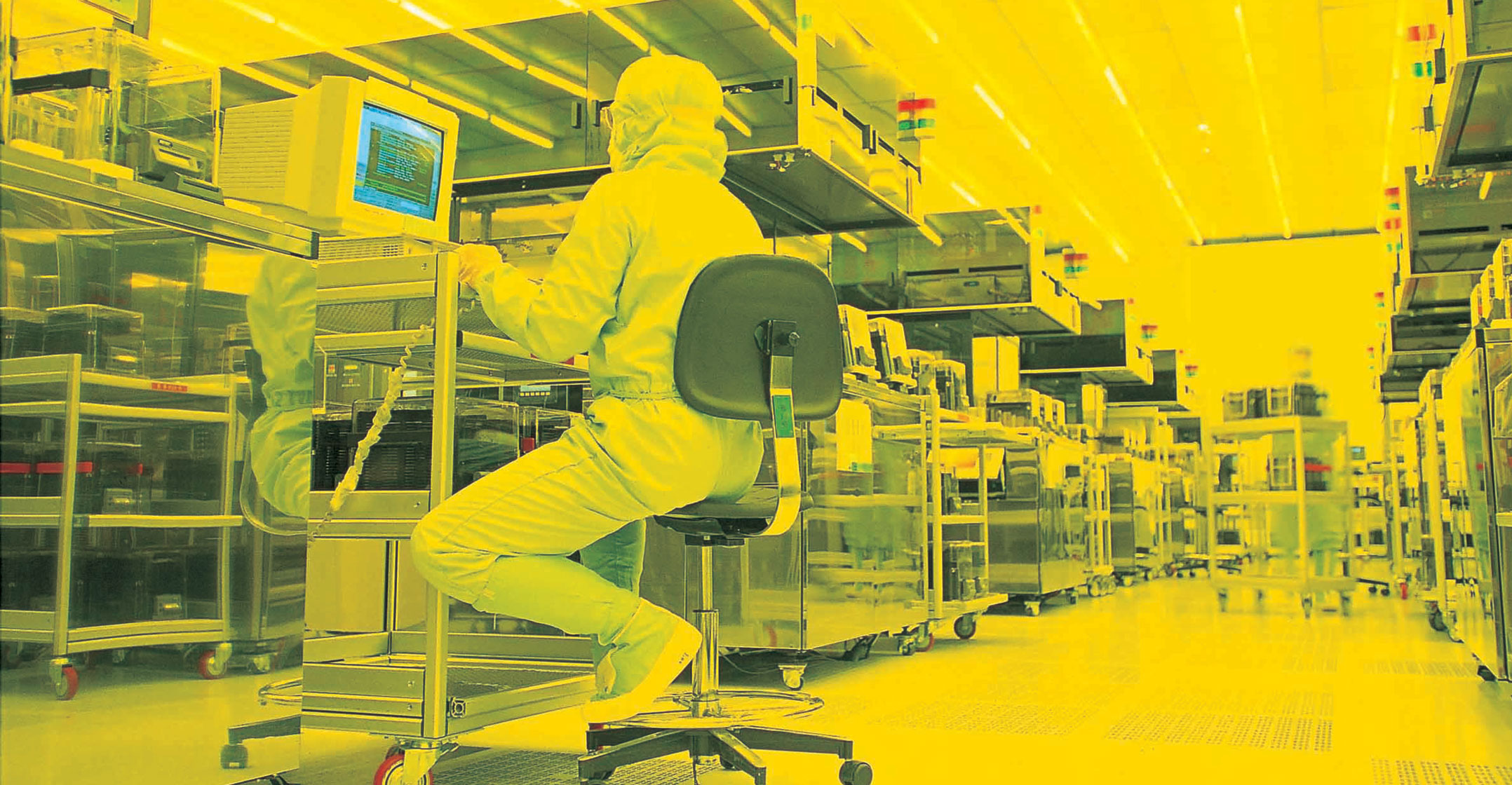
    Inside a TSMC facility

    What’s more, the very source of Taiwan’s recent geopolitical clout — its dominance of the market for cutting-edge chips — is under attack as governments from the US to Europe and Japan, alerted to the strategic nature of the semiconductor supply chain, seek to spur production at home. China is pumping billions into catching up after Washington imposed export controls on US chip technology.

    “I think we’ve become too dependent on Taiwan and Korea, that’s the point, we need a more balanced global supply chain,” Pat Gelsinger, CEO of Silicon Valley’s Intel, the world’s biggest chip maker, said in an interview. The US and Europe should act “more aggressively” to counter the “imbalance” of Asia’s lead in manufacturing semiconductors that are mostly consumed in the west, he said.

    Intel is a rival and plans to challenge TSMC at the cutting edge, but Gelsinger isn’t the only voice making for uncomfortable listening in Taiwan. Commerce secretary Gina Raimondo said this month that while the Biden administration is working with Taipei and TSMC to address the chip shortage, it’s also looking to reduce US dependence on Taiwan. TSMC is in the process of building a new fabrication facility in the US.

    Taipei has become more alert to the possibility of Chinese companies ramping up efforts to recruit Taiwanese engineers

    Some in Washington have suggested that Taiwan is a backdoor to China by enabling tech transfers. Republicans Michael McCaul and Tom Cotton have called on the administration to engage with Taipei to do more to “mitigate the risk of Taiwanese companies providing services and technologies to entities of concern”, a reference to Chinese state-backed companies with links to the military.

    With the prospect of some $50-billion in government funding to build out chip making in the US and the promise of still more in Europe and South Korea, there are signs that Taiwan is starting to feel the heat.

    Control list

    The government is working to draft a new export control list targeting technologies with military use, to tighten curbs on exports to China and raise the penalty for violations, according to a person familiar with the issue who asked not to be named discussing policy deliberations.

    That’s after Alchip Technologies’ stock took a beating in April when the Washington Post reported that it supplied chips to Phytium, a People’s Liberation Army-affiliated entity. Alchip said it has always been in compliance with government regulations and that Phytium projects were on hold.

    Taipei has become more alert to the possibility of Chinese companies ramping up efforts to recruit Taiwanese engineers. Last month the cabinet met to discuss how to prevent the outflow of local talent, with the ministry of labour instructing local job-search websites to remove ads recruiting Taiwanese citizens to work for China, particularly in the semiconductor industry.

    Intel CEO Pat Gelsinger

    Companies and headhunters can be fined as much as NT$500 000 (US$17 900) for advertising such jobs and NT$5-million for facilitating local engineers’ employment with Chinese companies on the mainland, ministry official Huang Chiao-ting said. Job search site 1111 said it has removed close to 3 000 job listings. Investigators have visited the local offices of four Chinese companies, including Bitmain Technologies, within the last two months to look into allegations they recruited engineers illegally.

    “By more aggressively investigating Chinese companies’ efforts to poach Taiwanese engineers, we hope we can help prevent potential trade secrets leaking to China should local talent get hired away,” said Judy Chen, a spokeswoman for the Hsinchu District Prosecutors Office. She declined to name the other companies probed.

    Members of the ruling Democratic Progressive Party are considering amending the law to boost penalties for intellectual property theft. Lawmaker Chao Tien-lin is proposing life sentences for those found guilty of economic espionage, a crime not currently on the statute books in Taiwan.

    Taiwan needs to win trust from its partners and help prevent China from building a supply chain from stolen technology

    “Taiwan needs to win trust from its partners and help prevent China from building a supply chain from stolen technology,” Chao said in comments provided by his assistant.

    Whether it’s enough to allay concerns in Washington may become clearer with the publication of President Joe Biden’s review of the semiconductor supply chain. The 100-day review is due to conclude on 4 June. What’s already known is that there is bipartisan support to build US chip making, and Taiwan is in the cross hairs.

    ‘Taiwan dominates’

    “Taiwan dominates semiconductor manufacturing, and one company, Taiwan Semiconductor Manufacturing Company, virtually controls the market,” senator John Cornyn, a Texas Republican who introduced the Chips for America Act to boost US production, said on the senate floor this month.

    The sustainability of Taiwan’s industry has also come into question after it suffered power outages this month, focusing attention on environmental factors including water shortages and uncertainty over future electricity supply for power-hungry chip plants.

    Taiwan can potentially overcome the virus outbreak as well as the power and water shortages, showing its companies “can still satisfy global demand by manufacturing mostly in Taiwan without any issue”, said Arisa Liu, a researcher at the Taiwan Institute of Economic Research.
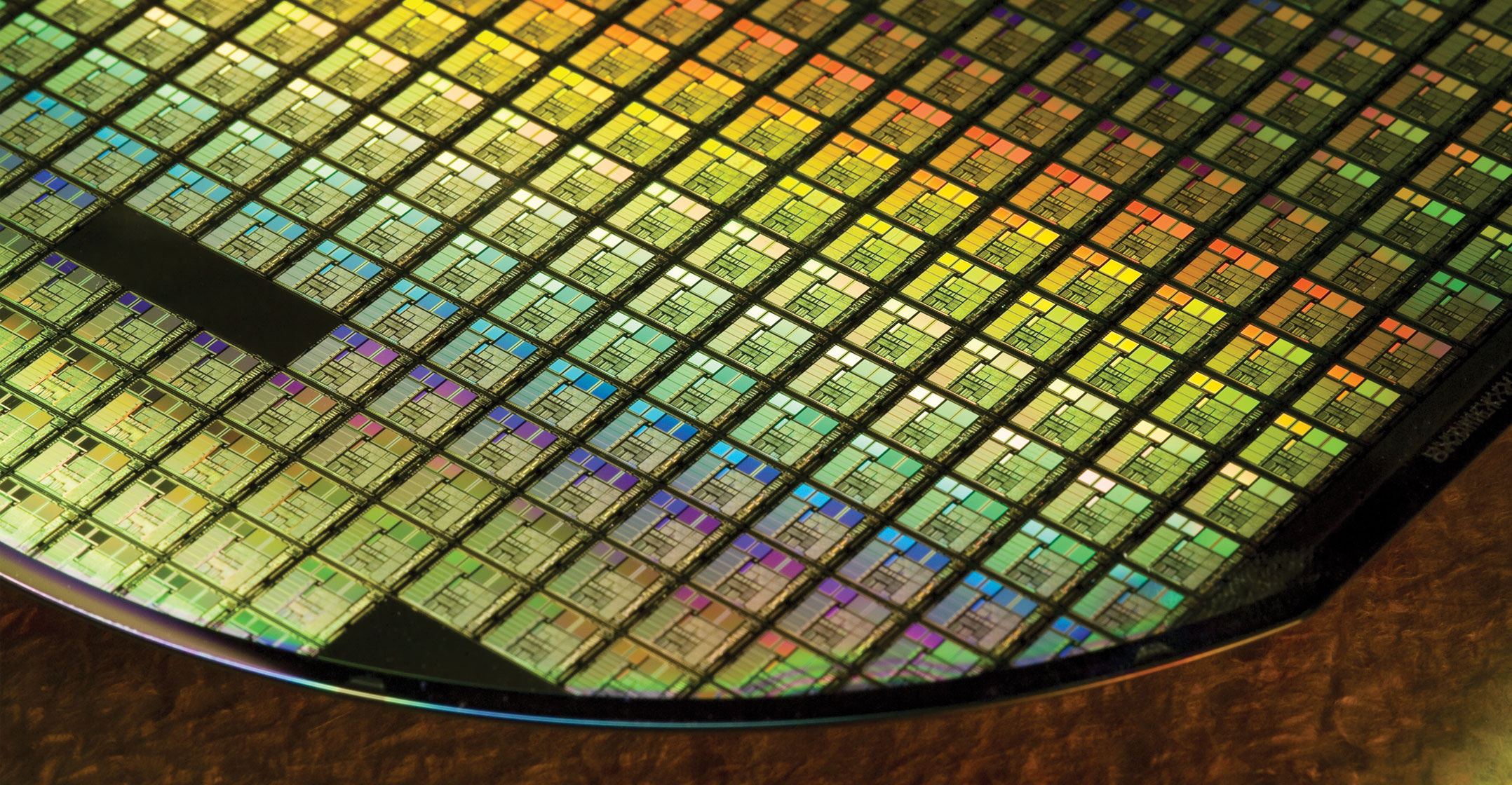
    Image: TSMC

    In the short term that will require vaccines, most likely from Europe or the US.

    According to Chunhuei Chi, a former health-policy adviser in Taiwan who is now director of the Center for Global Health at Oregon State University, “many politicians in Taiwan urged the Taiwanese government to use microchips as leverage” for vaccines.

    While the government is reluctant to use that leverage explicitly, “if the US is concerned about the supply of chips from TSMC, the US would have incentives to provide Taiwan with vaccines to make sure production will not be disrupted by this outbreak”, he said.  — Reported by Alan Crawford, Debby Wu and Iain Marlow, (c) 2021 Bloomberg LP

    Add TechCentral as a preferred source on GoogleFollow TechCentral on Google NewsGet breaking news on WhatsApp


    Intel Pat Gelsinger top TSMC
    WhatsApp YouTube
    Share. Facebook Twitter LinkedIn WhatsApp Telegram Email Copy Link
    Previous ArticleFlash-forward to better storage with Huawei OceanStor Dorado
    Next Article Crypto recovery stalls as miners eye exits

    Related Posts

    The AI PC is finally here. It's just very expensive - Jensen Huang, Satya Nadella

    The AI PC is finally here. It’s just very expensive

    8 October 2026
    The memory crunch is making Samsung fabulously rich

    The memory crunch is making Samsung fabulously rich

    8 October 2026
    A simple guide to modern laptop processors for small businesses - Incredible

    A simple guide to modern laptop processors for small businesses

    2 October 2026
    Company News
    Why fintechs need an insurance partner they can trust - Hollard Insurance

    Why fintechs need an insurance partner they can trust

    8 October 2026
    Reusable KYC means the end of 'please upload your ID' - Contactable

    Reusable KYC means the end of ‘please upload your ID’

    8 October 2026
    Eliminating the 'toggle tax': how CRM integration changes customer experience - Martie de Beer

    Eliminating the ‘toggle tax’: how CRM integration changes customer experience

    8 October 2026
    Opinion
    When a machine can choose, who does it become? Fanie van Rooyen

    When a machine can choose, who does it become?

    9 October 2026
    Let South Africans jailbreak their way to digital sovereignty - Dirk de Vos

    Let South Africans jailbreak their way to digital sovereignty

    5 October 2026
    South Africa's next energy crisis is in the accounts department - Craig Holmes

    South Africa’s next energy crisis is in the accounts department

    29 September 2026

    Subscribe to Updates

    Get the best South African technology news and analysis delivered to your e-mail inbox every morning.

    Latest Posts
    Shoprite ranks cybersecurity as its number one risk - Pieter Engelbrecht

    Shoprite ranks cybersecurity as its number one risk

    9 October 2026
    Standard Bank to take up to $200-million stake in OPay - Sim Tshabalala

    Standard Bank to take up to $200-million stake in OPay

    9 October 2026
    Shoprite takes on the banking apps with airtime on Sixty60

    Shoprite takes on the banking apps with airtime on Sixty60

    9 October 2026
    How to tell telemarketers to get lost - officially

    How to tell telemarketers to get lost – officially

    9 October 2026
    © 2009 - 2026 NewsCentral Media
    Built and maintained by Chronon
    • Cookie policy (ZA)
    • TechCentral – privacy and Popia

    Type above and press Enter to search. Press Esc to cancel.

    Manage consent

    TechCentral uses cookies to enhance its offerings. Consenting to these technologies allows us to serve you better. Not consenting or withdrawing consent may adversely affect certain features and functions of the website.

    Functional Always active
    The technical storage or access is strictly necessary for the legitimate purpose of enabling the use of a specific service explicitly requested by the subscriber or user, or for the sole purpose of carrying out the transmission of a communication over an electronic communications network.
    Preferences
    The technical storage or access is necessary for the legitimate purpose of storing preferences that are not requested by the subscriber or user.
    Statistics
    The technical storage or access that is used exclusively for statistical purposes. The technical storage or access that is used exclusively for anonymous statistical purposes. Without a subpoena, voluntary compliance on the part of your Internet Service Provider, or additional records from a third party, information stored or retrieved for this purpose alone cannot usually be used to identify you.
    Marketing
    The technical storage or access is required to create user profiles to send advertising, or to track the user on a website or across several websites for similar marketing purposes.
    • Manage options
    • Manage services
    • Manage {vendor_count} vendors
    • Read more about these purposes
    View preferences
    • {title}
    • {title}
    • {title}
    🇿🇦 Sign up to the TechCentral newsletter