Close Menu
TechCentralTechCentral

    Subscribe to the newsletter

    Get the best South African technology news and analysis delivered to your e-mail inbox every morning.

    Facebook X (Twitter) YouTube LinkedIn
    WhatsApp Facebook X (Twitter) LinkedIn YouTube
    TechCentralTechCentral
    • News
      How AI agents are reshaping banking in South Africa - Lindelani Ramukumba, Absa

      How agentic AI is reshaping banking in South Africa

      5 April 2026
      South Africa's 5G boom is bypassing rural areas: Icasa

      South Africa’s 5G boom is bypassing rural areas: Icasa

      5 April 2026
      WhatsApp is eating South African operators' revenue

      WhatsApp is eating South African operators’ revenue

      4 April 2026
      DeepSeek V4 to run on Huawei silicon as China builds its own AI stack

      DeepSeek V4 to run on Huawei silicon as China builds its own AI stack

      4 April 2026
      Gaping holes in South African government cyber defences

      Gaping holes in South African government cyber defences

      2 April 2026
    • World
      Amazon in talks to buy satellite operator Globalstar

      Amazon in talks to buy satellite operator Globalstar

      2 April 2026

      Apple plans to open Siri to rival AI services

      27 March 2026
      It's official: ads are coming to ChatGPT

      It’s official: ads are coming to ChatGPT

      23 March 2026
      Mystery Chinese AI model revealed to be Xiaomi's

      Mystery Chinese AI model revealed to be Xiaomi’s

      19 March 2026
      A mystery AI model has developers buzzing

      A mystery AI model has developers buzzing

      18 March 2026
    • In-depth
      The biggest untapped EV market on Earth is hiding in plain sight

      The biggest untapped EV market on Earth is hiding in plain sight

      1 April 2026
      The R18-billion tech giant hiding in plain sight - Jens Montanana

      The R16-billion tech giant hiding in plain sight

      26 March 2026
      The last generation of coders

      The last generation of coders

      18 February 2026
      Sentech is in dire straits

      Sentech is in dire straits

      10 February 2026
      How liberalisation is rewiring South Africa's power sector

      How liberalisation is rewiring South Africa’s power sector

      21 January 2026
    • TCS
      TCS | MTN's Divysh Joshi on the strategy behind Pi - Divyesh Joshi

      TCS | MTN’s Divyesh Joshi on the strategy behind Pi

      1 April 2026
      Anoosh Rooplal

      TCS | Anoosh Rooplal on the Post Office’s last stand

      27 March 2026
      Meet the CIO | HealthBridge CTO Anton Fatti on the future of digital health

      Meet the CIO | Healthbridge CTO Anton Fatti on the future of digital health

      23 March 2026
      TCS+ | Arctic Wolf unpacks the evolving threat landscape for SA businesses - Clare Loveridge and Jason Oehley

      TCS+ | Arctic Wolf unpacks the evolving threat landscape for SA businesses

      19 March 2026
      TCS+ | Vox Kiwi: a wireless solution promising a fibre-like experience - Theo van Zyl

      TCS+ | Vox Kiwi: a wireless solution promising a fibre-like experience

      13 March 2026
    • Opinion
      The conflict of interest at the heart of PayShap's slow adoption - Cheslyn Jacobs

      The conflict of interest at the heart of PayShap’s slow adoption

      26 March 2026
      South Africa's energy future hinges on getting wheeling right - Aishah Gire

      South Africa’s energy future hinges on getting wheeling right

      10 March 2026
      Hold the doom: the case for a South African comeback - Duncan McLeod

      Apple just dropped a bomb on the Windows world

      5 March 2026
      VC's centre of gravity is shifting - and South Africa is in the frame - Alison Collier

      VC’s centre of gravity is shifting – and South Africa is in the frame

      3 March 2026
      Hold the doom: the case for a South African comeback - Duncan McLeod

      Hold the doom: the case for a South African comeback

      26 February 2026
    • Company Hubs
      • 1Stream
      • Africa Data Centres
      • AfriGIS
      • Altron Digital Business
      • Altron Document Solutions
      • Altron Group
      • Arctic Wolf
      • Ascent Technology
      • AvertITD
      • BBD
      • Braintree
      • CallMiner
      • CambriLearn
      • CYBER1 Solutions
      • Digicloud Africa
      • Digimune
      • Domains.co.za
      • ESET
      • Euphoria Telecom
      • HOSTAFRICA
      • Incredible Business
      • iONLINE
      • IQbusiness
      • Iris Network Systems
      • Kaspersky
      • LSD Open
      • Mitel
      • NEC XON
      • Netstar
      • Network Platforms
      • Next DLP
      • Ovations
      • Paracon
      • Paratus
      • Q-KON
      • SevenC
      • SkyWire
      • Solid8 Technologies
      • Telit Cinterion
      • Telviva
      • Tenable
      • Vertiv
      • Videri Digital
      • Vodacom Business
      • Wipro
      • Workday
      • XLink
    • Sections
      • AI and machine learning
      • Banking
      • Broadcasting and Media
      • Cloud services
      • Contact centres and CX
      • Cryptocurrencies
      • Education and skills
      • Electronics and hardware
      • Energy and sustainability
      • Enterprise software
      • Financial services
      • HealthTech
      • Information security
      • Internet and connectivity
      • Internet of Things
      • Investment
      • IT services
      • Lifestyle
      • Motoring
      • Policy and regulation
      • Public sector
      • Retail and e-commerce
      • Satellite communications
      • Science
      • SMEs and start-ups
      • Social media
      • Talent and leadership
      • Telecoms
    • Events
    • Advertise
    TechCentralTechCentral
    Home » Sections » Financial services » African regulators set to tighten up on mobile money

    African regulators set to tighten up on mobile money

    By Larry Claasen5 August 2019
    Twitter LinkedIn Facebook WhatsApp Email Telegram Copy Link
    News Alerts
    WhatsApp

    African telecommunications authorities must walk a fine line when it comes to regulating the move of mobile operators into financial services. They want to encourage this shift, but they also don’t want to be in a position where operators don’t have much oversight.

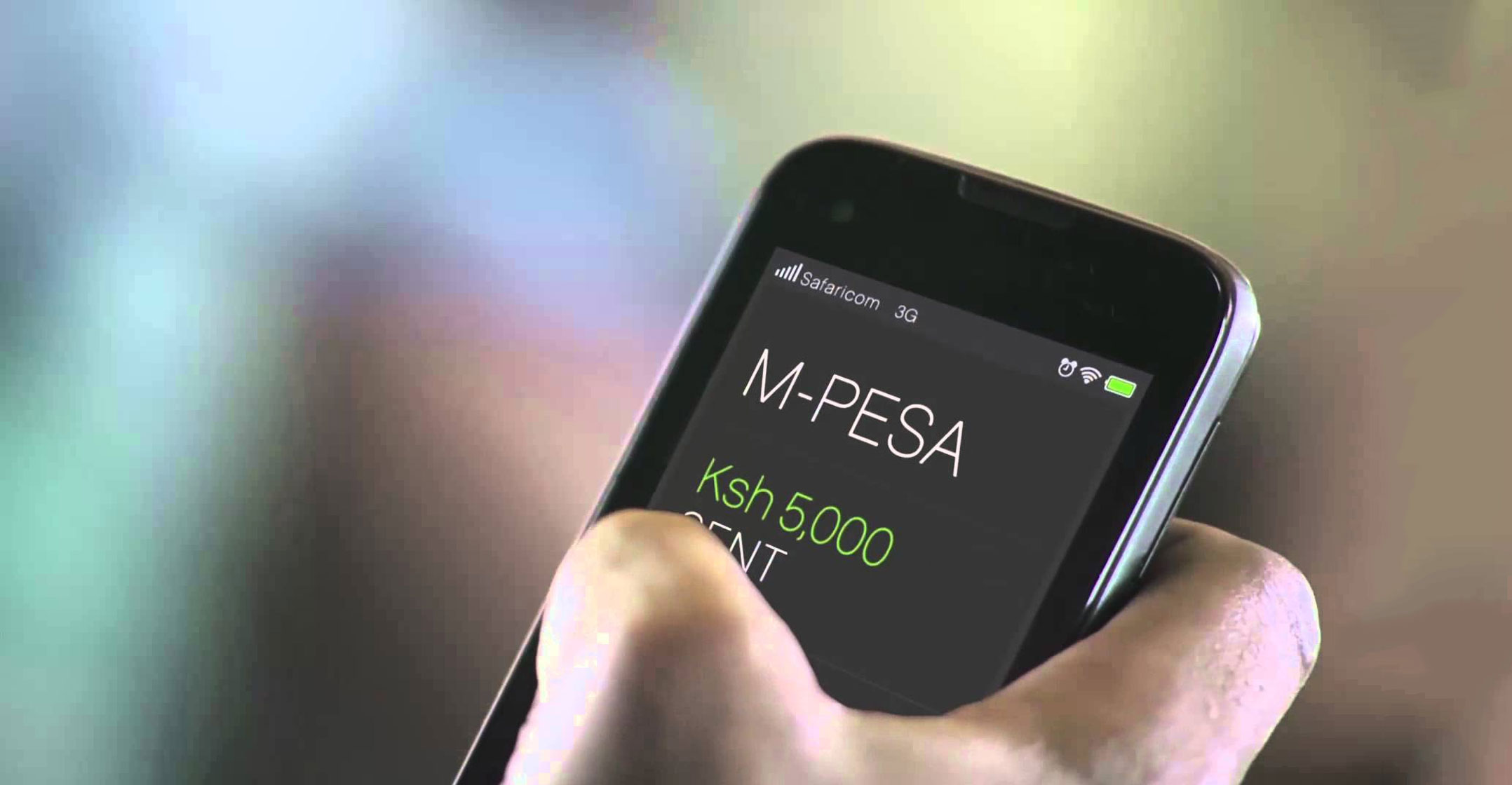
    This is what’s happening in Kenya, where mobile money transfer services like Safaricom’s M-Pesa don’t operate under regulations specifically meant to govern these kinds of services.

    M-Pesa was a game changer when it was launched in 2007, not only for Safaricom and Kenya — it enabled the transfer of nearly half of the country’s GDP — but also for African mobile operators.

    The excitement around M-Pesa’s potential led Kenyan authorities to hold off on regulating it too stringently – until now

    Prior to M-Pesa, and with the banking system underdeveloped, transferring money around Kenya was onerous. The easiest way to send money from one town to another was to pay a taxi driver to transport the cash.

    Although mobile operators had talked about creating a money transfer service for a while, it was wasn’t until Safaricom introduced M-Pesa that talk turned into action. Its success in Kenya proved that the concept of doing banking over an entry-level phone was not only possible but lucrative. About 27% of Safaricom’s revenue comes from M-Pesa.

    The excitement around M-Pesa’s potential led Kenyan authorities to hold off on regulating it too stringently.

    This is now changing. Concerns over its potential for money laundering and having a single company play such a dominant role in an important part of its economy has seen Kenyan authorities steadily increase regulatory requirements in recent years.

    Separate entity

    The Kenyan parliament is now even proposing legislation that will see the provider of a telecoms service split its other businesses, like M-Pesa, into a separate entity. This move will eventually see M-Pesa “provide separate accounts and reports”.

    The goal is to have M-Pesa fall under the country’s financial services, rather than its telecoms legislation and regulations. Currently, M-Pesa operates under a special licence from the Central Bank of Kenya.

    For its part, Safaricom warns that legislative changes could severely affect its operations. “We have noted with concern attempts to regulate the industry through proposed legislation and regulations that seek to forcefully reorganise the operating structure of companies such as ours, whose growth has been the result of well-executed business strategy,” it says in its 2019 annual report.
    It goes on to to say: “Such actions would severely limit the ability of businesses to invest, innovate and transform lives, which is what Safaricom exists to do.”

    Kenyan authorities are pushing for the change in the law, in part because they are trying to undo some of the unintended consequences of having M-Pesa become the dominant money transfer service in the country.

    Being the first to set up a mobile money service has given operators like Safaricom and MTN in Uganda considerable power in this emerging market. As the operators own the infrastructure that runs these services, they have the power to limit competition, as pointed out in a blog by Anthea Paelo, a researcher at the University of Johannesburg’s Centre for Competition, Regulation and Economic Development.

    Such actions would severely limit the ability of businesses to invest, innovate and transform lives, which is what Safaricom exists to do

    The challenge for authorities is in allowing operators to provide these services without having a handful become dominant, in which case they may charge the public steep fees for using the services and squeeze out competition in the market.

    This is what Nigerian authorities had in mind when the country put together its regulatory framework — for instance, it requires mobile money operators “to connect to the National Central Switch (NCS) for the purpose of ensuring interoperability of all schemes in the system”.

    This will mean that no single company will get to dominate the infrastructure when it comes to transfers.

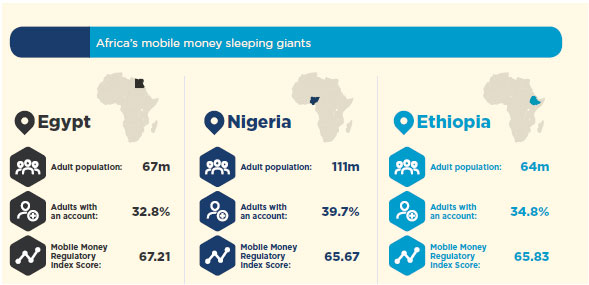
    Whatever approach regulators take will have far-reaching consequences. A 2018 survey by the GSMA found that Nigeria, Ethiopia and Egypt, the continent’s most populous countries, are expected to sign up 110 million new mobile money accounts in the next five years.

    • This article was originally published on Moneyweb and is used here with permission

    Follow TechCentral on Google News Add TechCentral as your preferred source on Google


    M-Pesa MTN Safaricom top
    WhatsApp YouTube
    Share. Facebook Twitter LinkedIn WhatsApp Telegram Email Copy Link
    Previous ArticleCloudflare cuts support for ‘cesspool of hate’ site 8chan
    Next Article Flying car hovers for one minute during Japanese demo

    Related Posts

    Ring, reject, repeat: South Africa's spam call crisis

    Ring, reject, repeat: South Africa’s spam call crisis

    2 April 2026
    TCS | MTN's Divysh Joshi on the strategy behind Pi - Divyesh Joshi

    TCS | MTN’s Divyesh Joshi on the strategy behind Pi

    1 April 2026
    Inside MTN's plan to turn its towers into AI hubs

    Inside MTN’s plan to turn its towers into AI hubs

    31 March 2026
    Company News
    Synthesis helps financial enterprises transform with new Gemini Enterprise - Digicloud Africa

    Synthesis helps financial enterprises transform with new Gemini Enterprise

    2 April 2026
    The next churn wave is already in your contact centre conversations - CallMiner

    The next churn wave is already in your contact centre conversations

    2 April 2026
    Mining's problem isn't output, it's execution - Workday

    Mining’s problem isn’t output, it’s execution – Workday

    1 April 2026
    Opinion
    The conflict of interest at the heart of PayShap's slow adoption - Cheslyn Jacobs

    The conflict of interest at the heart of PayShap’s slow adoption

    26 March 2026
    South Africa's energy future hinges on getting wheeling right - Aishah Gire

    South Africa’s energy future hinges on getting wheeling right

    10 March 2026
    Hold the doom: the case for a South African comeback - Duncan McLeod

    Apple just dropped a bomb on the Windows world

    5 March 2026

    Subscribe to Updates

    Get the best South African technology news and analysis delivered to your e-mail inbox every morning.

    Latest Posts
    How AI agents are reshaping banking in South Africa - Lindelani Ramukumba, Absa

    How agentic AI is reshaping banking in South Africa

    5 April 2026
    South Africa's 5G boom is bypassing rural areas: Icasa

    South Africa’s 5G boom is bypassing rural areas: Icasa

    5 April 2026
    WhatsApp is eating South African operators' revenue

    WhatsApp is eating South African operators’ revenue

    4 April 2026
    DeepSeek V4 to run on Huawei silicon as China builds its own AI stack

    DeepSeek V4 to run on Huawei silicon as China builds its own AI stack

    4 April 2026
    © 2009 - 2026 NewsCentral Media
    • Cookie policy (ZA)
    • TechCentral – privacy and Popia

    Type above and press Enter to search. Press Esc to cancel.

    Manage consent

    TechCentral uses cookies to enhance its offerings. Consenting to these technologies allows us to serve you better. Not consenting or withdrawing consent may adversely affect certain features and functions of the website.

    Functional Always active
    The technical storage or access is strictly necessary for the legitimate purpose of enabling the use of a specific service explicitly requested by the subscriber or user, or for the sole purpose of carrying out the transmission of a communication over an electronic communications network.
    Preferences
    The technical storage or access is necessary for the legitimate purpose of storing preferences that are not requested by the subscriber or user.
    Statistics
    The technical storage or access that is used exclusively for statistical purposes. The technical storage or access that is used exclusively for anonymous statistical purposes. Without a subpoena, voluntary compliance on the part of your Internet Service Provider, or additional records from a third party, information stored or retrieved for this purpose alone cannot usually be used to identify you.
    Marketing
    The technical storage or access is required to create user profiles to send advertising, or to track the user on a website or across several websites for similar marketing purposes.
    • Manage options
    • Manage services
    • Manage {vendor_count} vendors
    • Read more about these purposes
    View preferences
    • {title}
    • {title}
    • {title}