
Close Menu
TechCentralTechCentral

    Subscribe to the newsletter

    Get the best South African technology news and analysis delivered to your e-mail inbox every morning.

    Facebook X (Twitter) YouTube LinkedIn
    WhatsApp Facebook X (Twitter) LinkedIn YouTube
    TechCentralTechCentral
    • News
      FirstRand ups stake in Optasia in R1.5-billion deal

      FirstRand ups stake in Optasia in R1.5-billion deal

      26 March 2026
      Remgro's fibre empire roars back

      Remgro’s fibre empire roars back

      25 March 2026
      Truecaller cooperating with Info Regulator's Popia probe

      Truecaller cooperating with Info Regulator’s Popia probe

      25 March 2026
      Why Namibia slammed the door on Starlink

      Why Namibia slammed the door on Starlink

      25 March 2026
      Podcasters push back against regulatory overreach

      Podcasters push back against regulatory overreach

      25 March 2026
    • World
      It's official: ads are coming to ChatGPT

      It’s official: ads are coming to ChatGPT

      23 March 2026
      Mystery Chinese AI model revealed to be Xiaomi's

      Mystery Chinese AI model revealed to be Xiaomi’s

      19 March 2026
      A mystery AI model has developers buzzing

      A mystery AI model has developers buzzing

      18 March 2026
      Samsung's trifold gamble ends in retreat

      Samsung’s trifold gamble ends in retreat

      17 March 2026
      Nvidia targets $1-trillion in AI chip sales as inference demand surges - Jensen Huang

      Nvidia targets $1-trillion in AI chip sales as inference demand surges

      17 March 2026
    • In-depth
      The last generation of coders

      The last generation of coders

      18 February 2026
      Sentech is in dire straits

      Sentech is in dire straits

      10 February 2026
      How liberalisation is rewiring South Africa's power sector

      How liberalisation is rewiring South Africa’s power sector

      21 January 2026
      The top-performing South African tech shares of 2025

      The top-performing South African tech shares of 2025

      12 January 2026
      Digital authoritarianism grows as African states normalise internet blackouts

      Digital authoritarianism grows as African states normalise internet blackouts

      19 December 2025
    • TCS
      Meet the CIO | HealthBridge CTO Anton Fatti on the future of digital health

      Meet the CIO | Healthbridge CTO Anton Fatti on the future of digital health

      23 March 2026
      TCS+ | Arctic Wolf unpacks the evolving threat landscape for SA businesses - Clare Loveridge and Jason Oehley

      TCS+ | Arctic Wolf unpacks the evolving threat landscape for SA businesses

      19 March 2026
      TCS+ | Vox Kiwi: a wireless solution promising a fibre-like experience - Theo van Zyl

      TCS+ | Vox Kiwi: a wireless solution promising a fibre-like experience

      13 March 2026
      TCS+ | Flipping the narrative on AI in the Global South - Josefin Rosén

      TCS+ | Flipping the narrative on AI in the Global South

      13 March 2026
      TCS | Sink or swim? Antony Makins on how AI is rewriting the rules of work

      TCS | Sink or swim? Antony Makins on how AI is rewriting the rules of work

      5 March 2026
    • Opinion
      South Africa's energy future hinges on getting wheeling right - Aishah Gire

      South Africa’s energy future hinges on getting wheeling right

      10 March 2026
      Hold the doom: the case for a South African comeback - Duncan McLeod

      Apple just dropped a bomb on the Windows world

      5 March 2026
      VC's centre of gravity is shifting - and South Africa is in the frame - Alison Collier

      VC’s centre of gravity is shifting – and South Africa is in the frame

      3 March 2026
      Hold the doom: the case for a South African comeback - Duncan McLeod

      Hold the doom: the case for a South African comeback

      26 February 2026
      The AI fraud crisis your bank is not ready for - Andries Maritz

      The AI fraud crisis your bank is not ready for

      18 February 2026
    • Company Hubs
      • 1Stream
      • Africa Data Centres
      • AfriGIS
      • Altron Digital Business
      • Altron Document Solutions
      • Altron Group
      • Arctic Wolf
      • Ascent Technology
      • AvertITD
      • Braintree
      • CallMiner
      • CambriLearn
      • CYBER1 Solutions
      • Digicloud Africa
      • Digimune
      • Domains.co.za
      • ESET
      • Euphoria Telecom
      • HOSTAFRICA
      • Incredible Business
      • iONLINE
      • IQbusiness
      • Iris Network Systems
      • LSD Open
      • Mitel
      • NEC XON
      • Netstar
      • Network Platforms
      • Next DLP
      • Ovations
      • Paracon
      • Paratus
      • Q-KON
      • SevenC
      • SkyWire
      • Solid8 Technologies
      • Telit Cinterion
      • Tenable
      • Vertiv
      • Videri Digital
      • Vodacom Business
      • Wipro
      • Workday
      • XLink
    • Sections
      • AI and machine learning
      • Banking
      • Broadcasting and Media
      • Cloud services
      • Contact centres and CX
      • Cryptocurrencies
      • Education and skills
      • Electronics and hardware
      • Energy and sustainability
      • Enterprise software
      • Financial services
      • HealthTech
      • Information security
      • Internet and connectivity
      • Internet of Things
      • Investment
      • IT services
      • Lifestyle
      • Motoring
      • Policy and regulation
      • Public sector
      • Retail and e-commerce
      • Satellite communications
      • Science
      • SMEs and start-ups
      • Social media
      • Talent and leadership
      • Telecoms
    • Events
    • Advertise
    TechCentralTechCentral
    Home » Sections » Investment » ANC’s attack on Solly Malatsi shows how BEE dogma trumps economic reality

    ANC’s attack on Solly Malatsi shows how BEE dogma trumps economic reality

    The ANC's ideological rigidity over BEE risks deterring investment and undermining much-needed reform.
    By Duncan McLeod14 December 2025
    Twitter LinkedIn Facebook WhatsApp Email Telegram Copy Link
    News Alerts
    WhatsApp
    ANC's attack on Solly Malatsi shows how BEE dogma trumps economic reality
    Communications minister Solly Malatsi. Image: DCDT

    If you needed a case study in political point-scoring trumping sober analysis, look no further than the ANC’s broadside on Saturday against communications minister Solly Malatsi’s policy directive on equity equivalent investment programmes (EEIPs).

    The party’s statement – framed as a defence of transformation and parliamentary authority – comes off less like a defence of constitutionalism and the rule of law and more like an ideological reflex: if it has anything to do with black economic empowerment and isn’t enforced exactly the ANC’s way, it must be wrong.

    This isn’t just quibbling over semantics. It risks chilling foreign investment, suppressing economic growth and leaving South Africans without access to critical digital infrastructure – in the name of preserving an orthodoxy that cannot, in the ANC’s view, ever be questioned.

    Malatsi’s policy directive deserves to be debated on its merits, not trashed for ideological reasons

    Let’s recap what’s happened over the past couple of days: Malatsi on Friday issued a final policy directive to Icasa urging the communications regulator to align its ownership regulations with the ICT sector code, including provisions that allow EEIPs to be recognised as an alternative to the rigid 30% equity ownership requirement historically demanded of foreign telecommunications operators.

    Under the current Icasa licensing regime – which is out of step with the ICT sector BEE code – any company seeking a telecoms licence must ensure that 30% of its equity is held by historically disadvantaged persons.

    Recognising EEIPs – essentially alternative transformation mechanisms such as investment in local suppliers, skills development and small business support – would align Icasa’s regulatory regime with the broader BEE framework already applied by the department of trade, industry & competition. These mechanisms are lawful and widely used across the economy by multinational firms seeking to satisfy empowerment expectations without forced dilution of equity.

    Ideological tantrum

    Yet the ANC’s reaction to Malatsi’s policy directive reads like a cry that the sky is falling. In short, it threw an ideological tantrum. In its statement, the party accused the minister, a senior member of the DA, of exceeding his authority, undermining transformation and threatening regulatory integrity.

    It even urged parliament’s communications portfolio committee to hold Malatsi accountable for the “legality, intent and consequences” of his policy directive. That’s rich, given what President Cyril Ramaphosa himself has publicly said about the directive when it was in draft form: that it is lawful, consistent with existing policy goals and not aimed at dismantling BEE but at clarifying how BEE should be applied in the ICT sector.

    Ramaphosa emphasised that EEIPs are valid transformation vehicles and that aligning them with Icasa’s approach helps remove legal inconsistency, not weaken empowerment. So, is the ANC now going to hold its own president to account?

    Read: Political war erupts over BEE in the ICT sector

    The ANC’s polemic assumes that any departure from a straight 30% equity ownership requirement is an existential threat to transformation. What hogwash!

    This ideological posturing ignores that EEIPs are part of the BEE architecture – not an external invention. Companies such as Microsoft, Amazon Web Services and others already use equity equivalents to deliver meaningful empowerment outcomes in South Africa, including enterprise development funds, infrastructure spending and skills programmes. These do not involve selling equity but arguably produce greater, more durable impact than token shareholding arrangements.
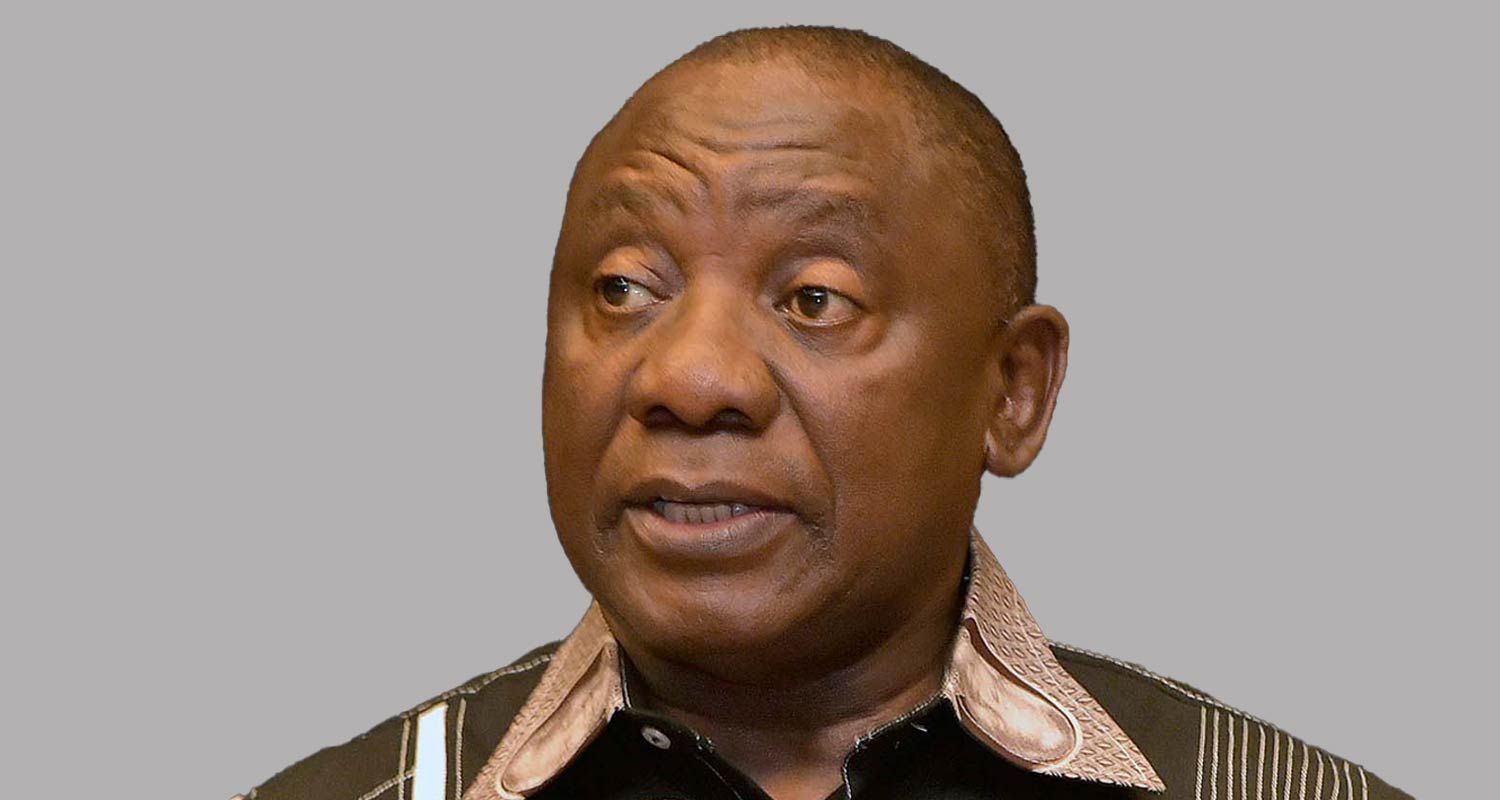
    President Cyril Ramaphosa has voiced his support for his communications minister's reforms
    President Cyril Ramaphosa has voiced his support for the communications minister’s reforms

    Ironically, Malatsi’s directive doesn’t eliminate the BEE requirement. It simply broadens the mechanisms by which companies can meet their empowerment obligations – precisely the kind of flexible implementation that transformation critics inside and outside the ANC have long argued would unlock investment and growth.

    And here’s the heart of the matter: the entire brouhaha has been conflated with Starlink, the satellite internet service owned by Elon Musk’s SpaceX. Starlink’s attempts to operate in South Africa have been tangled up in the country’s licensing regime because of Icasa’s 30% rule – and because the company has publicly criticised South Africa’s BEE laws as discriminatory. Musk’s sometimes incendiary remarks on the subject on his X platform have certainly not helped smooth already-ruffled feathers in the ANC.

    It’s easy to get worked up about Musk – a figure who is culturally and politically polarising, who has backed far-right figures abroad and who makes opportunistic statements to suit his global PR strategy. But if that’s the basis for public policy, we are in trouble. Policy should be about outcomes, not personalities — whatever we might think of them.

    If BEE becomes an idol, something that can never be adapted or applied flexibly, then it stops serving its purpose

    And the outcome here is clear: aligning Icasa’s regulations with the broader BEE framework would remove a barrier to investment that has stood for years and done nothing to advance South Africa’s economic fortunes. Malatsi is seeking to reform the system, yet the way the ANC carries on you’d think the minister had said he wants to tear down the entire system.

    South Africa has not delivered real economic growth in a decade-and-a-half. Unemployment stubbornly remains among the highest in the world. Business confidence is weak. Foreign direct investment is lower than it should be for a middle-income economy with comparatively sophisticated infrastructure. And part of this economic malaise stems from a regulatory environment that scares off investors by signalling unpredictability and inflexibility. The very same regulatory environment the ANC is vigorously defending.

    Archaic ownership rules that force companies to sell equity to local partners irrespective of economic logic or global corporate rules have been cited for years as obstacles to investment. In telecoms, this has been painfully obvious: potential entrants can see the size of the market and the infrastructure opportunities, but they are deterred by the requirement to dilute equity.

    Icasa in the crosshairs

    Icasa now finds itself in the crosshairs. The ANC has said the regulator should reject any directive that deviates from the old way of doing things – ignoring both the legal basis for EEIPs and the broader economic imperatives.

    Here’s the absurdity: Ramaphosa, the leader of the ANC, has endorsed Malatsi’s move. Yet the party is publicly castigating it. In the middle sits Icasa, an independent but historically weak regulator, tasked with applying the law and managing the sector’s long-term development. It’s now caught up in a political battle in which it will be seen to be taking sides, no matter what it does.

    Read: Icasa told to align on BEE in move that will favour Starlink

    Proponents of BEE have long argued that its purpose is to correct historical injustices, expand participation in the economy and create sustainable opportunities for black people. But if BEE becomes an idol – something that can never be adapted or applied flexibly – then it stops serving its purpose and becomes a barrier to progress. And if that happens, calls for it to be scrapped in its entirety will grow.

    The ANC’s attack on Malatsi’s reform agenda sends a clear message: BEE cannot ever be wrong; it cannot be questioned; it cannot be adapted. That’s why the party reacted with such zeal, ignoring the fact that EEIPs are lawful and widely used in practice. Malatsi hasn’t asked Icasa to abandon transformation. Rather, he is trying to make transformation work in a way that doesn’t cripple investment and hurt the economy.

    Icasa

    The ANC’s weekend statement is a political stunt. Malatsi’s policy directive – aligned as it is with the broader BEE framework – deserves to be debated on its merits, not trashed for dogmatic ideological reasons.

    If the ANC truly cares about transformation, it will embrace mechanisms that allow empowerment to be delivered in different ways without killing the investment that could accelerate inclusion and opportunity.

    If the party truly cares about growth, it will stop reflexively opposing every change simply because it doesn’t fit its unyielding worldview, one that is out of sync with the need to build a modern, fast-growing economy.  – © 2025 NewsCentral Media

    Get breaking news from TechCentral on WhatsApp. Sign up here.

    • The author, Duncan McLeod, is editor of TechCentral

    Follow TechCentral on Google News Add TechCentral as your preferred source on Google


    Cyril Ramaphosa Icasa Solly Malatsi
    WhatsApp YouTube
    Share. Facebook Twitter LinkedIn WhatsApp Telegram Email Copy Link
    Previous ArticlePolitical war erupts over BEE in the ICT sector
    Next Article ICT BEE fight deepens as MK, EFF target Malatsi

    Related Posts

    The Post Office is out of options - Anoosh Rooplal

    The Post Office is out of options

    24 March 2026
    Namibia rejects Starlink

    Namibia rejects Starlink

    24 March 2026
    Showmax kill date announced

    Commission to probe Showmax closure

    18 March 2026
    Company News
    Defend your cloud with Altron Digital Business

    Defend your cloud with Altron Digital Business

    26 March 2026
    Why most Cisco partners leave money on the table at renewal time - Westcon-Comstor

    Why most Cisco partners leave money on the table at renewal time

    25 March 2026
    Why South Africa's technology leaders choose TechCentral

    Why South Africa’s technology leaders choose TechCentral

    25 March 2026
    Opinion
    South Africa's energy future hinges on getting wheeling right - Aishah Gire

    South Africa’s energy future hinges on getting wheeling right

    10 March 2026
    Hold the doom: the case for a South African comeback - Duncan McLeod

    Apple just dropped a bomb on the Windows world

    5 March 2026
    VC's centre of gravity is shifting - and South Africa is in the frame - Alison Collier

    VC’s centre of gravity is shifting – and South Africa is in the frame

    3 March 2026

    Subscribe to Updates

    Get the best South African technology news and analysis delivered to your e-mail inbox every morning.

    Latest Posts
    Defend your cloud with Altron Digital Business

    Defend your cloud with Altron Digital Business

    26 March 2026
    FirstRand ups stake in Optasia in R1.5-billion deal

    FirstRand ups stake in Optasia in R1.5-billion deal

    26 March 2026
    Remgro's fibre empire roars back

    Remgro’s fibre empire roars back

    25 March 2026
    Truecaller cooperating with Info Regulator's Popia probe

    Truecaller cooperating with Info Regulator’s Popia probe

    25 March 2026
    © 2009 - 2026 NewsCentral Media
    • Cookie policy (ZA)
    • TechCentral – privacy and Popia

    Type above and press Enter to search. Press Esc to cancel.

    Manage consent

    TechCentral uses cookies to enhance its offerings. Consenting to these technologies allows us to serve you better. Not consenting or withdrawing consent may adversely affect certain features and functions of the website.

    Functional Always active
    The technical storage or access is strictly necessary for the legitimate purpose of enabling the use of a specific service explicitly requested by the subscriber or user, or for the sole purpose of carrying out the transmission of a communication over an electronic communications network.
    Preferences
    The technical storage or access is necessary for the legitimate purpose of storing preferences that are not requested by the subscriber or user.
    Statistics
    The technical storage or access that is used exclusively for statistical purposes. The technical storage or access that is used exclusively for anonymous statistical purposes. Without a subpoena, voluntary compliance on the part of your Internet Service Provider, or additional records from a third party, information stored or retrieved for this purpose alone cannot usually be used to identify you.
    Marketing
    The technical storage or access is required to create user profiles to send advertising, or to track the user on a website or across several websites for similar marketing purposes.
    • Manage options
    • Manage services
    • Manage {vendor_count} vendors
    • Read more about these purposes
    View preferences
    • {title}
    • {title}
    • {title}