Close Menu
TechCentralTechCentral

    Subscribe to the newsletter

    Get the best South African technology news and analysis delivered to your e-mail inbox every morning.

    Facebook X (Twitter) YouTube LinkedIn
    WhatsApp Facebook X (Twitter) LinkedIn YouTube
    TechCentralTechCentral
    • News
      MultiChoice scraps annual DStv price hikes for 2026 - David Mignot

      MultiChoice scraps annual DStv price hike

      20 February 2026
      What Gen Z really thinks about the tech world it inherited - Tinashe Mazodze

      What Gen Z really thinks about the tech world it inherited

      20 February 2026
      Showmax 'can't continue' in its current form

      Showmax ‘can’t continue’ in its current form

      20 February 2026
      Free Market Foundation slams treasury's proposed gambling tax

      Free Market Foundation slams treasury’s proposed gambling tax

      20 February 2026
      South Africa's dynamic spectrum breakthrough - Paul Colmer

      South Africa’s dynamic spectrum breakthrough

      20 February 2026
    • World
      Prominent Southern African journalist targeted with Predator spyware

      Prominent Southern African journalist targeted with Predator spyware

      18 February 2026
      More drama in Warner Bros tug of war

      More drama in Warner Bros tug of war

      17 February 2026
      Russia bans WhatsApp

      Russia bans WhatsApp

      12 February 2026
      EU regulators take aim at WhatsApp

      EU regulators take aim at WhatsApp

      9 February 2026
      Musk hits brakes on Mars mission

      Musk hits brakes on Mars mission

      9 February 2026
    • In-depth
      How liberalisation is rewiring South Africa's power sector

      How liberalisation is rewiring South Africa’s power sector

      21 January 2026
      The top-performing South African tech shares of 2025

      The top-performing South African tech shares of 2025

      12 January 2026
      Digital authoritarianism grows as African states normalise internet blackouts

      Digital authoritarianism grows as African states normalise internet blackouts

      19 December 2025
      TechCentral's South African Newsmakers of 2025

      TechCentral’s South African Newsmakers of 2025

      18 December 2025
      Black Friday goes digital in South Africa as online spending surges to record high

      Black Friday goes digital in South Africa as online spending surges to record high

      4 December 2025
    • TCS
      Watts & Wheels S1E4: 'We drive an electric Uber'

      Watts & Wheels S1E4: ‘We drive an electric Uber’

      10 February 2026
      TCS+ | How Cloud On Demand is helping SA businesses succeed in the cloud - Xhenia Rhode, Dion Kalicharan

      TCS+ | Cloud On Demand and Consnet: inside a real-world AWS partner success story

      30 January 2026
      Watts & Wheels S1E4: 'We drive an electric Uber'

      Watts & Wheels S1E3: ‘BYD’s Corolla Cross challenger’

      30 January 2026
      Watts & Wheels S1E4: 'We drive an electric Uber'

      Watts & Wheels S1E2: ‘China attacks, BMW digs in, Toyota’s sublime supercar’

      23 January 2026

      TCS+ | Why cybersecurity is becoming a competitive advantage for SA businesses

      20 January 2026
    • Opinion
      A million reasons monopolies don't work - Duncan McLeod

      A million reasons monopolies don’t work

      10 February 2026
      The author, Business Leadership South Africa CEO Busi Mavuso

      Eskom unbundling U-turn threatens to undo hard-won electricity gains

      9 February 2026
      South Africa's skills advantage is being overlooked at home - Richard Firth

      South Africa’s skills advantage is being overlooked at home

      29 January 2026
      Why Elon Musk's Starlink is a 'hard no' for me - Songezo Zibi

      Why Elon Musk’s Starlink is a ‘hard no’ for me

      26 January 2026
      A million reasons monopolies don't work - Duncan McLeod

      South Africa’s new fibre broadband battle

      20 January 2026
    • Company Hubs
      • Africa Data Centres
      • AfriGIS
      • Altron Digital Business
      • Altron Document Solutions
      • Altron Group
      • Arctic Wolf
      • AvertITD
      • Braintree
      • CallMiner
      • CambriLearn
      • CYBER1 Solutions
      • Digicloud Africa
      • Digimune
      • Domains.co.za
      • ESET
      • Euphoria Telecom
      • Incredible Business
      • iONLINE
      • IQbusiness
      • Iris Network Systems
      • LSD Open
      • Mitel
      • NEC XON
      • Netstar
      • Network Platforms
      • Next DLP
      • Ovations
      • Paracon
      • Paratus
      • Q-KON
      • SevenC
      • SkyWire
      • Solid8 Technologies
      • Telit Cinterion
      • Tenable
      • Vertiv
      • Videri Digital
      • Vodacom Business
      • Wipro
      • Workday
      • XLink
    • Sections
      • AI and machine learning
      • Banking
      • Broadcasting and Media
      • Cloud services
      • Contact centres and CX
      • Cryptocurrencies
      • Education and skills
      • Electronics and hardware
      • Energy and sustainability
      • Enterprise software
      • Financial services
      • Information security
      • Internet and connectivity
      • Internet of Things
      • Investment
      • IT services
      • Lifestyle
      • Motoring
      • Public sector
      • Retail and e-commerce
      • Satellite communications
      • Science
      • SMEs and start-ups
      • Social media
      • Talent and leadership
      • Telecoms
    • Events
    • Advertise
    TechCentralTechCentral
    Home » Sections » AI and machine learning » Experts disagree on AI regulation in South Africa
    Experts disagree on AI regulation in South Africa
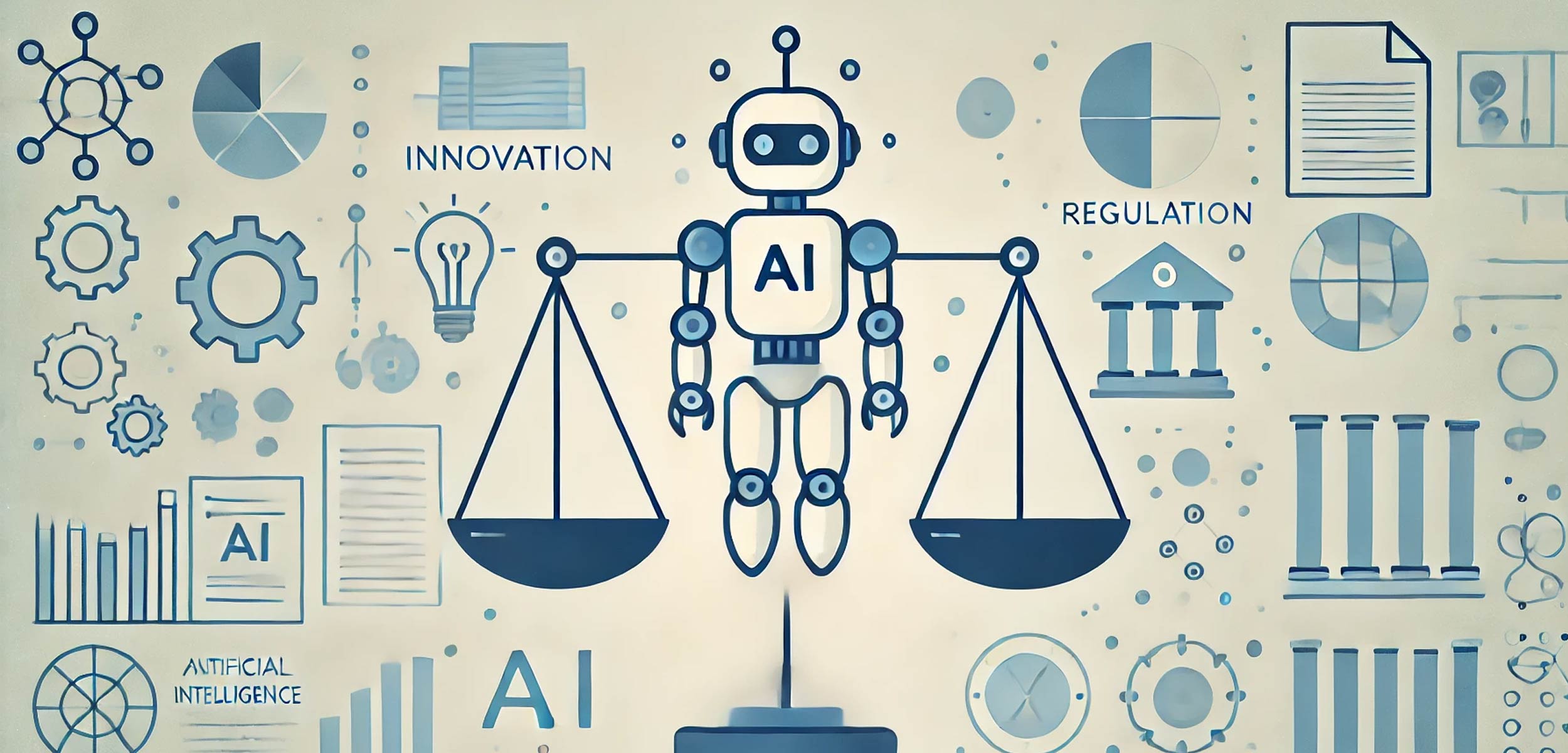
    Image: Dall-E

    Experts disagree on AI regulation in South Africa

    By Nkosinathi Ndlovu25 October 2024

    The rush by regulatory bodies in some regions to regulate artificial intelligence while the technology is still in its infancy could stifle its development and rob humanity of its benefits before they are realised.

    That’s the stark warning from Bronwyn Howell, a telecommunications and public policy researcher at the Victoria University of Wellington in New Zealand, who spoke on a recent webinar arranged by the University of South Africa (Unisa).

    Howell’s view is based on research done with AI development firms and regulatory authorities in Washington, DC earlier this year while she was on research and study leave from the university.

    Imagine we learnt this year how to split the atom and how to create nuclear power and nuclear bombs

    “The question we must ask is this: are we trying to create something to regulate not a real harm that we are aware of but a feared harm by stopping anyone from actually going into the jungle in the first place? Are we using regulation to assuage anxious consumers that we are seen to be doing something before we fully understand it? Have we overreacted when it would have been better to wait and gather more information?”

    Howell is critical of the “risk management approach” taken by US and EU regulators on AI. The EU AI Act defines risk as “the combination of the probability of an occurrence of harm and the severity of that harm”. However, Howell argues that when it comes to AI, regulators are not dealing with risk per se, but rather with the more complex world of uncertainty.

    The reluctance to acknowledge high levels of uncertainty in the AI space introduces biases in regulation and risks imposing old ways of thinking on new technologies. She said when regulators don’t know a new technology well enough, they revert to what they already know and try to prevent things that we understood to be harms in the past.

    ‘Protect people’

    However, according to Johan Steyn, founder of AI for Business and an advocate for human-centred AI, the technology has the potential to displace jobs and widen the gap between rich and poor – the downstream effects of which could destabilise economies.

    “The goal of regulation is to protect people, not exploit them. The typical way it happens is that regulation follows innovation, but often something has to go wrong before we start regulating. So, there had to be car crashes before we got seatbelts.

    Read: Icasa and other regulators create new top-level forum

    “But in the age of rapidly expanding technology, the split between regulation and innovation is widening, so what has to go wrong before we wake up to regulate AI?” he said in an interview with TechCentral.

    Steyn is part of a working group of experts from various industries that is preparing an advisory report to government that may influence how South Africa regulates AI. He said the EU AI Act is a sound law on the subject and South African legislation should take a similar approach.
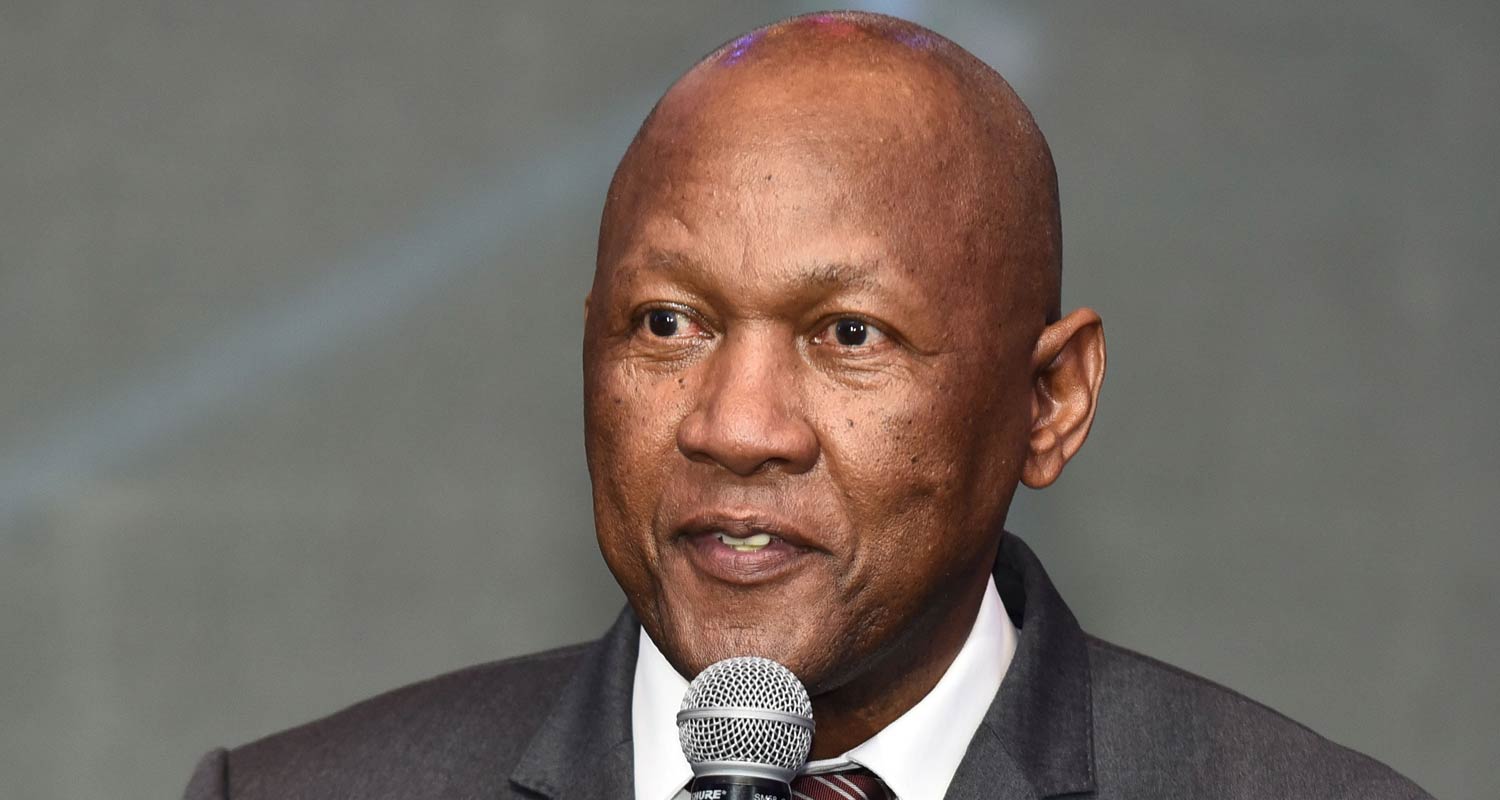
    Convergence Partners chairman Andile Ngcaba
    Convergence Partners chairman Andile Ngcaba

    But according to Andile Ngcaba, executive chairman at Convergence Partners and president of the Digital Council Africa, South African regulators must be careful not to imitate the mistakes made by their EU peers if the benefits of technology are to be realised locally.

    “Our friends in Europe … say that sometimes Europe writes standards and technology about AI before AI is even tested. I have been telling colleagues here to please not copy this [approach] because they are going to hinder innovation… We must not make decisions that are counterproductive to innovation,” Ngcaba said at an event hosted by fibre operator Maziv on Thursday.

    According to Howell, generative AI is conceptually different to computing methodologies that have come before. Gen AI models are designed to learn and change, so they are expected to give different outputs for the same inputs over time, making them unpredictable. This complexity, she argued, is why regulating AI from a risk management perspective is not ideal.

    Bronwyn Howell

    For Steyn, on the other hand, the fact that generative AI can learn and change is exactly why regulators should get ahead of the curve and reign in the technology before its capabilities expand beyond human control.

    “Imagine we learnt this year how to split the atom and how to create nuclear power and nuclear bombs. Would a wait-and-see approach to regulation work then? AI won’t destroy a city physically like a weapon, but the impact it will have on us in the next few years is so severe, potentially, that we don’t have any time to sit and wait,” he declared.  – © 2024 NewsCentral Media

    Get breaking news from TechCentral on WhatsApp. Sign up here

    Don’t miss:

    South Africa publishes national AI policy framework

    Follow TechCentral on Google News Add TechCentral as your preferred source on Google


    AI for Business Andile Ngcaba Bronwyn Howell Convergence Partners Johan Steyn
    WhatsApp YouTube
    Share. Facebook Twitter LinkedIn WhatsApp Telegram Email Copy Link
    Previous ArticleBookmarks | Elon Musk’s secret talks with Vladimir Putin
    Next Article Hidden South African observatory quietly shapes our view of space

    Related Posts

    Seacom targeting Q4 2026 to lock in funds for huge new broadband system - Prenesh Padayachee

    Seacom targeting Q4 2026 to lock in funds for huge new broadband system

    11 November 2025
    Get AI rules wrong, choke innovation, warns Competition Commission - Hardin Ratshisusu

    Get AI rules wrong, choke innovation, warns Competition Commission

    15 September 2025
    Cut electricity prices for data centres: Andile Ngcaba

    Cut electricity prices for data centres: Andile Ngcaba

    18 July 2025
    Company News
    Service is everyone's problem now - and that's exactly why the Atlassian Service Collection matters

    Service is everyone’s problem now – why the Atlassian Service Collection matters

    20 February 2026
    Customers have new expectations. Is your CX ready? 1Stream

    Customers have new expectations. Is your CX ready?

    19 February 2026
    South Africa's cybersecurity challenge is not a tool problem - Nicholas Applewhite, Trinexia South Africa

    South Africa’s cybersecurity challenge is not a tool problem

    19 February 2026
    Opinion
    A million reasons monopolies don't work - Duncan McLeod

    A million reasons monopolies don’t work

    10 February 2026
    The author, Business Leadership South Africa CEO Busi Mavuso

    Eskom unbundling U-turn threatens to undo hard-won electricity gains

    9 February 2026
    South Africa's skills advantage is being overlooked at home - Richard Firth

    South Africa’s skills advantage is being overlooked at home

    29 January 2026

    Subscribe to Updates

    Get the best South African technology news and analysis delivered to your e-mail inbox every morning.

    Latest Posts
    MultiChoice scraps annual DStv price hikes for 2026 - David Mignot

    MultiChoice scraps annual DStv price hike

    20 February 2026
    What Gen Z really thinks about the tech world it inherited - Tinashe Mazodze

    What Gen Z really thinks about the tech world it inherited

    20 February 2026
    Showmax 'can't continue' in its current form

    Showmax ‘can’t continue’ in its current form

    20 February 2026
    Free Market Foundation slams treasury's proposed gambling tax

    Free Market Foundation slams treasury’s proposed gambling tax

    20 February 2026
    © 2009 - 2026 NewsCentral Media
    • Cookie policy (ZA)
    • TechCentral – privacy and Popia

    Type above and press Enter to search. Press Esc to cancel.

    Manage consent

    TechCentral uses cookies to enhance its offerings. Consenting to these technologies allows us to serve you better. Not consenting or withdrawing consent may adversely affect certain features and functions of the website.

    Functional Always active
    The technical storage or access is strictly necessary for the legitimate purpose of enabling the use of a specific service explicitly requested by the subscriber or user, or for the sole purpose of carrying out the transmission of a communication over an electronic communications network.
    Preferences
    The technical storage or access is necessary for the legitimate purpose of storing preferences that are not requested by the subscriber or user.
    Statistics
    The technical storage or access that is used exclusively for statistical purposes. The technical storage or access that is used exclusively for anonymous statistical purposes. Without a subpoena, voluntary compliance on the part of your Internet Service Provider, or additional records from a third party, information stored or retrieved for this purpose alone cannot usually be used to identify you.
    Marketing
    The technical storage or access is required to create user profiles to send advertising, or to track the user on a website or across several websites for similar marketing purposes.
    • Manage options
    • Manage services
    • Manage {vendor_count} vendors
    • Read more about these purposes
    View preferences
    • {title}
    • {title}
    • {title}