Close Menu
TechCentralTechCentral

    Subscribe to the newsletter

    Get the best South African technology news and analysis delivered to your e-mail inbox every morning.

    Facebook X (Twitter) YouTube LinkedIn
    WhatsApp Facebook X (Twitter) LinkedIn YouTube
    TechCentralTechCentral
    • News
      Icasa's R100-million surplus and its empty toolbox

      Icasa’s R100-million surplus and its empty toolbox

      13 October 2026
      iOCO profit jumps 39% as operating cash flow falls 44%

      iOCO profit jumps 39% as operating cash flow falls 44%

      13 October 2026
      Apple takes another shot at the smart home - Apple HomeView

      Apple takes another shot at the smart home

      13 October 2026
      Wits researchers build a neural network that runs on light

      Wits researchers build a neural network that runs on light

      13 October 2026
      Sun International CEO Ulrik Bengtsson, who launched the group's responsible gambling charter

      Sun International launches gambling charter as tax fight looms

      13 October 2026
    • World
      AI is now holding up the world economy, says IMF

      AI is now propping up the world economy, says IMF

      12 October 2026
      SpaceX takes aim at US wireless carriers with spectrum acquisition

      Starlink is coming for your mobile operator

      9 October 2026
      The AI PC is finally here. It's just very expensive - Jensen Huang, Satya Nadella

      The AI PC is finally here. It’s just very expensive

      8 October 2026
      The memory crunch is making Samsung fabulously rich

      The memory crunch is making Samsung fabulously rich

      8 October 2026
      SpaceX to borrow $40-billion to buy Nvidia chips

      SpaceX to borrow $40-billion to buy Nvidia chips

      7 October 2026
    • In-depth

      10 days that changed the course of AI

      21 September 2026
      Meta to the AI industry: slow down without us - Mark Zuckerberg

      Meta to the AI industry: slow down without us

      16 September 2026
      Google DeepMind CEO Demis Hassabis. Image: John Sears

      The plan to stop AI from breaking the world

      16 July 2026
      The internet has a Strait of Hormuz problem

      The internet has a Strait of Hormuz problem

      15 July 2026
      AI boom sparks rally, frenzy and fear

      AI boom sparks rally, frenzy and fear

      11 June 2026
    • TCS
      W&W | LDV's Gerhard Moolman on electric bakkies, fleet orders and 'school fees'

      W&W | LDV’s Gerhard Moolman on electric bakkies and fleets

      9 October 2026
      TCS | Frogfoot sees bigger fibre deals coming - TechCentral Show guests Abraham van der Merwe and Shane Chorley

      TCS | Frogfoot sees bigger fibre deals coming

      8 October 2026
      Meet the CIO | Vodacom's Mohamed Sami on the agentic future

      Meet the CIO | Vodacom’s Mohamed Sami on the agentic future

      5 October 2026
      Lexi Novitske, general partner at Norrsken22, on the TechCentral Show

      TCS | Norrsken22’s Lexi Novitske on how China is winning African tech

      1 October 2026
      TCS | Dominic White and Adam Ely on AI agents going rogue

      TCS | Dominic White and Adam Ely on AI agents going rogue

      29 September 2026
    • Opinion
      When a machine can choose, who does it become? Fanie van Rooyen

      When a machine can choose, who does it become?

      9 October 2026
      Let South Africans jailbreak their way to digital sovereignty - Dirk de Vos

      Let South Africans jailbreak their way to digital sovereignty

      5 October 2026
      South Africa's next energy crisis is in the accounts department - Craig Holmes

      South Africa’s next energy crisis is in the accounts department

      29 September 2026
      The steam engine lesson AI doomsayers keep missing - Sam Clarke

      The steam engine lesson AI doomsayers keep missing

      28 September 2026
      Let South Africans jailbreak their way to digital sovereignty - Dirk de Vos

      Regulating AI: apply the laws we have first

      21 September 2026
    • Company News
      • 1Stream
      • Africa Data Centres
      • AfriGIS
      • Altron Digital Business
      • Altron Document Solutions
      • Altron Group
      • Arctic Wolf
      • Ascent Technology
      • AvertITD
      • BBD
      • Braintree
      • CallMiner
      • CambriLearn
      • CM.com
      • Contactable
      • CYBER1 Solutions
      • Digicloud Africa
      • Digimune
      • Domains.co.za
      • ESET
      • Euphoria Telecom
      • HOSTAFRICA
      • Incredible Business
      • iONLINE
      • IQbusiness
      • Iris Network Systems
      • Kaspersky
      • LSD Open
      • Mitel
      • NEC XON
      • Netstar
      • Network Platforms
      • Next DLP
      • Ovations
      • Paracon
      • Paratus
      • Publishared
      • Q-KON
      • SevenC
      • SkyWire
      • Solid8 Technologies
      • Telit Cinterion
      • Telviva
      • Tenable
      • Vertiv
      • Videri Digital
      • Vodacom Business
      • Vox
      • Wipro
      • Workday
      • XLink
    • Sections
      • AI and machine learning
      • Banking
      • Broadcasting and Media
      • Cloud services
      • Contact centres and CX
      • Cryptocurrencies
      • Education and skills
      • Electronics and hardware
      • Energy and sustainability
      • Enterprise software
      • Financial services
      • HealthTech
      • Information security
      • Internet and connectivity
      • Internet of Things
      • Investment
      • IT services
      • Lifestyle
      • Policy and regulation
      • Public sector
      • Retail and e-commerce
      • Satellite communications
      • Science
      • SMEs and start-ups
      • Social media
      • Talent and leadership
      • Telecoms
      • Watts & Wheels
    • Events
    • Advertise
    TechCentralTechCentral
    Home » Sections » AI and machine learning » Autistic and neurodivergent – and empowered by ChatGPT

    Autistic and neurodivergent – and empowered by ChatGPT

    For Cape Town filmmaker Kate D’hotman, connecting with audiences comes naturally. Far more daunting is speaking with others.
    By Agency Staff27 July 2025
    Twitter LinkedIn Facebook WhatsApp Email Telegram Copy Link
    Get breaking news on WhatsApp

    Autistic and neurodivergent - and empowered by ChatGPTFor Cape Town-based filmmaker Kate D’hotman, connecting with movie audiences comes naturally. Far more daunting is speaking with others. “I’ve never understood how people decipher social cues,” the 40-year-old director of horror films says.

    D’hotman has autism and attention-deficit hyperactivity disorder (ADHD), which can make relating to others exhausting and a challenge. However, since 2022, D’hotman has been a regular user of ChatGPT, the popular AI-powered chatbot from OpenAI, relying on it to overcome communication barriers at work and in her personal life.

    “I know it’s a machine,” she says. “But sometimes, honestly, it’s the most empathetic voice in my life.”

    I know it’s a machine. But sometimes, honestly, it’s the most empathetic voice in my life

    Neurodivergent people — including those with autism, ADHD, dyslexia and other conditions — can experience the world differently from the neurotypical norm. Talking to a colleague, or even texting a friend, can entail misread signals, a misunderstood tone and unintended impressions.

    AI-powered chatbots have emerged as an unlikely ally, helping people navigate social encounters with real-time guidance. Although this new technology is not without risks — in particular some worry about over-reliance — many neurodivergent users now see it as a lifeline.

    How does it work in practice? For D’hotman, ChatGPT acts as an editor, translator and confidant. Before using the technology, she says communicating in neurotypical spaces was difficult. She recalls how she once sent her boss a bulleted list of ways to improve the company, at their request. But what she took to be a straightforward response was received as overly blunt, and even rude.

    With a little help from a chatbot

    Now, she regularly runs things by ChatGPT, asking the chatbot to consider the tone and context of her conversations. Sometimes she’ll instruct it to take on the role of a psychologist or therapist, asking for help to navigate scenarios as sensitive as a misunderstanding with her best friend. She once uploaded months of messages between them, prompting the chatbot to help her see what she might have otherwise missed. Unlike humans, D’hotman says, the chatbot is positive and non-judgmental.

    That’s a feeling other neurodivergent people can relate to. Sarah Rickwood, a senior project manager in the sales training industry, based in Kent, England, has ADHD and autism. Rickwood says she has ideas that run away with her and often loses people in conversations. “I don’t do myself justice,” she says, noting that ChatGPT has “allowed me to do a lot more with my brain”. With its help, she can put together e-mails and business cases more clearly.

    Read: AI chatbots want you hooked – maybe too hooked

    The use of AI-powered tools is surging. A January study conducted by Google and the polling firm Ipsos found that AI usage globally has jumped 48%, with excitement about the technology’s practical benefits now exceeding concerns over its potentially adverse effects. In February, OpenAI said that its weekly active users surpassed 400 million, of which at least two million are paying business users.

    But for neurodivergent users, these aren’t just tools of convenience and some AI-powered chatbots are now being created with the neurodivergent community in mind.
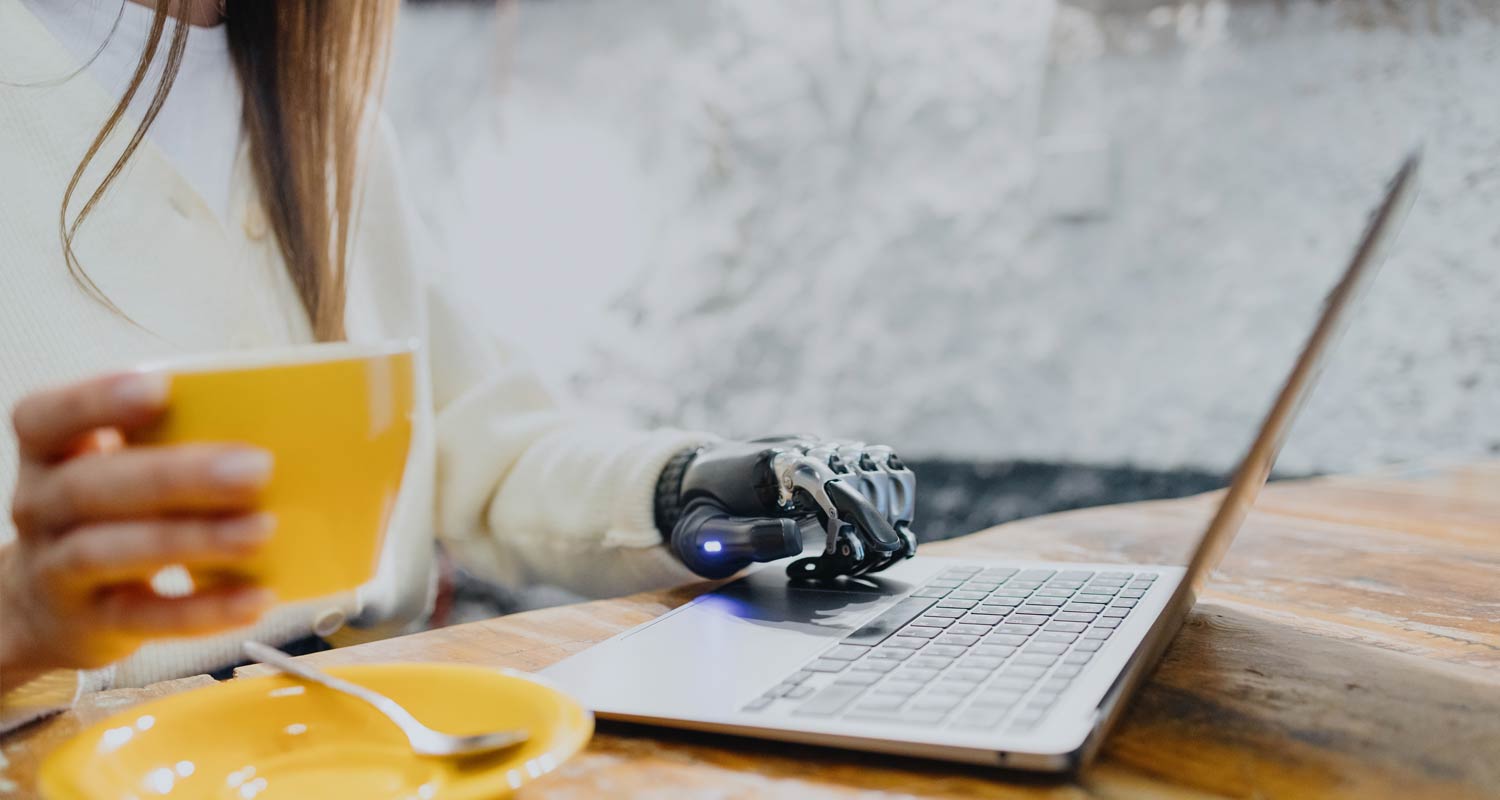
    Michael Daniel, an engineer and entrepreneur based in Newcastle, Australia, said it wasn’t until his daughter was diagnosed with autism — and he received the same diagnosis himself — that he realised how much he had been masking his own neurodivergent traits. His desire to communicate more clearly with his neurotypical wife and loved ones inspired him to build Neurotranslator, an AI-powered personal assistant, which he credits with helping him fully understand and process interactions, as well as avoid misunderstandings.

    “Wow … that’s a unique shirt,” he recalls saying about his wife’s outfit one day, without realising how his comment might be perceived. She asked him to run the comment through NeuroTranslator, which helped him recognise that, without a positive affirmation, remarks about a person’s appearance could come across as criticism.

    “The emotional baggage that comes along with those situations would just disappear within minutes,” he says of using the app.

    The emotional baggage that comes along with those situations would just disappear within minutes

    Since its launch in September, Daniel says NeuroTranslator has attracted more than 200 paid subscribers. An earlier web version of the app, called Autistic Translator, amassed 500 monthly paid subscribers.

    As transformative as this technology has become, some warn against becoming too dependent. The ability to get results on demand can be “very seductive”, says Larissa Suzuki, a London-based computer scientist and visiting Nasa researcher who is herself neurodivergent.

    Overreliance could be harmful if it inhibits neurodivergent users’ ability to function without it, or if the technology itself becomes unreliable — as is already the case with many AI search engine results, according to a recent study from the Columbia Journalism Review. “If AI starts screwing up things and getting things wrong,” Suzuki says, “people might give up on technology, and on themselves.”

    Risk

    Baring your soul to an AI chatbot does carry risk, agrees Gianluca Mauro, an AI adviser and co-author of Zero to AI. “The objective of AI models like ChatGPT is to satisfy the user,” he says, raising questions about its willingness to offer critical advice. Unlike therapists, these tools aren’t bound by ethical codes or professional guidelines. If AI has the potential to become addictive, Mauro adds, regulation should follow.

    A recent study by Carnegie Mellon and Microsoft (which is a key investor in OpenAI) suggests that long-term overdependence on generative AI tools can undermine users’ critical-thinking skills and leave them ill-equipped to manage without it. “While AI can improve efficiency,” the researchers wrote, “it may also reduce critical engagement, particularly in routine or lower-stakes tasks in which users simply rely on AI.”

    While Dr Melanie Katzman, a clinical psychologist and expert in human behaviour, recognises the benefits of AI for neurodivergent people, she does see downsides, such as giving patients an excuse not to engage with others. A therapist will push their patient to try different things outside of their comfort zone. “I think it’s harder for your AI companion to push you,” she says.
    But for users who have come to rely on this technology, such fears are academic. “A lot of us just end up kind of retreating from society,” warns D’hotman, who says that she barely left the house in the year following her autism diagnosis, feeling overwhelmed. Were she to give up using ChatGPT, she fears she would return to that traumatic period of isolation. “As somebody who’s struggled with a disability my whole life,” she says, “I need this.”  — Yasmeen Serhan and Sharon Singleton, (c) 2025 Reuters

    Get breaking news from TechCentral on WhatsApp. Sign up here.

    Don’t miss:

    Grok’s South Africa blunder raises alarms over chatbot oversight

    Add TechCentral as a preferred source on GoogleFollow TechCentral on Google NewsGet breaking news on WhatsApp


    ChatGPT OpenAI
    WhatsApp YouTube
    Share. Facebook Twitter LinkedIn WhatsApp Telegram Email Copy Link
    Previous ArticleThe test facing new Capitec CEO Graham Lee
    Next Article Taukobong cashes in after strong Telkom performance

    Related Posts

    Apple takes another shot at the smart home - Apple HomeView

    Apple takes another shot at the smart home

    13 October 2026
    Regulators fear AI could trigger the next banking crisis

    Regulators fear AI could trigger the next banking crisis

    13 October 2026
    The AI trade is cracking

    The AI trade is cracking

    13 October 2026
    Company News
    The sovereignty paradox: who really controls your data when the rand drops? Cloud on Demand / Microsoft

    The sovereignty paradox: who really controls your data when the rand drops?

    13 October 2026
    Paratus Namibia showcases connectivity solutions at ICT Summit 2026

    Paratus Namibia showcases connectivity solutions at ICT Summit 2026

    13 October 2026
    When every minute counts: how AnyDesk brings technical expertise to the business - Avert IT Distribution

    When every minute counts: how AnyDesk brings technical expertise to the business

    13 October 2026
    Opinion
    When a machine can choose, who does it become? Fanie van Rooyen

    When a machine can choose, who does it become?

    9 October 2026
    Let South Africans jailbreak their way to digital sovereignty - Dirk de Vos

    Let South Africans jailbreak their way to digital sovereignty

    5 October 2026
    South Africa's next energy crisis is in the accounts department - Craig Holmes

    South Africa’s next energy crisis is in the accounts department

    29 September 2026

    Subscribe to Updates

    Get the best South African technology news and analysis delivered to your e-mail inbox every morning.

    Latest Posts
    Icasa's R100-million surplus and its empty toolbox

    Icasa’s R100-million surplus and its empty toolbox

    13 October 2026
    iOCO profit jumps 39% as operating cash flow falls 44%

    iOCO profit jumps 39% as operating cash flow falls 44%

    13 October 2026
    Apple takes another shot at the smart home - Apple HomeView

    Apple takes another shot at the smart home

    13 October 2026
    Wits researchers build a neural network that runs on light

    Wits researchers build a neural network that runs on light

    13 October 2026
    © 2009 - 2026 NewsCentral Media
    Built and maintained by Chronon
    • Cookie policy (ZA)
    • TechCentral – privacy and Popia

    Type above and press Enter to search. Press Esc to cancel.

    Manage consent

    TechCentral uses cookies to enhance its offerings. Consenting to these technologies allows us to serve you better. Not consenting or withdrawing consent may adversely affect certain features and functions of the website.

    Functional Always active
    The technical storage or access is strictly necessary for the legitimate purpose of enabling the use of a specific service explicitly requested by the subscriber or user, or for the sole purpose of carrying out the transmission of a communication over an electronic communications network.
    Preferences
    The technical storage or access is necessary for the legitimate purpose of storing preferences that are not requested by the subscriber or user.
    Statistics
    The technical storage or access that is used exclusively for statistical purposes. The technical storage or access that is used exclusively for anonymous statistical purposes. Without a subpoena, voluntary compliance on the part of your Internet Service Provider, or additional records from a third party, information stored or retrieved for this purpose alone cannot usually be used to identify you.
    Marketing
    The technical storage or access is required to create user profiles to send advertising, or to track the user on a website or across several websites for similar marketing purposes.
    • Manage options
    • Manage services
    • Manage {vendor_count} vendors
    • Read more about these purposes
    View preferences
    • {title}
    • {title}
    • {title}
    🇿🇦 Sign up to the TechCentral newsletter