Close Menu
TechCentralTechCentral

    Subscribe to the newsletter

    Get the best South African technology news and analysis delivered to your e-mail inbox every morning.

    Facebook X (Twitter) YouTube LinkedIn
    WhatsApp Facebook X (Twitter) LinkedIn YouTube
    TechCentralTechCentral
    • News
      South Africa planning big overhaul of public sector IT - State IT Agency Sita

      South Africa planning big overhaul of public sector IT

      23 April 2026
      Usaasa's 30-year run nears its end - Communications minister Solly Malatsi. Image c/o DCDT

      Usaasa’s 30-year run nears its end

      23 April 2026
      Charge to switch on first N3 off-grid EV stations in May - Joubert Roux

      Charge to switch on first N3 off-grid EV stations in May

      23 April 2026
      Middle-class South Africa is ditching streaming for AI

      Middle-class South Africa is ditching streaming for AI

      23 April 2026
      Mythos forces South African banks onto high alert - Graham Lee

      Mythos forces South African banks onto high alert

      23 April 2026
    • World
      More organic compounds detected on Mars - Nasa Curiosity rover

      More organic compounds detected on Mars

      21 April 2026
      Adobe bets on AI agents to fend off cheaper rivals

      Adobe bets on AI agents to fend off cheaper rivals

      16 April 2026
      Google poised to lose ad crown to Meta

      Google poised to lose ad crown to Meta

      14 April 2026
      Grand Theft Data - hackers hit Rockstar Games - Grand Theft Auto

      Grand Theft Data – hackers hit Rockstar Games

      14 April 2026
      UK PM Keir Starmer declares war on doomscrolling

      UK PM Keir Starmer declares war on doomscrolling

      13 April 2026
    • In-depth
      Africa switches on as Europe dims the lights

      Africa switches on as Europe dims the lights

      9 April 2026
      The biggest untapped EV market on Earth is hiding in plain sight

      The biggest untapped EV market on Earth is hiding in plain sight

      1 April 2026
      The R18-billion tech giant hiding in plain sight - Jens Montanana

      The R16-billion tech giant hiding in plain sight

      26 March 2026
      The last generation of coders

      The last generation of coders

      18 February 2026
      Sentech is in dire straits

      Sentech is in dire straits

      10 February 2026
    • TCS

      TCS+ | ‘The ISP for ISPs’: Vox’s shift to wholesale aggregator

      20 April 2026
      TCS | Werner Lindemann on how AI is rewriting the infosec rulebook

      TCS | Werner Lindemann on how AI is rewriting the infosec rulebook

      15 April 2026
      TCS | Donovan Marsh on AI and the future of filmmaking

      TCS | Donovan Marsh on AI and the future of filmmaking

      7 April 2026
      TCS+ | Vodacom Business moves to crack the SME tech gap - Andrew Fulton, Sannesh Beharie

      TCS+ | Vodacom Business moves to crack the SME tech gap

      7 April 2026
      TCS | MTN's Divysh Joshi on the strategy behind Pi - Divyesh Joshi

      TCS | MTN’s Divyesh Joshi on the strategy behind Pi

      1 April 2026
    • Opinion
      The conflict of interest at the heart of PayShap's slow adoption - Cheslyn Jacobs

      The conflict of interest at the heart of PayShap’s slow adoption

      26 March 2026
      South Africa's energy future hinges on getting wheeling right - Aishah Gire

      South Africa’s energy future hinges on getting wheeling right

      10 March 2026
      Hold the doom: the case for a South African comeback - Duncan McLeod

      Apple just dropped a bomb on the Windows world

      5 March 2026
      R230-million in the bag for Endeavor's third Harvest Fund - Alison Collier

      VC’s centre of gravity is shifting – and South Africa is in the frame

      3 March 2026
      Hold the doom: the case for a South African comeback - Duncan McLeod

      Hold the doom: the case for a South African comeback

      26 February 2026
    • Company Hubs
      • 1Stream
      • Africa Data Centres
      • AfriGIS
      • Altron Digital Business
      • Altron Document Solutions
      • Altron Group
      • Arctic Wolf
      • Ascent Technology
      • AvertITD
      • BBD
      • Braintree
      • CallMiner
      • CambriLearn
      • CYBER1 Solutions
      • Digicloud Africa
      • Digimune
      • Domains.co.za
      • ESET
      • Euphoria Telecom
      • HOSTAFRICA
      • Incredible Business
      • iONLINE
      • IQbusiness
      • Iris Network Systems
      • Kaspersky
      • LSD Open
      • Mitel
      • NEC XON
      • Netstar
      • Network Platforms
      • Next DLP
      • Ovations
      • Paracon
      • Paratus
      • Q-KON
      • SevenC
      • SkyWire
      • Solid8 Technologies
      • Telit Cinterion
      • Telviva
      • Tenable
      • Vertiv
      • Videri Digital
      • Vodacom Business
      • Wipro
      • Workday
      • XLink
    • Sections
      • AI and machine learning
      • Banking
      • Broadcasting and Media
      • Cloud services
      • Contact centres and CX
      • Cryptocurrencies
      • Education and skills
      • Electronics and hardware
      • Energy and sustainability
      • Enterprise software
      • Financial services
      • HealthTech
      • Information security
      • Internet and connectivity
      • Internet of Things
      • Investment
      • IT services
      • Lifestyle
      • Motoring
      • Policy and regulation
      • Public sector
      • Retail and e-commerce
      • Satellite communications
      • Science
      • SMEs and start-ups
      • Social media
      • Talent and leadership
      • Telecoms
    • Events
    • Advertise
    TechCentralTechCentral
    Home » In-depth » Democracy never faced a threat like Facebook

    Democracy never faced a threat like Facebook

    By Agency Staff9 June 2017
    Twitter LinkedIn Facebook WhatsApp Email Telegram Copy Link
    News Alerts
    WhatsApp

    [dropcap]T[/dropcap]he social media giants based in the US may soon face a new attack in Europe. There’s a perception among activists and officials that the basis of their business model — targeted advertising — can be a threat to democracy.

    In a speech on Wednesday, commissioner Margrethe Vestager — who, as the top European Union antitrust official, has been the nemesis of US tech companies such as Google and Apple — laid out her problems with the way social networking changes people’s political behaviour.

    One of her complaints is familiar and much-discussed: Facebook and its peers tend to sort people into political and ideological filter bubbles and silos, destroying, as Vestager sees it, the chances of meaningful debate.

    The other has received less media attention. It concerns political ads and, generally, campaigns’ social messaging. Said Vestager:

    If political ads only appear on the timelines of certain voters, then how can we all debate the issues that they raise? How can other parties and the media do their job of challenging those claims? How can we even know what mandate an election has given, if the promises that voters relied on were made in private?

    There are reasonable arguments against both of Vestager’s complaints. Long before social networks, people have grouped together on the basis of compatible views; confirmation biases, too, are as old as human society. The social networks merely reflect reality and make it more palpable.

    As for targeted messages, old campaigning instruments, such as direct mailings and phone calls, also delivered private messages to potential voters, and the media usually parsed them — just as they parse modern campaign activities on social platforms. It’s actually become easier because everyone is on Facebook and Twitter.
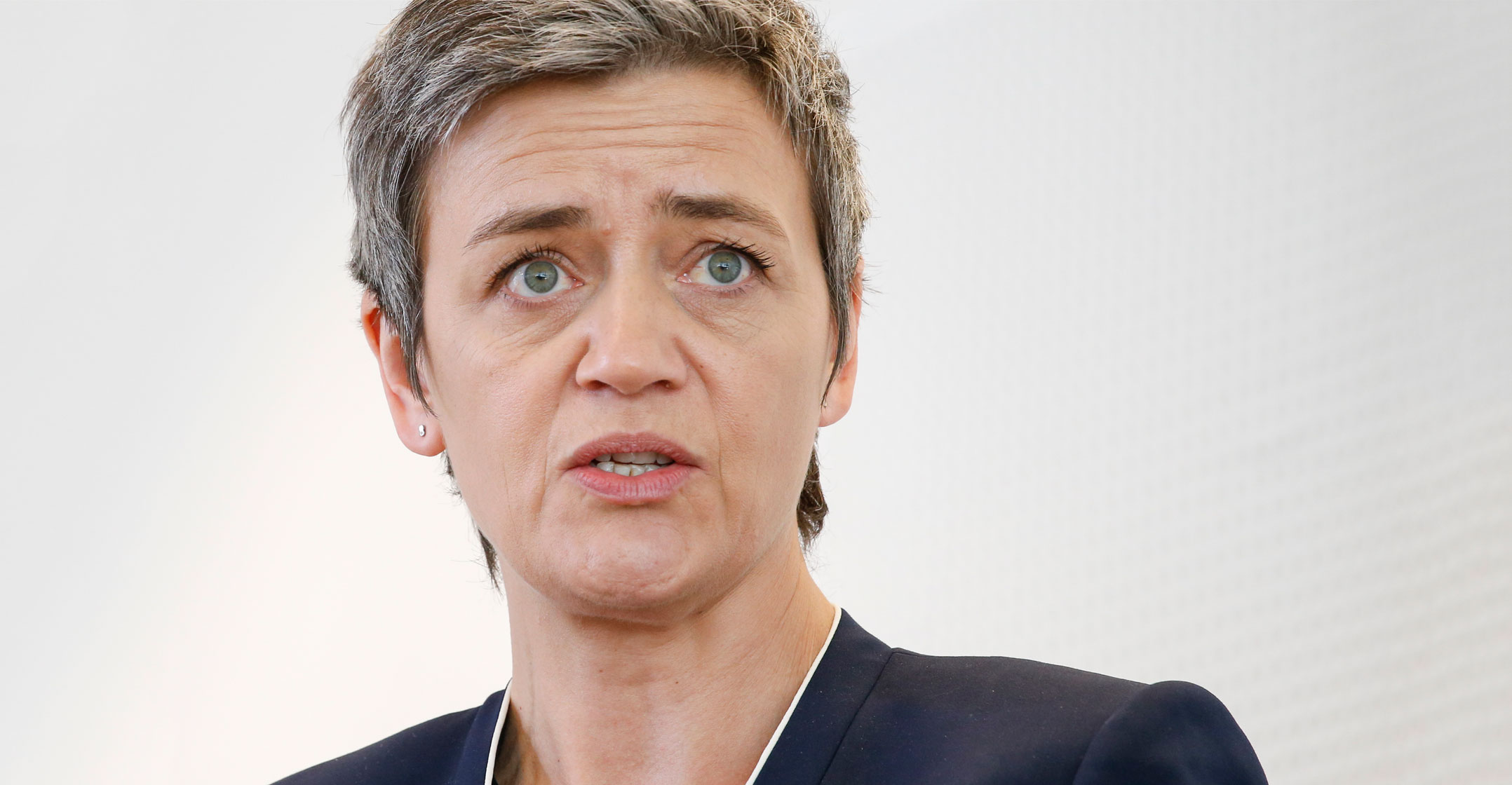
    Margrethe Vestager

    Vestager, however, is onto something. The old tools allowed for rather generic targeting — say, by voting or campaign donation history. Modern campaigns try to target messages using people’s private data or even psychological profiles created on the basis of social network and browsing activity. That’s not necessarily effective — I’ve argued that it isn’t — but it means certain voters get ads and messages that they wouldn’t have chosen to receive.

    Imagine I’m a social media junkie for whom Facebook is the primary news source, as for about two-thirds of Americans and a fifth of Europeans. I see a political ad because someone — or, most likely, an artificially intelligent entity — has profiled me in a certain way, not because I made a donation to a certain party or voted for a specific candidate in the last election. Unless another algorithm profiles me differently, I don’t see the other parties’ responses to the content with which I’ve been plied. I have no idea what the party that advertises to me has promised people in different target groups. I have less of an idea of the campaigns parties are running than if I watched TV like a 20th century voter.

    People will still believe what they want to believe, and if they mistrust mainstream media, they are likely to discount fact-checkers’ efforts, too

    At the same time, Facebook doesn’t release any data about what campaigns do on its platform. In a country that hasn’t removed campaign spending limits as the US effectively did with Citizens United, that makes it hard to check what they spend on ads. Facebook’s position is that it’s the campaigns’ responsibility to follow their countries’ laws, and that a user has full control over which ads are shown to him or her. The former is irrelevant to the task of checking campaigns’ self-reporting. The latter is only true to a degree: On Facebook, you can opt out of certain ads, but algorithms will still decide how they will be replaced.

    In the run-up to Thursday’s UK election, a group called Who Targets Me recruited 10 000 volunteers to install a browser extension that registers targeted messages, ranging from Facebook videos to Google search ads. The group calls them “dark ads” because they are so hard to monitor: they’ve been targeted to specific local constituencies, gender and age groups.

    Fake news

    Last year’s US election led to pressure on the social networks to crack down on fake news stories and the bot networks that spread them. Facebook responded by introducing well-publicised mechanisms for reporting likely fake stories and having them fact-checked. During the recent French presidential election, it said it also suspended 30 000 fake accounts to stop them from spreading false stories.

    None of that really fixes the filter bubble problem — people will still believe what they want to believe, and if they mistrust mainstream media, they are likely to discount fact-checkers’ efforts, too. So the pressure is still on for a more pertinent response, but it’s not clear what that could be — short of having human editors remove stories deemed to be fake, something the networks will resist because it’s contrary to their self-perception as neutral platforms.

    These changes have been so fast that I’m not sure our democracy has caught up

    If a regulatory backlash starts against political targeting, though, it’s clear what the social networks might be required to do. Regulators could order them to disclose what messages campaigns are using and how much they are paying to circulate them. In an extreme scenario, they could even ban paid political advertising on social networks, arguing, as Vestager did in her speech, that politics is different from business, so rules for targeted messaging should be different to protect democracy.

    In a manifesto earlier this year, Facebook founder Mark Zuckerberg wrote about moving relationships and social structures formed on the networks into the offline world. “These changes have been so fast that I’m not sure our democracy has caught up,” Vestager said in her speech. One can be sure European regulators will choose to slow down the development of Zuckerberg’s vision rather than rewrite campaigning rules to catch up with it.  — By Leonid Bershidsky, (c) 2017 Bloomberg LP

    Follow TechCentral on Google News Add TechCentral as your preferred source on Google


    Facebook Margrethe Vestager Mark Zuckerberg top
    WhatsApp YouTube
    Share. Facebook Twitter LinkedIn WhatsApp Telegram Email Copy Link
    Previous ArticleEskom establishes energy storage facility
    Next Article What spooked Telkom investors

    Related Posts

    Big Tech's Big Tobacco moment has arrived

    Big Tech’s Big Tobacco moment has arrived

    27 March 2026
    Jury finds Meta enabled child exploitation

    Jury finds Meta enabled child exploitation

    25 March 2026
    Meta planning layoffs that could hit 20% of workforce

    Meta planning layoffs that could hit 20% of workforce

    16 March 2026
    Company News
    Security by design is the channel's strongest pitch - Othelo Vieira

    Security by design is the channel’s strongest pitch

    23 April 2026
    Your brand is invisible to the AI that's choosing your competitor - Michelle Losco

    Your brand is invisible to the AI that’s choosing your competitor

    23 April 2026
    How AnyDesk is redefining remote access for African enterprises

    How AnyDesk is redefining remote access for African enterprises

    22 April 2026
    Opinion
    The conflict of interest at the heart of PayShap's slow adoption - Cheslyn Jacobs

    The conflict of interest at the heart of PayShap’s slow adoption

    26 March 2026
    South Africa's energy future hinges on getting wheeling right - Aishah Gire

    South Africa’s energy future hinges on getting wheeling right

    10 March 2026
    Hold the doom: the case for a South African comeback - Duncan McLeod

    Apple just dropped a bomb on the Windows world

    5 March 2026

    Subscribe to Updates

    Get the best South African technology news and analysis delivered to your e-mail inbox every morning.

    Latest Posts
    South Africa planning big overhaul of public sector IT - State IT Agency Sita

    South Africa planning big overhaul of public sector IT

    23 April 2026
    Usaasa's 30-year run nears its end - Communications minister Solly Malatsi. Image c/o DCDT

    Usaasa’s 30-year run nears its end

    23 April 2026
    Charge to switch on first N3 off-grid EV stations in May - Joubert Roux

    Charge to switch on first N3 off-grid EV stations in May

    23 April 2026
    Middle-class South Africa is ditching streaming for AI

    Middle-class South Africa is ditching streaming for AI

    23 April 2026
    © 2009 - 2026 NewsCentral Media
    • Cookie policy (ZA)
    • TechCentral – privacy and Popia

    Type above and press Enter to search. Press Esc to cancel.

    Manage consent

    TechCentral uses cookies to enhance its offerings. Consenting to these technologies allows us to serve you better. Not consenting or withdrawing consent may adversely affect certain features and functions of the website.

    Functional Always active
    The technical storage or access is strictly necessary for the legitimate purpose of enabling the use of a specific service explicitly requested by the subscriber or user, or for the sole purpose of carrying out the transmission of a communication over an electronic communications network.
    Preferences
    The technical storage or access is necessary for the legitimate purpose of storing preferences that are not requested by the subscriber or user.
    Statistics
    The technical storage or access that is used exclusively for statistical purposes. The technical storage or access that is used exclusively for anonymous statistical purposes. Without a subpoena, voluntary compliance on the part of your Internet Service Provider, or additional records from a third party, information stored or retrieved for this purpose alone cannot usually be used to identify you.
    Marketing
    The technical storage or access is required to create user profiles to send advertising, or to track the user on a website or across several websites for similar marketing purposes.
    • Manage options
    • Manage services
    • Manage {vendor_count} vendors
    • Read more about these purposes
    View preferences
    • {title}
    • {title}
    • {title}