
Close Menu
TechCentralTechCentral

    Subscribe to the newsletter

    Get the best South African technology news and analysis delivered to your e-mail inbox every morning.

    Facebook X (Twitter) YouTube LinkedIn
    WhatsApp Facebook X (Twitter) LinkedIn YouTube
    TechCentralTechCentral
    • News
      Everything you wanted to know about EVs but were afraid to ask

      Everything you wanted to know about EVs but were afraid to ask

      22 July 2026
      Bitcoin at $65 000: stalled, or simply early?

      Bitcoin at $65 000: stalled, or simply early?

      22 July 2026
      Smart ID renewals go mobile - Absa CEO Kenny Fihla with home affairs minister Leon Schreiber

      Smart ID renewals go mobile

      22 July 2026
      South African inflation surges to 5% - a two-year high

      South African inflation surges to 5% – a two-year high

      22 July 2026
      Pepkor builds R21-billion fintech giant - and plans to list it - Pieter Erasmus

      Pepkor builds R21-billion fintech giant – and plans to list it

      22 July 2026
    • World
      Meta AI will now tell parents if their teen is in crisis

      Meta AI will now tell parents if their teen is in crisis

      17 July 2026
      IBM shares crash 25% as AI upends software spending - Arvind Krishna

      IBM shares crash 25% as AI upends software spending

      15 July 2026
      Jony Ive's first OpenAI device: an AI smart speaker - Jony Ive and Sam Altman

      Jony Ive’s first OpenAI device: an AI smart speaker

      15 July 2026
      Stripe, Advent in talks to buy PayPal for $53-billion

      Stripe, Advent in talks to buy PayPal for $53-billion

      15 July 2026
      Memory crisis sends smartphone market into steep decline

      Memory crisis sends smartphone market into steep decline

      13 July 2026
    • In-depth
      The plan to stop AI from breaking the world - Google DeepMind CEO Demis Hassabis. Image: John Sears

      The plan to stop AI from breaking the world

      16 July 2026
      The internet has a Strait of Hormuz problem

      The internet has a Strait of Hormuz problem

      15 July 2026
      AI boom sparks rally, frenzy and fear

      AI boom sparks rally, frenzy and fear

      11 June 2026
      Every plug-in hybrid on sale in South Africa, ranked by price - Lamborghini Temerario

      Every plug-in hybrid on sale in South Africa, ranked by price

      7 June 2026
      What Wi-Fi 8 will mean for wireless networks

      What Wi-Fi 8 will mean for wireless networks

      1 June 2026
    • TCS
      The rands-and-cents case for electric trucks - William Kelly Watts & Wheels with Wills

      The rands-and-cents case for electric trucks

      20 July 2026
      Watts & Wheels S1E7: 'Ferrari's EV breaks the internet'

      Watts & Wheels S1E7: ‘Ferrari’s EV breaks the internet’

      8 July 2026
      TCS+ | How Tracker is turning vehicle data into business strategy - Silvia Schollenberger

      TCS+ | How Tracker is turning vehicle data into business strategy

      1 July 2026
      TCS+ | IBM Bob: an AI-powered 'development partner' for the enterprise - David Spurway

      TCS+ | IBM Bob: an AI-powered development partner for the enterprise

      30 June 2026
      Watts & Wheels S1E6: 'A flawless Alfa and a bakkie that divides'

      Watts & Wheels S1E6: ‘A flawless Alfa and a bakkie that divides’

      17 June 2026
    • Opinion
      Selling vapour is corporate suicide in slow motion - Jannie van Zyl

      Selling vapour is corporate suicide in slow motion

      16 July 2026
      Brazil's online gambling crackdown is a lesson for South Africa

      How Amazon outmanoeuvred Starlink in South Africa

      15 July 2026
      The Popia problem with agentic AI - Herman Haasbroek

      The Popia problem with agentic AI

      14 July 2026
      The author, Fanie van Rooyen

      South Africa can still catch the AI wave – here’s how

      7 July 2026
      The author, Fanie van Rooyen

      The AI utopia South Africa can’t afford

      1 July 2026
    • Company Hubs
      • 1Stream
      • Africa Data Centres
      • AfriGIS
      • Altron Digital Business
      • Altron Document Solutions
      • Altron Group
      • Arctic Wolf
      • Ascent Technology
      • AvertITD
      • BBD
      • Braintree
      • CallMiner
      • CambriLearn
      • CM Telecom
      • Contactable
      • CYBER1 Solutions
      • Digicloud Africa
      • Digimune
      • Domains.co.za
      • ESET
      • Euphoria Telecom
      • HOSTAFRICA
      • Incredible Business
      • iONLINE
      • IQbusiness
      • Iris Network Systems
      • Kaspersky
      • LSD Open
      • Mitel
      • NEC XON
      • Netstar
      • Network Platforms
      • Next DLP
      • Ovations
      • Paracon
      • Paratus
      • Q-KON
      • SevenC
      • SkyWire
      • Solid8 Technologies
      • Telit Cinterion
      • Telviva
      • Tenable
      • Vertiv
      • Videri Digital
      • Vodacom Business
      • Vox
      • Wipro
      • Workday
      • XLink
    • Sections
      • AI and machine learning
      • Banking
      • Broadcasting and Media
      • Cloud services
      • Contact centres and CX
      • Cryptocurrencies
      • Education and skills
      • Electronics and hardware
      • Energy and sustainability
      • Enterprise software
      • Financial services
      • HealthTech
      • Information security
      • Internet and connectivity
      • Internet of Things
      • Investment
      • IT services
      • Lifestyle
      • Policy and regulation
      • Public sector
      • Retail and e-commerce
      • Satellite communications
      • Science
      • SMEs and start-ups
      • Social media
      • Talent and leadership
      • Telecoms
      • Watts & Wheels
    • Events
    • Advertise
    TechCentralTechCentral
    Home » Opinion » Hilton Tarrant » Discovery has a world-beater on its hands

    Discovery has a world-beater on its hands

    By Hilton Tarrant8 April 2016
    Twitter LinkedIn Facebook WhatsApp Email Telegram Copy Link
    News Alerts
    WhatsApp

    hilton-tarrant-180Vitality Active Rewards is a big deal for Discovery. Not only does it offer a way for the insurer to actually keep track of its members’ (largely legitimate) physical activity for the first time — thanks primarily to wearable devices — it is also a means to incentivise far more regular exercise than what was probable under the overall annual-points-equals-discount-tiers system.

    Think about it: in years past, you’d be able to coast along to gold Vitality status by simply keeping up with your minimum number of gym visits (36 over a rolling 12-month window, which means a pitiful three a month) along with a flurry of in-person assessments and checks in December. Hardly engagement.

    It rather smartly piloted Active Rewards in the UK, before introducing it in South Africa in September. Reach a points goal (tailored to you) every week and you’re rewarded with a free coffee/juice/smoothie from partners. Certainly more carrot than stick: you aren’t forced to sign up and neither are you penalised for not doing so (or not reaching your goals).

    Members are used to annual revisions to rewards programmes, which is perhaps why the changes from January didn’t cause too much ruckus. But, judging from the uproar a month ago when additional changes were announced (see the “how to earn” breakdown), you’d think these made achieving your goal completely impossible.

    The thing is, humans, being humans, found all manner of ways to game the system — from strapping fitness trackers to their dogs to simply uploading manual “workouts” through supported apps. No wonder it’s “moving towards verified heart-rate based workouts”.

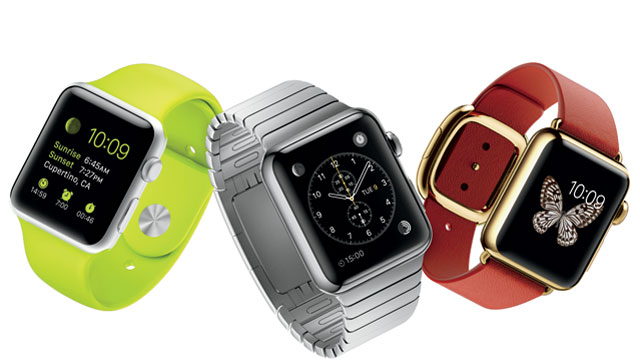
    To be sure, Discovery didn’t do the best job in communicating the changes, which took effect this week. And it quietly announced more recently that it would “reset” weekly goals for all members down to 300 points or lower (if your goal was lower). Had it made this clear from the start, more of its members would not have thought the proverbial sky was falling. One can have some sympathy for those on the Apple Watch benefit, who had no idea whether they’d be able to reach their weekly goals — this would have had a direct impact on what they’d pay for their watch monthly (or whether they’d pay at all).

    I’m not for a second suggesting that everyone must buy an Apple Watch. In fact, the statistics Discovery has publicised show that “almost 200 000” members are “enjoying Active Rewards”. In its results announcement for the six months to December 2015, it disclosed that “over 17 000 Apple Watches” had been sold in less than three months. It’s likely, based on those figures, that roughly one in 10 Active Rewards participants has the device. Many don’t have any wearable tracker at all.

    But Discovery, and its partners globally, would be naïve not to take advantage of smartwatches and other wearable devices to better incentivise and track members to live healthier lives.

    And you can see why this is so appealing from an actuarial perspective:

    Source: Discovery
    Source: Discovery

    I’m a sucker for gamification, so this weekly points goal appeals to me a lot. In fact, I’ve hit “perfect” months on my Apple Watch nearly every month since I got it in April last year (try achieving a goal of 600 active calories with at least 30 minutes of exercise every day for just one month!).

    Yes, I’ve been a critic (largely on Twitter) of these April points changes, but on reflection they’ve achieved what Discovery wanted: I’m exercising more.

    At this point, I’m comfortably managing a 6,5km run inside 30 minutes practically daily (and pushing for 7km). A month ago, I could achieve 5km, and at the start of this year, I could hit anywhere between 3km and 4km, depending on the day. That’s not to say I was unfit and not active.

    I’m not a sample of one. Discovery points to early data, which “shows an average increase in physical activity of 21% among members”. This has a big impact across a base as large as Vitality’s.

    The programme isn’t perfect, however. There are two recent revisions that would benefit from a little more effort, thought and research by Discovery.

    Maximum heart rate

    In these April changes, the heart rate for “vigorous” exercise was changed from >70% of your age-related maximum to >80% (see the full table). It cites recommendations by the American College of Sports Medicine and the American Heart Association (the journal paper is here if you feel like falling asleep).

    In my case (33), that’s meant maintaining an average of >150bpm during physical activity, from >131bpm previously. That’s a big jump, but not necessarily over 30 minutes of exercise (it has meant my runs have gotten quicker and, ideally, less flat).
    apple-watch-640

    The heart rate for “moderate” exercise was changed from 60% to 70% of your maximum (again, age-related) to 70% to 80% (I would’ve previously “coasted by” at 113bpm). The problem is not the upward revision of what “vigorous” and “moderate” mean. Rather, participating in longer activities like distance running and (particularly) cycling are effectively penalised in this new system.

    Now, a three-hour-long cycle ride will likely earn you just 300 points — the same as a parkrun or a 30-minute jog. Sustaining physical activity at anything near the rates Discovery’s hoping for over an extended period of time is rare. I’ve looked back at my workout tracking for this year’s Cape Town Cycle Tour, and I just scraped into its definition of vigorous.

    If it’s an officially timed/verified event (like the Cycle Tour), you’ll get your points regardless, but what about the average Vitality member who spends a few hours in the Cradle on Saturday mornings? Unless they’re sprinting, they’re going to only get those 300 points. An additional level for 180+ minutes of moderate exercise (at 600 points on the above table) would surely solve the problem?

    Strava, beloved Strava

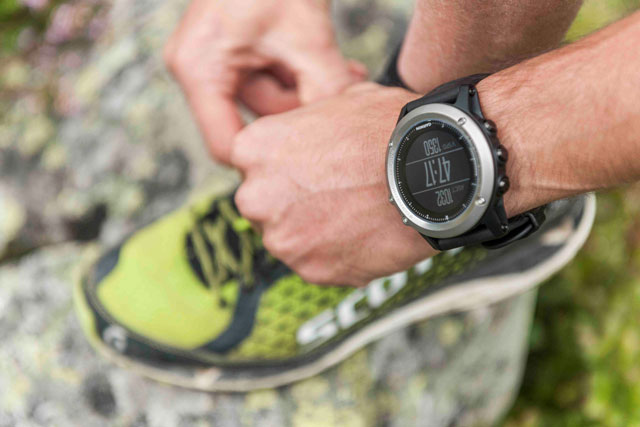
    Running and cycling tracking app Strava is something of a cult (the social layer, with its strong sense of community is one of the reasons it’s so compelling). Out of all the apps and tracking devices, which Discovery announced it would no longer support from April, the outcry from Strava users was the loudest.
    garmin-fenix-3-640-2

    But Discovery’s heavy-handed approach of blocking the app as a source of data completely, rather than simply blocking/ignoring any manual workouts logged, was the wrong one. This is a relatively trivial distinction, available from the Strava data which Discovery is accessing. Quite why it didn’t exclude all manual workouts from all sources from the start is a mystery.

    Happily, it says it is working closely with “Strava, Suunto and TomTom to get the required integrations in place to award Vitality points, and we are confident that this will be finalised with all three partners in the coming months”.

    There’ll be further refinements to Active Rewards in the months and years ahead (like, ahem, ensuring that “vigorous” and “moderate” mean the same thing in South Africa, the UK and US), and you get the sense that the activities and points could be simpler still.

    There’s no such thing as a “perfect” rewards programme, especially in the field of behavioural economics. But it’s clear that Active Rewards is fast becoming the most important part of Vitality, especially as wearable devices become more pervasive (and more useful).

    Discovery has a world-beater on its hands.

    • Hilton Tarrant holds shares in Discovery, acquired in September 2013. He has done work for content providers to various of the group’s businesses. And he is a Vitality Active Rewards member
    • This piece was originally published on Moneyweb and is used here with permission

    Follow TechCentral on Google News Add TechCentral as your preferred source on Google


    Discovery Discovery Health Discovery Vitality Discovery Vitality Active Rewards Vitality Vitality Active Rewards
    WhatsApp YouTube
    Share. Facebook Twitter LinkedIn WhatsApp Telegram Email Copy Link
    Previous ArticleGuptas and Zuma son resign from Oakbay
    Next Article Can the ANC survive its current crisis?

    Related Posts

    Yoco buys restaurant AI start-up Dyner in push beyond payments

    Yoco buys restaurant AI start-up Dyner in push beyond payments

    29 May 2026
    Investec's contrarian AI bet: people over machines Graeme Lockley

    Investec’s contrarian AI bet: people over machines

    18 May 2026
    Middle-class South Africa is ditching streaming for AI

    Middle-class South Africa is ditching streaming for AI

    23 April 2026
    Company News
    Is your cloud PBX a hacker's back door? Centracom

    Is your cloud PBX a hacker’s back door?

    22 July 2026

    Africa’s biggest entrepreneurship gathering heads for Cape Town

    22 July 2026
    Cloud adoption is done. Execution is the new frontier - Cloud on Demand

    Cloud adoption is done. Execution is the new frontier

    21 July 2026
    Opinion
    Selling vapour is corporate suicide in slow motion - Jannie van Zyl

    Selling vapour is corporate suicide in slow motion

    16 July 2026
    Brazil's online gambling crackdown is a lesson for South Africa

    How Amazon outmanoeuvred Starlink in South Africa

    15 July 2026
    The Popia problem with agentic AI - Herman Haasbroek

    The Popia problem with agentic AI

    14 July 2026

    Subscribe to Updates

    Get the best South African technology news and analysis delivered to your e-mail inbox every morning.

    Latest Posts
    Everything you wanted to know about EVs but were afraid to ask

    Everything you wanted to know about EVs but were afraid to ask

    22 July 2026
    Is your cloud PBX a hacker's back door? Centracom

    Is your cloud PBX a hacker’s back door?

    22 July 2026
    Bitcoin at $65 000: stalled, or simply early?

    Bitcoin at $65 000: stalled, or simply early?

    22 July 2026
    Smart ID renewals go mobile - Absa CEO Kenny Fihla with home affairs minister Leon Schreiber

    Smart ID renewals go mobile

    22 July 2026
    © 2009 - 2026 NewsCentral Media
    Built and maintained by Chronon
    • Cookie policy (ZA)
    • TechCentral – privacy and Popia

    Type above and press Enter to search. Press Esc to cancel.

    Manage consent

    TechCentral uses cookies to enhance its offerings. Consenting to these technologies allows us to serve you better. Not consenting or withdrawing consent may adversely affect certain features and functions of the website.

    Functional Always active
    The technical storage or access is strictly necessary for the legitimate purpose of enabling the use of a specific service explicitly requested by the subscriber or user, or for the sole purpose of carrying out the transmission of a communication over an electronic communications network.
    Preferences
    The technical storage or access is necessary for the legitimate purpose of storing preferences that are not requested by the subscriber or user.
    Statistics
    The technical storage or access that is used exclusively for statistical purposes. The technical storage or access that is used exclusively for anonymous statistical purposes. Without a subpoena, voluntary compliance on the part of your Internet Service Provider, or additional records from a third party, information stored or retrieved for this purpose alone cannot usually be used to identify you.
    Marketing
    The technical storage or access is required to create user profiles to send advertising, or to track the user on a website or across several websites for similar marketing purposes.
    • Manage options
    • Manage services
    • Manage {vendor_count} vendors
    • Read more about these purposes
    View preferences
    • {title}
    • {title}
    • {title}