Close Menu
TechCentralTechCentral

    Subscribe to the newsletter

    Get the best South African technology news and analysis delivered to your e-mail inbox every morning.

    Facebook X (Twitter) YouTube LinkedIn
    WhatsApp Facebook X (Twitter) LinkedIn YouTube
    TechCentralTechCentral
    • News
      Openserve hits back in fibre ISP row

      Openserve hits back in fibre ISP row

      20 July 2026
      Best network, worst vibes: the puzzle of SA telecoms

      Best network, worst vibes: the puzzle of SA telecoms

      20 July 2026
      Why South Africa is sending Balls to the moon

      Why South Africa is sending spheres to the moon

      20 July 2026
      The rands-and-cents case for electric trucks - William Kelly Watts & Wheels with Wills

      The rands-and-cents case for electric trucks

      20 July 2026
      South Africa's newfound economic resilience

      South Africa’s newfound economic resilience

      20 July 2026
    • World
      Meta AI will now tell parents if their teen is in crisis

      Meta AI will now tell parents if their teen is in crisis

      17 July 2026
      IBM shares crash 25% as AI upends software spending - Arvind Krishna

      IBM shares crash 25% as AI upends software spending

      15 July 2026
      Jony Ive's first OpenAI device: an AI smart speaker - Jony Ive and Sam Altman

      Jony Ive’s first OpenAI device: an AI smart speaker

      15 July 2026
      Stripe, Advent in talks to buy PayPal for $53-billion

      Stripe, Advent in talks to buy PayPal for $53-billion

      15 July 2026
      Memory crisis sends smartphone market into steep decline

      Memory crisis sends smartphone market into steep decline

      13 July 2026
    • In-depth
      The plan to stop AI from breaking the world - Google DeepMind CEO Demis Hassabis. Image: John Sears

      The plan to stop AI from breaking the world

      16 July 2026
      The internet has a Strait of Hormuz problem

      The internet has a Strait of Hormuz problem

      15 July 2026
      AI boom sparks rally, frenzy and fear

      AI boom sparks rally, frenzy and fear

      11 June 2026
      Every plug-in hybrid on sale in South Africa, ranked by price - Lamborghini Temerario

      Every plug-in hybrid on sale in South Africa, ranked by price

      7 June 2026
      What Wi-Fi 8 will mean for wireless networks

      What Wi-Fi 8 will mean for wireless networks

      1 June 2026
    • TCS
      Watts & Wheels S1E7: 'Ferrari's EV breaks the internet'

      Watts & Wheels S1E7: ‘Ferrari’s EV breaks the internet’

      8 July 2026
      TCS+ | How Tracker is turning vehicle data into business strategy - Silvia Schollenberger

      TCS+ | How Tracker is turning vehicle data into business strategy

      1 July 2026
      TCS+ | IBM Bob: an AI-powered 'development partner' for the enterprise - David Spurway

      TCS+ | IBM Bob: an AI-powered development partner for the enterprise

      30 June 2026
      Watts & Wheels S1E6: 'A flawless Alfa and a bakkie that divides'

      Watts & Wheels S1E6: ‘A flawless Alfa and a bakkie that divides’

      17 June 2026
      Watts & Wheels S1E6: 'A flawless Alfa and a bakkie that divides'

      Watts & Wheels S1E5: ‘A Bentley of the bush and a car that swims’

      8 June 2026
    • Opinion
      Selling vapour is corporate suicide in slow motion - Jannie van Zyl

      Selling vapour is corporate suicide in slow motion

      16 July 2026
      Brazil's online gambling crackdown is a lesson for South Africa

      How Amazon outmanoeuvred Starlink in South Africa

      15 July 2026
      The Popia problem with agentic AI - Herman Haasbroek

      The Popia problem with agentic AI

      14 July 2026
      The author, Fanie van Rooyen

      South Africa can still catch the AI wave – here’s how

      7 July 2026
      The author, Fanie van Rooyen

      The AI utopia South Africa can’t afford

      1 July 2026
    • Company Hubs
      • 1Stream
      • Africa Data Centres
      • AfriGIS
      • Altron Digital Business
      • Altron Document Solutions
      • Altron Group
      • Arctic Wolf
      • Ascent Technology
      • AvertITD
      • BBD
      • Braintree
      • CallMiner
      • CambriLearn
      • CM Telecom
      • Contactable
      • CYBER1 Solutions
      • Digicloud Africa
      • Digimune
      • Domains.co.za
      • ESET
      • Euphoria Telecom
      • HOSTAFRICA
      • Incredible Business
      • iONLINE
      • IQbusiness
      • Iris Network Systems
      • Kaspersky
      • LSD Open
      • Mitel
      • NEC XON
      • Netstar
      • Network Platforms
      • Next DLP
      • Ovations
      • Paracon
      • Paratus
      • Q-KON
      • SevenC
      • SkyWire
      • Solid8 Technologies
      • Telit Cinterion
      • Telviva
      • Tenable
      • Vertiv
      • Videri Digital
      • Vodacom Business
      • Wipro
      • Workday
      • XLink
    • Sections
      • AI and machine learning
      • Banking
      • Broadcasting and Media
      • Cloud services
      • Contact centres and CX
      • Cryptocurrencies
      • Education and skills
      • Electronics and hardware
      • Energy and sustainability
      • Enterprise software
      • Financial services
      • HealthTech
      • Information security
      • Internet and connectivity
      • Internet of Things
      • Investment
      • IT services
      • Lifestyle
      • Policy and regulation
      • Public sector
      • Retail and e-commerce
      • Satellite communications
      • Science
      • SMEs and start-ups
      • Social media
      • Talent and leadership
      • Telecoms
      • Watts & Wheels
    • Events
    • Advertise
    TechCentralTechCentral
    Home Ā» Sections Ā» Cryptocurrencies Ā» Dr Doom and Mr Ethereum debate crypto

    Dr Doom and Mr Ethereum debate crypto

    By Leonid Bershidsky12 October 2018
    Twitter LinkedIn Facebook WhatsApp Email Telegram Copy Link
    News Alerts
    WhatsApp

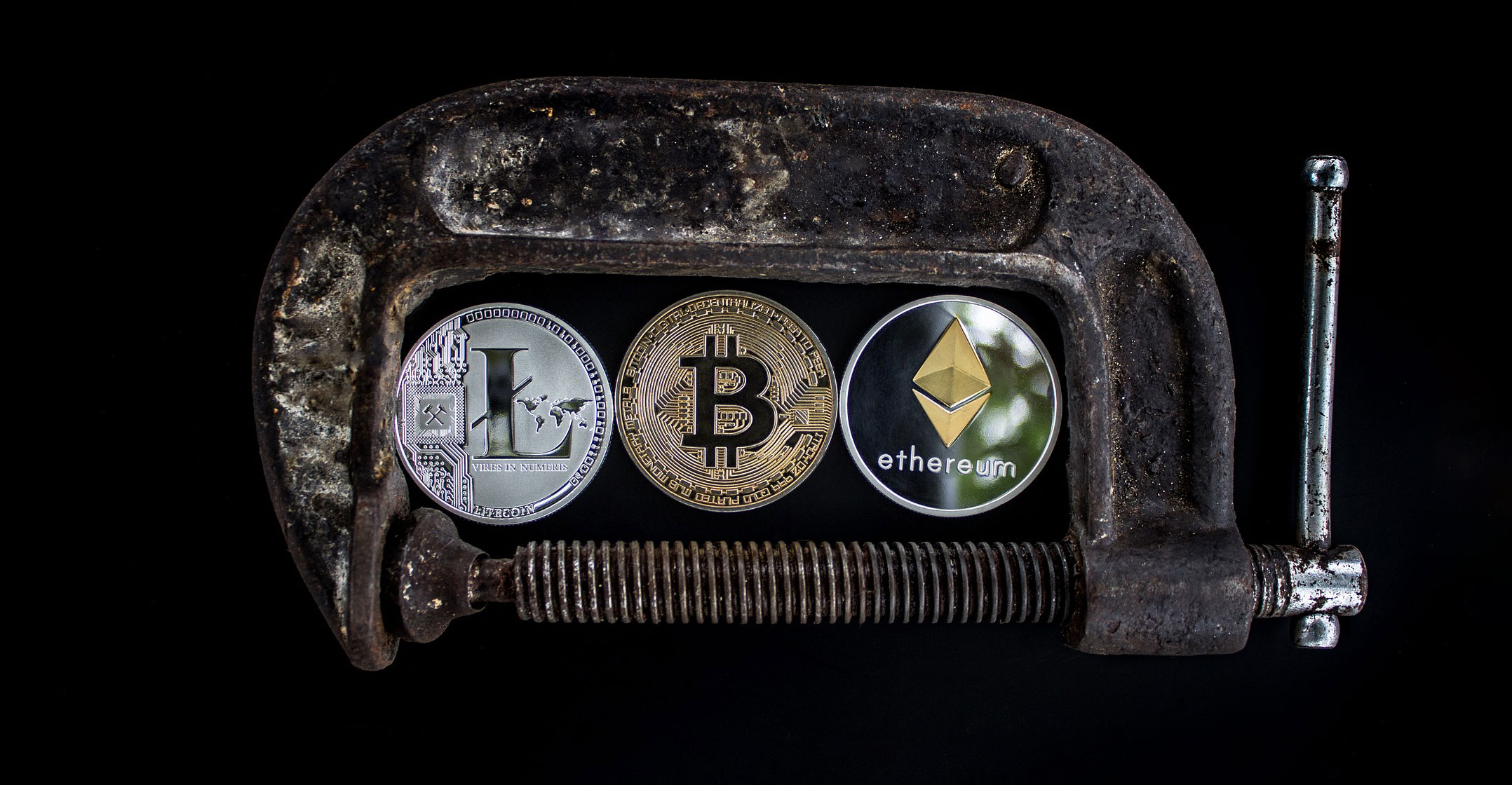
    Economist Nouriel Roubini, nicknamed Dr Doom for predicting the most recent global financial crisis, has crossed swords with cryptocurrency guru and ethereum founder Vitalik Buterin. In the epic battle of words, both are right about some things, and neither is quite wrong. Theirs is a fundamental, and philosophical, conflict.

    It started with Roubini’s testimony before the US senate’s banking committee on Wednesday. The New York University professor, who has long disparaged virtual currencies and the blockchain technology behind them, delivered a particularly stinging indictment of the industry.

    ā€œScammers, swindlers, criminals, charlatans, insider whales and carnival barkers (all conflicted insiders) tapped into clueless retail investors’ Fomo (ā€œfear of missing outā€), and took them for a ride selling them and dumping on them scammy, crappy assets at the peak that then went into a bust and crash — in a matter of months — like you have not seen in any history of financial bubbles,ā€ said Roubini, about the crypto phenomenon of the past two years.

    Roubini’s testimony was a comprehensive, tersely argued takedown of crypto. But it was also full of personal attacks on Buterin

    He made all the familiar arguments about cryptocurrencies: that they have no intrinsic value; that they impose transaction costs that are too high for small payments, making them useless as currencies; and that they use up too much energy to generate. He warned that bitcoin, the most popular cryptocurrency, was deflationary in nature because of its finite supply (in a growing economy, that means prices denominated in bitcoin cannot but fall) and that most of the other virtual currencies ā€œhave an arbitrary supply-generation mechanism that is worse than any fiat currencyā€.

    Roubini pointed to research showing that almost four-fifths of all initial coin offerings have been outright scams. He argued that the crypto economy was concentrated in dodgy jurisdictions such as China and Russia, and that it created a wealth inequality ā€œgreater than that of Kim Jong-un landā€.

    As for the blockchain, it isn’t a revolutionary technology, the economist said, because the financial solutions based on it are not scaleable, truly decentralised or secure.

    Takedown

    In short, Roubini’s testimony was a comprehensive, tersely argued takedown of crypto. But it was also full of personal attacks on Buterin for his failure to deliver a scaleable system he’s promised since 2013, and even for the allegedly buggy code of his ethereum platform.

    Buterin was quick to counter with an attack on Roubini’s credentials. ā€œI officially predict a financial crisis some time between now and 2021,ā€ he tweeted. ā€œNot because I have any special knowledge or even actually think that, but so that I can have a ~25% (or whatever) chance of later being publicly acclaimed as ā€˜a guru who predicted the last financial crisis’.ā€

    This started off a debate between him and Roubini in several Twitter threads which can best be described as an economist’s conversation with a technologist; it’s not quite as bad talking over each other in two different languages, but it’s close. For example, Roubini attacked sharding — a technology meant to speed up transactions recorded on a blockchain — as ā€œvapourwareā€; crypto enthusiasts quickly responded that Google used a version of it in cloud computing. On the other hand, Buterin had no clear answer to Roubini’s arguments concerning the immediate uselessness of crypto as a financial technology; all he could say, essentially, was that technological problems were in the process of being resolved.

    For the engineer, the failures are merely inputs, and the scams are irrelevant

    The exchanges reflect a fundamental difference in worldview. The economist looks at the present state of affairs, and sees a familiar phenomenon: a hype-based bubble without workable fundamentals, and a highly imperfect technology that, at the moment, works worse than other solutions. (Roubini’s examples include fintech leaders such as PayPal and Alipay.) The engineer sees a problem worth solving — in this case, removing a central approving and certifying authority from financial transactions, and all kinds of contracts — and works on solutions. For the economist, the current failure rate is important, and the sheer number of scams surrounding a particular technology triggers red alarms. For the engineer, the failures are merely inputs, and the scams are irrelevant.

    In this particular case, Roubini resorted to an ad hominem attack, too, but Buterin had a quick (and calm) rebuttal ready. Even as the founder of the second biggest cryptocurrency after bitcoin, he’s not a paper billionaire, getting wealthy off the crypto hype, and, thanks to the blockchain, his transactions are relatively transparent.

    Philosophical difference

    This, however, isn’t important. In our increasingly tech-dominated world, what matters is the philosophical difference. Do we want to stick with technology sufficient to run the world as we know it, just a bit more efficiently; or are we okay with technology that tries to change the nature of our interactions? That’s a question we need to ask more and more often — about gene editing, self-driving vehicles, communication and commerce without privacy and, yes, potential applications of the blockchain.

    I’m with the retrogrades on most of this, but I also understand and respect the engineers’ refusal to recognise existing boundaries as red lines.

    Even if the crypto market implodes, as some predict, the engineers will keep working on the technology. A second coming should not be ruled out. There are plenty of precedents: electric cars, tablet computers, virtual reality. The smart money isn’t on the hype, it’s on the research and development.Ā  — (c) 2018 Bloomberg LP

    Follow TechCentral on Google News Add TechCentral as your preferred source on Google


    Bitcoin Ethereum Nouriel Roubini top Vitalik Buterin
    WhatsApp YouTube
    Share. Facebook Twitter LinkedIn WhatsApp Telegram Email Copy Link
    Previous ArticleWPA3 promises far better Wi-Fi security
    Next Article Tencent is a huge falling knife – time to catch it?

    Related Posts

    Quantum computers are coming for bitcoin

    Quantum computers are coming for bitcoin

    9 July 2026
    More pain ahead for bitcoin investors

    More pain ahead for bitcoin investors

    10 June 2026

    Clashing judgments leave South Africa’s crypto law unsettled

    2 June 2026
    Company News
    The AI-led industrial revolution has begun - CallMiner Bruce McMahon

    The AI-led industrial revolution has begun

    20 July 2026
    Sophos firewalls: your business's first line of cyber defence - Vox

    Sophos firewalls: your business’s first line of cyber defence

    20 July 2026
    Paratus again voted Namibia's most reliable internet provider

    Paratus again voted Namibia’s most reliable internet provider

    17 July 2026
    Opinion
    Selling vapour is corporate suicide in slow motion - Jannie van Zyl

    Selling vapour is corporate suicide in slow motion

    16 July 2026
    Brazil's online gambling crackdown is a lesson for South Africa

    How Amazon outmanoeuvred Starlink in South Africa

    15 July 2026
    The Popia problem with agentic AI - Herman Haasbroek

    The Popia problem with agentic AI

    14 July 2026

    Subscribe to Updates

    Get the best South African technology news and analysis delivered to your e-mail inbox every morning.

    Latest Posts
    Openserve hits back in fibre ISP row

    Openserve hits back in fibre ISP row

    20 July 2026
    Best network, worst vibes: the puzzle of SA telecoms

    Best network, worst vibes: the puzzle of SA telecoms

    20 July 2026
    Why South Africa is sending Balls to the moon

    Why South Africa is sending spheres to the moon

    20 July 2026
    The rands-and-cents case for electric trucks - William Kelly Watts & Wheels with Wills

    The rands-and-cents case for electric trucks

    20 July 2026
    © 2009 - 2026 NewsCentral Media
    Built and maintained by Chronon
    • Cookie policy (ZA)
    • TechCentral – privacy and Popia

    Type above and press Enter to search. Press Esc to cancel.

    Manage consent

    TechCentral uses cookies to enhance its offerings. Consenting to these technologies allows us to serve you better. Not consenting or withdrawing consent may adversely affect certain features and functions of the website.

    Functional Always active
    The technical storage or access is strictly necessary for the legitimate purpose of enabling the use of a specific service explicitly requested by the subscriber or user, or for the sole purpose of carrying out the transmission of a communication over an electronic communications network.
    Preferences
    The technical storage or access is necessary for the legitimate purpose of storing preferences that are not requested by the subscriber or user.
    Statistics
    The technical storage or access that is used exclusively for statistical purposes. The technical storage or access that is used exclusively for anonymous statistical purposes. Without a subpoena, voluntary compliance on the part of your Internet Service Provider, or additional records from a third party, information stored or retrieved for this purpose alone cannot usually be used to identify you.
    Marketing
    The technical storage or access is required to create user profiles to send advertising, or to track the user on a website or across several websites for similar marketing purposes.
    • Manage options
    • Manage services
    • Manage {vendor_count} vendors
    • Read more about these purposes
    View preferences
    • {title}
    • {title}
    • {title}