

Close Menu
TechCentralTechCentral

    Subscribe to the newsletter

    Get the best South African technology news and analysis delivered to your e-mail inbox every morning.

    Facebook X (Twitter) YouTube LinkedIn
    WhatsApp Facebook X (Twitter) LinkedIn YouTube
    TechCentralTechCentral
    • News
      Cell C cleans up its balance sheet but faces tough trading reality

      Cell C cleans up its balance sheet but faces tough trading reality

      13 February 2026
      MVNO business shines in Cell C's first post-listing results - Jorges Mendes

      MVNO business shines in Cell C’s first post-listing results

      13 February 2026
      Ramaphosa presses ahead with Eskom break-up - Cyril Ramaphosa

      Ramaphosa presses ahead with Eskom break-up

      13 February 2026
      The key technology takeaways from Ramaphosa's 2026 Sona - Cyril Ramaphosa

      The key technology takeaways from Ramaphosa’s 2026 Sona

      13 February 2026
      Toyota SA CEO: NEV inaction will cost South Africa its motoring industry - Andrew Kirby

      Toyota SA CEO: NEV inaction will cost South Africa its motoring industry

      12 February 2026
    • World
      Russia bans WhatsApp

      Russia bans WhatsApp

      12 February 2026
      EU regulators take aim at WhatsApp

      EU regulators take aim at WhatsApp

      9 February 2026
      Musk hits brakes on Mars mission

      Musk hits brakes on Mars mission

      9 February 2026
      Crypto firm accidentally sends R700-billion in bitcoin to its users

      Crypto firm accidentally sends R700-billion in bitcoin to its users

      8 February 2026
      AI won't replace software, says Nvidia CEO amid market rout - Jensen Huang

      AI won’t replace software, says Nvidia CEO amid market rout

      4 February 2026
    • In-depth
      How liberalisation is rewiring South Africa's power sector

      How liberalisation is rewiring South Africa’s power sector

      21 January 2026
      The top-performing South African tech shares of 2025

      The top-performing South African tech shares of 2025

      12 January 2026
      Digital authoritarianism grows as African states normalise internet blackouts

      Digital authoritarianism grows as African states normalise internet blackouts

      19 December 2025
      TechCentral's South African Newsmakers of 2025

      TechCentral’s South African Newsmakers of 2025

      18 December 2025
      Black Friday goes digital in South Africa as online spending surges to record high

      Black Friday goes digital in South Africa as online spending surges to record high

      4 December 2025
    • TCS
      Watts & Wheels S1E4: 'We drive an electric Uber'

      Watts & Wheels S1E4: ‘We drive an electric Uber’

      10 February 2026
      TCS+ | How Cloud On Demand is helping SA businesses succeed in the cloud - Xhenia Rhode, Dion Kalicharan

      TCS+ | Cloud On Demand and Consnet: inside a real-world AWS partner success story

      30 January 2026
      Watts & Wheels S1E4: 'We drive an electric Uber'

      Watts & Wheels S1E3: ‘BYD’s Corolla Cross challenger’

      30 January 2026
      Watts & Wheels S1E4: 'We drive an electric Uber'

      Watts & Wheels S1E2: ‘China attacks, BMW digs in, Toyota’s sublime supercar’

      23 January 2026

      TCS+ | Why cybersecurity is becoming a competitive advantage for SA businesses

      20 January 2026
    • Opinion
      A million reasons monopolies don't work - Duncan McLeod

      A million reasons monopolies don’t work

      10 February 2026
      Eskom unbundling U-turn threatens to undo hard-won electricity gains - Busi Mavuso

      Eskom unbundling U-turn threatens to undo hard-won electricity gains

      9 February 2026
      South Africa's skills advantage is being overlooked at home - Richard Firth

      South Africa’s skills advantage is being overlooked at home

      29 January 2026
      Why Elon Musk's Starlink is a 'hard no' for me - Songezo Zibi

      Why Elon Musk’s Starlink is a ‘hard no’ for me

      26 January 2026
      A million reasons monopolies don't work - Duncan McLeod

      South Africa’s new fibre broadband battle

      20 January 2026
    • Company Hubs
      • Africa Data Centres
      • AfriGIS
      • Altron Digital Business
      • Altron Document Solutions
      • Altron Group
      • Arctic Wolf
      • AvertITD
      • Braintree
      • CallMiner
      • CambriLearn
      • CYBER1 Solutions
      • Digicloud Africa
      • Digimune
      • Domains.co.za
      • ESET
      • Euphoria Telecom
      • Incredible Business
      • iONLINE
      • IQbusiness
      • Iris Network Systems
      • LSD Open
      • Mitel
      • NEC XON
      • Netstar
      • Network Platforms
      • Next DLP
      • Ovations
      • Paracon
      • Paratus
      • Q-KON
      • SevenC
      • SkyWire
      • Solid8 Technologies
      • Telit Cinterion
      • Tenable
      • Vertiv
      • Videri Digital
      • Vodacom Business
      • Wipro
      • Workday
      • XLink
    • Sections
      • AI and machine learning
      • Banking
      • Broadcasting and Media
      • Cloud services
      • Contact centres and CX
      • Cryptocurrencies
      • Education and skills
      • Electronics and hardware
      • Energy and sustainability
      • Enterprise software
      • Financial services
      • Information security
      • Internet and connectivity
      • Internet of Things
      • Investment
      • IT services
      • Lifestyle
      • Motoring
      • Public sector
      • Retail and e-commerce
      • Satellite communications
      • Science
      • SMEs and start-ups
      • Social media
      • Talent and leadership
      • Telecoms
    • Events
    • Advertise
    TechCentralTechCentral
    Home » In-depth » Drones fly into murky territory

    Drones fly into murky territory

    By Thalia Holmes27 June 2014
    Twitter LinkedIn Facebook WhatsApp Email Telegram Copy Link
    News Alerts
    WhatsApp

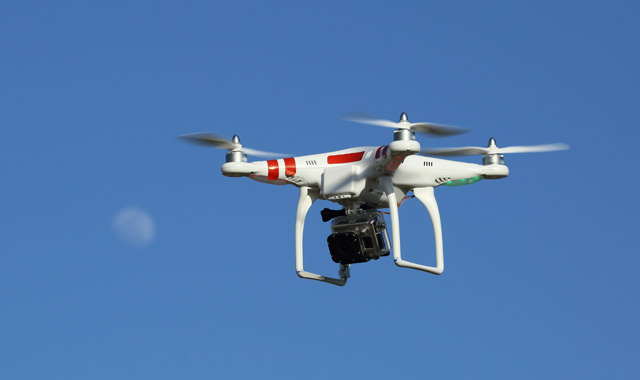
    Phantom-Drone-640

    There are potholes in the tar leading to the North East Radio Flyers model airfield in Kelvin, just north of Johannesburg. A beefy security guard in camouflage mans a boom gate next to a sign indicating that the field is for members only, and visitors “by invitation”.

    Four or five cars are parked next to the thatched shell of a lapa, and a lonely windsock flaps in the wind. Small bunches of people greet each other, then turn their attention to the tiny runway. Gareth Knight, head of the drone division at nearby toys-for-boys shop Aerial Concepts, is readying a small white device for flight.

    It’s known as the Phantom Vision 2 — a haughty name for a small, plastic device. Its X-shaped frame sports four small plastic propellers. The centre of the X houses a revolvable camera; the body of the “quadcopter” is held up by spindly little legs.

    Upon powering up, the Phantom takes several minutes to get its bearings by connecting with satellites in the area. It blinks its little lights as it does so, like a baby giraffe stepping into the sunlight for the first time.

    It’s difficult to believe that this small device and its bigger brothers have attracted the attention of techie aficionados, wannabe pilots, film makers, commercial farmers and environmentalists alike. And in turn they have drawn the concern — and, in some cases, the wrath — of the South African Civil Aviation Authority (Sacaa).

    Drone flyers stand on terra firma, but when they’re flying their unmanned aircraft, they see the sky — and ground — as if they were sitting in a tiny cockpit on board.

    Their vehicles possess the ability to fly autonomously using external referencing such as GPS. Instead of using a remote control and directing their aeroplane by watching its position in the sky (model aeroplane style), these people use a live video downlink to know where their vehicle is and what it is encountering. They are the flyers of “unmanned aircraft systems” or, in layman’s terms, drones. Their aircraft give them “eyes” in the sky.

    Drone aficionados claim that technology in their industry is evolving more quickly than any other in the world. In part, this is driven by the fast-multiplying number of uses for the machinery.

    In it, farmers have found a new, more effective way to inspect their perimeter fences and reservoirs. Property developers have found a cheaper way to take aerial shots of their land. Hobbyists have found a fun channel to showcase their weekend’s shenanigans. Film makers can shoot military combat scenes without using real pilots, and get landscape shots without hiring helicopters.

    But there’s a more sinister side to these machines, which can range in cost between R750 and half a million rand. The most obvious example is their military capabilities, resulting in the infamy of the US army in places like Afghanistan.

    Ominously, the world’s first “riot control copter”, made here, was recently launched. The Skunk fires paintball bullets, pepper bullets and plastic bullets at meteoric rates, and is designed to “stop any crowd in its tracks”. The Pretoria-based manufacturer, Desert Wolf, has already sold 25 units.

    “We cannot disclose the customer, but I am allowed to say it will be used by an international mining house,” MD Hennie Kieser told the BBC recently. There are “a number of other customers” interested, including mines and security companies in South Africa, he said.
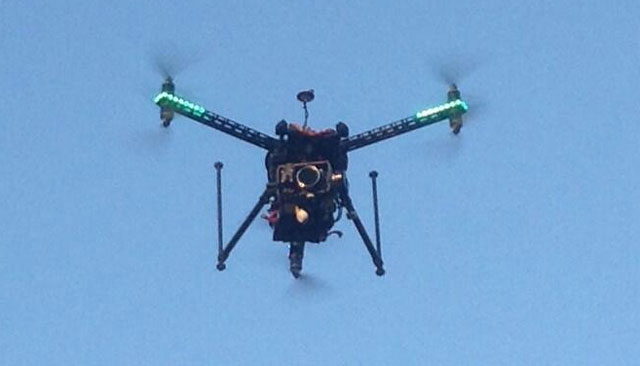
    mandela-drone-640

    Civil aviation authorities are concerned that the drone-flying space has become the Wild West of the flying frontier. Recent moves by Sacaa reflect an attempt to rein in some of the cowboys.

    The flying frontier
    “The South African drone industry is huge,” said Wessie van der Westhuizen, co-owner and technical director of Drone Zone in South Africa. “You virtually need no experience to fly a drone. These things are autopiloting, autoregulating and autostabilising, and they return to their starting position at the click of a button.”

    There are no official statistics about the size of the drone industry in South Africa, but small-scale drones are “flying off the shelves faster than we can stock them”, said Van der Westhuizen.

    And, as could be expected with a new industry, unforeseen safety hazards have cropped up. There is currently no law in place to govern who does what with a drone in South Africa.

    Entrepreneurs have moved into the grey area. Overseas, online retailer Amazon announced its intention to make short-distance parcel deliveries using drones. In the UK, Domino’s Pizza made headlines by delivering its signature dish using the “DomiCopter” in 2013. Recently, a pizzeria in Mumbai, India, followed suit, much to the chagrin of the local authorities.

    South Africa is seeing similar acts. In August, the organisers of the local Oppikoppi music festival announced they would be delivering beers via drone to thirsty revellers. There are repeated reports of film-makers and news houses flying drones over heavily populated streets in Cape Town.

    In July last year, Reuters reported that freelance filmmaker FC Hamman was detained by the police and his drone confiscated for filming the hospital where Nelson Mandela was being treated.

    In April, Sacaa issued a statement indicating its intention to “crack down” on the “illegal flying of unmanned aircraft systems [UASes] or unmanned aircraft vehicles”.

    The statement prompted media reports that drones had been banned from flying in South Africa. But Sacaa responded by saying that was not the case. Instead, it said, the flying of drones in South Africa had never been legal, as there are no laws governing their use in South Africa.

    “The current civil aviation regulations prescribe specific requirements for operating an aircraft in the South African airspace. To date, no UAS has been able to comply with these requirements,” said Sacaa.

    “Sacaa has not given any concession or approval to any organisation, individual, institution or government entity to operate UASes within the civil aviation airspace. Those that are flying any type of unmanned aircraft are doing so illegally.”

    The authority does not specify any exceptions. Does this mean that Knight, flying his 35cm Phantom in a designated field, is flouting the law?

    Despite being questioned multiple times on this particular point, Sacaa did not provide an answer. It did say that it is currently working to align its development process with International Civil Aviation Organisation requirements.

    In the meantime, the authority aims to publish an interim document that will allow case-by-case approval. But even the interim guidelines will only be complete by 31 March 2015.

    In the absence of further clarity, this means that according to the authority, anyone who flies a drone between now and then is breaking the law.

    A need to regulate
    All industry practitioners seem to agree on the need for legal guidelines. “Regulation in the commercial industry is definitely needed,” said Van der Westhuizen, “I’ve seen some pretty hairy things being done to get ‘the shot’. I just hope Sacaa get their ducks in a row very quickly.”

    While Sacaa works through the legalities, drone flyers argue that a potentially burgeoning market has been brought to a standstill.

    Film companies have in some cases spent millions on drone technology that now cannot be used. Among the most prominent examples is a new blockbuster starring Oscar winners Colin Firth and Helen Mirren, originally set to start filming in South Africa later this year. The film, which is about – you guessed it – drones, is now reportedly on ice and may need to be shot elsewhere.
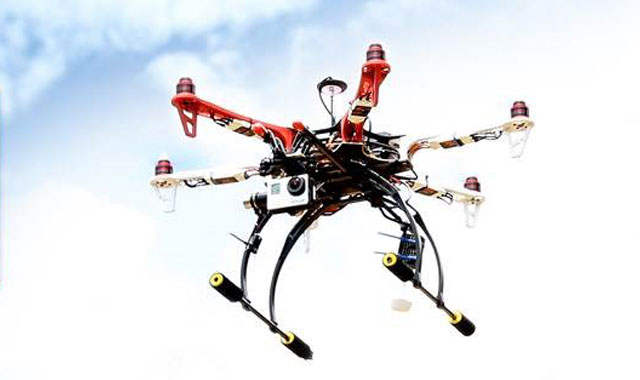
    drone-640

    Sacaa will need to take privacy laws (currently, airspace in South Africa is considered public) and liability laws (if a drone crashes out of sight, who is liable?) into consideration when drawing up its guidelines.

    Some drone flyers are concerned that the new regulations will disallow the flying of drones “out of line of vision”, as has been adopted in some parts of the world.

    According to Ben Kieser, chairperson of the South African Unmanned Aerial Vehicle Association for Small Aircraft, this would detrimentally affect much of the industry, such as commercial farmers and those using drones for game viewing.

    In Kieser’s opinion the lack of regulation in South Africa has helped to bolster the industry and attract “talent and entrepreneurship”.

    “We were right up there with the best in the world regarding UASes. We had some of the best pilots and some of the best drones,” he said.

    His association supports the need for regulation, but highlights an urgency to complete the process. Failure to do so may mean that South Africa loses its head start. “If the process gets dragged out, it could set the South African UAS industry about seven years behind,” he said.

    For drone flyers, that could mean a whole lot of lost opportunity on a frontier where technology evolves much more quickly than the sheriff’s legal deliberations ever will.  — (c) 2014 Mail & Guardian

    • Visit the Mail & Guardian Online, the smart news source

    Ben Kieser Desert Wolf Desert Wolf Skunk Drone Zone South African Unmanned Aerial Vehicle Association for Small Aircraft Wessie van der Westhuizen
    WhatsApp YouTube Follow on Google News Add as preferred source on Google
    Share. Facebook Twitter LinkedIn WhatsApp Telegram Email Copy Link
    Previous ArticleNxumalo named to top Gijima job
    Next Article TalkCentral: Ep 102 – ‘Lollipop’

    Related Posts

    Meet the man behind SA’s riot-control drone

    17 July 2014
    Company News
    Cell C delivers maiden results with growth momentum, financial flexibility - Jorges Mendes

    Cell C delivers maiden results with growth momentum, financial flexibility

    13 February 2026
    Start-up king joins Paratus Rwanda - Innocent Mutimura

    Start-up king joins Paratus Rwanda

    13 February 2026
    How NEC XON tackled identity risk for a major telco - Michael de Neuilly Rice

    How NEC XON tackled identity risk for a major telco

    11 February 2026
    Opinion
    A million reasons monopolies don't work - Duncan McLeod

    A million reasons monopolies don’t work

    10 February 2026
    Eskom unbundling U-turn threatens to undo hard-won electricity gains - Busi Mavuso

    Eskom unbundling U-turn threatens to undo hard-won electricity gains

    9 February 2026
    South Africa's skills advantage is being overlooked at home - Richard Firth

    South Africa’s skills advantage is being overlooked at home

    29 January 2026

    Subscribe to Updates

    Get the best South African technology news and analysis delivered to your e-mail inbox every morning.

    Latest Posts
    Cell C cleans up its balance sheet but faces tough trading reality

    Cell C cleans up its balance sheet but faces tough trading reality

    13 February 2026
    MVNO business shines in Cell C's first post-listing results - Jorges Mendes

    MVNO business shines in Cell C’s first post-listing results

    13 February 2026
    Ramaphosa presses ahead with Eskom break-up - Cyril Ramaphosa

    Ramaphosa presses ahead with Eskom break-up

    13 February 2026
    The key technology takeaways from Ramaphosa's 2026 Sona - Cyril Ramaphosa

    The key technology takeaways from Ramaphosa’s 2026 Sona

    13 February 2026
    © 2009 - 2026 NewsCentral Media
    • Cookie policy (ZA)
    • TechCentral – privacy and Popia

    Type above and press Enter to search. Press Esc to cancel.

    Manage consent

    TechCentral uses cookies to enhance its offerings. Consenting to these technologies allows us to serve you better. Not consenting or withdrawing consent may adversely affect certain features and functions of the website.

    Functional Always active
    The technical storage or access is strictly necessary for the legitimate purpose of enabling the use of a specific service explicitly requested by the subscriber or user, or for the sole purpose of carrying out the transmission of a communication over an electronic communications network.
    Preferences
    The technical storage or access is necessary for the legitimate purpose of storing preferences that are not requested by the subscriber or user.
    Statistics
    The technical storage or access that is used exclusively for statistical purposes. The technical storage or access that is used exclusively for anonymous statistical purposes. Without a subpoena, voluntary compliance on the part of your Internet Service Provider, or additional records from a third party, information stored or retrieved for this purpose alone cannot usually be used to identify you.
    Marketing
    The technical storage or access is required to create user profiles to send advertising, or to track the user on a website or across several websites for similar marketing purposes.
    • Manage options
    • Manage services
    • Manage {vendor_count} vendors
    • Read more about these purposes
    View preferences
    • {title}
    • {title}
    • {title}