Close Menu
TechCentralTechCentral

    Subscribe to the newsletter

    Get the best South African technology news and analysis delivered to your e-mail inbox every morning.

    Facebook X (Twitter) YouTube LinkedIn
    WhatsApp Facebook X (Twitter) LinkedIn YouTube
    TechCentralTechCentral
    • News
      iOCO deploys R9.6-million in fresh share buybacks

      iOCO deploys R9.6-million in fresh share buybacks

      2 February 2026
      South Africa must defend its car industry - before it's too late

      South Africa must defend its car industry – before it’s too late

      2 February 2026
      Starlink updates privacy policy to allow consumer data to train AI

      Privacy alarm as SpaceX opens Starlink user data to AI models

      2 February 2026
      Vuyani Jarana: Mobile coverage masks a deeper broadband failure

      Vuyani Jarana: Mobile coverage masks a deeper broadband failure

      30 January 2026
      SABC Plus to flight Microsoft AI training videos

      SABC Plus to flight Microsoft AI training videos

      30 January 2026
    • World
      Apple acquires audio AI start-up Q.ai

      Apple acquires audio AI start-up Q.ai

      30 January 2026
      SpaceX IPO may be largest in history

      SpaceX IPO may be largest in history

      28 January 2026
      Nvidia throws AI at the weather

      Nvidia throws AI at weather forecasting

      27 January 2026
      Debate erupts over value of in-flight Wi-Fi

      Debate erupts over value of in-flight Wi-Fi

      26 January 2026
      Intel takes another hit - Intel CEO Lip-Bu Tan. Laure Andrillon/Reuters

      Intel takes another hit

      23 January 2026
    • In-depth
      How liberalisation is rewiring South Africa's power sector

      How liberalisation is rewiring South Africa’s power sector

      21 January 2026
      The top-performing South African tech shares of 2025

      The top-performing South African tech shares of 2025

      12 January 2026
      Digital authoritarianism grows as African states normalise internet blackouts

      Digital authoritarianism grows as African states normalise internet blackouts

      19 December 2025
      TechCentral's South African Newsmakers of 2025

      TechCentral’s South African Newsmakers of 2025

      18 December 2025
      Black Friday goes digital in South Africa as online spending surges to record high

      Black Friday goes digital in South Africa as online spending surges to record high

      4 December 2025
    • TCS
      TCS+ | How Cloud On Demand is helping SA businesses succeed in the cloud - Xhenia Rhode, Dion Kalicharan

      TCS+ | Cloud On Demand and Consnet: inside a real-world AWS partner success story

      30 January 2026
      Watts & Wheels S1E3: 'BYD's Corolla Cross challenger'

      Watts & Wheels S1E2: ‘China attacks, BMW digs in, Toyota’s sublime supercar’

      23 January 2026

      TCS+ | Why cybersecurity is becoming a competitive advantage for SA businesses

      20 January 2026
      Watts & Wheels S1E3: 'BYD's Corolla Cross challenger'

      Watts & Wheels: S1E1 – ‘William, Prince of Wheels’

      8 January 2026
      TCS+ | Africa's digital transformation - unlocking AI through cloud and culture - Cliff de Wit Accelera Digital Group

      TCS+ | Cloud without culture won’t deliver AI: Accelera’s Cliff de Wit

      12 December 2025
    • Opinion
      South Africa's skills advantage is being overlooked at home - Richard Firth

      South Africa’s skills advantage is being overlooked at home

      29 January 2026
      Why Elon Musk's Starlink is a 'hard no' for me - Songezo Zibi

      Why Elon Musk’s Starlink is a ‘hard no’ for me

      26 January 2026
      South Africa's new fibre broadband battle - Duncan McLeod

      South Africa’s new fibre broadband battle

      20 January 2026
      AI moves from pilots to production in South African companies - Nazia Pillay SAP

      AI moves from pilots to production in South African companies

      20 January 2026
      South Africa's new fibre broadband battle - Duncan McLeod

      ANC’s attack on Solly Malatsi shows how BEE dogma trumps economic reality

      14 December 2025
    • Company Hubs
      • Africa Data Centres
      • AfriGIS
      • Altron Digital Business
      • Altron Document Solutions
      • Altron Group
      • Arctic Wolf
      • AvertITD
      • Braintree
      • CallMiner
      • CambriLearn
      • CYBER1 Solutions
      • Digicloud Africa
      • Digimune
      • Domains.co.za
      • ESET
      • Euphoria Telecom
      • Incredible Business
      • iONLINE
      • IQbusiness
      • Iris Network Systems
      • LSD Open
      • NEC XON
      • Netstar
      • Network Platforms
      • Next DLP
      • Ovations
      • Paracon
      • Paratus
      • Q-KON
      • SevenC
      • SkyWire
      • Solid8 Technologies
      • Telit Cinterion
      • Tenable
      • Vertiv
      • Videri Digital
      • Vodacom Business
      • Wipro
      • Workday
      • XLink
    • Sections
      • AI and machine learning
      • Banking
      • Broadcasting and Media
      • Cloud services
      • Contact centres and CX
      • Cryptocurrencies
      • Education and skills
      • Electronics and hardware
      • Energy and sustainability
      • Enterprise software
      • Financial services
      • Information security
      • Internet and connectivity
      • Internet of Things
      • Investment
      • IT services
      • Lifestyle
      • Motoring
      • Public sector
      • Retail and e-commerce
      • Satellite communications
      • Science
      • SMEs and start-ups
      • Social media
      • Talent and leadership
      • Telecoms
    • Events
    • Advertise
    TechCentralTechCentral
    Home » Sections » Motoring » Electric vehicles in Africa: what’s taking so long?
    Electric vehicles in Africa: what's needed to grow the sector

    Electric vehicles in Africa: what’s taking so long?

    By The Conversation10 November 2024

    In sub-Saharan Africa, high levels of particulate matter (PM2.5) pollution from vehicle tailpipe emissions cause poor health, developmental stunting and even death. Vehicle emissions also contribute to global warming.

    Electric vehicles could help solve these problems but they’ve been slow to take off in the region. The continent’s biggest economy, South Africa, had only about a thousand electric vehicles by 2022.

    We are specialist transport engineers whose research has focused on electric vehicles and road freight transport in sub-Saharan Africa. In our work, we look at how electric vehicles could contribute to reducing emissions in the region, and what is standing in the way of electrifying transport.

    One of the reasons for low uptake is high cost. They also have limited range, and their batteries are slow to charge

    One of the reasons for low uptake is the high cost of electric vehicles. They also have limited range, and their batteries are slow to charge: a problem for long distance or frequent driving.

    The inability of countries to generate and distribute enough clean electricity is also a barrier to electrifying vehicles. Just over half of all electricity in the region comes from burning fossil fuels. Powering electric vehicles with electricity generated by burning fossil fuels wouldn’t necessarily reduce carbon emissions.

    However, the roll-out of electric motorcycles and small public transport vehicles has already begun. If all vehicles could be made locally, using clean energy, there would be tremendous economic benefits for the region.

    Electric mobility is some way off

    Transitioning to electric mobility requires clean energy provision, which means investing in electricity infrastructure. Electric vehicle charging stations can be installed fast: South Africa already has a very high electric vehicle ratio of one charger for every five cars, compared to the UK at 1:20. But these charging stations must be able to deliver electricity when vehicles need it. They need reliable, renewable energy stored in large battery systems to do so – and these large battery systems are still being developed.

    In sub-Saharan Africa informal public transport moves about 72% of the region’s passengers. Freight moves goods in the absence of adequate rail. Electrifying these sectors needs careful planning.

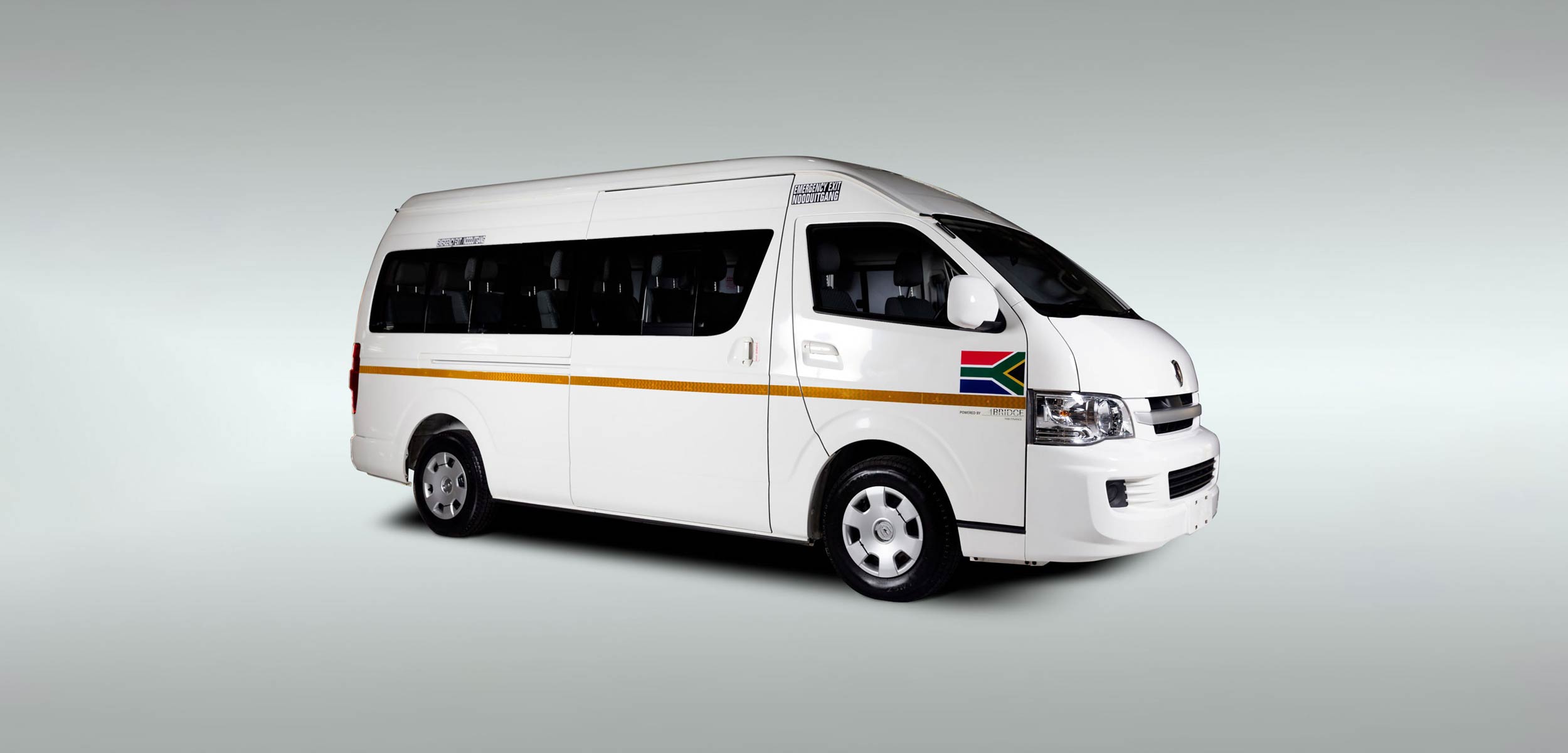
    Read: South Africa’s first electric minibus taxi to hit the road

    Informal “paratransit” or “popular transportation” is made up of minibuses (matatu, ndiaga ndiaye, danfo, trotro), three-wheelers (tuk-tuk) and motorbikes (boda boda, moto).

    Planning for the eventual electrification of informal taxis is complicated by the sector’s unscheduled, decentralised, often chaotic and demand-driven nature.
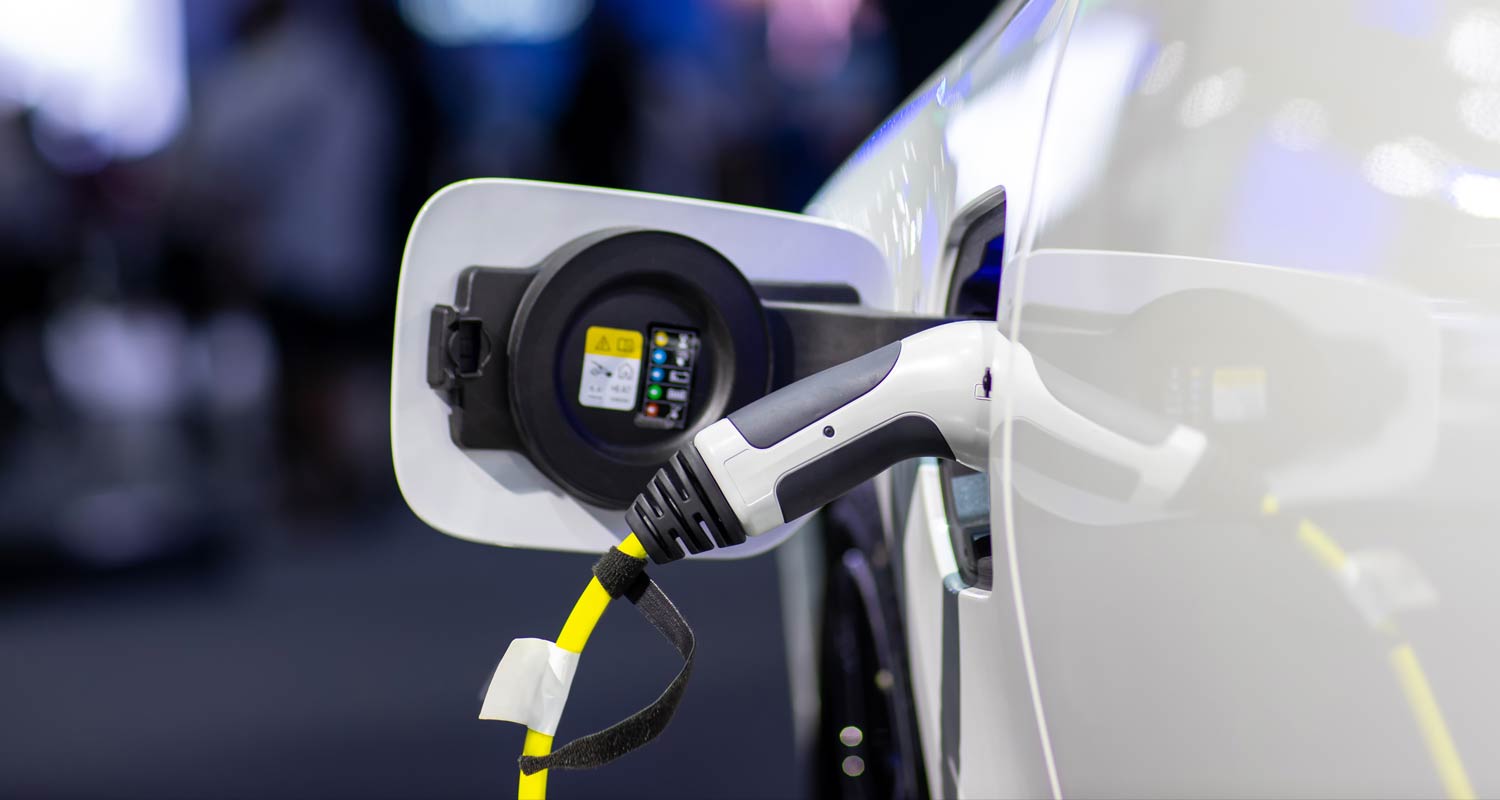
    Freight transport is a leading indicator for economic growth, and for economies to grow, freight transport must grow. This means that national and local governments must plan and invest in high-powered, fast charging stations along transport routes. These must be able to charge different sizes and kinds of trucks. The freight industry cannot absorb these costs alone.

    Need for rapid change

    The transport sector must make the transition to electric mobility faster than the breakneck speed at which smartphones were adopted if it is to meet net zero – an end to carbon emissions – by 2050. Costly electrical and civil infrastructure (roads, minibus termini, truck stops, electricity distribution networks) will be needed – and soon.

    However, our results show that fleets will have to contain a mix of electric and combustion-based engines if countries want to continue to transport the same amount of goods and people they are currently transporting. This is because electric vehicles charge slowly. While a diesel minibus taxi takes only one minute to fill up with enough diesel to travel 750km, the fastest currently available electric minibus recharges at a mere 2km/minute with DC and 0.3km per minute with AC. The electric taxi’s range is also only 21% of the diesel equivalent.

    Read: South Africa to get its first fleet of electric buses

    Filling stations in the region generally store the equivalent of up to 225 000km worth of fuel for a diesel minibus. The same size of stationary electric battery storage will store a mere 16 000km for an electric equivalent minibus. Range-extending and potentially swappable battery storage can be used (where a trailer acts as a mobile battery bank to the vehicle, and is charged from a solar charging station to reduce emissions). But this will increase the cost so much that it may not be financially viable for the freight industry at all.

    Building a local electric vehicle industry

    Except for South Africa, the region has been a dumping ground for second-hand vehicles from developed countries. The comparatively simple designs of electric vehicles provide an opportunity for sub-Saharan Africa to move away from accepting second hand-vehicles and towards a new local electric vehicle industry.

    Workers in hundreds of thousands of jobs making combustion engines could be reskilled to make electric vehicles. Africa already has the skills to design and produce the powertrain components, such as batteries and electric motors. Setting up local industries would also spare sub-Saharan Africa from being flooded by cheap electric vehicle imports that don’t contribute to local employment.
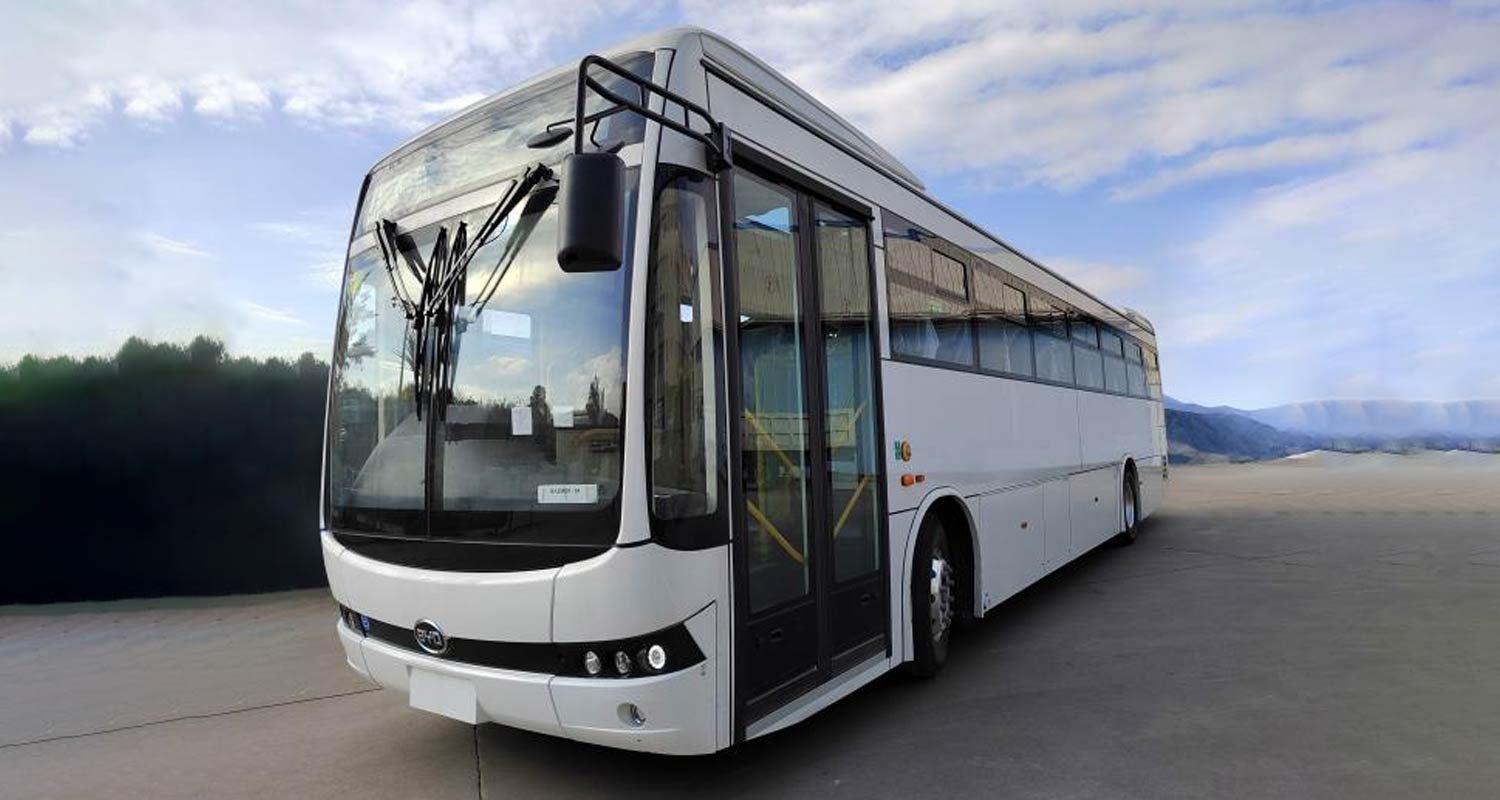
    South Africa to get its first fleet of electric busesEthiopia has recently banned the importation of combustion vehicles. Africa’s first all-electric mass rapid transit was set up in Dakar, Senegal in 2023. The Golden Arrow bus company in South Africa purchased 120 electric buses this year. Heavy-haul electric trucks are also entering the South African market space.

    Africa has already produced tens of thousands of electric two- and three-wheelers used for public transport and last-mile delivery. These include Ampersand in Rwanda, Roam Electric in Kenya and Spiro in Benin. Batteries are usually provided through swapping and payment by mobile phone. In South Africa, Mellowvans produce a last-mile three-wheeler.

    A Roam Air electric motorbike recently completed the 6 000km journey from Nairobi to Stellenbosch using only the region’s abundant solar power. In Kenya, BasiGO assembled buses locally and now provides finance for electric buses. Roam Electric makes locally designed electric buses (and motorbikes). Meanwhile, a project owned by the South African National Energy Development Institute at Stellenbosch University has converted a petrol minibus taxi and a 65-seater diesel bus to electric.

    Electrification is inevitable

    The shift to electric vehicles is inevitable. These steps are needed first:

    • Review transport policy related to freight vehicles, such as axle weight and vehicle length, to ensure that imported electric vehicles can operate on African road networks.
    • Ensure paratransit is safe, efficient and equitable.
    • Carefully consider import duties and incentives. Rwanda scrapped customs tax on electric vehicles to make them cheaper, but this led to an influx of old hybrid vehicles with depleted batteries. South Africa has vehicle import duties to protect local production, but an additional luxury tax on electric vehicles makes these expensive to buy.
    • Rethink the taxation model. In South Africa, for example, fuel levies make up a chunk of national revenue.

    Read: We drove five electric cars across South Africa – a photo essay

    To make the most of the electric mobility revolution, sub-Saharan African countries need policies and incentives to localise production and invest in green energy, lest they miss the bus.The Conversation

    • The author are MJ (Thinus) Booysen, professor in engineering, Stellenbosch University, and Joubert van Eeden, professor of industrial engineering, Stellenbosch University
    • This article is republished from The Conversation under a Creative Commons licence. Read the original article

    Get breaking news from TechCentral on WhatsApp. Sign up here

    Don’t miss:

    South Africa weighs subsidies and rebates to boost electric car sales



    WhatsApp YouTube Follow on Google News Add as preferred source on Google
    Share. Facebook Twitter LinkedIn WhatsApp Telegram Email Copy Link
    Previous ArticleMultiChoice warns of ‘most challenging’ period in group’s history
    Next Article Elon Musk’s net worth tops $300-billion

    Related Posts

    iOCO deploys R9.6-million in fresh share buybacks

    iOCO deploys R9.6-million in fresh share buybacks

    2 February 2026
    South Africa must defend its car industry - before it's too late

    South Africa must defend its car industry – before it’s too late

    2 February 2026
    Starlink updates privacy policy to allow consumer data to train AI

    Privacy alarm as SpaceX opens Starlink user data to AI models

    2 February 2026
    Company News
    Huawei turns 25 in South Africa, celebrates with major device discounts

    Huawei turns 25 in South Africa, celebrates with major device discounts

    30 January 2026
    Phishing has not disappeared, but it has grown up - KnowBe4

    Phishing has not disappeared, but it has grown up

    30 January 2026
    Smartphone affordability: South Africa's new economic divide - PayJoy

    Smartphone affordability: South Africa’s new economic divide

    29 January 2026
    Opinion
    South Africa's skills advantage is being overlooked at home - Richard Firth

    South Africa’s skills advantage is being overlooked at home

    29 January 2026
    Why Elon Musk's Starlink is a 'hard no' for me - Songezo Zibi

    Why Elon Musk’s Starlink is a ‘hard no’ for me

    26 January 2026
    South Africa's new fibre broadband battle - Duncan McLeod

    South Africa’s new fibre broadband battle

    20 January 2026

    Subscribe to Updates

    Get the best South African technology news and analysis delivered to your e-mail inbox every morning.

    Latest Posts
    iOCO deploys R9.6-million in fresh share buybacks

    iOCO deploys R9.6-million in fresh share buybacks

    2 February 2026
    South Africa must defend its car industry - before it's too late

    South Africa must defend its car industry – before it’s too late

    2 February 2026
    Starlink updates privacy policy to allow consumer data to train AI

    Privacy alarm as SpaceX opens Starlink user data to AI models

    2 February 2026
    Vuyani Jarana: Mobile coverage masks a deeper broadband failure

    Vuyani Jarana: Mobile coverage masks a deeper broadband failure

    30 January 2026
    © 2009 - 2026 NewsCentral Media
    • Cookie policy (ZA)
    • TechCentral – privacy and Popia

    Type above and press Enter to search. Press Esc to cancel.

    Manage consent

    TechCentral uses cookies to enhance its offerings. Consenting to these technologies allows us to serve you better. Not consenting or withdrawing consent may adversely affect certain features and functions of the website.

    Functional Always active
    The technical storage or access is strictly necessary for the legitimate purpose of enabling the use of a specific service explicitly requested by the subscriber or user, or for the sole purpose of carrying out the transmission of a communication over an electronic communications network.
    Preferences
    The technical storage or access is necessary for the legitimate purpose of storing preferences that are not requested by the subscriber or user.
    Statistics
    The technical storage or access that is used exclusively for statistical purposes. The technical storage or access that is used exclusively for anonymous statistical purposes. Without a subpoena, voluntary compliance on the part of your Internet Service Provider, or additional records from a third party, information stored or retrieved for this purpose alone cannot usually be used to identify you.
    Marketing
    The technical storage or access is required to create user profiles to send advertising, or to track the user on a website or across several websites for similar marketing purposes.
    • Manage options
    • Manage services
    • Manage {vendor_count} vendors
    • Read more about these purposes
    View preferences
    • {title}
    • {title}
    • {title}