Close Menu
TechCentralTechCentral

    Subscribe to the newsletter

    Get the best South African technology news and analysis delivered to your e-mail inbox every morning.

    Facebook X (Twitter) YouTube LinkedIn
    WhatsApp Facebook X (Twitter) LinkedIn YouTube
    TechCentralTechCentral
    • News
      Why Telkom is pouring capex into IT - Serame Taukobong

      Why Telkom is pouring capital spending into IT

      2 June 2026
      Telkom's data growth story still has years to run: CEO

      Telkom’s data growth story still has years to run: CEO

      2 June 2026
      Reserve Bank draws a line on inflation - Lesetja Kganyago. Siphiwe Sibeko/Reuters

      Reserve Bank draws a line on inflation

      2 June 2026

      Clashing judgments leave South Africa’s crypto law unsettled

      2 June 2026
      Telkom's four-year SIU standoff awaits a final ruling

      Telkom’s four-year SIU standoff awaits a final ruling

      2 June 2026
    • World
      Astronomers discover exoplanets with magnetic fields

      Strange winds reveal magnetic fields on distant ‘hot Jupiters’

      2 June 2026
      Nvidia's first CPUs to debut in Windows laptops this week

      Nvidia CPUs to debut in Windows laptops this week

      31 May 2026
      Watch: Bezos rocket erupts in fireball during ground test

      Watch: Bezos rocket erupts in fireball during ground test

      29 May 2026
      AI boom hands Samsung chip workers life-changing bonuses

      AI boom hands Samsung chip workers life-changing bonuses

      27 May 2026
      Luce lit: Ferrari unveils its first electric car

      Luce lit: Ferrari unveils its first electric car

      26 May 2026
    • In-depth
      Alfa's electric rebel - Alfa Romeo Junior Elettrica Veloce

      Alfa’s electric rebel

      29 April 2026
      Africa switches on as Europe dims the lights

      Africa switches on as Europe dims the lights

      9 April 2026
      The biggest untapped EV market on Earth is hiding in plain sight

      The biggest untapped EV market on Earth is hiding in plain sight

      1 April 2026
      AI, cybersecurity power standout year for Datatec - Jens Montanana

      The R16-billion tech giant hiding in plain sight

      26 March 2026
      The last generation of coders

      The last generation of coders

      18 February 2026
    • TCS
      TCS | Charge's R1.8-billion bet on an off-grid EV future - Charge chairman Joubert Roux

      TCS | Charge’s R1.8-billion bet on an off-grid EV future

      18 May 2026
      TCS+ | The Up&Up Group on the hidden cost of AI - Jason Harrison

      TCS+ | The Up&Up Group on the hidden cost of AI

      13 May 2026
      Michael Rossouw

      TCS+ | The retirement decision most South Africans get wrong

      6 May 2026
      TCS | The Cape Town start-up listening for TB with AI - Braden van Breda

      TCS | The Cape Town start-up listening for TB with AI

      4 May 2026

      TCS+ | ‘The ISP for ISPs’: Vox’s shift to wholesale aggregator

      20 April 2026
    • Opinion
      Treasury's crypto crackdown is a betrayal of Mandela's promise - Duncan McLeod

      Treasury’s crypto crackdown is a betrayal of Mandela’s promise

      22 May 2026
      South Africa is sleepwalking into another AI policy failure - Celeste Labuschagne

      South Africa is sleepwalking into another AI policy failure

      20 May 2026
      AI won't fix your culture - it will expose it - Jackie Kennedy

      AI won’t fix your culture – it will expose it

      19 May 2026
      Treasury's crypto crackdown is a betrayal of Mandela's promise - Duncan McLeod

      Free calls, dead voice and Shameel Joosub’s Spanish ghost

      22 April 2026
      The conflict of interest at the heart of PayShap's slow adoption - Cheslyn Jacobs

      The conflict of interest at the heart of PayShap’s slow adoption

      26 March 2026
    • Company Hubs
      • 1Stream
      • Africa Data Centres
      • AfriGIS
      • Altron Digital Business
      • Altron Document Solutions
      • Altron Group
      • Arctic Wolf
      • Ascent Technology
      • AvertITD
      • BBD
      • Braintree
      • CallMiner
      • CambriLearn
      • CM Telecom
      • Contactable
      • CYBER1 Solutions
      • Digicloud Africa
      • Digimune
      • Domains.co.za
      • ESET
      • Euphoria Telecom
      • HOSTAFRICA
      • Incredible Business
      • iONLINE
      • IQbusiness
      • Iris Network Systems
      • Kaspersky
      • LSD Open
      • Mitel
      • NEC XON
      • Netstar
      • Network Platforms
      • Next DLP
      • Ovations
      • Paracon
      • Paratus
      • Q-KON
      • SevenC
      • SkyWire
      • Solid8 Technologies
      • Telit Cinterion
      • Telviva
      • Tenable
      • Vertiv
      • Videri Digital
      • Vodacom Business
      • Wipro
      • Workday
      • XLink
    • Sections
      • AI and machine learning
      • Banking
      • Broadcasting and Media
      • Cloud services
      • Contact centres and CX
      • Cryptocurrencies
      • Education and skills
      • Electronics and hardware
      • Energy and sustainability
      • Enterprise software
      • Financial services
      • HealthTech
      • Information security
      • Internet and connectivity
      • Internet of Things
      • Investment
      • IT services
      • Lifestyle
      • Motoring
      • Policy and regulation
      • Public sector
      • Retail and e-commerce
      • Satellite communications
      • Science
      • SMEs and start-ups
      • Social media
      • Talent and leadership
      • Telecoms
    • Events
    • Advertise
    TechCentralTechCentral
    Home » World » Elon Musk-backed research group in AI breakthrough

    Elon Musk-backed research group in AI breakthrough

    By Agency Staff25 June 2018
    Twitter LinkedIn Facebook WhatsApp Email Telegram Copy Link
    News Alerts
    WhatsApp

    Artificial intelligence research group OpenAI said it has created software capable of beating teams of five skilled human players in the videogame Dota 2, a milestone in computer science.

    The achievement puts San Francisco-based OpenAI, whose backers include billionaire Elon Musk, ahead of other artificial intelligence researchers in developing software that can master complex games combining fast, real-time action, longer-term strategy, imperfect information and team play.

    The ability to learn these kinds of videogames at human or superhuman levels is important for the advancement of AI because they more closely approximate the uncertainties and complexity of the real world than games such as chess, which IBM’s software mastered in the late 1990s, or Go, which was conquered in 2016 with software created by DeepMind, the London-based AI company owned by Alphabet.

    The ability to learn these kinds of videogames at human or superhuman levels is important for the advancement of AI

    Dota 2 is a multiplayer science-fiction fantasy videogame created by Bellevue, Washington-based Valve. The tournament version pits two competing five-player teams. Each team is assigned a base on opposing ends of a map that can only be learned through exploration. Each player controls a separate character with unique powers and weapons. Each team must battle to reach the opposing team’s territory and destroy a structure called an Ancient.

    The game, with more than a million active players, also is one of the most popular and lucrative in professional e-sports. The International, the game’s premier pro tournament, last year had a prize pool of more than US$24-million, the biggest for any e-sport to date.

    OpenAI said its software in mid-June beat a semi-professional team that is ranked among the top 1% of Dota 2 players and an amateur team ranked in the top 10% — both times winning two games to one in a best-of-three series. Earlier in the month, OpenAI’s bot crushed three amateur teams.

    Dota 2 is many times more complicated than chess or Go, where players take turns and have complete information about the state of the game. At any given moment, a player in Dota 2 must choose from an average of about a thousand valid possible actions, compared with 250 in Go and just 35 in chess. The state of the video game is also represented by about 20 000 data points, compared to 400 in Go and 70 in chess.

    Learnt through trial and error

    OpenAI’s software learnt solely through trial and error while playing against itself. This technique is known as reinforcement learning and is often compared to the way infants learn. It was also used by DeepMind to create its Go-playing AI. The software starts by making random movements and must learn through a series of rewards (usually points in a game environment) how to play successfully. Games are often used for reinforcement learning research because they have points that can serve as interim rewards and a clear winner or loser.

    In this case, OpenAI used a relatively simple reinforcement learning algorithm it released last year that encourages the artificial intelligence to try new things without drifting too far from whatever it is currently doing that seems to be working. Throughout training, the researchers also gradually extended the time between rewards that the AI received as a way of encouraging the bot, once it had learnt the game’s basics, to think more about longer-term strategy and ultimate victory as opposed to shorter-term payoffs.

    These techniques could point to big advances in the training of robots, self-driving cars, stock trading, or anything that can be reliably simulated, Greg Brockman, OpenAI’s co-founder and chief technology officer, said in an interview. “What Dota does is show that today’s algorithms can go a lot further toward being able to solve those real-world challenges than people realised,” he said.
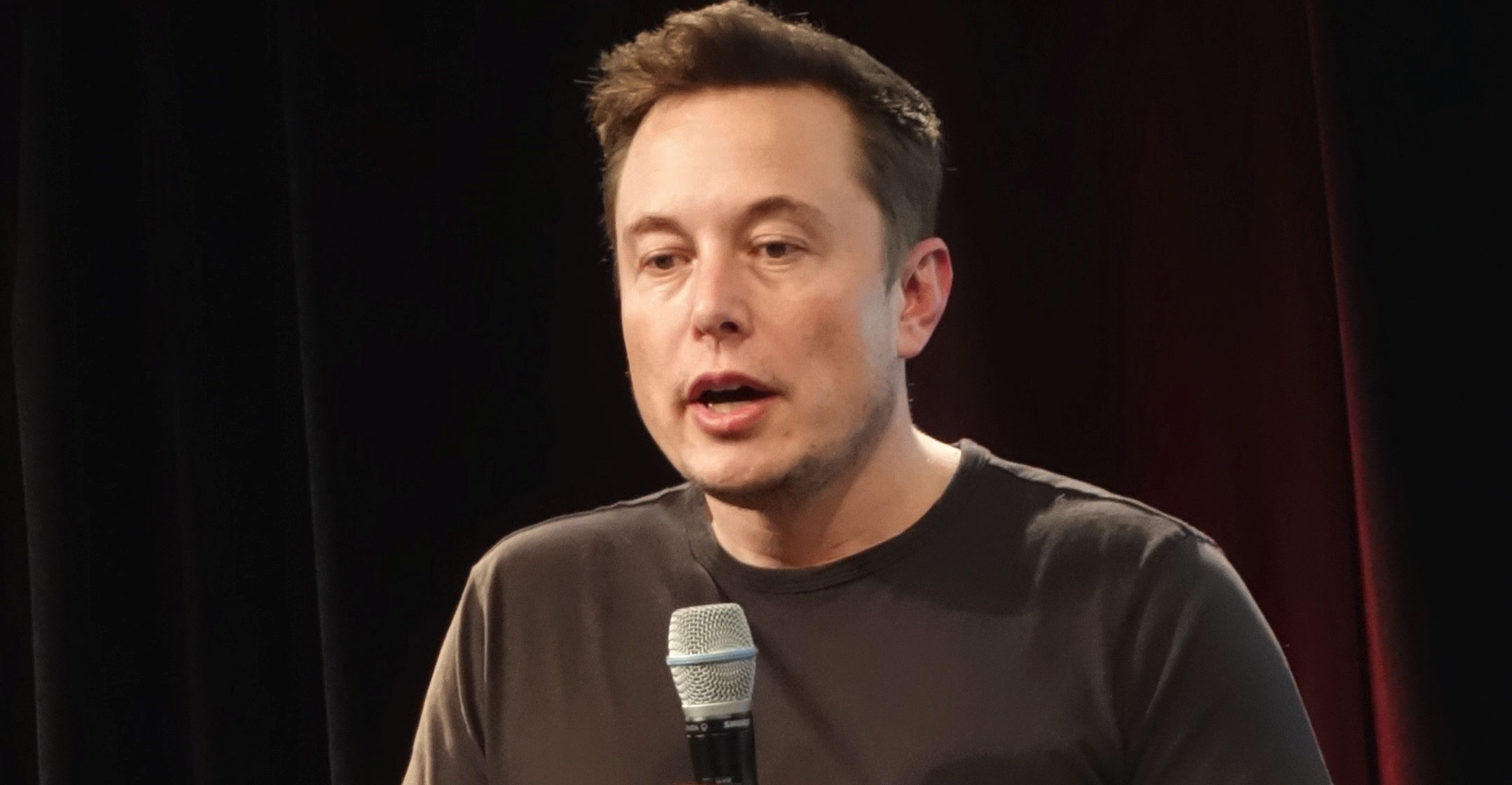
    Elon Musk

    The sort of reinforcement learning OpenAI used could be promising for solving real-world situations, particularly those that could be couched as games — whether that is military war games or those meant to simulate politics or business, said Jonathan Schaeffer, an expert on AI and games at the University of Alberta in Edmonton, Canada.

    But Schaeffer said the amount of data and computing power required to use the technique effectively limited its applications. “Humans have the ability to learn with very few examples,” he said. “Humans also have the ability to generalise and learn at a higher level of abstraction than what we currently see being done by computer programs.”

    To train its Dota 2 software, OpenAI used 128 000 computing cores — the central processing unit in your laptop might have just four cores — as well as 256 graphics processing units, a powerful type of computer chip originally invented to render visuals for videogames and animation. During that training, the software played the equivalent of 180 years of games against itself every day throughout a 19-day training cycle.

    To train its Dota 2 software, OpenAI used 128 000 computing cores – the central processing unit in your laptop might have just four cores – as well as 256 graphics processing units

    Founded in October 2015 by Musk, Sam Altman, the president of the Silicon Valley technology incubator Y Combinator, and a group of other PayPal alumni, OpenAI is a nonprofit company dedicated to creating what it calls “safe” artificial general intelligence and distributing it “as widely and evenly as possible”. Artificial general intelligence is a term that refers to software that would have the flexibility to equal or surpass human intellectual abilities across a wide variety of different tasks — much like the androids depicted in science-fiction movies.

    OpenAI said it would challenge the top-ranked North American professional Dota 2 team to a match, which it will livestream, on 28 July. Then it will try to take on the world’s highest-ranked pros at The International, which is scheduled from 20 August to 25 August, in Vancouver, Canada.

    DeepMind and Facebook’s artificial research unit have ongoing efforts to create software to play Starcraft and Starcraft II, science-fiction real-time strategy videogames produced by Activision Blizzard, but so far have not publicly demonstrated software that can beat good human players.

    OpenAI’s claim to have mastered the five-against-five version of Dota 2 follows an attempt by the AI research shop to conquer a simpler one-on-one version last year. In that effort, OpenAI created software that beat one of the world’s top players in a formal demonstration. But within a few days, the AI researchers were embarrassed after amateur players discovered ways to easily defeat its software by confusing it with unusual tactics humans typically didn’t employ in real competition.

    Schaeffer said reinforcement learning is likely to play a part in getting the field closer to artificial general intelligence. For now, most AI systems are “idiot savants” that can solve only one problem. This is true of OpenAI’s Dota 2 bots, too. They can play Dota 2 very well, but, once trained, cannot transfer any knowledge about strategy or tactics to other games that are conceptually similar.  — Reported by Jeremy Kahn, (c) 2018 Bloomberg LP

    Follow TechCentral on Google News Add TechCentral as your preferred source on Google


    Dota 2 Elon Musk Greg Brockman OpenAI top
    WhatsApp YouTube
    Share. Facebook Twitter LinkedIn WhatsApp Telegram Email Copy Link
    Previous ArticleBitcoin hovers near year’s lows
    Next Article Backspace: ‘Takealot’

    Related Posts

    AI giant Anthropic files for landmark US listing

    AI giant Anthropic files for landmark US listing

    1 June 2026
    Watch: Bezos rocket erupts in fireball during ground test

    Watch: Bezos rocket erupts in fireball during ground test

    29 May 2026
    Anthropic tops valuation of AI pioneer OpenAI

    Anthropic tops valuation of AI pioneer OpenAI

    28 May 2026
    Company News
    The hidden infrastructure behind AI - Open Access Data Centres OADC

    The hidden infrastructure behind AI

    2 June 2026
    Addressing the 57% blind spot: Kaspersky on measuring SOC effectiveness

    Addressing the 57% blind spot: Kaspersky on measuring SOC effectiveness

    2 June 2026
    Strike48 report: security leaders wary of AI agents - Maidar Secure

    Strike48 report: security leaders wary of AI agents

    2 June 2026
    Opinion
    Treasury's crypto crackdown is a betrayal of Mandela's promise - Duncan McLeod

    Treasury’s crypto crackdown is a betrayal of Mandela’s promise

    22 May 2026
    South Africa is sleepwalking into another AI policy failure - Celeste Labuschagne

    South Africa is sleepwalking into another AI policy failure

    20 May 2026
    AI won't fix your culture - it will expose it - Jackie Kennedy

    AI won’t fix your culture – it will expose it

    19 May 2026

    Subscribe to Updates

    Get the best South African technology news and analysis delivered to your e-mail inbox every morning.

    Latest Posts
    Why Telkom is pouring capex into IT - Serame Taukobong

    Why Telkom is pouring capital spending into IT

    2 June 2026
    Telkom's data growth story still has years to run: CEO

    Telkom’s data growth story still has years to run: CEO

    2 June 2026
    Reserve Bank draws a line on inflation - Lesetja Kganyago. Siphiwe Sibeko/Reuters

    Reserve Bank draws a line on inflation

    2 June 2026
    Astronomers discover exoplanets with magnetic fields

    Strange winds reveal magnetic fields on distant ‘hot Jupiters’

    2 June 2026
    © 2009 - 2026 NewsCentral Media
    • Cookie policy (ZA)
    • TechCentral – privacy and Popia

    Type above and press Enter to search. Press Esc to cancel.

    Manage consent

    TechCentral uses cookies to enhance its offerings. Consenting to these technologies allows us to serve you better. Not consenting or withdrawing consent may adversely affect certain features and functions of the website.

    Functional Always active
    The technical storage or access is strictly necessary for the legitimate purpose of enabling the use of a specific service explicitly requested by the subscriber or user, or for the sole purpose of carrying out the transmission of a communication over an electronic communications network.
    Preferences
    The technical storage or access is necessary for the legitimate purpose of storing preferences that are not requested by the subscriber or user.
    Statistics
    The technical storage or access that is used exclusively for statistical purposes. The technical storage or access that is used exclusively for anonymous statistical purposes. Without a subpoena, voluntary compliance on the part of your Internet Service Provider, or additional records from a third party, information stored or retrieved for this purpose alone cannot usually be used to identify you.
    Marketing
    The technical storage or access is required to create user profiles to send advertising, or to track the user on a website or across several websites for similar marketing purposes.
    • Manage options
    • Manage services
    • Manage {vendor_count} vendors
    • Read more about these purposes
    View preferences
    • {title}
    • {title}
    • {title}